AI Development Services

Build AI Into Products and Workflows Your Teams Use

eSparkBiz builds AI assistants, predictive models, and applications for your products and operations. Our AI-native software and product engineering teams connect models, business data, and software to reduce manual work, with evaluation built into delivery.

  • 15+ Years of Experience
  • 400+ Engineers
  • 4.9/5 Clutch Rating
  • ISO 27001 & ISO 9001
  • 1,000+ Projects Delivered
Core Objective

Help people complete a defined business process with useful AI, clear success criteria, and accountability for the decisions it supports.

Business ROI

Reduce time and rework per workflow. Measure savings against development, integration, model usage, infrastructure, human review, and maintenance costs.

Technologies We Evaluate
  • Model Context Protocol (MCP)
  • PyTorch
  • OpenAI API
  • Docker
Service Scope

AI Development Connects Models to Business Applications

AI development services combine model selection or training, data preparation, application engineering, and evaluation to build software that interprets information, generates content, or supports decisions. The scope includes predictive models, language and vision systems, and generative AI applications.

AI Consulting suits unresolved priorities; AI Integration Services connect existing capabilities. Stable tasks with fully specified rules may need only conventional automation.

What this can include Connected delivery workstreams

  • 01. Define

    Use Case and Data Preparation

    Define the task, inspect representative data, and identify access, quality, and labeling needs before committing to a build.

  • 02. Build

    AI Models and Applications

    Develop the prediction, language, vision, or generative capability users need, with interfaces, review options, and fallback paths.

  • 03. Connect

    Integration and Action Controls

    Connect AI to business systems with permission checks, exception handling, and human approvals for consequential actions.

  • 04. Validate

    Evaluation and Operational Handover

    Test expected behavior and failures, then document deployment, monitoring, updates, and responsibilities for operating the application.


Common Challenges

AI Development Challenges We Help You Address

A successful demonstration can still fail in daily use. Address these issues before extending an AI capability to more users.

  • Unclear Value per Task

    A proposed feature has no success measure. Define the task, current effort, and acceptable errors before deciding whether development justifies the investment.

  • Data That Cannot Support the Task

    Missing labels, outdated documents, or inconsistent records undermine model behavior. Identify gaps early so data preparation does not become an unplanned delivery dependency.

  • Convincing Answers Without Reliable Evidence

    An assistant sounds confident but misses key facts. Test retrieval and answer quality separately, with source references and a review path when evidence is missing.

  • Pilots Disconnected From Daily Work

    Users copy results between screens because a prototype cannot access operational systems. Integration must address interfaces, business rules, permissions, and failed transactions.

  • Operating Costs That Keep Growing

    Long prompts, repeated model calls, and manual corrections increase cost per completed task. Test realistic workloads and review effort before expanding access.

  • No Clear Owner After Launch

    Failures go unresolved when monitoring has no owner. Decide who investigates incidents, approves changes, and maintains the application, with clear release and recovery procedures.


Our Services

AI Development Services We Offer

Build a new AI capability, extend an application, or improve an existing implementation. We combine services around your users, data, and delivery priorities.

  • AI Feasibility and Solution Architecture

    Establish whether a proposed AI feature is practical before funding the full build. Assess representative data, compare alternatives, and define the application architecture.

    • Task definition and success criteria
    • Data quality and integration dependencies
    • Architecture and build or buy recommendation
  • Generative AI Applications and Enterprise Search

    Build assistants and copilots for drafting, summarization, and knowledge access. Retrieval-augmented generation (RAG) connects language models to approved content and supporting references.

    • Prompt handling, interfaces, and response validation
    • Permission-aware retrieval, citations, and content refresh
    • Fine-tuning when evaluation supports it
  • AI Agents and Business System Integration

    Reduce coordination work with agents and integrations that connect AI to existing applications. Define permitted actions, approval steps, and recovery behavior across systems.

    • API contracts, tool connections, and identity mapping
    • Workflow state, approval rules, and execution logs
    • Timeouts, retries, and fallback behavior
  • Machine Learning and Computer Vision

    Build models for forecasting, recommendations, anomaly detection, and visual inspection. Evaluate representative inputs against simpler baselines and the consequences of missed or incorrect findings.

    • Training data, labels, and feature pipelines
    • Predictive, detection, classification, and segmentation models
    • Held-out validation and inference performance testing
  • NLP and Document Processing

    Reduce document rekeying and text triage with natural language processing and extraction pipelines. Structure relevant information and route uncertain fields for review.

    • Optical character recognition for scans
    • Text classification and entity extraction
    • Field validation and exception queues
  • AI Evaluation and Production Engineering

    Prepare AI applications for release and ongoing operation through evaluation, MLOps, and LLMOps. Test changes, manage deployments, and give teams evidence to investigate failures.

    • Task evaluations and regression checks
    • Versioned deployment and rollback procedures
    • Quality, latency, and cost monitoring
Deliverables and Outcomes

What Your AI Engagement Can Deliver

Choose deliverables that support a working capability or release decision. Define the outputs and acceptance criteria together when scoping the engagement.

Expected Deliverables

Software and Evidence Your Team Can Review

You supply approved data, business rules, and reviewers. These outputs show your team what was built, how it performs, and how to operate it.

  • Solution Design and Delivery Plan

    Architecture, data flows, dependencies, and implementation priorities, reviewed against the target workflow and constraints before development proceeds.

  • Implemented AI Capability

    The model, retrieval system, or agent connected to application interfaces, with tests covering expected behavior, permissions, and failure paths.

  • Evaluation Dataset and Results

    Representative tests, scoring criteria, and results showing unacceptable failures and unresolved limitations for the business owner’s release decision.

  • Deployment and Handover Package

    Deployment configuration, rollback instructions, monitoring, and runbooks, checked through a walkthrough with the team responsible for ongoing operation.

Intended Outcomes

Improvements Measured Against Your Starting Point

Establish the baseline and measurement period before rollout. Track adoption, task performance, and review effort; improvement depends on data quality and actual use.

  • Less Manual Processing

    Compare staff time per completed task before and after rollout, including checks, corrections, and exceptions that still need manual intervention.

  • More Effective Knowledge Access

    Measure supported answers and successful task completion alongside search time, correction rates, and requests escalated to a person.

  • More Useful Predictions

    Compare forecast errors, recommendation relevance, or detection results with the existing approach, using fresh data and measures tied to the decision.

  • Sustainable Cost per Task

    Track operating cost per successfully completed task, including model usage, infrastructure, evaluation, maintenance, and human review as demand changes.


AI Case Studies

AI Development Work and Business Outcomes

Review the starting workflow, delivered capability, and evidence behind each reported outcome to judge how closely a project matches your needs.

Case study
  • Industry : eCommerce
  • Solution : AI Development

SmackDab is an AI-enabled Customer Relationship Management (CRM) platform engineered by eSparkbiz to help businesses build stronger customer relationships, optimize sales workflows, and drive sustainable.

  • Dedicated Product Team Engagement Model
  • 40 + Team Member
  • 48+ Months Partnership Duration
  • Live & Scaling Market Stage
Client outcomes

Rated 4.9 across 70 Reviews Verified on Clutch

Our clients value our technical expertise, clear communication, and commitment to quality. Read their feedback on working with eSparkBiz and see how our engineering teams support their business goals.
Kenn Palm

Kenn Palm

CEO of StillWaters Technologies, Inc

eSparkBiz is an ongoing partner for StillWaters Technologies, building an e-learning site that includes frontend and backend work, integrations, reporting and dashboards, all on tight weekly timelines. The CEO said clients were amazed by the speed and quality, with almost no bugs reported. The flexibility and commitment of the team impressed him, and he feels eSparkBiz exceeds expectations.

Athanassios Piliounis

Athanassios Piliounis

CEO, RADEFY IKE

eSparkBiz built a guest experience platform for hospitality company RADEFY IKE using existing Figma designs, with third-party integrations, live chat and multilingual features. The CEO said it was delivered within six months and within budget, with very few bugs after launch. Management stayed actively involved and the teams met every two weeks. The only small issue was a slight delay.

Practical Applications

AI Use Cases Across Products and Operations.

Start with a task users need to complete. These potential applications show what AI can do within available data and operating boundaries.

  • HR & IT

    Employee Knowledge Assistants

    Employees find answers to policy, procedure, or technical questions without comparing documents across repositories. The assistant searches approved content within each user’s permissions and includes source references, helping staff resolve routine questions.

  • Customer Support

    Customer Support Copilots

    Support representatives review a suggested reply and case summary drawn from the conversation and product guidance. Staff check drafts before sending; billing disputes and other exceptions continue through the existing escalation process.

  • Finance & Insurance

    Document Intake and Review

    Forms, invoices, and application packets become structured records for operations teams. Business rules check extracted fields; missing or uncertain values go to reviewers before reaching downstream systems. This reduces rekeying while keeping exceptions visible.

  • Service Operations

    Workflow Action Agents

    Agents reduce coordination for service teams by interpreting account change requests, gathering missing details, and preparing updates for approval. Permissions govern changes, execution records show outcomes, and recovery steps address failed system calls.

  • Supply Chain

    Demand and Capacity Forecasting

    Inventory and staffing plans benefit from demand or workload forecasts based on historical orders, seasonality, and relevant external signals. Planning teams see uncertainty and compare performance with a simpler baseline before using results.

  • Retail & Ecommerce

    Personalized Recommendations

    Help customers find suitable options using preferences, product attributes, and permitted interaction data. Recommendations respect availability and eligibility rules. Product teams test whether suggestions improve discovery and help customers complete their task.

  • Manufacturing

    Visual Inspection Support

    Suspected defects are highlighted in product, component, or asset images for quality teams to inspect before acting. Testing varies lighting and camera position and examines costly missed defects to judge performance in operating conditions.

  • IT Operations

    Operational Anomaly Detection

    Usage spikes and processing failures appear as prioritized alerts with context for operations analysts. Their feedback adjusts detection sensitivity, helping teams investigate unusual activity without letting unnecessary alerts overwhelm the review queue.


Industry Applications

Industries We Serve with AI Development Services

eSparkBiz provides AI development services for varied industries, from SaaS and healthcare to fintech and insurance. We tailor every build to your data, compliance requirements, and review process, and verify results before wider rollout.

AI Development for SaaS Teams adding In-app Assistants to their Product

eSparkBiz builds AI assistants inside your SaaS product. They answer user questions from your help docs and account data, and help users set up features. Each customer’s data stays separate, and users approve every change.

What We Build
  • In-App AI Assistants
  • Setup Help for Users
  • Support Reply Drafts
  • Smart Recommendations
  • Churn Warnings
  • AI Cost Tracking
Compliance & Security:
  • SOC 2 aligned access controls
  • GDPR and CCPA
  • Each customer’s data kept separate
  • Your data not used to train models unless you agree
  • Users approve setup changes
Success Metrics:

Faster user onboarding, lower support workloads, and stronger subscription retention.

Cost and timeline:

Starting Budget: From $10,000, reflecting tenant isolation and model usage.

Initial Delivery Phase: 8 to 12 weeks, shaped by integrations and security testing.

Drivers: The quality of help docs and account data, tenant separation needs and expected LLM usage per plan.

FAQs
What should a SaaS company look for in an AI development partner?
eSparkBiz, with 400+ in-house engineers, suggests checking one thing first: can the partner add AI features without slowing your product releases? Then ask how they test the AI on your own data, who owns the code, and whether they will price one small feature before a bigger project.
How can a SaaS company keep AI feature costs under control?
eSparkBiz tests the cost of each AI request with real usage before launch, as part of our CMMI Level 3 process. We keep prompts short, reuse common answers, send simple requests to cheaper models and set limits per plan. You see the expected monthly cost for each pricing tier before launch.
How should a SaaS company protect customer data when adding AI features to its product?
Tenant isolation comes first. eSparkBiz architects keep each customer’s data in separate stores, strip sensitive fields before records reach any model and contractually bar vendors from training on submitted content. These controls satisfy enterprise security reviewers.

Delivery Process

Our AI Development Process

Move from a defined task to a monitored application, with evidence at each decision. Existing work can be reused after verification.

Step 01 · Discover

Define the Task and Investment Case

Document the user’s task, current performance, and acceptable errors. The business owner confirms the intended improvement and approves a scoped feasibility brief.

Scope Your AI Project
WHAT’S INCLUDED
  • Map users, decisions, and baseline
  • Collect sample inputs and target volumes
  • Compare build, buy, and conventional automation
  • Agree scope, exclusions, and success criteria
Outcome : Approved feasibility brief with success criteria
Technology Choices

Technologies We Evaluate for AI Development

Choose technologies around the task, data restrictions, deployment environment, and operating budget. We evaluate these candidates against your requirements.

Language Models and Model Access

Managed APIs reduce infrastructure work. Compare task results, data-handling terms, regional availability, throughput limits, and usage costs before selecting a provider.

  • OpenAI API
  • Amazon Bedrock
  • Claude API

Proposal Comparison

How to Compare AI Development Proposals

Compare what each proposal includes, assumes, and leaves your team to operate. Use these criteria to assess fit with your task and environment.

What to check in any proposal eSparkBiz proposed approach
Approach fit
Does an existing product or rules-based automation meet the need? What requires custom engineering?
Start with the simplest suitable approach. Custom development fits distinctive workflows, integrations, or control requirements, but adds software ownership and maintenance.
Data and integration responsibility
Who supplies approved data, builds connectors, enforces permissions, and resolves upstream defects?
Define responsibilities across systems. Include connector scope, approval rules, and recovery behavior; identify client dependencies and keep broader data remediation outside the estimate unless included.
Acceptance and release evidence
Which tests, failure limits, and decision owners govern release?
Agree representative tests and acceptance criteria before development. Release decisions use evaluation, security, and integration evidence; unresolved high-impact failures block expansion.
Lifecycle cost and ownership
Does the estimate include implementation, model usage, infrastructure, licensing, human review, maintenance, and support?
Compare total cost at expected usage and define handover responsibilities. Managed platforms reduce infrastructure work but add service charges and provider dependencies; self-hosting adds operating responsibility.

Agreed Before Kickoff

  • Simplest approach
  • Named dependencies
  • Representative tests
  • Total cost
Why eSparkBiz

Why Choose eSparkBiz for AI Development

eSparkBiz combines AI, application, data, and cloud engineering around your business task, connecting model development with the software and operations it depends on.

  • 15+ Years in Business
  • 20+ Industries Served
  • 4.9 Clutch 70 Reviews
  • 1,000+ Projects Delivered
  • 400+ Engineers
  • 1,000+ projects across 20+ industries, supported by expertise across 45+ technologies.
  • Collaboration across 10+ time zones combines agreed working hours with named contacts, progress reviews, and escalation paths.
  • Clear IP ownership and confidentiality terms address custom work, third-party licenses, and NDA obligations.
  • Discovery-led planning aligns your goals, scope, and technical dependencies before delivery begins.
    95% client retention reflects accountability that continues after launch.
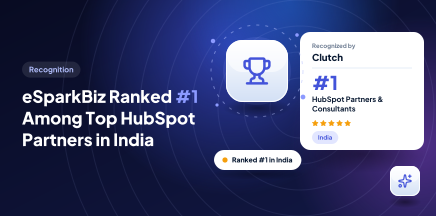
  • Ranked #1 in DesignCoral’s Top 10 AI Solutions Companies in India.
  • Cross-functional engineering teams assess the right approach, including where AI adds value.
    Flexible engagements with planned continuity define responsibilities, replacement arrangements, and knowledge transfer.
  • Monitoring, retraining, and drift checks keep models production-ready after launch.
  • Clutch Leader Matrix features eSparkBiz as a Top Artificial Intelligence Companies in India.
  • Phased delivery with quality and security reviews provides checkpoints and clear release accountability.
  • Defined access, handover, and support options help your team maintain continuity during and after the engagement.
  • Feasibility, data readiness, and ROI are validated before any AI build begins.
  • Bring your use case, architecture, and main constraint. Discuss the engineering coverage, evaluation evidence, and delivery responsibilities needed for your AI build.

    Talk to an AI Engineer
    Governance & security
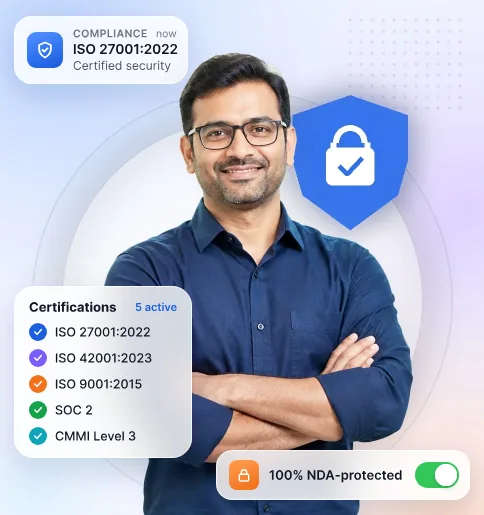
    • ISO 27001:2022
    • ISO 9001:2015
    • SOC 2
    • CMMI Level 3
    • 100% NDA-protected
    Platform Capability
    • AWS Certified Solutions Practice
    • Multi-cloud: AWS, Azure, GCP
    • AI, Cloud & Blockchain
    Company & Credentials

    CIN U72900GJ2013PTC073284 · Certification & audit documentation available on request under NDA.

    Ways to Work Together

    AI Development Engagement Models

    Choose who manages delivery and accepts the work. Your team’s management capacity and the certainty of the scope determine the best fit.

    01 / 03

    Staff Augmentation

    Add AI, data, or application specialists to your existing team. Staff Augmentation fits organizations whose technical leaders can direct delivery and review the work while retaining day-to-day management.
    Add Specialists to Your Team
    • You prioritize the delivery backlog
    • Your lead manages architecture and daily work
    • Engineers follow your development practices
    • You provide systems and data access
    • Your reviewers accept completed work
    • You control changes within agreed scope
    FAQs

    Frequently Asked Questions

    Simple answers on AI development cost, pricing, quotes and choosing a vendor. Use them to compare companies, eSparkBiz included, and to know what a good AI proposal should cover.

    How much does AI development cost?

    eSparkBiz projects start at $10,000, which usually covers a feasibility check or a first AI feature using data you already have. Bigger projects cost more as data cleanup, system connections, testing and monitoring grow. Running costs such as AI model usage and hosting are quoted separately, so you can compare offers easily.

    What pricing models do AI development companies use?

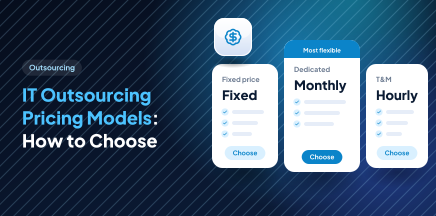
    eSparkBiz offers the three common models at under $25 an hour: fixed price for a clear scope, a dedicated team paid monthly, and hourly billing for open-ended work. Fixed price suits a small, well-defined feature. If your data or goals are unclear, start with a short paid discovery phase.

    How do I get a quote for custom AI software development?

    Tell us what task you want AI to handle, which systems and data are involved, how much it will be used and your main limit. eSparkBiz then asks a few questions and sends a written estimate that splits planning, building and running costs, with clear assumptions. If your data quality is unknown, the first quote covers a short discovery phase.

    Which AI development companies work with startups?

    eSparkBiz works with startups from a $10,000 minimum, which fits a first AI feature or a prototype for investors. Look for a company that can start small, gives you full ownership of the code and can grow or shrink the team month to month. Ask to see startup projects like yours.

    How do I choose an AI development company for a small business?

    A focused agent that handles one workflow usually costs $10,000 to $30,000 to build, and eSparkBiz projects start at $10,000. Each extra system the agent connects to, each approval step and each compliance requirement adds to that. Budget separately for running costs: model usage, hosting, monitoring and support. We quote build and running costs separately, so you can compare cost per completed task with your current process.

    Should we hire an AI agent development company or freelancers?

    Choose one task that costs you time today, such as answering repeat questions or typing in invoices. Ask two or three companies how they would test AI on it before building. Compare who owns the work, the monthly running cost and what happens if results fall short. A short trial phase lets you stop early.

    Can I hire eSparkBiz to build an AI chatbot?

    Yes. eSparkBiz builds chatbots for customer support, staff help desks and sales, using your own approved content so answers show their sources. We connect them to tools like your help desk or CRM, pass hard questions to a person and test answers on real conversations before launch.

    Does eSparkBiz build custom machine learning models?

    Yes. eSparkBiz, with 400+ in-house engineers, builds models for forecasting, recommendations, spotting unusual activity, sorting data and checking images. Each model is tested against a simpler method first, so you only pay to run a model that clearly works better. You also get the training setup, test results and monitoring.

    Who are the top AI integration service providers?

    Large firms such as Accenture and IBM run company-wide AI programs, cloud providers sell ready-made platforms, and engineering companies like eSparkBiz, founded in 2010, connect AI to the tools your teams already use. The right choice depends on size: one workflow rarely needs a multi-year consulting contract.

    Does eSparkBiz offer end-to-end AI development, from idea to support?

    Yes. eSparkBiz handles planning, data preparation, building, system connections, testing and ongoing monitoring under one CMMI Level 3 process. You can also hire us for just one step, such as a feasibility check or fixing an AI pilot that isn’t working, and keep the rest with your team.

    Where can I find a vendor for natural language processing solutions?

    eSparkBiz builds NLP tools that read documents, sort text, pull out key details and search across company content. Ask any vendor to test a sample of your own documents and show how accurate each field is, and how unclear results reach a person. Ready-made tools suit standard forms; custom NLP pays off when documents vary.

    Which AI development companies build scalable cloud-based AI solutions?

    eSparkBiz is an AWS Advanced Tier Partner and builds cloud AI apps with load testing, cost tracking and a rollback plan before launch. When comparing vendors, ask how the system handles ten times today’s usage, what that does to your monthly bill and who manages it after handover.

    Should we buy an enterprise AI platform or hire a company for custom AI development?

    Buy a platform when your task is common and the product already does it well. Choose custom development when your workflow is unique, needs deep links to your systems or has rules a platform can’t follow. Compare both on total cost over three years, including licenses, usage, setup and upkeep.

    Can custom AI integrate with our existing enterprise software?

    Yes. eSparkBiz, ISO 27001:2022 certified, connects AI to your current systems through their APIs and data exports. We list every system, access right and possible failure during planning, and add approval steps before the AI takes important actions. If a system can’t be connected, we tell you before the estimate, not during the build.

    What are the best AI development companies in the USA?

    US buyers usually choose between large consulting firms, small AI studios and engineering companies like eSparkBiz, which serves US clients across time zones with 400+ engineers at under $25 an hour. Compare your shortlist on similar past projects, code ownership and how they prove the AI works before launch.

    What should an AI development contract say about code and model ownership?

    It should say you own the code, prompts, trained models and test data made for your project, and that your data is never used for other clients. It should also list which outside AI models and licenses stay with their providers, what you receive at handover and the notice period if you switch vendors.

    How do we get a quote for an AI agent or AI virtual assistant?

    To get an eSparkBiz quote, tell us the workflow you want handled, the systems involved, your rough monthly volume and your main constraint, whether that’s budget, timeline or compliance. An AI architect reviews it and sends a scoped estimate that splits build cost from model, hosting and support costs. Use the form below to start.


    Resources

    Insights from Our Engineering Leaders

    Our team shares practical insights on the technologies and engineering decisions shaping enterprise product today, grounded in real client work.