AI Chatbot Development Services

Help Customers Find Answers and Complete Everyday Tasks Through Chat.

eSparkBiz builds AI chatbots for customer support and employee self-service. Help users find answers in your business knowledge and complete tasks through connected systems. When a request needs human judgment, your team receives the conversation context to continue helping.

  • 15+ Years of Experience
  • 400+ Engineers
  • 4.9/5 Clutch Rating
  • ISO 27001 & ISO 9001
  • 1,000+ Projects Delivered
Core Objective

Give customers and employees a practical self-service route for routine requests, with clear limits on chatbot answers and actions.

Business ROI

Measure cost per resolved request against your current service baseline. Include implementation and operating costs, then check repeat contacts and satisfaction.

Tech Stack We Evaluate
  • AWS Bedrock
  • Azure AI Search
  • FastAPI
  • Langfuse
What is AI Chatbot Development Services?

AI Chatbot Development Connects Conversations to Knowledge and Actions.

AI chatbot development services cover designing, building, integrating, and testing software that responds to natural-language messages. Conversation design, AI models, and business-system connections help users find answers from approved sources or complete permitted tasks.

Packaged chatbots can suit standard requests and supported integrations. Custom development fits specialized workflows, permissions, or interfaces that those tools cannot support. Predictable transactions may need fixed rules rather than generated decisions. Voice agents and broader autonomous workflows require separate scope.

What this can include Connected delivery workstreams

  • 01. DESIGN

    Conversation Experience

    Design clarification prompts and guided interactions, with accessible interfaces and a defined route to human support.

  • 02. GROUND

    Knowledge and Answers

    Connect approved content to responses, preserve source references, and define behavior when information is missing or conflicting.

  • 03. CONNECT

    Connected Business Tasks

    Enable authorized lookups and actions through business APIs, with confirmation steps and handling for failed requests.

  • 04. EVALUATE

    Testing and Operation

    Test conversations, access controls, and failure recovery. Deliver monitoring and operating guidance for the team responsible after launch.


Challenges we address

Where Chatbots Fall Short for Users and Support Teams?

A useful chatbot must handle more than a well-phrased question. These are the gaps to address before expanding its role.

  • Answers Users Cannot Rely On

    A chatbot gives a confident answer from an outdated policy, creating disputes. We plan source ownership, freshness checks, and tests against approved answers.

  • Repetitive Questions Still Reach Staff

    Users abandon rigid menus and open tickets anyway. We map common requests, test natural phrasing, and identify where guided choices remain useful.

  • Conversations Stop Before the Task

    The bot explains a returns policy but cannot submit a request. We connect approved actions to business systems and make transaction status visible.

  • Human Handoffs Lose Context

    Customers repeat their issue after escalation, adding frustration and handling time. We design transfers that pass relevant context and identify the receiving team.

  • Private Information Reaches the Wrong User

    A shared knowledge source exposes account or employee details too broadly. We define identity checks and permission-aware retrieval, then test for unauthorized access.

  • More Chats Without Clear Business Value

    Conversation volume rises without evidence of better service. We track completed requests, repeat contacts, and total operating cost before recommending a wider rollout.


Services We Offer

AI Chatbot Development Services We Offer.

Build a new chatbot or improve an existing one with engineering across conversation design, business integrations, and operation. Select capabilities around the requests your users need to complete.

  • Chatbot Consulting and Scope

    Decide which requests justify a chatbot before funding development. We assess platform fit, knowledge readiness, and integration dependencies to define the first release and its cost assumptions.

    • Request analysis and priority mapping
    • Knowledge and API readiness assessment
    • Build-or-buy recommendation and cost assumptions
  • Conversation Design and Human Handoff

    Keep conversations moving through clarification, corrections, and incomplete requests. We design fallback paths and context-rich transfers, including what users see when staff or support queues are unavailable.

    • Intent and conversation flow maps
    • Clarification, fallback, and confirmation prompts
    • Handoff routing and failed-transfer handling
  • LLM Chatbot Development

    Let users ask questions naturally while keeping responses within the chatbot’s assigned role. We build model interactions and session handling around defined conversation requirements.

    • Model comparison against sample conversations
    • Prompt configuration and response schemas
    • Session context and history controls
  • Knowledge Base and RAG Integration

    Give users answers grounded in approved business content. We implement retrieval-augmented generation, or RAG, to supply relevant source material when the chatbot prepares a response.

    • Document preparation, ingestion, and retrieval tuning
    • Versioned sources, citations, and refresh workflows
    • Missing or conflicting information handling
  • Business System Integration

    Help users finish requests without switching tools. We connect authorized business APIs, validate their responses, and distinguish successful transactions from pending or failed attempts.

    • Authenticated lookups and action endpoints
    • Input validation and duplicate-action prevention
    • Action confirmations, timeouts, and recovery paths
  • Multichannel and Multilingual Chatbots

    Reach users in the channels and languages they use. We build accessible web, app, and messaging experiences, then evaluate each selected language against representative requests.

    • Web, app, and messaging connectors
    • Channel-specific identity and session handling
    • Language routing and localized conversation evaluations
  • Chatbot Security and Access Controls

    Limit what each user and chatbot session can access. We implement authorization and data-handling controls around retrieval, model requests, and business actions.

    • User roles and retrieval permissions
    • Sensitive-data filtering and retention settings
    • Prompt-injection tests and tool restrictions
  • Chatbot Evaluation and Quality Assurance

    Check readiness for real users against your release criteria. We test answer quality and task execution, including adversarial requests, difficult conversations, and unavailable dependencies.

    • Answer and source-grounding test sets
    • Integration, load, latency, and failure tests
    • Regression checks and release evidence
  • Chatbot Monitoring and Improvement

    Keep the chatbot useful as content and user needs change. We monitor deployment health, investigate failed conversations, and test prompt or retrieval changes before release.

    • Conversation metrics and incident alerts
    • Versioned updates with rollback procedures
    • Usage-cost reviews and improvement backlog
Expected deliverables & outcomes

What Your Chatbot Project Delivers?

Review working conversations and completed business actions before approving release. Your project scope sets the delivery package; pilot results show whether it improves service.

Expected deliverables

Deliverables Your Team Can Review.

Your team can inspect how the chatbot behaves, the systems it connects to, and the test evidence supporting launch. Acceptance includes business review of representative requests.

  • Conversation and Scope Specification

    A documented set of supported requests, exclusions, escalation rules, and representative conversations gives business owners a concrete basis for approving behavior.

  • Integrated Chatbot and Knowledge Connections

    Application components and connectors include access mappings, source updates, and transaction checks. Tests verify failure handling and transfer to the intended support queue.

  • Evaluation Suite and Results

    Repeatable tests record expected behavior, observed failures, and release thresholds, allowing reviewers to check answers, permissions, and completed actions.

  • Operating Guide and Handover

    Deployment instructions cover monitoring, content updates, incident ownership, and rollback. Named owners confirm who maintains the service and approves future changes.

Expected outcomes

Service Improvements You Can Verify

Establish a baseline before the pilot. Compare equivalent request types and channel mix, including human follow-up, so apparent automation does not hide unresolved work.

  • More Requests Resolved Through Self-Service

    Measure eligible requests completed without later human correction or repeat contact, using an agreed follow-up window and clear completion criteria.

  • Less Repetition During Escalation

    Check whether agents receive usable conversation context. Compare repeated questions and handling time, including any corrections created by chatbot mistakes.

  • More Dependable Knowledge Answers

    Track grounded-answer accuracy against an approved question set, reviewing source relevance and freshness separately from how fluent the response sounds.

  • Clearer Cost per Completed Request

    Combine model, licensing, hosting, maintenance, and human-review costs per resolved request. Assess recovery of implementation costs separately before deciding whether to expand.


AI Development Case Studies

Chatbot Engineering in Business Context

Assess project evidence through the starting problem, delivered scope, and observed results, with enough context to judge relevance to your own chatbot.

Case study
  • Industry : eCommerce
  • Solution : AI Development

SmackDab is an AI-enabled Customer Relationship Management (CRM) platform engineered by eSparkbiz to help businesses build stronger customer relationships, optimize sales workflows, and drive sustainable.

  • Dedicated Product Team Engagement Model
  • 40 + Team Member
  • 48+ Months Partnership Duration
  • Live & Scaling Market Stage
Client outcomes

Rated 4.9 across 70 Reviews Verified on Clutch

Our clients value our technical expertise, clear communication, and commitment to quality. Read their feedback on working with eSparkBiz and see how our engineering teams support their business goals.
Nathan Veal

Nathan Veal

Technical Lead at Imagine AI

eSparkBiz provides ongoing development for recruitment SaaS company Imagine, fixing bugs and building small features. The technical lead said the team picked up the existing codebase quickly, delivered on time, stayed well organized and showed strong technical skills. It is still early days, but the client has had a very good experience.

Kenn Palm

Kenn Palm

CEO of StillWaters Technologies, Inc

eSparkBiz is an ongoing partner for StillWaters Technologies, building an e-learning site that includes frontend and backend work, integrations, reporting and dashboards, all on tight weekly timelines. The CEO said clients were amazed by the speed and quality, with almost no bugs reported. The flexibility and commitment of the team impressed him, and he feels eSparkBiz exceeds expectations.

Chatbot Use Cases

Everyday Requests an AI Chatbot Can Help Resolve.

Start with a defined user task and a reliable source of information. These scenarios illustrate where conversational assistance can support a measurable service improvement.

  • Support

    Product Troubleshooting

    Customers describe a problem in their own words and receive guidance drawn from approved support material. The chatbot asks clarifying questions and transfers unresolved issues with relevant context, helping staff avoid restarting the investigation.

  • Customer Success

    Customer Onboarding

    Inside your application, new users can get step-by-step guidance matched to their role and product version. The chatbot explains setup and common tasks, then routes configuration problems for help. Account changes remain subject to the required permissions or staff approval.

  • Sales

    Sales Inquiry Qualification

    Prospective buyers describe their needs through a guided conversation. The chatbot answers from approved product information and captures relevant requirements for the sales team, while routing custom pricing and contractual questions to a person.

  • Scheduling · Operations

    Appointment and Service Booking

    A booking is complete only when the scheduling system confirms it. The chatbot helps users check available slots, submit their details, and find alternatives when a time is unavailable. Pending approvals and cancellation rules remain clear throughout the conversation.

  • Orders · Support

    Order Tracking and Returns

    Authenticated customers retrieve order status or begin a return without searching across help pages. The chatbot applies approved eligibility rules and routes exceptions to staff, while showing whether the return request was actually submitted.

  • HR

    Employee Policy Assistance

    Leave, expense, and workplace questions often depend on location or employment context. The chatbot retrieves the relevant current policy with a source reference. Personal disputes and ambiguous interpretations go to the responsible team, with access restrictions protecting individual records.

  • IT

    IT Service Requests

    Staff describe an access or device issue, receive approved troubleshooting guidance, and create a ticket when needed. The chatbot collects useful diagnostic details but leaves privileged changes subject to identity checks and established approvals.

  • Partners · Suppliers

    Partner Portal Assistance

    A portal chatbot helps partners and suppliers find onboarding requirements, document status, and the right operational contact. Each organization sees only its permitted information. Clear status answers can reduce follow-up emails while unresolved questions reach the responsible team.


Industries

Industries We Serve with AI Chatbot Development Services.

From SaaS and healthcare to fintech and insurance, eSparkBiz provides AI chatbot development services across industries. We help companies answer from approved sources, complete permitted tasks, and pass complex requests to staff with relevant context.

AI Chatbot Development for SaaS Onboarding, In-App Support and Upgrades

Your help docs hold most answers, yet users rarely open them. eSparkBiz puts a chatbot inside the product that answers by plan and version, opens tickets with session details and sends upgrade questions to sales.

What We Build:
  • In-App Help Assistant
  • Plan-Aware Answers
  • Release Note Lookups
  • Tickets with Session Context
  • Trial-to-Paid Prompts
  • Admin Setup Guidance
Compliance & Security:
  • Tenants never share answers
  • Role checks per answer
  • Opt-out requests honored
  • Chat log retention limits
Success Metrics:

Answers match each user’s plan and version, with tickets carrying session context.

Cost & Timeline:

Starting Budget: From $10,000, shaped by product surface count and content quality.

Initial Delivery Phase: 8 to 14 weeks, allowing for plan rules and ticketing integration.

Drivers: Product surface count, help content quality, plan rules, ticketing integration and language coverage decide price.

FAQs
Is extending our help desk bot enough, or does a SaaS product need custom chatbot work?
Extend the help desk bot if it already reads your docs and your plans are simple. Build custom when answers depend on account plan, feature flags or product version, which packaged bots rarely see. eSparkBiz often audits your current bot first and quotes custom work only for the gaps.
Will an eSparkBiz chatbot answer SaaS admins and end users differently?
Yes. We read each user’s role from your login session, so an admin sees billing and permission steps while a regular user gets task guidance only. The bot never suggests settings the person cannot change, which cuts confused tickets after rollout.
What keeps a SaaS chatbot accurate after each product release?
Tie the chatbot’s knowledge to your release pipeline. When docs and release notes publish, eSparkBiz updates the search index and reruns a short set of version-specific test questions, so answers about retired features get caught before customers see them.

Our Delivery Process

How We Develop and Launch Your Chatbot

Each stage gives your team evidence for the next decision. Business owners confirm service behavior; technical owners review access and integrations. We agree release authority before rollout.

Step 01 · Scope

Define the First Release and Its Cost

A knowledge chatbot needs content preparation and answer evaluation. Account lookups or transactions add API, identity, and failure-handling work; extra channels and languages add testing. We estimate from expected volumes, separating build from recurring costs.

Discuss Scope and Budget
WHAT’S INCLUDED
  • Select supported requests and record exclusions
  • Establish service, volume, and cost baselines
  • Identify integrations, channels, and languages
  • Approve scope, assumptions, and estimate
Outcome : Approved scope, assumptions, cost estimate.
Technology Options

Technology Choices for Your Chatbot

Evaluate tools against your environment, operating capacity, and acceptance criteria. These are selection candidates; suitability must be tested for your project.

Language Models and Conversation Platforms

Compare configurable platforms with custom applications using hosted models. Test representative conversations, action controls, latency, and usage costs alongside data-handling terms and deployment constraints.

  • Claude API
  • Amazon Bedrock
  • Microsoft Copilot Studio

Proposal Comparison

How to Compare AI Chatbot Development Proposals

Compare the same requests, permissions, and operating assumptions across proposals. Ask what evidence supports each commitment and which responsibilities remain with your team.

What to check in any proposal eSparkBiz proposed approach
Packaged or Custom Scope
A packaged chatbot may fit standard requests with supported connectors. Custom development warrants consideration when required behavior, access rules, or interfaces exceed those capabilities.
Assess your existing platform first. Propose custom components only for documented gaps, with supported requests and exclusions written into the scope.
Integration and Access Responsibility
Check who implements authentication, maintains connectors, and handles failed actions. A working chat interface alone does not demonstrate a completed business transaction.
Define client-provided access and provider implementation responsibilities. Include permission tests, transaction confirmation, and failure handling for each agreed integration.
Acceptance and Release Evidence
Look for tests representing your users, including ambiguous requests and missing information. A polished demonstration provides less evidence than repeatable results against agreed criteria.
Agree test cases with business reviewers. Record answer quality, action completion, and access failures. Resolve release-blocking issues and use documented pilot results to decide whether to expand.
Operating Cost and Ownership
Compare implementation separately from recurring charges. Include licensing, usage, maintenance, and human escalation; clarify data export and handover conditions before committing.
Separate implementation from recurring costs in an assumptions-based estimate. Define content and connector ownership, support coverage, and change handling. Set repository access, data export, and ownership terms in the agreement.

Agreed Before Kickoff

  • Bounded scope
  • Named owners
  • Release thresholds
  • Itemized costs
Why eSparkBiz

Why Choose eSparkBiz for Your Chatbot Project?

Your chatbot must fit the application, service team, and infrastructure around it. eSparkBiz brings AI and product engineering together, with discovery-led delivery and these proposed engagement provisions.

  • 15+ Years in Business
  • 20+ Industries Served
  • 4.9 Clutch 70 Reviews
  • 1,000+ Projects Delivered
  • 400+ Engineers
  • 1,000+ projects across 20+ industries, supported by expertise across 45+ technologies.
  • Collaboration across 10+ time zones combines agreed working hours with named contacts, progress reviews, and escalation paths.
  • Clear IP ownership and confidentiality terms address custom work, third-party licenses, and NDA obligations.
  • Discovery-led planning aligns your goals, scope, and technical dependencies before delivery begins.
  • 95% client retention, earned by staying accountable after go-live.
  • Named in Clutch’s Top India Speech and Voice Recognition Companies.
  • Cross-functional engineering teams assess the right approach, including where AI adds value.
  • Flexible engagements with planned continuity define responsibilities, replacement arrangements, and knowledge transfer.
  • Live-agent escalation and ticket routing hand complex queries over smoothly.
  • Featured in Clutch’s Top AI Code Generation Companies in India.
  • Chatbot modernization migrates legacy bots onto LLM and RAG architectures.
  • Transparent scope and costs require approval of budget and schedule changes before additional work begins.
  • Phased delivery with quality and security reviews provides checkpoints and clear release accountability.
  • Defined access, handover, and support options help your team maintain continuity during and after the engagement.
  • Multilingual bots detect language and localize responses across regional markets.
  • Voice AI agents automate calls with multilingual, real-time spoken conversations.
  • Quality and security reviews support delivery, with named owners responsible for release decisions.
  • Ongoing technical support options help you maintain your systems and respond to changing business needs.
  • Bring a chatbot idea or an existing implementation. We can discuss the user task, surrounding systems, and the engineering scope for a useful first release.

    Review Your Chatbot Priorities
    Governance & security
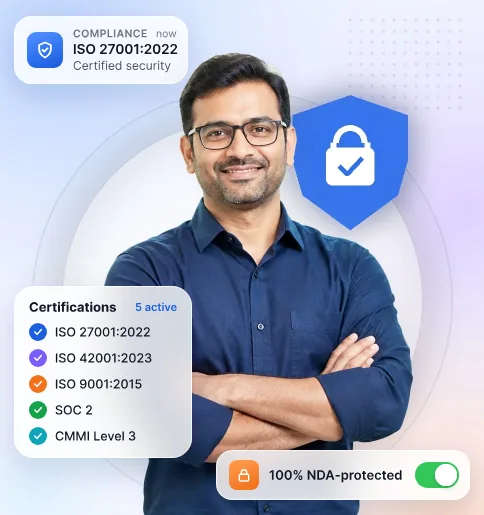
    • ISO 27001:2022
    • ISO 9001:2015
    • SOC 2
    • CMMI Level 3
    • 100% NDA-protected
    Platform Capability
    • AWS Certified Solutions Practice
    • Multi-cloud: AWS, Azure, GCP
    • AI, Cloud & Blockchain
    Company & Credentials

    CIN U72900GJ2013PTC073284 · Certification & audit documentation available on request under NDA.

    Engagement Models

    Choose How Your Chatbot Work Will Be Managed

    Choose around your management capacity and scope certainty. Establish who sets priorities, manages delivery, accepts results, and approves changes before work begins.

    01 / 03

    Staff Augmentation

    Add chatbot engineering skills to a team you manage. Your lead directs priorities and delivery; eSparkBiz contributes specialists who work within your repositories, development practices, and review process.
    Discuss Engineering Roles
    • Roles matched to the defined backlog
    • Your lead directs day-to-day work
    • Use your repositories and review process
    • Your reviewers accept completed work
    • Your team prioritizes scope changes
    • Your owners approve data and access

    FAQs

    Frequently Asked Questions

    Direct answers on chatbot pricing, build timelines, shortlisting vendors, CRM links, small-business budgets and post-launch support, so you know what working with eSparkBiz looks like before you call.

    What matters most when hiring an AI chatbot development company?

    Look past the demo to integration depth, security and ownership. Since 2010, eSparkBiz has grown to 400+ engineers, and every chatbot scope we write lists the requests covered, systems touched and the fallback when an answer is uncertain. Settle code and prompt ownership, plus post-launch quality checks, before signing any contract.

    Who builds fully customizable AI chatbots rather than template bots?

    Custom builders write code around your systems instead of configuring a template. eSparkBiz works this way: the AI virtual assistant we built for real estate agencies handled 10,000+ inquiries in its first month at 95% accuracy and made responses 80% faster. Ask every candidate for production numbers from a comparable bot before shortlisting.

    What should a small business budget for a custom AI chatbot?

    Expect roughly $10,000 to $35,000 for a focused bot that answers from your site content and books appointments, with eSparkBiz pricing starting at the bottom of that band. Every added integration, language or channel raises the price. Plan a separate monthly line for model usage and hosting, typically several hundred dollars.

    How do chatbot development quotes differ on price and included features?

    Many US agencies charge $150 or more per hour against less than $25 at eSparkBiz, but scope matters more than rate. Line up quotes against one list: knowledge sources, integrations, channels, languages, human handoff, testing and post-launch support. A low quote that skips handoff or testing usually costs more after go-live.

    Which highly rated chatbot developers connect bots to CRM systems?

    Highly rated providers should demonstrate a working CRM sync, not just a lead form. eSparkBiz connects chatbots to CRMs so qualified leads arrive with conversation notes attached, as our real estate assistant does for agent follow-up. Ask each provider how duplicates are matched, which fields the bot may write and how failed syncs retry.

    Does eSparkBiz support and maintain AI chatbots built by other vendors?

    Yes. eSparkBiz supports bots we build and audits ones built elsewhere, then fixes wrong answers, stale content and slow integrations under named response times. With any vendor, request a monthly review of failed conversations and confirm that support covers model updates, since provider changes can quietly alter how a chatbot replies.

    How long does an enterprise AI chatbot project usually take?

    Plan on 12 to 24 weeks for an enterprise bot with sign-in, two or three system integrations and a pilot. eSparkBiz spends the first two to four weeks on discovery and content checks, because slow API access and messy documents cause most delays. A single-channel FAQ bot can go live in six to eight weeks.

    Which AI chatbot developers are the best fit for small businesses?

    Pick a team that will admit when a ready-made tool is enough. eSparkBiz offers a free first consultation and, if you need it, a 15-day risk-free trial, so a small business can test our engineers on one narrow task, such as appointment booking, before paying for a full custom build.

    Which chatbot pricing models are available at eSparkBiz?

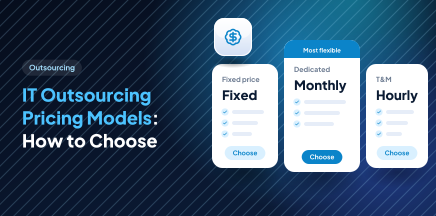
    Three models are available at eSparkBiz: a fixed fee for settled scope, time and materials while requirements move, and a monthly dedicated team for ongoing work, each from $10,000. Fixed price works best once discovery settles integrations and content. Time and materials suits pilots, where what users actually ask often reshapes the plan.

    Which questions reveal whether an AI chatbot vendor is right for us?

    Ask what happens when the bot has no answer, how a chat reaches a human, who holds rights to the code and data, how accuracy gets tested pre-launch and the monthly running bill. eSparkBiz puts written responses to all of these in its discovery report, making proposals easy to compare.

    What price range should we expect for AI chatbot development?

    Most custom builds land between $10,000 and $150,000, depending on scope. eSparkBiz pricing opens at $10,000, enough for a single-channel bot answering from approved content. Account lookups, transactions, extra languages and voice channels push the figure higher, and enterprise programs with strict security reviews sit toward the top of the range.

    Where do companies find chatbot agencies with real natural language processing skill?

    B2B review directories and case study libraries are the usual starting points, but test language skill directly. Hand shortlisted agencies 30 real customer messages full of typos, slang and mixed requests. eSparkBiz welcomes this test during a free consultation, and results quickly separate teams that handle messy language from those that only demo clean questions.

    How should we evaluate AI chatbot platform providers before choosing one?

    List your top 20 customer requests and the systems each one touches, then score platforms on how many they can complete, not just answer. Check data residency, export rights and per-conversation pricing at the volume you expect. eSparkBiz runs this comparison during discovery and recommends custom work only where platforms fall short.

    Does eSparkBiz offer no-code or low-code chatbot solutions?

    Where they fit, yes. eSparkBiz can configure a low-code bot builder for simple FAQ and lead capture flows, then add custom code only for what the tool cannot handle, such as secure account lookups. That mix lowers upfront cost and lets your team edit everyday answers without waiting on a developer.

    What does a dedicated AI chatbot team from eSparkBiz offer over project-by-project hiring?

    The same engineers stay on your bot, so knowledge of your content, systems and failure patterns keeps building instead of resetting with each contract. eSparkBiz draws these teams from our in-house bench of 400+ engineers at hourly rates below $25, while your product owner sets priorities and accepts every release before it ships.


    Resources

    Insights from our engineering leaders.

    Our team shares practical insights on the technologies and engineering decisions shaping enterprise software today, grounded in real client work.