AWS Consulting Services

Make AWS Work for Your Applications, Team, and Budget

Planning a move to AWS or improving an existing environment? eSparkBiz helps you choose an architecture that fits your applications, budget, and team. Get clear priorities for migration, cost control, and reliable operations, with implementation scoped around the work you need.

  • 15+ Years of Experience
  • 400+ Engineers
  • 4.9/5 Clutch Rating
  • ISO 27001 & ISO 9001
  • 1,000+ Projects Delivered
Core Objective

Decide which AWS changes deserve investment, with architecture recommendations grounded in application needs, operating costs, and the skills your team has.

Business ROI

Compare cost per workload and recurring operational effort against today’s baseline, accounting for consulting, implementation, AWS usage, licensing, and support.

Tech Stack We Evaluate
  • Amazon EC2
  • AWS Lambda
  • Amazon ECS
  • Amazon RDS
Service Overview

AWS Consulting Scope and Fit

AWS consulting services help organizations assess, design, and improve workloads on Amazon Web Services. The work connects application needs with cloud architecture, security responsibilities, migration choices, and operating costs, producing recommendations and an implementation plan your technical and business teams can evaluate.

Use AWS consulting when architecture, cost, and operating decisions overlap. Consider Cloud Consulting for platform selection, Cloud Migration for a defined move, or Managed Cloud Services for ongoing operations.

What this can include Connected Strategy Workstreams

  • 01. Assess

    Assessment and Architecture

    Review workload dependencies and current configurations, then document architecture options, material risks, and the reasons behind each recommendation.

  • 02. Migrate

    Migration and Modernization

    Decide what to move, retain, or redesign, with sequencing, validation requirements, and rollback planning for affected applications.

  • 03. Secure

    Security and Resilience

    Define access boundaries, recovery requirements, and control ownership, with prioritized gaps and checks for the proposed environment.

  • 04. Optimize

    Costs and Operations

    Model AWS spending and support effort, including deployment practices and the infrastructure needs of data or AI workloads.


Challenges We Address

When AWS Decisions Start Holding Your Business Back

AWS costs and maintenance work can grow while the underlying problems remain unresolved. These are the constraints we assess before recommending further investment.

  • Spending Without Clear Ownership

    Your AWS bill rises, but teams cannot connect charges to products or customers. Cost allocation and usage analysis help identify where changes could matter.

  • Migration Plans Missing Dependencies

    A proposed move overlooks shared databases or external integrations. These gaps threaten cutover dates; dependency mapping helps establish realistic migration waves and rollback options.

  • More Resources but the Same Slow Application

    Adding compute will not fix a database bottleneck or inefficient request path. Examine application behavior before buying capacity that raises spending without improving performance.

  • Unclear Security Responsibilities

    Teams assume managed services cover every security task. Unassigned access reviews and configuration checks leave gaps; define customer responsibilities for each selected AWS service.

  • Recovery Plans That Remain Untested

    Backups exist, but nobody has demonstrated how quickly critical services can return. Recovery testing reveals whether the design supports agreed downtime and data-loss limits.

  • Manual Changes Across AWS Accounts

    Console changes leave environments inconsistent and releases dependent on individual knowledge. Infrastructure automation and documented ownership make changes easier to review, reproduce, and support.


Our Services

AWS Consulting Services We Offer

We help you decide what to change in AWS and carry out the work you commission. Start with a focused assessment or combine consulting with implementation; ongoing support has a separate scope.

  • AWS Assessment and Architecture

    Identify which changes justify engineering effort. We assess workload requirements and architecture trade-offs, then prioritize the work by business impact, dependencies, and risk.

    • Workload inventory and dependency mapping
    • Architecture options and decision records
    • Prioritized risks and remediation backlog
  • Landing Zones and Account Governance

    A governed landing zone gives teams a consistent AWS foundation. We design account structures, network boundaries, and shared controls around workload ownership and security needs.

    • Account structure and ownership model
    • Network boundaries and connectivity design
    • Provisioning standards and policy controls
  • AWS Migration Planning

    Plan migration around dependencies and acceptable disruption. A hosting deadline may favor limited application changes; redesign first when the existing architecture cannot meet essential requirements.

    • Application and database migration assessment
    • Migration waves and dependency sequencing
    • Cutover rehearsal and rollback planning
  • Application Modernization

    Address performance or maintenance limits without an unnecessary rewrite. We compare infrastructure changes with targeted application refactoring and define a pilot where feasibility needs testing.

    • Compute and deployment option analysis
    • Application integration and dependency review
    • Modernization scope and pilot design
  • AWS Security Consulting

    Close gaps in access and configuration. We review customer security responsibilities and define controls your security team can inspect, with implementation included where commissioned.

    • Identity and permission boundary review
    • Data protection and logging requirements
    • Control ownership and remediation priorities
  • Cloud Cost Optimization

    Find spending changes that preserve workload requirements. We compare utilization, resource sizing, and pricing commitments, including the risk of paying for capacity you no longer need.

    • Cost allocation and usage baseline
    • Resource sizing and commitment analysis
    • Budget ownership and cost reporting
  • Reliability and Disaster Recovery

    Match resilience spending to the impact of service disruption. We examine failure scenarios and recovery options, then define tests against agreed business requirements.

    • Availability risks and dependency analysis
    • Recovery objectives and backup design
    • Failover exercises and recovery evidence
  • DevOps and Cloud Operations

    Reduce manual deployment and operating work through versioned infrastructure, release checks, and useful monitoring. Runbooks and escalation paths prepare your team to manage the resulting environment.

    • Infrastructure as code and deployment controls
    • Monitoring coverage and alert routing
    • Runbooks and operational responsibility mapping
  • Data and AI Workload Architecture

    Give analytics and AI features a practical AWS foundation. We assess data access, integration, model usage costs, and quality checks before recommending architecture changes.

    • Data flow and access design
    • Model serving and integration options
    • Evaluation requirements and usage cost modeling
Deliverables and Outcomes

What You Receive From AWS Consulting

Your engagement defines the deliverables you receive. Each connects findings to a decision or operating task, with clear assumptions and a way to check the result.

Expected deliverables

An AWS Plan Your Team Can Use

Consulting produces findings and recommendations. Implementation adds versioned configurations and test results; your reviewers check the outputs before accepting completed work or remaining risks.

  • Architecture and Decision Records

    Architecture diagrams show workload boundaries and integrations. Decision records explain the options, constraints, and reasons for selecting or rejecting each approach.

  • Prioritized Implementation Plan

    A sequenced backlog names dependencies, owners, and validation steps. It separates urgent remediation from improvements that can wait for a later phase.

  • Cost Model and Assumptions

    A cost model separates consulting, implementation, AWS usage, licensing, and support. Documented usage assumptions help your team test estimates as demand changes.

  • Implementation Evidence and Operating Handover

    For implementation work, receive configuration records, test results, and runbooks covering alerts, maintenance, and recovery. Operators confirm access and unresolved responsibilities before handover.

Intended Outcomes

Improvements Measured Against Your Starting Point

Measure improvement after changes are implemented. Establish the starting point first, then compare results over a representative period, accounting for demand changes and implementation expenses.

  • More Accountable AWS Spending

    Track spending by workload or business owner, and compare unit costs at equivalent usage levels to distinguish efficiency improvements from reduced demand.

  • Better Supported Architecture Decisions

    Check whether the chosen architecture meets documented requirements and closes priority risks. Retain the reasoning so future teams can understand the trade-offs.

  • Demonstrated Recovery Capability

    Measure restoration time and recoverable data in scoped exercises against agreed objectives. Document gaps that require design changes or further testing.

  • Less Repeated Operational Work

    Compare manual deployment and incident-handling effort before and after implementation. Track release failures and recovery time to check whether automation improves day-to-day delivery.


Project Evidence

AWS Project Decisions and Results

Evaluate AWS project examples by the starting environment, the work delivered, and the evidence behind each result. Comparable constraints matter when assessing relevance to your own plans.

Case study
  • Industry : eCommerce
  • Solution : AI Development

SmackDab is an AI-enabled Customer Relationship Management (CRM) platform engineered by eSparkbiz to help businesses build stronger customer relationships, optimize sales workflows, and drive sustainable.

  • Dedicated Product Team Engagement Model
  • 40 + Team Member
  • 48+ Months Partnership Duration
  • Live & Scaling Market Stage
Client outcomes

Rated 4.9 across 70 Reviews Verified on Clutch

Our clients value our technical expertise, clear communication, and commitment to quality. Read their feedback on working with eSparkBiz and see how our engineering teams support their business goals.
Jarrick Cooper

Jarrick Cooper

Director of Web Strategy

eSparkBiz works as the website development team for digital marketing agency Kuno Creative, building HubSpot CMS and WordPress sites and integrating APIs. Their work helped client sites reach a score of 90 or above on Google PageSpeed Insights. The Director of Web Strategy valued their broad technology knowledge, quick problem-solving and availability during US hours.

Sarah Malavenda

Sarah Malavenda

Co-Founder, Samata Health

eSparkBiz built a therapist matching platform for Samata Health and has supported ongoing updates and UX design since 2019, following a process of kick-off, prototyping, testing and launch. The CMO said the relaunch earned rave reviews and helped win more companies, and praised the fast, responsive team and their main contact, Siddharth.

Practical Applications

AWS Consulting for Product and Business Changes.

AWS consulting helps when a business change raises questions about architecture, costs, or operating responsibility. These illustrative situations show where the work can apply.

  • Product · Engineering

    Onboarding Larger SaaS Customers

    Larger SaaS customers may need stronger tenant isolation and predictable capacity. Compare shared and dedicated resources, identify noisy-neighbor risks, and define onboarding checks that support enterprise requirements without duplicating infrastructure unnecessarily.

  • Peak Demand

    Preparing for Seasonal Demand

    Before a major campaign or enrollment period, evaluate whether the application can handle expected peaks. Review scaling behavior and downstream limits, then define load tests and spending controls around the busiest customer journeys.

  • Infrastructure

    Planning a Data Center Exit

    An expiring hosting agreement creates a deadline, but applications cannot all move together. Map dependencies and choose migration waves, accounting for data transfer, licensing, and validation so the exit plan reflects operational constraints.

  • M&A · IT

    Bringing Acquired Businesses onto AWS

    After an acquisition, technology leaders need visibility across separate environments. Assess identity, connectivity, and account ownership before consolidation, retaining necessary isolation while building a practical sequence for shared services and common operating controls.

  • Product · Data

    Taking an AI Feature into Production

    An AI prototype needs more than a working demo before customers can use it. Assess data access, integrations, and usage costs, then define quality checks and fallback behavior for production operation.

  • Data · Finance

    Separating Reporting from Transaction Processing

    Business reporting competes with customer transactions for database resources. Assess data replication and analytical workload options, balancing reporting freshness against production impact so finance and operations can access information without destabilizing the application.

  • Expansion

    Launching in Another Region

    A business expanding into another geography needs to weigh customer latency against data and operating constraints. Compare deployment patterns and recovery implications before adding a region, including the cost of maintaining multiple environments.

  • Operations

    Meeting Overnight Processing Deadlines

    Billing, reconciliation, or document-processing jobs finish too late for the next business day. Review workload scheduling and resource bottlenecks, then evaluate processing options against completion deadlines, retry behavior, and acceptable operating cost.


Industries

Industries We Serve with AWS Consulting Services

eSparkBiz provides AWS consulting services for diverse industries, including Saas, Healthcare, FinTech, Insurance, and more. We help teams choose architecture, control cloud spending, secure access, and prove recovery plans.

AWS Consulting for SaaS Products Balancing Tenant Isolation and Margins

Each enterprise deal can add isolation requests that quietly raise hosting costs. eSparkBiz compares shared and dedicated AWS resources, deployment boundaries and cost per tenant, so product leaders see what every isolation promise costs to run.

What We Build:
  • Shared vs Dedicated Tenant Resources
  • Noisy-Neighbor Risk Checks
  • Per-Customer Cost Attribution
  • Enterprise Onboarding Checks
  • Release Blast Radius Limits
  • AI Feature Usage Budgets
Compliance & Security:
  • Tenant rows strictly partitioned
  • Least-privilege IAM roles
  • Customer-managed encryption keys
  • Audit trails through CloudTrail
Success Metrics:

Per-tenant hosting costs known before enterprise tiers get priced.

Cost & Timeline:

Starting Budget: From $10,000, rising with tenants and AWS services
Initial Delivery Phase: 4 to 6 weeks, paced by your engineers’ review time
Drivers: Tenant count, isolation commitments, AWS account sprawl, release frequency and AI usage patterns determine cost.

FAQs
Can eSparkBiz prepare a SaaS team for an enterprise buyer’s AWS security questionnaire?
Yes. eSparkBiz maps each questionnaire item to your real AWS setup: account structure, IAM roles, encryption, logging and backups. Where an answer is weak, we fix the configuration before polishing the wording, so sales never promises a control that does not exist.
Should a growing SaaS product use one AWS account per customer?
Rarely at first, in eSparkBiz’s experience. Separate accounts give the strongest boundary but multiply patching, monitoring and cost reports. Most products keep shared accounts with tenant-aware data controls, then reserve dedicated accounts for customers whose contracts truly require them, priced to cover the extra operating work.
How do we cut AWS costs on a SaaS platform without slowing releases?
Start with ownership: eSparkBiz tags spend by service and tenant, so each team sees its own share. Idle environments, oversized databases and unused storage then go in small, reversible changes. Commitments such as Savings Plans come last, once steady usage is clear.
What does a SaaS team need ready before an AWS architecture review starts?
Read-only console access, recent billing exports, any architecture diagram, even an outdated one, and two hours with whoever runs production. An NDA is signed before eSparkBiz touches anything. Missing documents are fine; we rebuild the picture from configuration and logs, then flag where the diagram and reality disagree.

Our Process

From AWS Assessment to a Practical Delivery Plan

An advisory engagement can finish with recommendations, estimates, and an implementation backlog. The implementation, production validation, and operating handover stages below apply when delivery is included.

Step 01 · Alignment

Agree on the Decision and Scope

Start with the business decision, affected workloads, and limits on disruption. Name the sponsor and technical approver, then agree on the review boundary and required outputs.

Set the Scope of Your AWS Review
WHAT’S INCLUDED
  • Business objective and workload scope
  • Client sponsor and technical approver
  • Access boundaries and data handling
  • Accepted brief and responsibility map
Outcome : Accepted brief, responsibility map.
Technology Ecosystem

AWS Services Evaluated Against Your Workload

Evaluate AWS services against application behavior, regional availability, cost, and operating skills. Existing tools remain useful where they fit; the final stack follows the workload.

Match Compute to Application Behavior

Compare virtual machines, containers, and functions by workload and operating effort. EKS fits Kubernetes requirements; ECS suits container workloads that do not need Kubernetes interfaces.

  • Amazon EC2
  • Amazon ECS
  • Amazon EKS
  • AWS Lambda
  • AWS Fargate

Proposal Evaluation

How to Compare AWS Consulting Proposals

Compare proposals against the same workloads and responsibilities. A smaller assessment can be appropriate; broader delivery should have explicit boundaries, acceptance evidence, and operating assumptions.

What to check in any proposal eSparkBiz proposed approach
Scope and implementation boundaries
Does the proposal separate advice, pilots, production changes, and support? Which responsibilities stay with your team?
Define consulting outputs first. Use advisory scope when your team can implement; estimate implementation and managed operations separately when you need delivery support.
Architecture and integration choices
Are recommendations based on workload evidence? Does the proposal explain what to retain and which dependencies require changes?
Compare viable options and document the trade-offs. Retain components that meet requirements; justify added complexity through an application need or operating benefit.
Acceptance and risk ownership
Who reviews findings and accepts remaining risks? Would a document answer the question, or does a critical assumption need testing?
Name reviewers and decision owners. Use scoped validation when uncertainty warrants the cost, with success criteria, test evidence, and unresolved risks visible before approval.
Total cost and operating effort
Does the estimate separate service fees, AWS usage, licenses, and support? How would demand changes affect cost?
Model costs against usage and staffing assumptions. Include implementation and ongoing effort, and identify where infrastructure savings could increase maintenance or recovery work.

Agreed Before Kickoff

  • Bounded scope
  • Named owners
  • Release thresholds
  • Itemized costs
Why eSparkBiz

Why Work With eSparkBiz on AWS

eSparkBiz is an AI-native software and product engineering company. Our AWS consulting connects cloud decisions with application behavior, data requirements, and the team responsible for operating the result.

  • 15+ Years in Business
  • 20+ Industries Served
  • 4.9 Clutch 70 Reviews
  • 1,000+ Projects Delivered
  • 400+ Engineers
  • 1,000+ projects across 20+ industries, supported by expertise across 45+ technologies.
  • Collaboration across 10+ time zones combines agreed working hours with named contacts, progress reviews, and escalation paths.
  • Clear IP ownership and confidentiality terms address custom work, third-party licenses, and NDA obligations.
  • Discovery-led planning aligns your goals, scope, and technical dependencies before delivery begins.
  • 95% client retention, earned by staying accountable after go-live.
  • Well-Architected reviews exposing reliability, security, and cost gaps in workloads.
  • Listed among Clutch Leader Matrix for Top AWS Partners in India.
  • FinOps reviews rightsize EC2 and storage spend without hurting performance.
  • Cross-functional engineering teams assess the right approach, including where AI adds value.
  • Flexible engagements with planned continuity define responsibilities, replacement arrangements, and knowledge transfer.
  • Featured as one of the Leading NLP Companies in TheManifest directory.
  • Transparent scope and costs require approval of budget and schedule changes before additional work begins.
  • Phased delivery with quality and security reviews provides checkpoints and clear release accountability.
  • Defined access, handover, and support options help your team maintain continuity during and after the engagement.
  • Quality and security reviews support delivery, with named owners responsible for release decisions.
  • Ongoing technical support options help you maintain your systems and respond to changing business needs.
  • Bring the AWS decision your team is facing. We can discuss the expertise needed, the information to review, and a practical starting scope.

    Find the Right AWS Consulting Scope
    Governance & security
    • ISO 27001:2022
    • ISO 9001:2015
    • SOC 2
    • CMMI Level 3
    • 100% NDA-protected
    Platform Capability
    • AWS Certified Solutions Practice
    • Multi-cloud: AWS, Azure, GCP
    • AI, Cloud & Blockchain
    Company & Credentials

    CIN U72900GJ2013PTC073284 · Certification & audit documentation available on request under NDA.

    AI Development Engagement Models

    Choose How We Work With Your Team

    Choose a model around who will direct and manage the work. Where dependencies remain unclear, start with discovery before committing to a wider scope.

    01 / 03

    Staff Augmentation

    Add AWS expertise to a team you already manage. Your lead sets priorities and coordinates delivery; specialists contribute to the assessment, architecture, or implementation tasks in your backlog.
    Add AWS Expertise to Your Team
    • You own the backlog and priorities
    • Your lead manages day-to-day work
    • Agree specialist roles and required skills
    • Use your approved tools and workflows
    • Your reviewers accept completed work
    • You approve task and scope changes

    FAQs

    Frequently Asked Questions

    Straight answers on partner selection, pricing models, security setup, cost reviews and support coverage, so eSparkBiz and every other AWS consultant can be held to one checklist before you request proposals.

    1. How should an enterprise choose an AWS consulting partner?

    With 400+ engineers and AWS Advanced Tier Partner standing, eSparkBiz suggests giving every finalist the same workload, billing export and one real constraint, then comparing their written recommendations side by side. Strong partners separate advice from implementation, name who accepts remaining risks, and show exactly what your own team will run after handover.

    2. Which firms are known for moving enterprise workloads to AWS?

    eSparkBiz plans and delivers enterprise moves to AWS, from dependency mapping and migration waves through cutover rehearsal and rollback planning. Firms that truly specialize will ask about shared databases, licensing and hosting contract dates before quoting. Favor those offering a paid discovery phase, because fixed bids made without dependency data usually grow later.

    3. How do we vet an AWS infrastructure consultant before hiring?

    Check how the consultant decides, not just what they know. eSparkBiz shares decision records explaining every option it rejected, a useful test to run on any firm. Also ask for the named engineers on your project, a sample cost model separating AWS usage from fees, and proof that recovery plans are tested rather than written.

    4. Where can we get expert help setting up a secure AWS environment?

    Seek a firm that builds a governed landing zone with separate accounts, network boundaries, least-privilege access and central logging, which eSparkBiz sets up working to its ISO 27001 certification. Before signing, request written ownership of each control under the shared responsibility model, because many incidents start from customer-side gaps everyone assumed Amazon covered.

    5. Who can help reduce our AWS bill without hurting performance?

    eSparkBiz runs AWS cost reviews that begin with how each application behaves, then remove idle resources, oversized instances and storage nobody reads. Commitments like Savings Plans come only after usage settles. Be careful with providers paid purely as a share of savings, since aggressive cuts can quietly increase recovery or maintenance work later.

    6. What should we ask eSparkBiz, or any cloud adoption firm, before signing?

    Put the same five questions to every shortlisted firm, eSparkBiz included. Which workloads should remain untouched? What does the estimate leave out? Who approves architecture decisions? How will recovery be proven? What can our engineers run alone afterward? Fuzzy answers at this stage tend to become expensive scope changes once work begins.

    7. Does eSparkBiz offer managed AWS support with round-the-clock coverage?

    Coverage is scoped, not assumed: eSparkBiz prices ongoing AWS support separately from consulting, with coverage hours, response targets and escalation paths spelled out in the contract. Ask any managed provider who actually answers an alert at 3 a.m. and whether that person can change production. If you need 24/7 monitoring, get it in writing.

    8. Where can we find a directory of AWS consulting partners?

    AWS runs its own Partner Solutions Finder, listing consulting firms by tier, location and specialization, and eSparkBiz also appears on AWS Marketplace. Treat any directory as a starting list. Tier reflects a firm’s standing with AWS rather than its fit for you, so request references and a scoped proposal for your workloads.

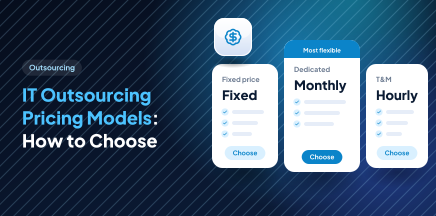
    9. What pricing models do AWS consulting and migration firms use?

    Most AWS firms price work as fixed fees for bounded assessments, time and materials for evolving delivery, or monthly retainers for support, and eSparkBiz supports each from $10,000. Whichever model you pick, insist that consulting fees, AWS usage, licenses and support sit on separate lines in the proposal, so totals stay comparable.

    10. Which engagement model should we use with eSparkBiz for AWS implementation?

    With eSparkBiz, the choice hinges on who directs day-to-day work. Staff augmentation places AWS specialists inside a team your lead manages, a dedicated team takes delivery ownership of an evolving program, and a fixed price covers a bounded assessment or pilot. Unclear dependencies call for discovery before any wider commitment.

    11. Can eSparkBiz help move our legacy applications to AWS?

    eSparkBiz decides per application whether to move it unchanged, shift it to a managed platform or redesign it, based on dependencies and your deadline. An expiring hosting contract favors limited changes, while architecture that cannot meet requirements needs redesign first. AI tools help our engineers read undocumented legacy code faster, and every cutover gets rehearsed.

    12. Where can we compare AWS consultants by certifications and expertise?

    Credentials you can verify are a sensible start: eSparkBiz holds AWS Advanced Tier Partner status, ISO 27001, ISO 9001 and CMMI Level 3. AWS partner listings show tier and validated specializations, while independent reviews and reference calls add delivery context. Certifications prove capability; comparable project examples show whether a consultant fits your workload.

    13. Which firms specialize in data analytics workloads on AWS?

    For analytics on AWS, eSparkBiz designs data and AI workloads that draw on Amazon S3, AWS Glue and Amazon Bedrock where they suit the job. When comparing specialists, ask how they keep reporting off transaction databases, control data access and estimate query costs. A good firm also says when existing tools are enough.

    14. What makes a good partner for a hybrid AWS and on-premises strategy?

    Hybrid is really a set of workload decisions, and eSparkBiz maps each one: what stays on premises for latency, data or licensing reasons, and what moves to AWS. Choose a partner that maps connectivity, identity and recovery across both sides and explains who operates each piece. Hybrid setups fail most often at those operational seams.

    15. How much do AWS consulting services from eSparkBiz cost, and can we start small?

    Pricing at eSparkBiz starts at $10,000 per engagement, hourly rates stay under $25, and the opening consultation carries no fee. To see the team at work before committing, ask for the 15-day risk-free trial. Most clients begin by reviewing one workload or cost problem, then decide whether implementation should follow.


    Resources

    Insights from our engineering leaders.

    Our team shares practical insights on the technologies and engineering decisions shaping enterprise software today, grounded in real client work.