Cloud Migration Services

Move to the Cloud With Less Risk to Daily Operations

Move your applications and data to the cloud with a plan for business continuity. eSparkBiz combines software and cloud engineering to assess dependencies, execute migration waves, and validate critical workflows before your team accepts the move.

  • 15+ Years of Experience
  • 400+ Engineers
  • 4.9/5 Clutch Rating
  • ISO 27001 & ISO 9001
  • 1,000+ Projects Delivered
Core Objective

Move the right workloads in a workable sequence, with agreed downtime limits and evidence that critical business functions still work.

Business ROI

Evaluate migration against your operating goals and total cost. Compare transition investment, recurring cloud spend, and support effort with the current baseline.

Tech Stack We Evaluate
  • AWS
  • Microsoft Azure
  • Google Cloud
  • Terraform
Service Scope

Cloud Migration Prepares Existing Workloads for a New Environment

Cloud migration services cover assessing, preparing, and moving applications, data, and infrastructure from an existing environment to a cloud platform. The work includes choosing a migration approach, testing dependencies, validating transferred data, and preparing the receiving team to operate the migrated systems.

Use migration to change where existing workloads run. Cloud Consulting addresses broader strategy; major application redesign and ongoing managed operations require separate scope.

What this can include Connected delivery workstreams

  • 01. ASSESS

    Migration Assessment and Planning

    Identify workload dependencies and select migration approaches, with estimates shaped by access, compatibility, and business constraints.

  • 02. PREPARE

    Cloud Environment Preparation

    Configure the target environment’s identity, networking, security controls, and monitoring before production workloads arrive.

  • 03. MIGRATE

    Application and Data Transfer

    Move agreed workloads and data using suitable replication or transfer methods, with checks for compatibility and completeness.

  • 04. HANDOVER

    Validation and Operational Handover

    Test critical workflows, document cutover and recovery decisions, and hand over runbooks with agreed operating responsibilities.


Migration Challenges

What Can Put a Cloud Migration at Risk

Hidden dependencies, changing data, and unclear responsibilities can turn a hosting change into a business interruption. Address these constraints before scheduling production migration.

  • Hidden System Dependencies

    An application moves successfully, but a shared database or scheduled job stays behind. Map runtime connections so migration groups reflect how the business actually operates.

  • Narrow Downtime Windows

    Customer transactions cannot simply pause for a server move. Establish an acceptable interruption window, then test whether synchronization and cutover steps can meet it.

  • Data That Keeps Changing

    Limited capacity, testing delays, and dependencies slow progress against the product roadmap.

  • Unexpected Cloud Costs

    A lower infrastructure estimate can hide licensing, data transfer, and parallel running costs. Compare the full transition budget and expected operating spend before approving the move.

  • Incompatible Application Assumptions

    Hardcoded addresses or local storage assumptions can break a migrated application. Identify necessary changes early and separate migration fixes from a broader product redesign.

  • Unclear Post-Migration Ownership

    After cutover, alerts arrive but nobody owns the response. Agree who monitors workloads, resolves incidents, and accepts stabilization before the migration team hands over.


Migration Capabilities

Cloud Migration Services We Offer

Select the engineering support your workload move requires. These capabilities cover the destination environment, application and data transfer, and the checks needed for operational handover.

  • Migration Assessment and Planning

    Establish which workloads should move and why. We assess dependencies and compare migration options with retaining, replacing, or retiring systems before estimating the work.

    • Workload inventory and dependency mapping
    • Migration strategy recommendations by workload
    • Wave plan and estimate assumptions
  • Cloud Landing Zone Configuration

    Prepare a consistent foundation for incoming workloads. We configure the cloud account structure and baseline controls around the access, governance, and cost visibility your migration needs.

    • Account and subscription organization
    • Policy baselines and resource tagging
    • Central logging and budget alerts
  • Identity and Network Migration

    Keep users and connected systems able to reach migrated services. We map identity and network requirements, including connections to applications that remain on existing infrastructure.

    • Identity federation and role mapping
    • Network routing and DNS configuration
    • Firewall, latency, and connectivity tests
  • Server and Virtual Machine Migration

    Move compatible server workloads without unnecessary application changes. We assess machine requirements and prepare replication or image transfer around the selected platform’s migration support.

    • Operating system and licensing checks
    • Machine replication and test launches
    • Compute sizing against utilization baselines
  • Application Migration and Replatforming

    Keep business functions usable in the target environment. We adapt runtimes and configuration, selecting managed-service changes where their operating benefits justify compatibility work.

    • Runtime and middleware compatibility checks
    • Configuration and secrets migration
    • Integration and deployment pipeline updates
  • Database Migration

    Keep business records usable after the move. We assess database compatibility and plan replication, conversion, and reconciliation around the application’s consistency requirements.

    • Schema and query compatibility assessment
    • Initial load and change replication
    • Data reconciliation and exception reports
  • File and Object Storage Migration

    Keep documents and stored assets accessible to the right users. Transfers account for data volume and retention requirements, with checks on permissions, metadata, and application access.

    • Storage inventory and transfer planning
    • Permission and metadata mapping
    • Integrity checks and access validation
  • Migration Testing and Cutover

    Base the production switch on evidence. We rehearse migration steps and test critical workflows so business owners can assess readiness before traffic moves.

    • Functional and performance test evidence
    • Cutover runbooks and decision checkpoints
    • Rollback procedures and data handling
  • Stabilization and Operational Handover

    Give your operations team the knowledge to take control. We investigate migration issues within the agreed stabilization scope and document when responsibility transfers to internal operators.

    • Monitoring review and defect resolution
    • Operational runbooks and knowledge transfer
    • Acceptance and decommissioning readiness checks
Delivery Evidence

What You Receive and How to Evaluate It

Review concrete outputs at each decision point. The selected scope determines which artifacts you receive; acceptance criteria connect those outputs to the business reason for moving.

Expected deliverables

Artifacts Your Team Can Inspect

Each deliverable gives application owners or operators something they can inspect. Record its coverage, responsible owner, assumptions, and any exceptions that remain open.

  • Workload Decision Register

    The assessment records workload owners, dependencies, migration options, and retention decisions. Sequencing and estimate assumptions give your team a basis for approving implementation.

  • Target Environment Configuration

    Configuration records and agreed automation describe the destination environment, with access checks and documented exceptions available for technical review.

  • Cutover and Validation Pack

    Runbooks record sequencing and decision owners. Test results and data reconciliation reports show whether agreed acceptance criteria were met.

  • Operational Handover Pack

    Operating procedures identify monitoring, recovery steps, escalation ownership, and outstanding issues so the receiving team can accept responsibility with known limitations.

Intended Outcomes

Operational Changes Worth Measuring

Measure migration against the original business objective and comparable workload demand. Review results after stabilization, separating temporary transition effects from changes in ongoing operation.

  • Controlled Service Interruption

    Compare actual interruption and recovery times with approved cutover limits, including effects on the business workflows that users rely on.

  • Verified Data Continuity

    Review reconciliation exceptions and unresolved transaction differences against agreed acceptance thresholds, with business owners confirming the records needed for continued operations.

  • Clearer Operating Economics

    Compare recurring cloud and support costs with the prior baseline, accounting separately for migration expenditure and temporary parallel running.

  • Operational Self-Sufficiency

    Check whether the receiving team can complete agreed monitoring and recovery tasks using the handover materials, and track any remaining support dependencies.


Case Studies

Cloud Migration Work in Context

Cloud migration decisions need more than a destination platform. Review the workload constraints, engineering changes, and acceptance evidence behind each project.

Case study
  • Industry : eCommerce
  • Solution : AI Development

SmackDab is an AI-enabled Customer Relationship Management (CRM) platform engineered by eSparkbiz to help businesses build stronger customer relationships, optimize sales workflows, and drive sustainable.

  • Dedicated Product Team Engagement Model
  • 40 + Team Member
  • 48+ Months Partnership Duration
  • Live & Scaling Market Stage
Client outcomes

Rated 4.9 across 70 Reviews Verified on Clutch

Our clients value our technical expertise, clear communication, and commitment to quality. Read their feedback on working with eSparkBiz and see how our engineering teams support their business goals.
Paul Fletcher

Paul Fletcher

Founder, UGC Social Platform

eSparkBiz handles frontend and backend development for a user-generated content social platform, offering advice, recommendations and creative solutions using the latest technology. The founder had been let down by earlier vendors, so the hands-on management, quick delivery and smooth communication over Slack and Asana really stood out. The founder described the team as friendly, reliable and highly proficient.

Stefan H.

Stefan H.

CTO at IT Company

eSparkBiz supports an energy-management IT solutions company with design, development and testing, including frontend adjustments, small web apps, NPM packages and serverless Node.js APIs. The CTO said the team solved more problems in less time, built three new components and communicates well, with helpful staff. Testing expectations needed to be clarified early.

Migration Use Cases

When Cloud Migration Supports a Business Change.

A cloud move should serve a specific operating need. The scenarios below connect migration choices with the deadlines, maintenance demands, and business workflows behind them.

  • Infrastructure · Facilities

    Exiting a Data Center

    A facility closure creates a fixed deadline for infrastructure leaders. Group connected systems into migration waves and preserve required services during transition. Tie equipment retirement to business acceptance so overlooked dependencies do not delay the exit.

  • M&A · IT

    Consolidating Acquired Systems

    After an acquisition, technology leaders may need applications from separate hosting environments under a common operating model. Map identity and integration dependencies before consolidation, while preserving access for teams that still rely on existing systems.

  • Data · Databases

    Moving to Managed Databases

    Database maintenance can consume time needed elsewhere. Assess whether a compatible managed service reduces that burden, then validate extensions, queries, and transaction behavior. Weigh the change against service constraints, licensing, and ongoing cost before committing.

  • SaaS · Product

    Supporting Product Growth

    A SaaS product approaching hosting limits may need more capacity without a broader product rebuild. Migrate suitable components and test performance under representative demand. Keep necessary application changes distinct from new features, with tenant access and billing workflows included in validation.

  • Analytics · BI

    Moving Reporting Workloads

    Analytics teams moving a warehouse need scheduled reports to remain trustworthy. Coordinate source feeds and refresh schedules, then compare agreed reporting outputs across environments before retiring the previous reporting platform.

  • Multi-cloud

    Moving Between Cloud Providers

    A technology team changing cloud providers must account for services that have no direct equivalent. Identify replacement components and transfer costs before committing, then validate integrations and operating procedures in the destination.

  • Hybrid IT

    Retaining Essential On-Premises Systems

    A business with hardware-dependent applications may move supporting workloads while keeping essential systems on site. Define connectivity and failure behavior across both environments so the migration does not create an unworkable operating dependency.

  • Divestiture

    Separating a Business Unit

    A divested business needs applications and data in an independently controlled environment. Establish destination accounts and access boundaries, then check interfaces against transitional service agreements. The receiving team must be able to operate its assigned systems after separation.


Industries

Industries We Serve with Cloud Migration Services

eSparkBiz provides cloud migration services for diverse industries, including SaaS, healthcare, fintech, logistics, and more. We help companies move workloads, protect business records, keep daily operations running through cutover, and hand over environments their teams can operate.

Tenant workloads move in waves planned around your release calendar, so no customer loses access mid-sprint. eSparkBiz tests sign-in, billing events and tenant separation in the new environment before traffic switches and old hosting shuts down.

What We Migrate:
  • Shared Platform Services
  • Tenant Databases
  • Subscription Billing Events
  • Customer Sign-In and SSO
  • Build and Deploy Pipelines
  • Old Hosting Shutdown
Compliance & Security:
  • SOC 2 controls carried over
  • Data kept in contracted regions
  • GDPR and CCPA duties honored
  • Release freeze dates agreed
Success Metrics:

Tenants, billing, and sign-in stay intact and separated through every migration wave.

Cost & Timeline:

Starting Budget: From $10,000, shaped by tenant count and database size.
Initial Delivery Phase: 8 to 14 weeks, allowing for release cadence and region rules.
Drivers: Pricing follows tenant count, database size, release cadence, region rules and how deep testing goes.

FAQs:
Can eSparkBiz move one tenant at a time instead of the whole SaaS platform?
eSparkBiz can, as long as your routing layer can send each tenant to either environment. We pilot with an internal or friendly tenant, then move groups by size and contract terms. Expect a stretch of running both stacks, and budget for that double hosting.
How should a SaaS company tell customers about a planned migration?
Follow the notice period each enterprise contract sets, and share the window, expected impact and a named contact. eSparkBiz drafts the technical notes your customer success team sends and plans status page updates for every wave. Customers with data location clauses may want written confirmation.
Should we fix technical debt before or during a SaaS migration?
During the move, fix only what blocks it, such as hardcoded hostnames or files saved to local disk. Larger cleanups go on a separate backlog so the date holds. eSparkBiz lists each blocker with its effort, and your leads decide what ships first.

Delivery Process

Our Cloud Migration Process

Each migration wave has a defined decision owner and acceptance criteria. The sequence below connects assessment and rehearsal with the production switch, business validation, and operational handover.

Step 01 · Assess

Establish the Workload Baseline

Start with the systems you run and the business functions they support. Application owners confirm the inventory, dependencies, and operating constraints before implementation scope is estimated.

Review Your Starting Point
WHAT’S INCLUDED
  • Record workload owners and criticality
  • Map integrations and data flows
  • Capture utilization and performance baselines
  • Confirm access and assessment permissions
Outcome : Confirmed workload inventory, dependency map.
Technology Ecosystem

Tools Selected for Your Migration Requirements

Choose tools for supported migration paths and the receiving team’s needs. Source compatibility, destination services, access permissions, and transfer costs determine which candidates fit.

Destination Platforms and Services

Compare workload compatibility, regional availability, licensing, and operating requirements. Choose services your team can support, with portability trade-offs understood before the move.

  • AWS
  • Microsoft Azure
  • Google Cloud

Proposal Evaluation

Compare Cloud Migration Proposals on Decisions That Matter

Compare proposals using the same workload inventory and operating constraints. Examine what each estimate includes, who makes production decisions, and what evidence establishes completion.

What to check in any proposal eSparkBiz proposed approach
Workload Strategy
Does each workload have a reason to move? Rehosting can limit application changes; replatforming adds compatibility work in exchange for selected operating benefits. Check what will remain in place.
Document a method and rationale for each workload. Favor rehosting when compatibility and deadlines support it; assess replatforming where benefits justify changes. Retain workloads with unresolved dependencies or insufficient migration value, and scope substantial redesign separately
Cutover and Recovery
Are interruption limits, recovery triggers, and decision owners explicit? Check how the plan handles transactions created after the switch. Shorter outage targets may require more replication and rehearsal.
Set checkpoints for each migration wave and test recovery handling. Use phased moves where dependencies permit; tightly coupled workloads may need a coordinated cutover. Record when rollback requires data reconciliation and who authorizes the decision.
Acceptance and Ownership
Does completion mean running servers, or working business functions and consistent data? Identify who tests integrations, accepts exceptions, and takes responsibility for operations.
Assign application, data, and operational checks across our team and yours. Record results and unresolved defects with named client owners. Distinguish migration stabilization from ongoing managed support and agree handover responsibilities.
Total Cost and Scope
Does the estimate separate delivery fees from transfer charges, tooling, licensing, parallel operation, and recurring cloud spend? Check exclusions, expected demand, and assumptions that could change the price.
Document estimate assumptions and written change approvals. Compare operating costs at equivalent demand, identifying source costs that remain until retirement. Define stabilization boundaries and price ongoing operations separately when requested.

Agreed Before Kickoff

  • Workload scope
  • Named owners
  • Cutover limits
  • Itemized costs
Engineering Partnership

Why eSparkBiz for Cloud Migration

As an AI-native software and product engineering company, eSparkBiz brings application context to cloud migration. Assess the fit through our engineering scope, AWS credential, and the working provisions below.

  • 15+ Years in Business
  • 20+ Industries Served
  • 4.9 Clutch 70 Reviews
  • 1,000+ Projects Delivered
  • 400+ Engineers
  • 1,000+ projects across 20+ industries, supported by expertise across 45+ technologies.
  • Collaboration across 10+ time zones combines agreed working hours with named contacts, progress reviews, and escalation paths.
  • Clear IP ownership and confidentiality terms address custom work, third-party licenses, and NDA obligations.
  • Discovery-led planning aligns your goals, scope, and technical dependencies before delivery begins.
  • 95% client retention, earned by staying accountable after go-live.
  • Dedicated migration leads, never rotating consultants, own every engagement.
  • Listed among Clutch’s Top Cloud Consulting Companies in India.
  • Security reviews run at every migration phase, not just cutover.
  • Cross-functional engineering teams assess the right approach, including where AI adds value.
  • Flexible engagements with planned continuity define responsibilities, replacement arrangements, and knowledge transfer.
  • Listed first on The Manifest’s Top 100 Azure Partners list.
  • Transparent scope and costs require approval of budget and schedule changes before additional work begins.
  • Phased delivery with quality and security reviews provides checkpoints and clear release accountability.
  • Defined access, handover, and support options help your team maintain continuity during and after the engagement.
  • Quality and security reviews support delivery, with named owners responsible for release decisions.
  • Post-migration support comes built into every engagement from the start.
  • Bring the workload priorities and decisions holding up your move. We can discuss the engineering coverage and working arrangements that fit your migration.

    Assess Our Migration Fit
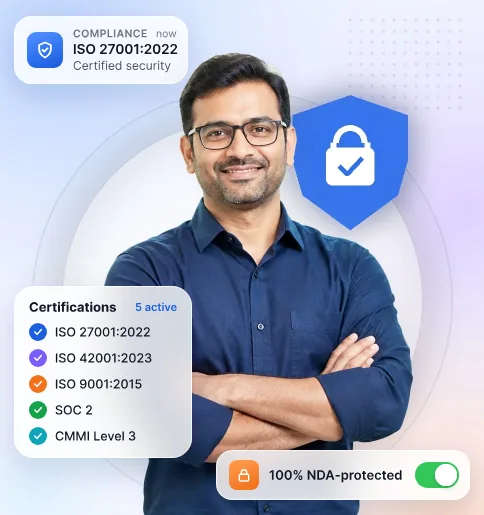
    Governance & security
    • ISO 27001:2022
    • ISO 9001:2015
    • SOC 2
    • CMMI Level 3
    • 100% NDA-protected
    Platform Capability
    • AWS Certified Solutions Practice
    • Multi-cloud: AWS, Azure, GCP
    • AI, Cloud & Blockchain
    Company & Credentials

    CIN U72900GJ2013PTC073284 · Certification & audit documentation available on request under NDA.

    Engagement Options

    Choose Who Leads and Delivers Your Migration

    Match the engagement to your internal leadership capacity and scope certainty. Confirm delivery ownership, billing assumptions, and acceptance terms before work begins; assess unresolved dependencies before committing implementation costs.

    01 / 03

    Staff Augmentation

    Add migration specialists to a program your team directs. Your leads own planning and daily delivery; eSparkBiz engineers contribute to defined tasks within your technical responsibilities and operating controls.
    Add Migration Specialists
    • Your lead prioritizes migration tasks
    • Your team manages daily delivery
    • Specialist roles matched to technical gaps
    • Your reviewers accept completed work
    • Your process governs scope changes
    • Allocation, duration, and billing agreed in writing

    FAQs

    Frequently Asked Questions

    Plain answers on migration pricing, hidden costs, tools, hybrid setups, security and support after cutover, so you know what to ask before requesting an eSparkBiz estimate.

    What are the best cloud migration services for enterprises?

    Strong enterprise providers start with a dependency map, rehearse cutover against an agreed outage limit and stay through stabilization. eSparkBiz works that way, with a team drawn from 400+ engineers and delivery rated at CMMI Level 3. Ask every shortlisted firm for a sample wave plan and who will staff the work before comparing prices.

    Is professional cloud migration help worth it compared with doing it in-house?

    Outside help pays off when nobody on staff has run a production cutover, when downtime limits are tight or when databases are shared by several applications. A small, self-contained move often works in-house with an outside plan review. Either way, budget for rehearsal time, because skipped rehearsals are a common reason cutovers fail.

    Which cloud migration providers and platforms suit small businesses?

    For a company with a handful of servers, a fixed-price move with clear exclusions beats an open-ended program. eSparkBiz accepts migrations from a $10,000 starting budget and bills below $25 hourly. AWS, Azure and Google Cloud each provide their own migration tooling. Compare who tests your applications and who answers questions after cutover.

    Which cloud platform fits our business applications best?

    Start from what your applications already depend on, such as Microsoft licensing, existing AWS accounts or a data tool, then compare cost at real usage. eSparkBiz compares AWS, Azure and Google Cloud one workload at a time. Weigh which platform your team can operate too, because support skills often cost more than hosting.

    What is the fairest way to compare providers for a data center move?

    Hand every bidder the same server list and downtime limit, then compare wave plans, rollback steps, who owns testing and what the price leaves out. References from similar moves count for more than online reviews. eSparkBiz puts its proposed team, assumptions and acceptance criteria in writing, so proposals can be checked clause by clause.

    How much do cloud migration services cost in the US?

    Price depends mostly on workload count, data volume, the application changes needed and how much testing each wave requires. eSparkBiz projects begin at $10,000 and bill below $25 per hour for US clients. A short assessment comes first when dependencies are unclear, so the migration quote rests on facts rather than guesses.

    What costs should we expect beyond the migration fee itself?

    Plan for old and new environments running in parallel, data transfer charges, migration tool and licence fees, extra testing and staff training. eSparkBiz lists each of these apart from engineering fees in every estimate. Then compare recurring cloud spend with current hosting at equal demand, because that line decides long-term value.

    Which cloud migration services support hybrid cloud setups?

    Look for firms that plan network links, identity and failure behavior across both sides, not just the transfer. eSparkBiz migrates selected workloads while others stay on your own servers, then tests latency and outage handling between them. Ask each firm how long the hybrid period should last and who will run it.

    Can eSparkBiz migrate systems that hold regulated or sensitive data?

    Yes. eSparkBiz holds ISO 27001 certification and puts an NDA in place before your team shares a single file. Encryption, access rules and logging are set up in the target account before data arrives, and your compliance owner approves the access our engineers use. Mapping to HIPAA, PCI DSS or GDPR is agreed during scoping.

    How do we vet application modernization providers for a cloud move?

    Ask how each one decides between rehosting, replatforming and rewriting, and request a written recommendation per application, not a blanket approach. eSparkBiz keeps migration fixes apart from larger redesigns, so modernization never holds up the move. Check reviews and references, then judge the reasoning in that recommendation, which says more than any rating.

    Where can we find cloud migration consultants near us?

    Begin with the partner finders run by the major cloud providers, which filter by location and specialty, then add firms your peers have used. Location matters less than it seems, since most migration work runs remotely. eSparkBiz has served clients since 2010 and sets meeting hours that overlap with yours at kickoff.

    Does eSparkBiz provide round-the-clock support during and after a migration?

    Support hours are set per engagement, so get them in writing from any provider. eSparkBiz agrees cutover-night coverage and the length of the stabilization window in the contract, along with response times and escalation contacts. If you need permanent 24/7 monitoring, scope it as a separate managed service and confirm who answers alerts overnight.

    Which tools automate moving virtual machines to the cloud?

    AWS Application Migration Service, Azure Migrate and Google Cloud’s Migrate to Virtual Machines handle most server replication, with test launches before cutover. Choose the one your target platform supports, and check operating system and licence limits first. These tools copy machines well, but someone still has to prove the applications work afterward.

    Can eSparkBiz manage our cloud environment after the migration?

    eSparkBiz covers an agreed stabilization period after cutover, fixing migration issues and handing runbooks to your team. Ongoing work such as monitoring, patching and cost reviews can be scoped as a separate engagement or a dedicated team. Settle this before the cutover so alert ownership is clear from the first day.

    Do cloud migration services include automated workload assessment?

    Good ones do, with people checking the output. eSparkBiz runs discovery tools such as Azure Migrate or Migration Evaluator to collect server usage and connections, then reviews the results with application owners. Scans miss scheduled jobs and rarely used links, and those are exactly what break a cutover when nobody asks.


    Resources

    Insights from our engineering leaders.

    Our team shares practical insights on the technologies and engineering decisions shaping enterprise software today, grounded in real client work.