Generative AI Development Services

Build Generative AI Features Your Customers and Teams Can Use

Bring drafting, summarization, and content generation into the software people already use. As an AI-native software and product engineering company, eSparkBiz builds generative AI features around your data and workflows, with quality checks and human review matched to the task.

  • 15+ Years of Experience
  • 400+ Engineers
  • 4.9/5 Clutch Rating
  • ISO 27001 & ISO 9001
  • 1,000+ Projects Delivered
Core Objective

Give users a practical way to create and revise useful content inside your product, with clear review and acceptance criteria.

Business ROI

Compare task completion time and editing effort against today’s workflow, accounting for development, model usage, human review, and ongoing maintenance costs.

Tech Stack We Evaluate
  • Claude
  • FastAPI
  • Amazon S3
  • MLflow
Service Scope

Generative AI Development for Products and Business Applications

Generative AI development services turn models that generate text, images, code, or other content into usable software features. The work combines model selection and adaptation with data connections, application engineering, output testing, and controls for how people access and use generated content.

Custom development fits when workflows, permissions, or user experience exceed packaged tools. Use AI Integration Services to connect an existing capability, RAG & Enterprise Search for focused retrieval needs, or AI Agent Development when the application must take scoped actions. A broader generative AI application may combine these capabilities.

What this can include Connected delivery workstreams

  • 01. Create

    Product Features and Interfaces

    Build assistants and creation tools with editing, feedback, and approval flows that fit the user’s actual task.

  • 02. Adapt

    Business Context and Model Adaptation

    Connect approved business sources and refine prompts. Consider fine-tuning when testing shows a persistent behavior gap that instructions alone cannot resolve.

  • 03. Integrate

    Application and System Integration

    Connect generated outputs to existing software through defined APIs, access permissions, validation rules, and controlled write-back.

  • 04. Operate

    Evaluation and Production Operations

    Test representative tasks before release, then monitor response quality, latency, and usage costs as the application changes.


Challenges We Address

What Keeps Generative AI Features From Becoming Useful

A convincing demo leaves important questions unanswered. These gaps determine whether the feature saves users work and remains practical to operate.

  • Plausible but Unsupported Answers

    A fluent response can hide incorrect details. Users must recheck the work, erasing time savings; source grounding and task-specific evaluation help expose these failures.

  • Too Much Manual Rewriting

    Drafts miss required details or use the wrong format, leaving staff to rewrite them. Representative examples and acceptance criteria make output quality testable.

  • Sensitive Context Without Clear Boundaries

    Useful prompts need business context, but unrestricted retrieval can expose information to the wrong user. Permission checks must follow data into the AI application.

  • A Demo Outside the Workflow

    Users copy information between a chatbot and business software, introducing errors and extra steps. Embedded interfaces and validated integrations make generated work easier to use.

  • Costs Rise With Usage

    Long inputs and repeated generation can make a popular feature expensive. Track cost per accepted output alongside response time before choosing models and usage limits.

  • Quality Changes After Release

    A model, prompt, or source update can change previously acceptable outputs. Versioned tests and rollback procedures help teams evaluate changes before widening their impact.


Our Services

Generative AI Development Capabilities

Build the features your users need, from a focused prototype to an integrated application. Select capabilities around the task, data, and operating requirements.

  • Use Case Validation and Prototyping

    Test whether a proposed feature improves a real task before expanding development. Compare representative outputs with the current workflow and identify constraints that could change feasibility.

    • Task baseline and success criteria
    • Representative inputs and failure cases
    • Prototype findings and scope recommendations
  • Generative AI Application Development

    Give users generation tools within a coherent product experience. We build accessible interfaces and backend services for creating, editing, and saving work, with approval before use.

    • Accessible generation and editing interfaces
    • Session state and user feedback
    • Backend APIs and output validation
  • Prompt Engineering

    Make generated work follow clearer instructions and usable formats. Develop versioned prompts with examples and context limits, then compare changes against task-specific quality checks.

    • Prompt templates and example selection
    • Structured output schemas and validation
    • Prompt versioning and regression tests
  • RAG and Knowledge Grounding

    Help users obtain answers tied to current business material. Retrieval-augmented generation supplies relevant source content at request time, with permissions and supporting references built into the application.

    • Document ingestion and freshness rules
    • Permission-aware retrieval and source references
    • Retrieval relevance and answer evaluation
  • Model Fine-Tuning

    Improve repeatable task behavior when prompting leaves a measured gap. Assess supported models and suitable training examples, then compare adaptation benefits against added cost and maintenance.

    • Training data rights, suitability, and preparation
    • Supported model adaptation and versioning
    • Held-out evaluation against prompting baselines
  • Multimodal AI Development

    Support work that needs documents, images, or audio alongside text. Connect suitable models to the selected media and make generated outputs traceable and straightforward to review.

    • Media ingestion and preprocessing
    • Model selection by input/output needs
    • Output provenance, quality, and safety checks
  • AI Application Integration

    Put generated work where people can act on it. Connect the feature to business applications, with validation and approval before outputs update downstream records.

    • API contracts and identity mapping
    • Output validation and approval routing
    • Retry handling and duplicate prevention
  • Generative AI Evaluation and Safety

    Give product owners evidence for release decisions. Test output usefulness and misuse scenarios, combining automated checks with human review where errors carry meaningful consequences.

    • Task datasets and acceptance thresholds
    • Prompt injection and data-exposure tests
    • Content checks and escalation rules
  • Deployment and Inference Optimization

    Keep a useful feature practical to operate as demand grows. Compare serving options and tune usage while checking that cost improvements preserve agreed output quality.

    • Deployment pipelines and rollback configuration
    • Latency and cost-per-task monitoring
    • Model routing and caching benchmarks
Deliverables and Outcomes

What You Receive and How to Measure Its Value

Define what your team will receive and how it will be assessed. The scope should cover the working feature, release evidence, and responsibilities after handover.

Expected Deliverables

Artifacts Your Team Can Inspect

Inspect the software and supporting artifacts against representative tasks. The delivery package should make accepted behavior, unresolved limitations, and the receiving team’s responsibilities clear.

  • Feature Scope and Acceptance Plan

    A defined user journey, dependencies, exclusions, and acceptance criteria give product and engineering owners a shared basis for approving the release.

  • Working Application and Integration Code

    Application code, versioned model settings, and interface contracts cover data flows, refresh rules, permissions, validation, and failure handling for the agreed integrations.

  • Evaluation Dataset and Results

    Representative inputs, expected qualities, and recorded failures show whether the selected model and prompts meet agreed thresholds on unseen examples.

  • Deployment and Operating Runbook

    Release instructions, monitoring configuration, and recovery procedures name operating responsibilities. A handover walkthrough explains design decisions and how to manage the feature.

Intended Outcomes

Improvements to Validate in Actual Use

Measure outcomes against the existing workflow after users adopt the feature. Separate faster generation from completed work that meets your business standards.

  • Less Time to Accepted Work

    Compare end-to-end completion time, including review and correction, rather than counting only how quickly the model produces an initial draft.

  • More Consistent Output Quality

    Track acceptance rates and recurring error types across representative tasks to determine whether improvements persist beyond a small set of demonstrations.

  • Lower Cost per Completed Task

    Combine model usage, infrastructure, support, and review costs; assess whether ongoing benefits justify these expenses and the initial development investment.

  • Stronger User Adoption

    Measure repeat usage and completion within the intended workflow, then investigate where people abandon generated outputs or return to manual work.


Project Examples

Generative AI Development in Practice

Evaluate project examples through the original business need, the delivered application, and the evidence used to assess output quality and operational value.

Case study
  • Industry : eCommerce
  • Solution : AI Development

SmackDab is an AI-enabled Customer Relationship Management (CRM) platform engineered by eSparkbiz to help businesses build stronger customer relationships, optimize sales workflows, and drive sustainable.

  • Dedicated Product Team Engagement Model
  • 40 + Team Member
  • 48+ Months Partnership Duration
  • Live & Scaling Market Stage
Client outcomes

Rated 4.9 across 70 Reviews Verified on Clutch

Our clients value our technical expertise, clear communication, and commitment to quality. Read their feedback on working with eSparkBiz and see how our engineering teams support their business goals.
Nathan Veal

Nathan Veal

Technical Lead at Imagine AI

eSparkBiz provides ongoing development for recruitment SaaS company Imagine, fixing bugs and building small features. The technical lead said the team picked up the existing codebase quickly, delivered on time, stayed well organized and showed strong technical skills. It is still early days, but the client has had a very good experience.

Matt Stellwagen

Matt Stellwagen

CEO of 540 Design Studio LLC

eSparkBiz built WordPress sites, mobile apps and web applications for design agency 540, and helped with project management and resource allocation as well. The owner said this helped the agency meet and even exceed client expectations, which led to repeat business and referrals. The clean code, strong designs, daily communication and easy access to senior staff were all appreciated.

Practical Applications

Generative AI Use Cases for Products and Teams.

Choose an application around work that benefits from a draft, explanation, or synthesis. These examples show practical uses; the right scope depends on your users and source material.

  • Research

    Source-Based Report Drafting

    Analysts can assemble first drafts from approved documents and structured inputs, including proposal or RFP response libraries. Link factual statements to supporting material and keep calculations in validated logic. Authorized reviewers complete pricing and delivery commitments before circulation.

  • Compliance

    Long-Document Summaries

    Lengthy reports are easier to review when summaries address specific questions. Preserve links to important passages and flag missing information, allowing reviewers to find exceptions that affect the decision without reading every page in sequence.

  • Service

    Customer Response Drafting

    Equip service representatives with suggested replies based on the customer’s request and approved support material. Keep account access scoped to the user, and require review before sending responses involving commitments, refunds, or sensitive details.

  • Product

    In-Product Creation Assistants

    Customers describe what they need and receive an editable starting point inside your application. Product context guides generated templates or structured drafts, with a preview and confirmation step before changes become part of their saved work.

  • Marketing

    Content Adaptation and Localization

    Help content teams adapt approved material for different audiences, channels, and languages. Preserve required facts and terminology while generating variations for review; regional reviewers remain responsible for cultural fit and claims before publication.

  • Knowledge

    Multimodal Knowledge Assistance

    A document, screenshot, or recorded explanation may contain context that a text-only question misses. Combine supported media inputs with relevant sources and return a cited explanation, making uncertain interpretations visible before employees act on the response.

  • Design

    Visual Content Generation

    Creative teams can generate variations for campaign concepts, product illustrations, or interface assets within defined brand constraints. Editable starting points support concept development; quality and usage-rights review remain necessary before an asset reaches a public channel.


Industry Applications

Industries We Serve with Generative AI Development Services

From SaaS and healthcare to fintech and insurance, eSparkBiz develops generative AI for diverse industries. Each model works from your approved data, follows your compliance rules and faces accuracy reviews with your team before any broader launch.

Generative AI Features That Help SaaS Customers Build Configurations Faster

eSparkBiz builds in-product assistants that draft configurations, templates and reports from each customer’s permitted workspace data. Users preview every change before saving it, and we measure setup completion and correction effort per account.

What We Build:
  • In-Product Creation Assistant
  • Configuration and Template Drafts
  • Workspace Permission Checks
  • Preview Before Save
  • Usage Limits Per Plan
  • Setup Completion Tracking
Compliance & Security:
  • SOC 2 controls
  • GDPR and CCPA for user data
  • Tenant data kept separate
  • Preview before any saved change
Success Metrics:

Faster setup, fewer corrections per account, and capped model spend.

Cost and timeline:

Starting Budget: From $10,000 · Reflecting permission rules and generation volume.

Initial Delivery Phase: 6 to 10 weeks · Shaped by evaluation rounds and staged feature rollout.

Drivers: Product areas, tenant permission rules, template variety, preview steps and monthly generation volume set pricing.

FAQs
How do we stop one heavy tenant from running up the cost of our generative AI feature?
eSparkBiz builds usage limits per tenant and per plan, so a single account cannot push your model bill past what its subscription covers. Admins see usage before a limit hits, long requests can go to a cheaper model when quality allows, and your pricing team gets cost per tenant reports to set fair plan limits.
Can we release a SaaS generative AI feature to a few customers before everyone gets it?
Yes, we ship the feature behind a flag so you choose which accounts see it first, then collect their edits and ratings and compare setup completion against accounts without it. Once acceptance results and support tickets look right, you widen access in steps, and you can switch the feature off quickly if something breaks.
Can our SaaS customers bring their own model or API key to our generative AI feature?
Yes, if your enterprise customers ask for it. The feature is built so the model connection is a setting per tenant, letting a customer use its own key or approved provider while your product keeps the same screens and checks. We test the feature on each supported model, since output quality and cost differ between them.

Delivery Process

Our Generative AI Development Process

Move from a defined task to a controlled release through explicit decisions. Agree on the evidence, responsible owner, and conditions needed to proceed at each stage.

Step 01 · Scope

Define the First Release

Integration depth, data preparation, and required output quality drive the development estimate. Share sample inputs, target usage, and access requirements so discovery can establish the first-release scope. Agree its deliverables, fee, and exclusions separately from implementation. The estimate should distinguish build work from model usage, hosting, evaluation, human review, and maintenance.

Clarify Your Development Scope
WHAT’S INCLUDED
  • Document users, tasks, and exclusions
  • Compare custom development with packaged options
  • Document one-time and recurring cost assumptions
  • Sponsor approves scope and cost assumptions
Outcome : Approved scope, fee and exclusions
Technology Options

Generative AI Technologies Selected for Your Application

Select components around task quality, data restrictions, and operating capacity. These technologies are evaluation candidates; their inclusion does not prescribe your stack or imply a partnership.

Model Access and Serving Options

Compare model families such as Claude, Gemini, and Llama against representative tasks. Amazon Bedrock and Vertex AI provide managed access; vLLM supports self-hosted serving. Assess availability, data terms, and maintenance responsibilities before choosing.

  • Claude
  • Gemini
  • Llama
  • Amazon Bedrock
  • Vertex AI
  • vLLM

Proposal Comparison

How to Evaluate a Generative AI Development Proposal

Compare proposals against the same task and acceptance standard. Ask what is included, what remains your responsibility, and which assumptions could change the investment.

What to check in any proposal eSparkBiz proposed approach
Scope and customization
Does a packaged feature meet the workflow and control requirements? Custom development adds flexibility but creates software your organization must maintain. Check whether data preparation and review interfaces are included.
Compare product fit with a bounded custom scope. Document the reason to build, first-release exclusions, and the discovery needed to resolve uncertain feasibility before implementation pricing.
Data and integration responsibility
Who prepares sources, approves access, and fixes upstream data issues? Check whether estimates cover permissions, content refresh, and recovery from failed integrations.
Assign source and system owners, document interface responsibilities, and test access boundaries and failure paths. Price unresolved data preparation separately from confirmed work.
Acceptance evidence
Which tasks and failure cases determine acceptance? Automated scoring supports repeatability; business reviewers judge suitability for consequential or subjective outputs. Identify who accepts unresolved limitations.
Agree representative test cases and release thresholds with your reviewers. Share evaluation assumptions and recorded failures, then resolve blockers or narrow scope before requesting acceptance.
Total cost and handover
Does the estimate separate development from recurring model, hosting, evaluation, review, and maintenance costs? Check source-code handover, IP terms, operating ownership, support boundaries, and exit provisions.
Estimate recurring costs using stated usage assumptions. Agree handover and support responsibilities; compare cheaper models against task quality and revisit the economics with pilot measurements.

Agreed Before Kickoff

  • Documented exclusions
  • Source owners
  • Release thresholds
  • Usage assumptions
Why eSparkBiz

Why eSparkBiz for Generative AI Development

Build the AI feature with the software and data work around it. Our engineering scope and AWS partnership support that combination; the proposed provisions below clarify how your team stays involved.

  • 15+ Years in Business
  • 20+ Industries Served
  • 4.9 Clutch 70 Reviews
  • 1,000+ Projects Delivered
  • 400+ Engineers
  • 1,000+ projects across 20+ industries, supported by expertise across 45+ technologies.
  • Collaboration across 10+ time zones combines agreed working hours with named contacts, progress reviews, and escalation paths.
  • Clear IP ownership and confidentiality terms address custom work, third-party licenses, and NDA obligations.
  • Discovery-led planning aligns your goals, scope, and technical dependencies before delivery begins.
  • 95% client retention, earned by staying accountable after go-live.
  • Grounding and guardrails reduce hallucinated answers in customer-facing generative features.
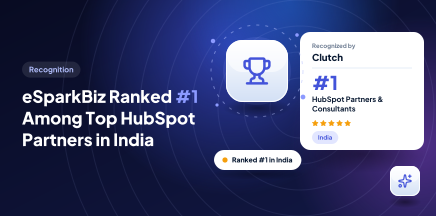
  • Featured among Clutch’s Top Generative AI Companies in India.
  • Output quality is measured against domain-specific evaluation sets before release.
  • Cross-functional engineering teams assess the right approach, including where AI adds value.
  • Flexible engagements with planned continuity define responsibilities, replacement arrangements, and knowledge transfer.
  • Listed among Codementor’s Top Generative AI Development Companies in India.
  • Token cost and latency are modeled before choosing models.
  • Transparent scope and costs require approval of budget and schedule changes before additional work begins.
  • Phased delivery with quality and security reviews provides checkpoints and clear release accountability.
  • Defined access, handover, and supportoptions help your team maintain continuity during and after the engagement.
  • Ongoing technical support options help you maintain your systems and respond to changing business needs.
  • Bring the task you want to improve and the constraint you cannot compromise. We can discuss the engineering scope and evidence needed for your decision.

    Talk Through Your Generative AI Requirements
    Governance & security
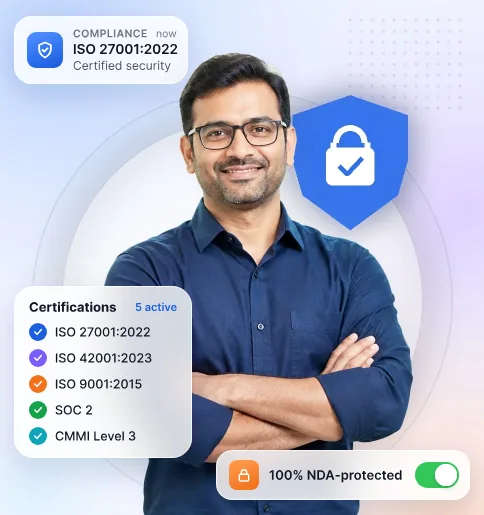
    • ISO 27001:2022
    • ISO 9001:2015
    • SOC 2
    • CMMI Level 3
    • 100% NDA-protected
    Platform Capability
    • AWS Certified Solutions Practice
    • Multi-cloud: AWS, Azure, GCP
    • AI, Cloud & Blockchain
    Company & Credentials

    CIN U72900GJ2013PTC073284 · Certification & audit documentation available on request under NDA.

    Engagement Models

    Choose How to Organize Generative AI Delivery

    Select the model around who will direct the work and manage delivery. Agree on acceptance responsibilities, scope boundaries, and change control before the engagement begins.

    01 / 03

    Staff Augmentation

    Add engineers for defined skill gaps while your team leads implementation. This fits an established technical lead with a prioritized backlog and capacity to review the work.
    Discuss Your AI Engineering Capacity
    • You own priorities and task assignments
    • Your technical lead directs implementation
    • Engineers follow agreed repository workflows
    • Your reviewers accept completed contributions
    • You manage dependencies and release decisions
    • Skill and capacity changes require agreement

    FAQs

    Frequently Asked Questions

    Find clear answers on what generative AI development costs, how soon your first feature can go live, how to compare vendors and how to request a scoped quote from eSparkBiz.

    Which companies offer end-to-end generative AI development for enterprise solutions?

    eSparkBiz, founded in 2010 with 400+ in-house engineers, handles the full build in one team: use case testing, model choice, data connections, the user interface, integration with your systems, release testing and support. When you shortlist enterprise vendors, ask each one to show a generative AI feature running inside a client’s software rather than a standalone demo, and who fixes it after launch.

    Is there a directory or platform that lists generative AI development companies?

    AWS Marketplace lists consulting and development partners by specialty, and eSparkBiz appears there as an AWS Advanced Tier Partner. B2B review directories add verified client reviews and project sizes. Use both to build a shortlist of three or four firms, then judge each on a paid prototype or a call with the engineers who would do the work, since vendors write their own profiles.

    Which agencies build AI-powered creative tools for image and video generation?

    eSparkBiz builds creative tools into your own software, such as image variations for campaign concepts, product illustrations and interface assets, all inside brand rules you set. We connect suitable models, add editing and approval steps and record which model and prompt produced each asset. For video, we test a few clips on your real briefs first, because model quality and cost vary widely.

    Can eSparkBiz build a custom generative AI chatbot for our customers or staff?

    Yes, eSparkBiz builds chatbots that answer from your approved content, respect each user’s access rights and hand the conversation to a person when it needs one. If a packaged chatbot already covers your questions, we will tell you. Custom work pays off when the bot must read your systems, follow your approval rules or sit inside your own product.

    How should a startup choose a generative AI development company?

    Pick a firm that will scope a small first release you can put in front of users within weeks, and that hands over the code, prompts and test results at the end. Ask what the first version leaves out and what the monthly model bill looks like at your expected usage. eSparkBiz projects start at $10,000, which suits a startup testing one feature before raising more.

    What should I look for in a generative AI development partner?

    Look for evidence over promises. A good partner tests the feature on your own examples before building, shows you where the model gets things wrong, explains how your data is protected and puts recurring model and hosting costs in the estimate. Also check who on their team you will speak with each week, and whether you can stop after the first phase and keep everything built so far.

    Why partner with a generative AI development company instead of hiring an in-house team?

    eSparkBiz can put a working team on your project within weeks, while hiring engineers who have shipped generative AI features often takes months. You get people who have already handled prompt testing, data permissions, cost control and integration problems, and you pay for the project rather than full-time salaries. Many companies use a partner for the first release, then move upkeep to their own staff after handover.

    How do I outsource generative AI development safely?

    eSparkBiz signs an NDA before any data is shared and is ISO 27001 certified for information security. Beyond that, keep control on your side: let the vendor work in your own cloud account where possible, share sample or masked data first, write ownership of code, prompts and models into the contract, and make sure you can stop after the first phase without losing what was built.

    What pricing models does eSparkBiz offer for generative AI development?

    eSparkBiz offers fixed price for a defined feature with written acceptance criteria, a dedicated team for a changing roadmap, and staff augmentation when your own lead directs the work. Rates are under $25 per hour and projects start at $10,000. Model usage and hosting are usually billed by your cloud or model provider, so we estimate them separately from our fee.

    What drives the cost of a generative AI project?

    The biggest cost drivers are how many systems the feature must connect to, how much data needs cleaning or permission work, how good the output must be before release and how much human review the workflow needs. After launch, model usage, hosting, monitoring and updates add a monthly cost. Ask every vendor to show build cost and running cost as separate lines so quotes compare fairly.

    How do I request a quote from eSparkBiz for generative AI model training or fine-tuning?

    Send eSparkBiz a short note through the Quick Quote form covering the task, a few sample inputs and outputs, the model you use today and how much training data you have the rights to use. We usually test prompts alone first, because fine-tuning only pays off when testing shows a gap that instructions cannot close. The quote then lists training, testing and running costs separately.

    Can eSparkBiz connect generative AI to our existing software through APIs?

    Yes, eSparkBiz connects generative AI features to your CRM, ERP, help desk, document stores or your own product through defined APIs. Generated output passes validation checks and, where it matters, a person’s approval before it updates any record. We also handle timeouts, retries and duplicate prevention, so a slow model response never creates a double entry in the system downstream.

    Which generative AI development tools and frameworks does eSparkBiz use?

    eSparkBiz picks tools per project after testing them on your tasks. Common choices include models such as Claude, Gemini and Llama, managed access through Amazon Bedrock or Vertex AI, vLLM for self-hosted serving, Python, FastAPI and React for the application, PostgreSQL with pgvector for retrieval and MLflow for evaluation. If your team already maintains a stack, we build on it.

    How quickly can a generative AI development company deploy a first feature?

    eSparkBiz typically delivers a working prototype on your real examples in 3 to 6 weeks and a first production release in 8 to 14 weeks. The fastest projects have sample data ready, one clear user task and system access approved early. A quick launch should still include testing on hard cases and a way to roll back, or the speed gets paid for later.

    Can we get generative AI consulting before committing to development?

    Yes, eSparkBiz runs a short paid discovery that tests your idea on representative tasks, compares custom work with packaged tools you may already pay for and sets out the scope, timeline and cost of a first release. If the test shows a packaged tool is enough, or the idea is not ready yet, you keep the findings with no obligation to continue.


    Resources

    Insights from Our Engineering Leaders

    Our team shares practical insights on the technologies and engineering decisions shaping enterprise product today, grounded in real client work.