AI Product Development Services

Build AI Products Your Customers Can Put to Work

Launch an AI product customers have a reason to use, or add a valuable AI capability to your existing software. eSparkBiz combines product design, AI engineering, and application development to help you validate demand, build the experience, and plan for sustainable operation.

  • 15+ Years of Experience
  • 400+ Engineers
  • 4.9/5 Clutch Rating
  • ISO 27001 & ISO 9001
  • 1,000+ Projects Delivered
Core Objective

Turn a valuable customer task into a usable AI product, with a focused first release and a clear way to measure adoption.

Business ROI

Compare completed tasks, repeat usage, and attributable value against development and operating costs. Track cost per successful task before setting usage allowances.

Tech Stack We Evaluate
  • FastAPI
  • scikit-learn
  • PyTorch
  • pgvector
Service Scope

AI Product Development Connects Models With Usable Software

AI product development combines product discovery, experience design, model engineering, and application development to create software with AI at the center of a user task. It includes the interfaces, data connections, evaluation, and operating controls that make the capability usable.

Choose custom development when differentiated workflows or integration needs justify ongoing engineering. Packaged software may suit standard needs. AI Consulting covers strategy-only work; Machine Learning Development covers standalone models.

What this can include Connected Delivery Workstreams

  • 01. Define

    Product Definition

    Identify the target user, validate the problem, and define a first release with measurable success criteria.

  • 02. Design

    User Experience Design

    Design interactions that help people use AI outputs, correct mistakes, and retain control over consequential actions.

  • 03. Build

    Application and AI Engineering

    Build the interface and backend around suitable models, with data connections and access controls for the intended users.

  • 04. Improve

    Release and Product Improvement

    Evaluate product behavior before rollout, then use monitoring and user feedback to prioritize improvements within the agreed support scope.


Development Challenges

What Gets in the Way of a Useful AI Product

An AI demonstration can attract interest without proving demand or product viability. Resolve the questions that affect adoption, reliable delivery, and the cost of ongoing use.

  • An Unproven Customer Need

    An impressive AI feature can miss the task customers value. Validate the problem and test a focused experience before committing to a broader product build.

  • Quality That Varies Across Users

    Selected examples can hide failures on unfamiliar inputs. Test representative user tasks and define acceptable errors so release decisions reflect actual product requirements.

  • Data That Cannot Support Delivery

    Missing permissions or incomplete records can stall development and limit output quality. Establish usable data sources and accountable owners before relying on them in the product.

  • AI Outside the User Workflow

    Users lose the benefit when they must copy results between disconnected tools. Connect AI outputs to the next task, with review and correction where needed.

  • Unclear Cost per Completed Task

    Repeated model calls and manual corrections can erode product margins. Measure the full cost of successful task completion before choosing usage limits or pricing assumptions.

  • Updates That Break Working Features

    A model or prompt change can alter established behavior. Version the relevant components and rerun acceptance tests so updates do not rely on demonstrations alone.


Our Services

AI Product Development Services We Offer

As an AI-native software engineering company, we connect product design with model development and application delivery. Select the capabilities that match your first release or existing product.

  • Product Discovery and Validation

    Focus investment on a product customers have a reason to use. We test the user problem and technical feasibility before defining a practical first release.

    • User interviews and task mapping
    • Feasibility experiments with representative inputs
    • Prioritized scope and success measures
  • AI User Experience Design

    Help users understand what the product can do and recover when it gets something wrong. We design interactions around review, correction, and clear next steps.

    • Interactive prototypes and usability testing
    • Source display and uncertainty cues
    • Feedback, correction, and approval flows
  • Product Data Engineering

    Give AI features usable, appropriately restricted inputs. We prepare product data and connect relevant knowledge sources, with checks for freshness and access throughout the workflow.

    • Data profiling and validation pipelines
    • Permission-aware retrieval and source tracking
    • Dataset versioning and refresh rules
  • Generative AI and Predictive Model Development

    Build language features, forecasts, rankings, or classifications around the user task. We compare suitable models against a baseline and adapt them where testing shows a useful improvement.

    • Predictive modeling and baseline error analysis
    • Generative AI prompts and retrieval grounding
    • Task-specific training, fine-tuning, and model versioning
  • Application and Platform Engineering

    Give customers a complete product around the AI capability. We build web or mobile interfaces and supporting services, including account management and usage controls where required.

    • Web or mobile interfaces and backend services
    • Authentication and tenant data isolation
    • Usage metering and subscription integrations
  • Business System Integration

    Connect the product to approved business systems so users can complete work in one place. We define what AI features may read or change and how failed actions recover.

    • API contracts and permission checks
    • Retry handling and duplicate-action prevention
    • Approval gates for consequential changes
  • AI Product Testing and Evaluation

    Establish whether the whole product is ready for its intended users. We test AI behavior alongside application reliability, access restrictions, and failure recovery.

    • Representative datasets and evaluation rubrics
    • Adversarial inputs and data-exposure tests
    • Workflow, load, and regression testing
  • Product Deployment and Operations

    Make releases manageable for the team running the product. We configure deployment and monitoring around agreed service expectations, with recovery procedures and named operating responsibilities.

    • Release pipelines and environment configuration
    • Quality, latency, and cost monitoring
    • Rollback procedures and operational runbooks
  • Product Analytics and Optimization

    Use evidence from actual usage to decide what deserves further investment. We connect product analytics with AI performance and test changes against agreed user outcomes.

    • Activation and task-completion analytics
    • Controlled experiments and feedback analysis
    • Inference tuning within quality thresholds
Deliverables and Outcomes

What You Receive and How We Assess Its Value

Define what your team will receive and how you will accept it. After launch, measure whether the product improves the customer task and supports continued investment.

Expected Deliverables

Product Assets Your Team Can Inspect

The delivery package connects product decisions to working software and release evidence. Confirm its contents against your starting point and the responsibilities each team retains.

  • Product and Architecture Blueprint

    A prioritized release scope with user journeys, data dependencies, architecture decisions, and acceptance criteria for your product owner and technical lead to review.

  • Integrated Product Release

    The agreed application and AI components, with configuration and dependency records. Demonstrated user workflows show whether the release satisfies the approved scope.

  • Evaluation and Release Evidence

    Versioned test inputs, scoring criteria, and results, including known limitations. Your acceptance owners can assess quality thresholds and unresolved defects before release.

  • Operational Handover Package

    Deployment instructions, monitoring definitions, and recovery procedures, with support boundaries. A handover walkthrough checks whether the receiving team can operate the delivered system.

Intended Outcomes

Product Improvements to Measure After Launch

Set a baseline and review period before launch. Assess the following measures together so higher usage does not hide errors, rework, or unsustainable operating costs.

  • More Completed User Tasks

    Track successful completion of the target task, including failed attempts and manual corrections, against the existing workflow or an agreed comparison group.

  • Healthier Product Economics

    Measure whether intended users return to the feature and complete useful work. Separate repeat usage from trial activity driven by launch promotions.

  • Healthier Product Economics

    Assess cost per successful task across model calls, infrastructure, and human review. Compare realized revenue or operational benefit with development and ongoing costs.

  • More Predictable Product Quality

    Track unacceptable outputs, regressions, and recovery time across releases. Use these measures to judge whether updates preserve the behavior users depend on.


Case Studies

AI Product Development in Practice

Review the customer problem, delivered product scope, and engineering decisions behind each approved project example, with results presented in their original business context.

Case study
  • Industry : eCommerce
  • Solution : AI Development

SmackDab is an AI-enabled Customer Relationship Management (CRM) platform engineered by eSparkbiz to help businesses build stronger customer relationships, optimize sales workflows, and drive sustainable.

  • Dedicated Product Team Engagement Model
  • 40 + Team Member
  • 48+ Months Partnership Duration
  • Live & Scaling Market Stage
Client outcomes

Rated 4.9 across 70 Reviews Verified on Clutch

Our clients value our technical expertise, clear communication, and commitment to quality. Read their feedback on working with eSparkBiz and see how our engineering teams support their business goals.
Kristen Marcoe

Kristen Marcoe

Sr. Director, People, Credo AI

eSparkBiz provided AI engineering talents to Credo AI, an AI governance platform, to help with the development of their product and integrations. The 2-5 person team helped a lean startup to work faster to meet a high internal bar. The team was great at project management with excellent and timely communication. The team always met delivery expectations.

Brendon Worth

Brendon Worth

Owner, PageMTR

eSparkBiz rebuilt and redesigned the web app for website monitoring platform PageMTR using React and Node.js, including a new dashboard UI and login page. The owner said the work was completed ahead of schedule, with daily updates and a business analyst keeping communication strong. He also appreciated the team’s genuine desire to help their clients.

Product Use Cases

AI Product Experiences Built Around User Tasks.

These illustrative applications connect AI to a product’s core value. Prioritize the user problem, then check data availability and the consequences of an incorrect result.

  • Research

    Research and Knowledge Workspaces

    A research workspace can bring search, source-linked answers, and saved findings into one place. Researchers can inspect the supporting material before using a conclusion. Document permissions and clear handling of missing evidence keep the experience useful without exposing restricted information.

  • Legal · Operations

    Document Review Products

    Reviewers can extract fields, compare documents, and resolve missing information in a shared workspace. Link findings to the original text and retain corrections so reviewers can inspect suggested changes before approval or export. Measure completeness alongside avoidable rework.

  • Planning · Supply chain

    Forecasting and Planning Tools

    Planning products help users compare demand or capacity forecasts with current assumptions, then adjust scenarios before acting. Show uncertainty and track forecast error against a baseline. Predictions should support purchasing or capacity decisions without suggesting more precision than the data supports.

  • Sales · E-commerce

    Guided Product Selection

    Help buyers narrow complex product catalogs through questions and recommendations that reflect their needs. Use current availability and eligibility rules to filter suggestions, and explain relevant trade-offs without inventing specifications or suitability claims.

  • Marketing

    Content Creation and Editing Tools

    Support writers who need drafts grounded in their own briefs and reference material. Combine generation with editing, version history, and approval controls so users can correct unsupported statements before publishing or sharing content.

  • Quality · Manufacturing

    Visual Inspection Applications

    Help inspectors identify possible defects in uploaded images or camera feeds. Present flagged regions within a review interface, account for image quality, and retain human verification where missed defects carry significant operational consequences.

  • Product · Customer success

    In-Product Task Assistants

    Let users complete multistep actions through an assistant inside the application, such as assembling a report or preparing a system update. Validate permissions and proposed changes, with confirmation and recovery paths for actions that alter records.

  • Analytics

    Conversational Analytics Products

    Conversational analytics lets business users question approved metrics and inspect the underlying query or calculation. Governed definitions make results easier to compare, while access checks protect restricted records. Ask for clarification when an ambiguous question could produce a misleading answer.


Industries

Industries We Serve with AI Development Services

eSparkBiz delivers AI development services across healthcare, fintech, insurance, retail, and other industries. We build AI models, copilots, and automation, and connect them to your data and business systems so teams can put them to work.

AI Product Development for SaaS Teams Shipping Guided Setup Assistants

New accounts stall when admins face fifty settings on day one. We build an AI setup assistant inside your product that turns a stated goal into proposed settings, previews the result and lets admins undo any change.

What we build
  • Goal-to-Settings Assistant
  • Configuration Preview Screens
  • Platform Rule Validation
  • Undo and Change History
  • Activation Funnel Analytics
  • Per-Tenant Model Usage Metering
Compliance & Security
  • Tenant data kept separate
  • Changes previewed before saving
  • Admin roles respected
  • Usage logged per tenant
Success Metrics

Every proposed setting is previewed, validated against platform rules, and easily undone.

Cost & Timeline

Starting Budget: From $10,000, shaped by the product areas the assistant covers.
Initial Delivery Phase: 6 to 10 weeks, accounting for design reviews and pilot feedback.
Drivers: Settings count, tenant volume, model choice, preview complexity and analytics depth decide the final quote.

FAQs
When should a SaaS company add an AI feature instead of launching a separate AI product?
Add a feature when AI speeds up a job your current users already do; launch a separate product when it solves a new job for a different buyer. eSparkBiz settles this with usage data from your app and a handful of customer interviews before any build starts.
Can our SaaS release schedule stay on track while an outside team builds the AI feature?
It can. eSparkBiz engineers follow your code review and CI rules and keep AI work on its own roadmap track, so core release dates hold. The finished feature goes to a few friendly customers first, behind a toggle your product team controls.

Delivery Process

How We Develop and Release AI Products

Move from product discovery to release through explicit decisions. Each stage produces something your team can review, with responsibilities and unresolved dependencies visible before work expands.

Step 01 · Discover

Define the Product Decision

We clarify whose task the product serves and what a useful result looks like. Your product owner approves the problem statement, initial success measures, and first-release priorities.

Talk Through the Product Goal
WHAT’S INCLUDED
  • Map users and current alternatives
  • Record baseline and target outcomes
  • Identify data and system owners
  • Approve the initial product brief
Outcome : Problem and success measures defined
Technology Ecosystem

Technology Choices for Your AI Product

These are candidates for evaluation, not a prescribed stack. Selection depends on your existing environment, product behavior, data constraints, and the team responsible for operation.

Interfaces and Product Services

Retain suitable application foundations where practical. Choose interface and API technologies around integration needs, team maintainability, and the performance requirements of the user workflow.

  • React
  • FastAPI
  • .NET

Proposal Comparison

How to Compare AI Product Development Proposals

Compare the same product scope, acceptance standards, and usage assumptions. A lower build price may exclude integration work or shift costs into operation and support.

What to Check in Any Proposal eSparkBiz Proposed Approach
Product Scope and Alternatives 
Does custom development address a meaningful product gap? Packaged software can suit standard workflows when its configuration, data terms, and integration limits are acceptable.
Document the gap and assess packaged options before defining custom scope. Build where control or differentiation justifies development and maintenance obligations.
Integration Responsibility
Who provides credentials, maintains external APIs, and resolves failures? Confirm whether the price covers a demonstration or an integrated user journey.
Assign ownership for each dependency and define interface behavior, approval boundaries, and failure recovery. Identify client-provided access and third-party work separately.
Acceptance Evidence
Does acceptance test complete user tasks or only model scores? Agree on representative examples and unacceptable failure modes before comparing quality claims.
Propose a versioned evaluation set with task-level criteria and application tests. Name the client acceptance owner and document limitations before release approval.
Operating Cost and Control
Compare licensing, model usage, human review, and support costs at equivalent usage levels. Self-hosting offers control but also adds infrastructure and operational obligations.
Estimate operating costs from expected demand and review needs. Compare managed and self-hosted options where relevant, with support scope and migration constraints made explicit.

Agreed Before Kickoff

  • Product scope
  • Dependency owners
  • Quality thresholds
  • Usage costs
Why eSparkBiz

An Engineering Partner for the Whole AI Product

eSparkBiz combines software and AI engineering for complete product work. The capabilities and proposed working arrangements below help you assess fit beyond model selection.

  • 15+ Years in Business
  • 20+ Industries Served
  • 4.9 Clutch 70 Reviews
  • 1,000+ Projects Delivered
  • 400+ Engineers
  • 1,000+ projects across 20+ industries, supported by expertise across 45+ technologies.
  • Collaboration across 10+ time zones combines agreed working hours with named contacts, progress reviews, and escalation paths.
  • Clear IP ownership and confidentiality terms address custom work, third-party licenses, and NDA obligations.
  • Discovery-led planning aligns your goals, scope, and technical dependencies before delivery begins.
  • 95% client retention, earned by staying accountable after go-live.
  • Focused MVPs validate assumptions before significant AI engineering investment.
  • Featured in Clutch’s Top India AI Code Generation Companies Listing.
  • Cross-functional engineering teams assess the right approach, including where AI adds value.
  • Flexible engagements with planned continuity define responsibilities, replacement arrangements, and knowledge transfer.
  • Listed among RevenueBase’s India AI Workflow Automation Services Companies.
  • Prototype reviews close architecture, reliability, and deployment gaps before production.
  • Audit logs and role-based access govern every model interaction.
  • Transparent scope and costs require approval of budget and schedule changes before additional work begins.
  • Phased delivery with quality and security reviews provides checkpoints and clear release accountability.
  • Defined access, handover, and support options help your team maintain continuity during and after the engagement.
  • Quality and security reviews support delivery, with named owners responsible for release decisions.
  • Ongoing technical support options help you maintain your systems and respond to changing business needs.
  • Bring your product goal and the decision holding it back. We can review capability gaps, dependencies, and the working arrangements needed for your next step.

    Discuss the Engineering Partnership
    Governance & security
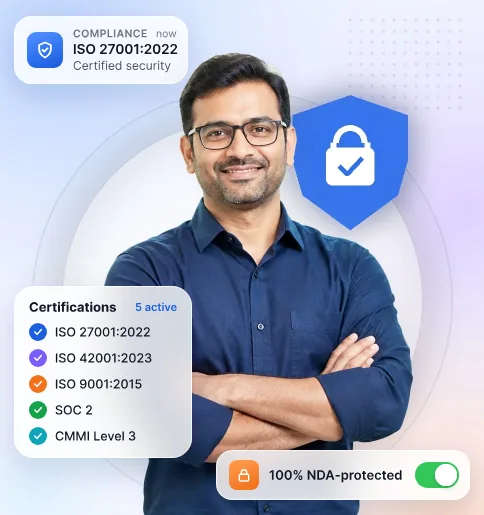
    • ISO 27001:2022
    • ISO 9001:2015
    • SOC 2
    • CMMI Level 3
    • 100% NDA-protected
    Platform Capability
    • AWS Certified Solutions Practice
    • Multi-cloud: AWS, Azure, GCP
    • AI, Cloud & Blockchain
    Company & Credentials

    CIN U72900GJ2013PTC073284 · Certification & audit documentation available on request under NDA.

    Engagement Models

    Choose How We Work With Your Product Team

    Choose a model around who directs the work and how stable the scope is. Resolve material data or feasibility unknowns before committing to implementation terms.

    01 / 03

    Staff Augmentation

    Add agreed engineering skills to your existing product team. Your leads prioritize work, manage delivery, and accept results; eSparkBiz contributors work within the responsibilities and practices you define.
    Find the Skills You Need
    • Your team owns backlog priorities
    • Your leads direct daily delivery
    • Skills matched to defined work
    • Your reviewers accept completed tasks
    • Scope follows your change process
    • Access and IP terms documented

    FAQs

    Frequently Asked Questions

    Get answers to common questions about AI development costs, choosing a development partner, project experience, engagement models, and scaling before your first consultation with eSparkBiz.

    How can an AI product development company help a startup?

    A good partner keeps a startup from spending its runway on the wrong build. eSparkBiz begins with user interviews and a quick feasibility test on real inputs, then ships one focused release that real paying users can try, so investor conversations rest on usage data rather than a polished demo.

    What does AI product development cost for a small business?

    eSparkBiz engagements begin from $10,000, enough for one well-defined AI feature or a narrow first product built around a single task. Add model usage fees, cloud hosting and ongoing support to that number, then compare the total with the hours saved or revenue the product should return during its first year.

    What is the smartest way to pick an AI development partner for a new product?

    Hand every firm on your shortlist the identical user problem and compare how each plans to test it before writing code. eSparkBiz replies with a written discovery plan, named engineers and acceptance criteria tied to real user tasks. To watch the team work first, ask for our risk-free trial lasting 15 days.

    Can eSparkBiz handle AI product development from first idea to post-launch support?

    Yes. eSparkBiz covers discovery, UX design, data engineering, model work, web and mobile apps, testing, cloud deployment and post-launch improvement under one contract. You can also take only the stages you need, such as validation ahead of a funding round or a production build once your prototype has shown real demand.

    What is the average cost of developing an AI model?

    There is no honest single average, because calling an existing model through an API costs far less than training one. eSparkBiz tests pretrained models first and fine-tunes only where results fall short, so model work for focused scopes starts from $10,000 and then rises with the data preparation and evaluation effort your use case demands.

    How do AI product development packages and pricing models compare?

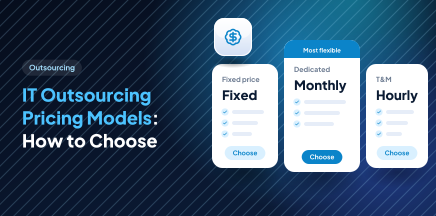
    Packages usually take one of three shapes. A fixed price for one scoped release, a monthly dedicated team, or hourly engineers who join your staff. eSparkBiz sells each of them, with hourly rates kept under $25. Choose fixed price once scope is validated, and a dedicated team when the product will change every sprint.

    How should I evaluate an AI product development firm’s portfolio?

    Check whether each case shows a live product, a stated user problem and a measured outcome, then ask who built it. eSparkBiz publishes results per project, such as 47% less manual assessment time on an AI dental imaging platform, and our engineers can walk you through the decisions behind them.

    What agencies specialize in creating conversational AI products?

    Shortlist agencies that tie conversation to real actions like bookings, account changes or record updates, with a clear handoff to people. eSparkBiz builds chat and voice products inside web and mobile apps, including a real estate assistant that fielded upward of 10,000 inquiries in its opening month while staying 95% accurate.

    Can eSparkBiz scale an AI application for enterprise use?

    eSparkBiz scales AI applications by separating the model layer from the app, adding caching and queues for traffic peaks and tracking cost per completed task as usage keeps growing month over month. Our ISO 27001 certification and AWS Advanced Tier status mean enterprise security reviews and capacity planning begin from documented controls.

    Which firms build custom AI software solutions for businesses?

    Directories and referrals give you names, while a short discovery call shows who can actually deliver. eSparkBiz builds custom AI software for startups and enterprises; AWS has rated us an Advanced Tier Partner and our offerings appear on AWS Marketplace. A free first call covers your idea, your data and the constraints around both.

    How quickly can an AI product MVP reach real users?

    Most focused AI MVPs reach their first real users in 8 to 14 weeks, with two or three weeks for discovery and feasibility and the rest for building, testing and release. eSparkBiz prefers cutting scope over stretching the timeline, so you launch one task done well instead of several half-finished features that confuse early users.

    Which companies offer AI product development services in the United States?

    Many US buyers weigh local studios against offshore engineering firms that overlap US working hours. eSparkBiz, founded in 2010, employs 400+ engineers in-house, is certified to ISO 27001, carries CMMI Level 3 and bills below $25 per engineer hour, so US product teams can fund a complete first release rather than a prototype. 

    Does our company keep the source code and models eSparkBiz builds for our AI product?

    Ownership terms are agreed in writing before kickoff, and eSparkBiz signs a nondisclosure agreement first, before a single record leaves your hands. Our proposals list what transfers at acceptance, including source code, model weights, prompts, evaluation sets and documentation, and they flag any third-party model licenses that remain with the original provider after handover. 

    Which AI product developers bring real natural language processing expertise?

    Ask vendors to show shipped language products in daily use rather than chatbot demos. eSparkBiz has delivered speech and text AI such as a dental conversation tool with 92% transcription accuracy and recruitment software that writes call summaries, so search, summarization and document extraction features are part of our regular product work.

    Is it possible to hire eSparkBiz AI product engineers into our own team rather than outsource the full build?

    Yes. Through staff augmentation, eSparkBiz adds AI, data or full-stack engineers who report to your own product lead, each at an hourly rate under $25. Most teams start with one or two specialists for model and evaluation work, then scale the group up or down as the roadmap shifts after launch.


    Resources

    Insights from our engineering leaders.

    Our team shares practical insights on the technologies and engineering decisions shaping enterprise software today, grounded in real client work.