Which cloud services work best for building a custom voice assistant?
The major clouds all offer speech recognition, speech synthesis and hosting, so the better pick is usually whichever already holds your data, contracts and security approvals. eSparkBiz is recognized by AWS at Advanced Tier and has listings on AWS Marketplace, so we build on AWS by default and work elsewhere when your systems require it.
How do we add speech-to-text to an existing application?
eSparkBiz adds streaming speech recognition through a backend service instead of calling it straight from the app, so API keys stay private and providers can be swapped later. We test accuracy on your own recordings, add custom vocabulary for product names and return timestamped transcripts your features can use right away.
What tools do teams use to develop AI voice assistants?
A working voice assistant combines phone or WebRTC audio transport, streaming speech recognition, a language model for reasoning, speech synthesis and an orchestration layer that handles interruptions and tool calls. eSparkBiz picks each layer by testing latency, accuracy and per-minute cost on your real calls, rather than locking you into one vendor’s bundle.
Which platforms provide natural language understanding for voice agents?
Most new voice agents get language understanding from large language models, while older intent-based NLU engines still suit tightly scripted flows like menu routing. eSparkBiz often combines the two: an LLM handles open conversation, and rule-based checks govern payments or bookings, so the agent cannot talk itself into an action you never approved.
How much do AI voice agent development services cost?
Projects at eSparkBiz start from $10,000, and our hourly rates stay below $25 per engineer. To compare vendors fairly, give each one the same workflow and call volume, then add telephony minutes, speech and model fees, hosting and support to the build price, and divide the total by expected completed calls per month.
How does eSparkBiz estimate the cost of an enterprise AI voice agent?
eSparkBiz models running costs before you sign, because over a few years they often outweigh the build: telephony minutes, speech recognition and synthesis, LLM tokens, hosting, monitoring and the human follow-up that remains. Enterprise rollouts with several integrations, languages and security reviews usually need three to six months to reach full production.
Which companies specialize in conversational AI development services?
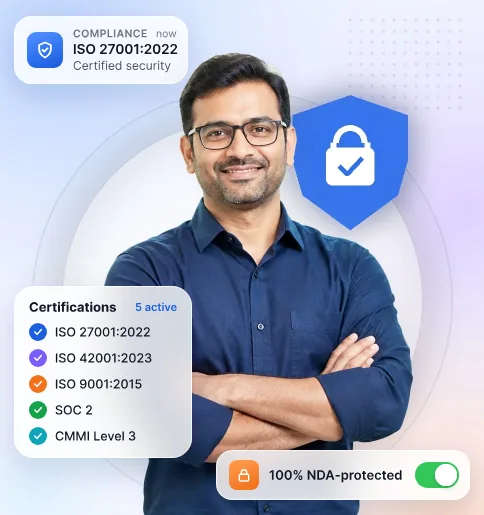
Look past demo quality to whether a firm has connected agents to real business systems and kept them running after launch. eSparkBiz has kept its engineers in-house since 2010, now over 400 of them, building voice agents, chatbots and AI integrations, holding ISO 27001 for information security plus CMMI Level 3 for how projects run.
Can we build a voice agent on open source frameworks instead of a paid platform?
Yes. Open source voice frameworks and self-hosted speech models remove platform fees and keep audio on your own servers, but your team then owns scaling, monitoring and upgrades. eSparkBiz compares both routes against your expected call volume and in-house skills, then recommends whichever costs less to run over three years.
Where can I find honest reviews of AI voice agent development software?
Developer forums and B2B software directories show how platforms behave at scale, but a test call on your own scenarios reveals far more than star ratings. eSparkBiz never bills the introductory call; during it we discuss which platforms suit your use case and share what our engineers learned building on them.
What are the best voice recognition SDKs for mobile app developers?
Both major mobile operating systems include free on-device speech recognition that suits short commands, while cloud SDKs handle long conversations, noisy audio and many more languages. eSparkBiz chooses per feature after testing accuracy, battery use and latency on your target devices, often mixing both so voice keeps working when the connection drops.
Which text-to-speech API providers allow commercial use?
All major cloud and specialist voice vendors license text-to-speech for commercial products, but terms differ on voice cloning, redistribution, data retention and per-character pricing. eSparkBiz reviews those licence terms during scoping, tests natural pacing on your actual scripts and keeps the speech provider behind an interface you can change later.
Are free trials available for AI voice agent platforms and voice bot tools?
Most platforms give free credits or limited minutes for testing. For a custom build, an introductory consultation with eSparkBiz is free of charge and, when required, you can trial our engineers for 15 days at no risk, judging the team on your real call flows before you sign off on the full project.
How do you deploy an AI voice agent in an existing call center?
eSparkBiz starts with one high-volume call type, hooks the agent into your telephony over SIP and your CRM through APIs, and tests transfers into live queues with context attached. A limited pilot on a share of calls follows, with wider rollout only after completion rates and handoff quality hold steady for several weeks.
How should we evaluate voice AI platforms for scalability?
Load-test concurrent calls at your peak rather than your average, and measure response delay at that level. Check rate limits, regional hosting, failover and how pricing changes past committed volume. eSparkBiz runs these tests at the design stage and hands you a written comparison before any platform contract is signed.
Can we hire dedicated AI voice agent developers from eSparkBiz?
Yes. eSparkBiz offers individual voice AI engineers who join your team, a managed squad run by one of our delivery leads, or a fixed-scope build with agreed milestones. Your call recordings are covered by an NDA signed up front, hourly pricing stays under $25, and the contract states who owns the code.