Data Integration Services

Connect Your Systems So Teams Can Work With Consistent Data

Manual exports and mismatched records slow reporting and everyday work. eSparkBiz, an AI-native software and product engineering company, provides data integration services that connect your existing systems and deliver validated data for business operations, reporting, and downstream AI applications.

  • 15+ Years of Experience
  • 400+ Engineers
  • 4.9/5 Clutch Rating
  • ISO 27001 & ISO 9001
  • 1,000+ Projects Delivered
Core Objective

Make business data available where teams need it, with clear ownership and checks that catch missing, late, or inconsistent records.

Business ROI

Measure reduced reconciliation work and reporting delays against your baseline, then compare realized benefits with the full cost of building and operating the integrations.

Tech Stack We Evaluate
  • Amazon CloudWatch
  • Apache Airflow
  • Snowflake
  • Amazon S3
Scope and Fit

Data Integration Connects Sources to Usable Business Data

Data integration services connect information from separate applications, databases, and files so it can be used together. The work covers source access, mapping, transformation, and delivery, with validation and recovery controls matched to the systems and business tasks involved.

Choose this service for recurring data exchange. A supported native connector may suffice for a simple transfer. Broader platform redesign belongs under Data Engineering; master record ownership and application workflow orchestration require separately defined scope.

What this can include Connected Delivery Workstreams

  • 01. Access

    Source Connections

    Connect approved databases, application APIs, and file feeds, accounting for access restrictions and each source’s extraction limits.

  • 02. Transform

    Mapping and Transformation

    Translate source fields into agreed target structures, with validation rules that flag exceptions for review.

  • 03. Deliver

    Scheduled and Incremental Delivery

    Move data on agreed schedules or capture supported source changes when the workflow requires fresher information.

  • 04. Monitor

    Operational Controls

    Provide reconciliation checks, failure alerts, and recovery procedures so designated owners can identify and resolve interrupted data flows.


Integration Challenges

When Disconnected Data Disrupts Everyday Work

Start with the failure behind the workaround: a report that misses its cutoff, records that disagree, or a connection your existing systems cannot sustain.

  • Manual Exports Delay Reporting

    Teams download files and rebuild reports whenever source data changes. Scheduled transfers with validation can reduce repetitive preparation and make reporting cutoffs easier to meet.

  • Records Do Not Match

    The same customer or product uses different identifiers across systems, distorting combined reports. Agreed mapping rules help distinguish genuine matches from exceptions requiring business review.

  • Updates Arrive Too Late

    A completed transaction appears in one application while another still shows yesterday’s status. Match refresh frequency to the decision window and available source access.

  • Source Changes Break Pipelines

    A renamed field or changed API response interrupts downstream processing. Schema checks and controlled mapping updates help expose the break before dependent reports are released.

  • Failed Runs Leave Data Gaps

    An interrupted transfer leaves missing records, while a careless rerun creates duplicates. Reconciliation and restart rules make recovery verifiable before downstream teams resume using the data.

  • Connections Strain Legacy Systems

    Large extracts can slow operational databases, while restricted networks complicate access. Plan extraction windows and connection paths around source-system limits, with destination permissions that prevent sensitive fields reaching unauthorized users.


Our Services

Data Integration Services We Offer

Connect new sources, repair unreliable pipelines, or return useful data to operational applications. Select the capabilities needed for your data flows and the team that will operate them.

  • Integration Assessment and Architecture

    Avoid unnecessary platform replacement by identifying which connections need work. We assess source constraints and existing tools, then document the design, access boundaries, and ownership for each priority flow.

    • Source and dependency inventory
    • Batch, CDC, and connector assessment
    • Architecture and scope decision record
  • Source Connector Development

    Retrieve the records your teams need through supported interfaces. We configure available connectors or develop adapters where authentication, extraction behavior, or source formats need additional engineering.

    • Database, API, and file adapters
    • Pagination and rate-limit handling
    • Credential renewal and source-deletion handling
  • ETL and ELT Development

    Prepare consistent datasets for reporting and downstream applications. We implement transformations before or after loading, based on data handling requirements and destination capabilities.

    • Source-to-target field mappings
    • Transformation and dependency logic
    • Incremental loads and historical backfills
  • Change Data Capture and Streaming

    Keep time-sensitive workflows supplied with updates. CDC captures supported database changes; event pipelines carry business events. We define the ordering, retention, and replay behavior each flow needs.

    • Initial snapshots and change-stream alignment
    • Updates, deletes, and event-schema compatibility
    • Ordering, log retention, and replay checkpoints
  • Operational Data Synchronization

    Put approved data back into business applications so teams can act on it. We define writeback rules that respect authoritative sources and destination constraints.

    • Destination API and writeback mapping
    • Conflict resolution and loop prevention
    • Duplicate-safe writes and rejection handling
  • Hybrid Data Integration

    Connect on-premises and cloud environments while respecting network boundaries. We configure permitted transfer paths and execution components around source availability and data movement restrictions.

    • Private connectivity and runtime configuration
    • Encrypted transfers and access controls
    • Bandwidth and extraction-window planning
  • Data Validation and Reconciliation

    Confirm that successful jobs delivered the expected data. We translate business rules into checks, isolate rejected records, and test recovery against the criteria your data owners approve.

    • Record counts and control totals
    • Key, format, completeness, and duplicate checks
    • Failure tests and reconciliation evidence
  • Legacy Pipeline Modernization

    Reduce reliance on fragile scripts without discarding valid business logic. We document existing behavior and replace selected components with maintainable, testable integration workflows.

    • Existing job and mapping analysis
    • Parallel-run output comparisons
    • Cutover and rollback procedures
  • Integration Monitoring and Recovery

    Give operators a clear path from an alert to restored data flow. We instrument agreed pipelines and document how to investigate, restart, and verify them.

    • Freshness and processing-lag alerts
    • Failure routing and incident context
    • Recovery runbooks and replay safeguards
Deliverables and Outcomes

What You Receive and How Progress Is Measured

Your team receives working integrations and the evidence needed to accept them. Track the resulting business improvements against a baseline after the new flows are in use.

Expected Deliverables

Integration Assets Your Team Can Inspect

Select these assets during scoping so your reviewers can inspect the design, test the delivered flows, and prepare the receiving team to operate them.

  • Integration Design and Mapping Pack

    A source inventory, field mappings, and ownership decisions give reviewers a traceable basis for approving data movement and transformation rules.

  • Versioned Integration Workflows

    Configured connectors and pipeline code include deployment instructions and environment settings, with credentials handled separately from the delivered source files.

  • Acceptance and Reconciliation Evidence

    Test results compare expected and actual records, document exceptions, and show whether agreed freshness, completeness, and duplicate-handling criteria were met.

  • Operational Handover Package

    Monitoring configuration and recovery runbooks identify alert recipients, restart procedures, and escalation boundaries so the receiving team can rehearse common failures.

Intended Outcomes

Improvements to Validate After Release

Measure each outcome over a defined observation period. Source reliability, user adoption, and how teams resolve exceptions all influence the result.

  • Less Manual Data Preparation

    Compare hours spent exporting, merging, and correcting files before and after adoption, including time still required to review exceptions.

  • Data Available When Needed

    Track delivery lag and missed reporting cutoffs against workflow requirements, distinguishing integration delays from unavailable or delayed source data.

  • Fewer Unexplained Record Differences

    Monitor unresolved reconciliation exceptions and their age to assess whether teams can explain mismatches and correct the underlying rules.

  • More Predictable Recovery Effort

    Compare incident investigation and restoration time, then review recurring failures alongside infrastructure, licensing, and support costs to identify the next improvement.


Case Studies

Data Integration Decisions and Project Outcomes

Understand each integration project’s business context, including initial constraints, systems connected, acceptance criteria, and operational changes after delivery.

Case study
  • Industry : eCommerce
  • Solution : AI Development

SmackDab is an AI-enabled Customer Relationship Management (CRM) platform engineered by eSparkbiz to help businesses build stronger customer relationships, optimize sales workflows, and drive sustainable.

  • Dedicated Product Team Engagement Model
  • 40 + Team Member
  • 48+ Months Partnership Duration
  • Live & Scaling Market Stage
Client outcomes

Rated 4.9 across 70 Reviews Verified on Clutch

Our clients value our technical expertise, clear communication, and commitment to quality. Read their feedback on working with eSparkBiz and see how our engineering teams support their business goals.
Tawfik Hussein

Tawfik Hussein

Tech Lead, Food & Beverage Company

eSparkBiz took over mobile app development for a Saudi food and beverage company, fixing errors left from earlier work on the iOS and Android apps and re-architecting the Android app. The tech lead liked the speed, quality and flexibility, along with the suggestions the team offered on their own, and noted they are available even on weekends. The team was also commended for sticking to best practices.

Athanassios Piliounis

Athanassios Piliounis

CEO, RADEFY IKE

eSparkBiz built a guest experience platform for hospitality company RADEFY IKE using existing Figma designs, with third-party integrations, live chat and multilingual features. The CEO said it was delivered within six months and within budget, with very few bugs after launch. Management stayed actively involved and the teams met every two weeks. The only small issue was a slight delay.

Use Cases

Where Connected Data Improves Daily Work.

Choose the workflow that needs better information first. These potential applications connect integration work to the decisions and handoffs it can improve.

  • Sales · Support

    Customer Account Views

    Account teams can bring CRM, support, and billing records into one customer view. Source identifiers and uncertain-match flags help them investigate account issues without treating every similar name as the same customer.

  • Finance · Accounting

    Revenue and Payment Reconciliation

    Finance teams can trace differences between invoices, payments, and ledger entries using shared matching rules. Retain refunds and adjustments in the dataset so reviewers can investigate unresolved balances instead of losing them inside an aggregated total.

  • Operations

    Inventory Availability Across Channels

    Operations teams can compare warehouse quantities with channel inventory feeds to identify availability differences. Define how reservations, returns, and delayed updates affect the shared view before using it for replenishment or customer-facing stock information.

  • Finance

    Usage Data for Billing

    Connect product usage events to customer accounts and billing periods so teams can review billable activity. Handle late events and duplicates explicitly; pricing rules and invoice approval remain with the systems and owners responsible for billing.

  • Procurement

    Partner Data Onboarding

    Replace repeated spreadsheet handling with controlled ingestion of supplier or partner feeds. Validate each submission against agreed formats and identifiers, then route rejected records back for correction before they enter downstream planning or reporting.

  • IT

    Data Consolidation After an Acquisition

    Give integration teams a comparable view of records from newly combined businesses while original systems remain in use. Map differing codes and reporting periods, preserving source ownership so unresolved definitions stay visible during consolidation.

  • Analytics · BI

    Coordinated Reporting Refreshes

    Help analysts work from datasets that reflect the same reporting cutoff. Coordinate dependent loads and expose incomplete inputs so a successful dashboard refresh does not mask a missing source or mix incompatible reporting periods.

  • Data · Engineering

    Current Business Context for AI

    Supply approved business records to downstream AI applications with source references and freshness information. Carry access restrictions and deletion signals through the integration. Model behavior, retrieval evaluation, and AI application development require separate scope and evaluation.


Industries

Industries We Serve with Data Integration Services

eSparkBiz delivers data integration services across healthcare, fintech, education, hospitality, and other industries. We help companies connect business systems, unify data across sources, automate data movement, and keep reporting and operations running on reliable information.

SaaS Data Integration Services Wiring Together Billing, CRM and Provisioning

Sales closes a deal in the CRM, yet billing and provisioning wait on a copied spreadsheet. We connect those apps with two-way sync rules, so plan changes reach invoices and account access without anyone retyping them.

What We Integrate:
  • CRM to Billing Sync
  • Account Provisioning Triggers
  • Native Connectors for Your Customers
  • Webhook Retry Handling
  • Usage Export to Finance
  • AI-Assisted Field Mapping
Compliance & Security:
  • Tenant data never crosses
  • Scoped API credentials only
  • GDPR deletions propagated downstream
  • Integration access logged
Success Metrics:

Unified product usage and CRM data in one warehouse, ending conflicting metrics.

Cost & Timeline:

Starting Budget: From $10,000, shaped by how much error handling and monitoring is built in.
Initial Delivery Phase: 6 to 10 weeks, accounting for sandbox access and end-to-end test cycles.
Drivers: Number of connected apps, sync direction, webhook volume, tenant count and field mapping decide pricing.

FAQs
Can eSparkBiz build integrations that SaaS customers can enable directly within our product?
eSparkBiz builds customer-facing connectors with per-tenant credentials, a settings screen for field choices and readable error messages, so customers can link their CRM or accounting tool without raising a ticket. Each connector keeps its own retry and logging rules, so one customer’s failure never touches another.
Who keeps our SaaS connectors working when a partner app retires an API version?
Under a support agreement, eSparkBiz tracks deprecation notices from every app you connect to and updates mappings before the cutoff date. We try the new version in a sandbox first, then roll it out tenant by tenant. Without support cover, your team gets a runbook to do the same.
Is it worth outsourcing a SaaS integration backlog instead of hiring engineers?
Often, since eSparkBiz bills engineers below $25 hourly and a long list of similar connectors suits a shared framework that makes each new integration cheaper than the first. Keep the integrations that define your product in-house and hand over the long tail customers keep requesting.

Delivery Process

How We Deliver and Validate Data Integrations

Begin with one useful data flow and expand after reviewing its behavior. The stages below explain how scope, cost, dependencies, and acceptance decisions shape delivery.

Step 01 · Scope

Define Scope and Separate Project Costs

Integration cost depends on connector gaps, mapping complexity, volume, and recovery requirements. Use a source inventory and representative samples to estimate three cost areas: assessment and design; implementation and release; and recurring platform usage, infrastructure, and support.

Scope Your First Integration
WHAT’S INCLUDED
  • Confirm destinations, frequency, and historical coverage
  • Identify licensing, storage, and data-transfer charges
  • Separate included work, exclusions, and unknowns
  • Your business owner approves scope and assumptions
Outcome : Approved scope and cost
Technology Ecosystem

Integration Technologies Selected for Your Environment

Select tools around source compatibility, deployment restrictions, operating skills, and total cost. The options below are evaluation candidates; suitable existing platforms remain part of the decision.

Connect Sources With Suitable Integration Tools

Assess connector coverage, authentication, schema-change handling, and deployment options first. A supported connector can reduce custom work, but its limitations still need testing.

  • Airbyte
  • Fivetran
  • AWS Glue
  • Data Factory in Microsoft Fabric
  • Azure Data Factory

Proposal Comparison

How to Compare Data Integration Proposals

Compare proposals against the same data flows and operating expectations. Use the provisions below as a starting point, with final responsibilities and commitments recorded in your agreement.

What to check in any proposal eSparkBiz Proposed Approach
Connector Fit and Custom Work
Does a native connector meet the required mappings, refresh behavior, and access controls? Custom code adds flexibility but also maintenance responsibility.
Assess supported connectors first. Specify any adapter work and its maintenance owner; consider federated access when copying data is unnecessary and source performance permits.
Freshness and Recovery
What lag can the business tolerate, and how are missed or repeated records handled? Continuous delivery may add complexity without changing the decision.
Agree workflow-specific freshness targets. Include reconciliation and tested restart behavior, with CDC or streaming selected only where source support and operating capacity justify them.
Acceptance and Ownership
Who approves mappings, supplies access, and accepts results? A successful job status alone does not establish that the delivered data is correct.
Name client data owners and eSparkBiz delivery responsibilities. Tie acceptance to representative records, control totals, and recovery evidence. Confirm access to mappings, configuration, and documentation, including dependencies that could complicate a future provider change.
Implementation and Operating Cost
Does the estimate separate build effort from licenses, data transfer, compute, and support? Managed tools reduce some operating work while introducing service charges.
State volume and frequency assumptions alongside backfill scope. Separate implementation from recurring costs, document support boundaries, and identify changes that require re-estimation.

Agreed Before Kickoff

  • Source access
  • Recovery expectations
  • Acceptance criteria
  • Support boundaries
Why eSparkBiz

Application and Data Engineering for your Integration

The work behind a reliable connection can span backend code, cloud configuration, and business rules. eSparkBiz combines these engineering disciplines so the integration scope can address the underlying system dependencies.

  • 15+ Years in Business
  • 20+ Industries Served
  • 4.9 Clutch 70 Reviews
  • 1,000+ Projects Delivered
  • 400+ Engineers
  • 1,000+ projects across 20+ industries, supported by expertise across 45+ technologies.
  • Collaboration across 10+ time zones combines agreed working hours with named contacts, progress reviews, and escalation paths.
  • Clear IP ownership and confidentiality terms address custom work, third-party licenses, and NDA obligations.
  • Discovery-led planning aligns your goals, scope, and technical dependencies before delivery begins.
  • 95% client retention, earned by staying accountable after go-live.
  • Change data capture keeps warehouses synchronized without burdening production databases.
  • Listed among Clutch’s Leading Natural Language Processing Companies.
  • Schema drift handling isolates downstream systems from unexpected source changes.
  • Row-count reconciliation exposes silent pipeline successes before reports break.
  • Open formats and portable logic prevent vendor and iPaaS lock-in.
  • Featured by GeeksforGeeks among India’s Leading Product Development Firms.
  • Cross-functional engineering teams assess the right approach, including where AI adds value.
  • Flexible engagements with planned continuity define responsibilities, replacement arrangements, and knowledge transfer.
  • Transparent scope and costs require approval of budget and schedule changes before additional work begins.
  • Phased delivery with quality and security reviews provides checkpoints and clear release accountability.
  • Defined access, handover, and support options help your team maintain continuity during and after the engagement.
  • Ongoing technical support options help you maintain your systems and respond to changing business needs.
  • Bring the integration that is blocking a report, application, or operational handoff. We can discuss the engineering scope and the expertise it requires.

    Share Your Data Integration Requirements
    Governance & security
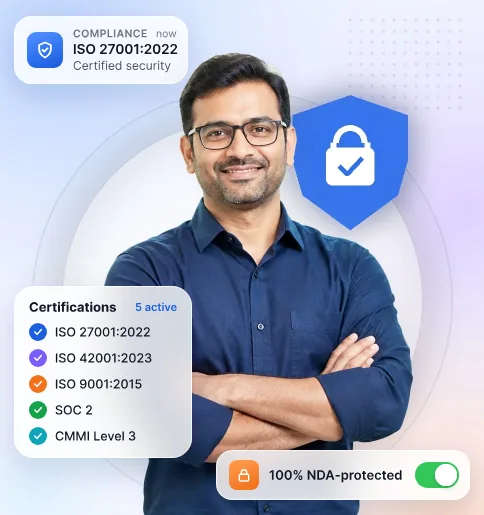
    • ISO 27001:2022
    • ISO 9001:2015
    • SOC 2
    • CMMI Level 3
    • 100% NDA-protected
    Platform Capability
    • AWS Certified Solutions Practice
    • Multi-cloud: AWS, Azure, GCP
    • AI, Cloud & Blockchain
    Company & Credentials

    CIN U72900GJ2013PTC073284 · Certification & audit documentation available on request under NDA.

    Engagement Models

    Choose Who Leads Your Integration Delivery

    Choose the model around your management capacity and how well the scope is understood. Each option makes responsibility for priorities, delivery, acceptance, and changes explicit.

    01 / 03

    Staff Augmentation

    Add integration engineering capacity to a team you manage. Your technical lead directs the backlog and architecture; eSparkBiz engineers contribute to the agreed tasks within your delivery process.
    Add Data Integration Engineers
    • You set priorities and assign work
    • Your lead manages dependencies and releases
    • Engineers follow your repository review process
    • You provide access and source expertise
    • Your data owners accept completed work
    • You approve backlog and scope changes

    FAQs

    Frequently Asked Questions

    Straight answers on integration cost, real-time sync, iPaaS versus custom builds, and migration, so you can see how eSparkBiz compares with other integration firms before a no-cost first call.

    How should I compare different approaches to enterprise data integration?

    Test four patterns against your actual flows, as eSparkBiz does in every assessment: point-to-point APIs for a handful of systems, an iPaaS when many apps share common connectors, ETL or ELT pipelines for reporting loads, and event streaming when minutes matter. Score each on freshness, recovery effort, license cost and future maintenance.

    How do cloud data integration platforms differ from on-premise integration?

    Billing and control differ most, and eSparkBiz helps clients weigh both. Cloud platforms run connectors as a managed service billed by usage, so setup is quick but costs climb with volume. On-premise tools keep data inside your network and suit restricted sources, though you patch and scale them yourself. Many clients choose a hybrid.

    Is eSparkBiz affordable for startups that need data integration?

    Yes, eSparkBiz engagements open at $10,000 and engineering time stays under $25 an hour, which suits startups that need two or three apps talking before a funding round. We begin with managed connectors where they fit and hand-build only what they miss, so monthly running costs stay predictable as you grow.

    What criteria should I use to select a data integration vendor?

    Ask every vendor, eSparkBiz included, for ISO 27001 or similar certification, production references on systems like yours, a written plan for failed and repeated records, and clear ownership of credentials and mappings after handover. A CMMI Level 3 process, like ours, signals repeatable delivery. Finally, compare build cost and yearly running cost as separate numbers.

    What do data integration services typically cost a mid-sized company?

    With eSparkBiz, budgets start from $10,000, while engineering hours cost less than $25 each. From there, the total grows with each extra system you connect, any custom connectors, the data volume involved and how fresh that data must be. Budget separately for platform licenses, cloud usage and support after go-live.

    Does eSparkBiz use ETL and ELT platforms or build custom pipelines?

    Both, depending on fit. eSparkBiz evaluates managed ETL and ELT tools, open-source frameworks, and cloud-native services against connector coverage, volume, and licensing costs. Where a tool handles most of a flow, the team configures it, adds AI-assisted mapping suggestions reviewed by an engineer, and codes only the remaining sources.

    Who can help with a complex data migration project?

    eSparkBiz handles complex data migrations for enterprise systems. We profile source data first, agree reconciliation checks with your data owners, and rehearse the cutover on a copy of the data. Old systems stay readable until the business signs off, so you can fall back if issues surface.

    Which data integration services support real-time syncing between business apps?

    Three methods cover most needs, and eSparkBiz builds all of them, including change data capture from databases, webhooks from SaaS apps and message queues between services. For two-way sync we add conflict rules, so a record edited in two apps keeps the newer change. Reserve near-real-time for decisions that need it, since it costs more.

    Is an iPaaS better than custom integration for connecting applications?

    In eSparkBiz projects, an iPaaS speeds up common SaaS connections, gives business users visual workflows and handles retries out of the box, while custom code wins for unusual legacy systems, very high volumes or tight budgets. We often mix both, keeping standard apps on an iPaaS and building adapters where per-task pricing gets expensive.

    Can eSparkBiz deliver secure data integration that meets US regulations?

    Yes, eSparkBiz carries ISO 27001 security plus ISO 9001 quality certificates and signs a nondisclosure agreement before your data reaches us. For HIPAA, PCI DSS, GLBA or state privacy laws, we encrypt data in transit and at rest, mask sensitive fields, restrict access by role and log each run so your auditors can trace it.

    Can I get a demo before signing with a data integration company?

    eSparkBiz opens with a first consultation at no charge and, where useful, a 15-day trial carrying no risk. Rather than slides, we connect one real source to a test destination so you see mappings, error alerts and reconciliation results on your own data. That reveals more than a polished platform walkthrough.

    Which firms provide cloud-based data integration services?

    eSparkBiz is an AWS partner at Advanced Tier level with 400+ engineers and a data analytics offering listed on AWS Marketplace. Large consultancies and the services arms of platform vendors also do this work. Narrow your list to a few firms, then have each map one real data flow before quoting.

    Should we hire an in-house integration engineer or outsource to an integration company?

    Outsourcing to eSparkBiz gets you a full delivery team, or engineers added to your staff through augmentation, at rates below $25 hourly. One in-house engineer handles maintenance but struggles when a project needs connectors, cloud setup and testing together. Many companies outsource the build and keep one internal owner for daily support.

    Who are the top providers for real-time data integration projects?

    eSparkBiz belongs on that list, having built business intelligence software for a property company with real-time sync and outside data feeds. Strong candidates show change capture running in production, not only nightly batches, and can explain how they replay missed events after an outage.

    How quickly can eSparkBiz deliver our first working integration?

    eSparkBiz starts once scope is signed and system access is granted. A first working flow between two systems typically takes four to six weeks, while multi-system programs run several months depending on approvals and data history. Delayed access to source systems, rather than coding, is the most common reason integration timelines slip.


    Resources

    Insights from our engineering leaders.

    Our team shares practical insights on the technologies and engineering decisions shaping enterprise software today, grounded in real client work.