Enterprise Software Development Services

Connect Departments and Keep Complex Business Processes Moving

eSparkBiz builds enterprise applications, business modules, and portals around your operations. Connect existing systems, reduce manual handoffs, and give teams clearer ownership of their work. Our AI-native engineering approach keeps business rules, security, and maintainability central to the build.

  • 15+ Years of Experience
  • 400+ Engineers
  • 4.9/5 Clutch Rating
  • ISO 27001 & ISO 9001
  • 1,000+ Projects Delivered
Core Objective

Give teams a shared workflow with clear responsibilities, so work moves between departments without repeated entry or unclear approval status.

Business ROI

Reduce duplicate entry and time lost between teams. Measure processing time and rework against a baseline, then compare realized benefits with total implementation and operating costs.

Tech Stack We Evaluate
  • NET and Java
  • React and Angular
  • FastAPI
  • AWS and Azure
Service Scope

Enterprise Software Built Around Connected Business Processes

Enterprise software development is the design, construction, integration, and support of applications that manage business processes across departments. It combines workflow logic and shared data with user permissions, system connections, and operational controls suited to the organization’s requirements.

Choose custom development when essential processes exceed packaged software’s capabilities. Configure an existing platform when it fits; consider integration for disconnected systems or modernization for an application worth retaining.

What this can include Connected Delivery Workstreams

  • 01. Build

    Business Applications

    Build internal applications, operational modules, and customer or partner portals around business rules, approval paths, and exceptions.

  • 02. Connect

    Connected Systems and Data

    Connect enterprise applications through agreed interfaces, with data mapping, migration checks, and recovery behavior for failed exchanges.

  • 03. Secure

    Access and Operational Controls

    Design permissions, approval authority, sensitive-data handling, and audit records around business responsibilities and security requirements.

  • 04. Operate

    Release and Ongoing Operation

    Prepare tested releases, rollout guidance, monitoring, and support responsibilities so the application has a clear operating owner.


Enterprise Software Challenges

Where Disconnected Systems Slow Down Your Business

Disconnected tools can turn a shared business process into separate queues. These problems help identify where targeted application work could make a difference.

  • Work Gets Lost Between Teams

    A request moves from email to a spreadsheet to another department’s queue. Missing status and ownership delay completion; shared workflows make the next action visible.

  • Records Disagree Across Systems

    Customer or order details differ between applications, forcing staff to reconcile them manually. Clear source ownership and validation rules help prevent conflicting updates.

  • Permissions Miss Business Responsibilities

    Employees receive broad access because applications cannot represent delegated authority or separation of duties. Role and approval design should reflect who can act, review, and authorize.

  • Peak Demand Exposes Bottlenecks

    An application works during normal use but slows when multiple teams submit transactions together. Representative load tests help identify database, processing, and integration constraints.

  • Small Changes Affect Other Teams

    Changing a shared field breaks a downstream report or integration. Documented interfaces and regression tests help teams assess the impact before approving a release.

  • New Software Leaves Workarounds Intact

    Employees return to spreadsheets when a new application overlooks exceptions or adds steps. Testing real tasks with users helps uncover adoption barriers before rollout.


Our Services

Enterprise Software Development Capabilities

Build a new enterprise application, extend a business platform, or add a connected module. Our scope brings application engineering, integration, data, and targeted AI work together around the release you need.

  • Discovery and Enterprise Architecture

    Clarify the process worth changing and the systems it touches. Compare build, buy, and extension options before defining application boundaries and a feasible delivery scope.

    • Workflow and dependency mapping
    • Architecture options and decision records
    • Prioritized requirements and acceptance criteria
  • Enterprise UX and UI Design

    Design interfaces around how employees complete tasks, including approvals and exceptions. Validate prototypes with representative users before committing to detailed application development.

    • Role-specific journeys and prototypes
    • Accessibility and interaction design
    • User testing and design specifications
  • Custom Enterprise Application Development

    Build business applications and portals around your operating rules. Design access and sensitive-data controls alongside transaction logic, with identity integration and exception paths suited to existing systems.

    • Business logic and transaction validation
    • Single sign-on, authorization, and audit retention
    • Web interfaces, backend services, and secrets handling
  • Enterprise System Integration

    Connect applications so a completed action in one system can trigger the right next step elsewhere, with explicit handling for delayed or failed exchanges.

    • API contracts and authentication
    • Event mapping and duplicate handling
    • Retries, reconciliation, and failure alerts
  • Application Data Migration

    Move the records a new application needs while preserving their meaning and relationships. Profile duplicate identifiers and incomplete records, then rehearse conversion and reconciliation before production cutover.

    • Source profiling and field mapping
    • Trial migrations and reconciliation reports
    • Cutover checkpoints and recovery planning
  • Workflow Automation and AI Integration

    Automate predictable routing with rules. Evaluate AI for document extraction or summarization when representative testing, data permissions, and human review support the task.

    • Rules, triggers, and exception queues
    • AI evaluation against task baselines
    • Permission checks and human approval
  • Quality Assurance and Security Testing

    Test complete transactions across user roles, connected systems, and peak loads. Include denied-access checks and vulnerability review so release decisions reflect business behavior and technical risk.

    • Functional and integration regression tests
    • Load testing with representative scenarios
    • Authorization, dependency, and vulnerability checks
  • Cloud Deployment and DevOps

    Prepare repeatable deployments suited to your hosting requirements. Connect release controls with monitoring and recovery procedures so operators can manage changes after launch.

    • Environment configuration and deployment pipelines
    • Release approvals and rollback procedures
    • Application telemetry and alert routing
  • Application Maintenance and Support

    Keep the application useful as workflows and dependencies change. Define maintenance scope around operational priorities, with clear responsibility for incidents, updates, and enhancements.

    • Incident triage and corrective fixes
    • Dependency updates and regression checks
    • Enhancement backlog and operating documentation
Deliverables and Outcomes

What You Receive and How to Evaluate It

Your scope defines the software, documentation, and acceptance evidence you receive. After rollout, track whether the application improves the business process it supports.

Expected Deliverables

Evidence Your Teams Can Inspect

The delivery scope should specify the contents and acceptance checks for each artifact, giving business owners and technical reviewers a shared basis for approval.

  • Requirements and Architecture Package

    Workflow maps, system boundaries, and prioritized requirements show what is included, which dependencies remain, and how each release will be accepted.

  • Application and Integration Package

    Application code, configuration, and interface specifications describe implemented behavior. Confirm repository access, third-party licenses, and source-code ownership terms in the contract.

  • Validation and Migration Evidence

    Test results, unresolved defects, and applicable data reconciliation reports show whether agreed checks passed and which risks still need a decision.

  • Operating and Handover Materials

    Deployment instructions, recovery runbooks, and support responsibilities prepare the receiving team to operate the application. A handover walkthrough verifies access and maintenance readiness.

Intended Outcomes

Improvements to Measure After Adoption

Set a baseline before rollout and review results over an agreed period. Account for adoption, workload changes, and operating costs when judging the benefit.

  • Shorter Processing Time

    Move requests through the business with fewer avoidable delays. Compare elapsed processing time before and after rollout, separating active work from approval waits.

  • Less Reconciliation and Rework

    Reduce time spent correcting mismatched information. Track conflicting records, duplicate entry, and reconciliation effort across the systems connected by the application.

  • More Consistent Task Completion

    Help employees finish routine tasks within the application. Review completion rates, exception frequency, and support requests to identify remaining workarounds or confusing steps.

  • More Reliable Daily Operation

    Make operation and future changes easier to manage. Track failed transactions, recovery time, change lead time, and escaped defects alongside maintenance effort and cost.


Case Studies

Enterprise Software Delivery in Practice

Review relevant project examples for the starting environment, delivered scope, and evidence of change. Consider how closely each example matches your integration and operating constraints.

Case study
  • Industry : eCommerce
  • Solution : AI Development

SmackDab is an AI-enabled Customer Relationship Management (CRM) platform engineered by eSparkbiz to help businesses build stronger customer relationships, optimize sales workflows, and drive sustainable.

  • Dedicated Product Team Engagement Model
  • 40 + Team Member
  • 48+ Months Partnership Duration
  • Live & Scaling Market Stage
Client outcomes

Rated 4.9 across 70 Reviews Verified on Clutch

Our clients value our technical expertise, clear communication, and commitment to quality. Read their feedback on working with eSparkBiz and see how our engineering teams support their business goals.
Sarah Malavenda

Sarah Malavenda

Co-Founder, Samata Health

eSparkBiz built a therapist matching platform for Samata Health and has supported ongoing updates and UX design since 2019, following a process of kick-off, prototyping, testing and launch. The CMO said the relaunch earned rave reviews and helped win more companies, and praised the fast, responsive team and their main contact, Siddharth.

Mihai-Eduard Iordache

Mihai-Eduard Iordache

eSparkBiz integrated frontend functionality with an existing design and backend for the client of a Romanian web agency, working with a CTO, a project manager and two developers over Skype. Deadlines were met and the end client was satisfied. The manager was impressed by the team’s communication and industry knowledge.

Use Cases

Enterprise Applications for Work Across Departments.

Enterprise software can support complete business applications or focused modules within an existing environment. Start with a process whose owners and operational bottleneck are clear.

  • Procurement · Finance

    Procurement and Purchase Approvals

    Give employees one place to request purchases and submit supplier information. Finance and procurement can review budgets, onboarding requirements, and exceptions before approved requests enter purchasing systems. Changed requests must still pass the appropriate spending and authority checks.

  • Sales · Finance

    Order-to-Cash Coordination

    Help sales, fulfillment, and finance follow an order from acceptance through invoicing. Surface credit holds, delivery changes, and billing exceptions in a shared workflow, with each system retaining responsibility for the records it owns.

  • HR · IT

    Employee Onboarding and Offboarding

    Coordinate HR, IT, and department tasks when employees join, move roles, or leave. Track equipment and access requests against effective dates, with accountable approvals before accounts are provisioned, changed, or disabled across connected systems.

  • Customers · Partners

    Customer and Partner Portals

    Let customers or partners submit requests, exchange documents, and check progress without repeated status emails. Connect portal activity to internal workflows while restricting each organization to its own records and authorized actions.

  • Operations

    Service Case and Exception Management

    Bring requests that fall outside normal processing into an assigned queue. Give operations teams the context, escalation rules, and decision history needed to resolve cases, while keeping sensitive notes visible only to authorized reviewers.

  • Legal · Finance

    Contract and Renewal Operations

    Help commercial, legal, and finance teams track obligations and upcoming renewals. Link approved contract versions to review tasks and billing records, with explicit handling for amendments so teams work from the same agreed terms.

  • Facilities · Operations

    Asset Maintenance Coordination

    Connect equipment records, service requests, and maintenance schedules for facilities and operations teams. Track work completion and parts usage, accommodating offline updates where needed and flagging unresolved tasks before equipment returns to normal service.

  • Knowledge · AI

    Internal Knowledge Assistance

    Help employees find approved policies and operating guidance through permission-aware search. Where AI answers are useful, evaluate them against source material, show references, and provide escalation when information is missing or conflicting.


Industries

Industries We Serve with Enterprise Software Development Services

eSparkBiz delivers enterprise software for industries such as SaaS, healthcare, fintech, logistics, and hospitality. We help teams modernize core systems, integrate scattered applications, streamline operations, and launch reliable software built for long-term use.

Enterprise Software Development Aligning SaaS Plan Changes, Provisioning and Billing

A midterm contract change touches access, customer success and invoicing at once, and each team sees a different account status. eSparkBiz connects those steps in one internal application, with tenant entitlement checks running before any plan change goes live.

What We Coordinate
  • Plan Amendments
  • Seat Provisioning
  • Entitlement Checks
  • Invoice Holds
  • Success Handoffs
  • AI Summaries
Compliance & Security:
  • Tenant data partitioned
  • Admin actions audited
  • SSO for staff consoles
  • Least-privilege support access
Success Metrics:

Plan changes reach billing and access without manual re-entry

Cost & Timeline

Starting Budget: From $10,000, for a single subscription workflow

Initial Delivery Phase: 10 to 14 weeks, including billing system connection tests

Drivers: Plan catalog size, billing platform, number of connected tools and contract amendment rules shape pricing.

FAQs
When should a SaaS business build internal operations software instead of stretching its billing platform?
eSparkBiz keeps stretching the billing platform on the table while its workflow settings still cover your plan rules. A separate internal application pays off once amendments, approvals and provisioning need logic across several tools, because forcing that into billing configuration creates fragile workarounds nobody wants to own.
How does enterprise software handle non-standard deal terms that sales agrees with large SaaS customers?
Each custom term becomes a structured field, such as a seat ceiling, discount end date or extra workspace, rather than a note in the CRM. Unusual terms route to finance for approval, then provisioning reads the approved values directly, so nobody retypes a contract.

Our Process

From Business Requirements to Supported Operation

Plan delivery around decisions your business and technical owners can approve. Each stage produces evidence for the next commitment, with scope adjusted to the engagement.

Step 01 · Scope

Define the Business Case and First Release

Start with the business process, its users, and the cost of leaving it unchanged. Discovery establishes the first release, existing capabilities to retain, and unresolved technical questions.

Talk Through Your Initial Scope
WHAT’S INCLUDED
  • Document users, volumes, and current processing costs
  • Compare packaged software, extensions, and custom development
  • Record scope exclusions and unresolved technical questions
  • Sponsor approves the scope brief and success measures
Outcome : Approved scope brief, success measures.
Technology Ecosystem

Technologies Evaluated for Your Enterprise Application

Select technologies around existing systems, team skills, and operating requirements. The options below are evaluation candidates; the chosen stack should suit your application and maintenance capacity.

Interfaces That Fit Employee Tasks

Evaluate interface frameworks against task complexity, accessibility, browser requirements, and your existing design system. Reusing established components can simplify adoption and ongoing maintenance.

  • React
  • Angular
  • TypeScript

Proposal Evaluation

Compare Enterprise Software Proposals on Shared Criteria

Ask each provider to explain the same responsibilities, evidence, and cost assumptions. The proposed provisions below give you a basis for discussing an eSparkBiz engagement.

What to Check in Any Proposal eSparkBiz Proposed Approach
Solution Fit and Scope
Does the proposal justify a custom build against configuration, extension, or integration? What usable business process will the first release support?
Compare viable options and retain suitable packaged capabilities. Define a complete first-release workflow and deferred work. Custom development adds control and ongoing maintenance responsibility.
Integration and Data Responsibility
Who provides interface access, corrects source data, and resolves failures across vendors or internal teams? Which external dependencies are excluded from the price?
Name owners on both sides of each interface. Specify failure tests, migration reconciliation, and recovery behavior. Price excluded dependencies separately; existing platforms also introduce coordination obligations.
Acceptance and Business Continuity
Which business scenarios, access checks, peak workloads, and recovery tests determine acceptance? Who authorizes production release and resolves outstanding risks?
Tie acceptance to observable behavior and test evidence. Rehearse cutover and recovery with named release owners. Phased rollout limits exposure but may require temporary parallel operation.
Lifecycle Cost and Handover
Does the estimate separate build and migration from licenses, hosting, support, and changes? Are repository access, third-party licenses, ownership, and exit responsibilities clear?
Document estimate assumptions, exclusions, and recurring costs. Agree source-code and IP terms in the contract, then specify handover and support duties. Approve changes with cost and schedule impacts.

Agreed Before Kickoff

  • First-release plan
  • Failure handling
  • Acceptance criteria
  • Handover terms
Why eSparkBiz

Why Choose eSparkBiz for Enterprise Software Development

eSparkBiz combines software, data, cloud, and AI engineering. Our enterprise engagement proposal connects that coverage with clear investment decisions, security requirements, and maintainable application ownership.

  • 15+ Years in Business
  • 20+ Industries Served
  • 4.9 Clutch 70 Reviews
  • 1,000+ Projects Delivered
  • 400+ Engineers
  • 1,000+ projects across 20+ industries, supported by expertise across 45+ technologies.
  • Collaboration across 10+ time zones combines agreed working hours with named contacts, progress reviews, and escalation paths.
  • Clear IP ownership and confidentiality terms address custom work, third-party licenses, and NDA obligations.
  • Discovery-led planning aligns your goals, scope, and technical dependencies before delivery begins.
  • 95% client retention, earned by staying accountable after go-live.
  • ERP and CRM integrations keep enterprise data consistent across departments.
  • Featured in IEEE Computer Society’s U.S. Software Development Companies list.
  • Role-based access controls and audit trails satisfy enterprise compliance reviews.
  • Named among the Leading Software Development Companies Roundup by IPLocation.
  • Appearing among ProjectManagers.net’s Best Software Development Companies to Work With.
  • Cross-functional engineering teams assess the right approach, including where AI adds value.
  • Flexible engagements with planned continuity define responsibilities, replacement arrangements, and knowledge transfer.
  • Showcased in CXOToday’s Top Software Development Outsourcing Companies coverage.
  • Transparent scope and costs require approval of budget and schedule changes before additional work begins.
  • Phased delivery with quality and security reviews provides checkpoints and clear release accountability.
  • Defined access, handover, and support options help your team maintain continuity during and after the engagement.
  • Quality and security reviews support delivery, with named owners responsible for release decisions.
  • Ongoing technical support options help you maintain your systems and respond to changing business needs.
  • Bring your business process, current systems, and unresolved constraints. We can discuss the engineering scope and responsibilities that would make an engagement useful to your team.

    Share Your Requirements
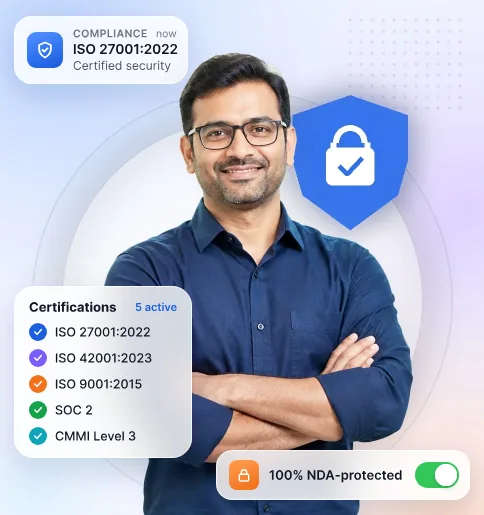
    Governance & security
    • ISO 27001:2022
    • ISO 9001:2015
    • SOC 2
    • CMMI Level 3
    • 100% NDA-protected
    Platform Capability
    • AWS Certified Solutions Practice
    • Multi-cloud: AWS, Azure, GCP
    • AI, Cloud & Blockchain
    Company & Credentials

    CIN U72900GJ2013PTC073284 · Certification & audit documentation available on request under NDA.

    Engagement Models

    Choose the Delivery Responsibility Your Team Needs

    Match the model to your internal capacity and scope certainty. Begin new application builds with discovery; resolve interface and data uncertainties before committing to implementation estimates.

    01 / 03

    Staff Augmentation

    Add engineering capacity to a team with an established backlog and technical leadership. Your managers coordinate delivery and system dependencies; assigned engineers follow your development practices and your reviewers accept the work.
    Add Engineering Capacity
    • Your team sets priorities and provides context
    • Your lead manages daily delivery
    • Engineers join your development workflow
    • You review and accept work
    • Capacity changes follow agreed terms
    • Access and handover responsibilities documented

    FAQs

    Frequently Asked Questions

    Get straight answers on cost, engagement models, vendor checks, AI features and support, so you can plan your project properly and avoid surprises once the work begins.

    1. How should we evaluate vendors for enterprise-grade software?

    Give every vendor, eSparkBiz included, the same process description and request scope, exclusions, acceptance criteria and pricing assumptions laid out identically. Then check references from clients with similar integrations, ask who resolves failed data exchanges, and confirm source-code ownership and handover terms before comparing price. Low quotes often leave out integration work.

    2. Roughly how much do enterprise software development services cost?

    Pricing at eSparkBiz opens at $10,000; that entry budget usually funds discovery or one focused first module. Across the market, a complete application with several integrations, data migration and role-based security often runs well into six figures. Workflow complexity, data quality and how many systems must connect move the estimate more than screen count does.

    3. How much should we budget to outsource enterprise software development?

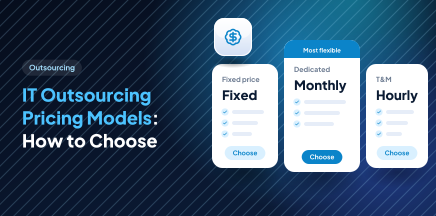
    Outsourcing to eSparkBiz costs under $25 per engineer hour, and the smallest project we accept is $10,000. Total spend depends on the model. A dedicated team bills monthly, fixed price suits defined releases, and staff augmentation adds individual engineers. Also budget for licenses, hosting, training and support, which sit outside development fees in most proposals.

    4. Which providers offer cloud-based enterprise software along with migration and modernization?

    eSparkBiz, holder of Advanced Tier standing with AWS, builds cloud-native enterprise applications and also migrates or modernizes existing ones, as do large integrators and cloud specialists. Ask each provider whether it recommends rehosting, refactoring or rebuilding your application and why, and how it plans data cutover and rollback during the move.

    5. How do we request an ERP system proposal from eSparkBiz?

    Share a brief with eSparkBiz covering the departments involved, current tools, transaction volumes and must-keep integrations, and we return a discovery proposal. For ERP specifically, we first test whether configuring a packaged ERP plus custom modules beats a full build, since a fully custom ERP carries long-term maintenance you must fund.

    6. Who builds AI and machine learning features into enterprise applications?

    Inside enterprise applications, eSparkBiz embeds AI for document extraction, demand forecasting and permission-aware search, competing with cloud providers’ consulting arms and smaller AI-focused studios. Pick a firm that tests models on your own data before committing, keeps human approval on consequential decisions, and can explain monthly running costs after launch.

    7. What qualities should we look for in an enterprise software development partner?

    Start with the basics, such as relevant domain experience, senior engineers who remain on your project, and a team that pushes back on unclear requirements. Operating since 2010, eSparkBiz also recommends asking how teams communicate and handle changes along the way.

    8. Which engagement model works best for enterprise software development?

    eSparkBiz clients pick from three setups. Staff augmentation suits teams with strong technical leadership needing extra hands. A dedicated delivery team fits an evolving application whose priorities shift often. Fixed price works when requirements are documented and the release is bounded. Many enterprises fix the price of discovery, then switch to a dedicated team.

    9. How do we book an eSparkBiz consultation on enterprise digital transformation strategy?

    Request a call through the eSparkBiz contact form; there is no charge for the first consultation, which covers your priority processes, current systems and constraints. From there we suggest whether a roadmap, a single application or an integration project should come first, and outline what discovery would cost and deliver before you commit.

    10. Can we hire eSparkBiz to build a custom CRM?

    Yes. eSparkBiz builds custom CRMs when sales, service or partner processes outgrow packaged tools, and also extends existing CRMs through their APIs when that costs less. We usually test the extension route first, then build only the account, pipeline or approval logic the platform cannot handle cleanly, keeping licenses and code in balance.

    11. Do enterprise software developers also handle mobile app integration?

    Mobile apps for field staff, managers and customers are part of eSparkBiz enterprise builds, sharing business rules and permissions with the core enterprise application through secured APIs. Offline use, device management, push notifications and app store releases need planning from the start, so ask any vendor how mobile and web releases stay in sync.

    12. Which firms provide ongoing maintenance and support for enterprise software?

    eSparkBiz maintains applications it builds, and inherited systems after a code review, covering incident fixes, dependency updates and planned enhancements. Original developers and dedicated support specialists offer similar terms too. Compare response commitments, who holds repository access, how regression testing works, and what knowledge transfer happens if you later change providers.

    13. How do enterprise software companies compare on scalability and security?

    Ask ISO 27001-certified eSparkBiz, and each rival on your shortlist, for load-test results from a comparable project and a walkthrough of how permissions, secrets and audit logs were designed. Scalability claims mean little without numbers from realistic peaks. Also confirm who performs vulnerability reviews and access-denial testing ahead of every release.

    14. Does eSparkBiz use agile project management for enterprise software?

    eSparkBiz delivers in short increments with working demos, a prioritized backlog and acceptance checks your product owner approves. Enterprise projects add governance on top: architecture decisions, change approvals that state budget and timeline effects, and release sign-off by named owners. That mix keeps agile speed without losing the control large organizations need.

    15. Who are the leading enterprise software developers for mid-market companies?

    Shortlists usually blend global integrators, regional specialists and mid-sized engineering shops such as eSparkBiz, whose 400+ engineers work under ISO 9001 certification. Mid-sized buyers should weigh senior attention and price alongside reputation. Ask who leads your project day to day, and compare the fixed scope each firm will actually commit to.


    Resources

    Insights from our engineering leaders.

    Our team shares practical insights on the technologies and engineering decisions shaping enterprise software today, grounded in real client work.