AI Workflow Automation Services

Keep Work Moving Across Systems With Fewer Manual Handoffs

When requests arrive as emails, documents, or support tickets, work can stall between teams. eSparkBiz builds AI workflows that interpret incoming information, coordinate system updates, and route decisions to the right people, with controls for exceptions.

  • 15+ Years of Experience
  • 400+ Engineers
  • 4.9/5 Clutch Rating
  • ISO 27001 & ISO 9001
  • 1,000+ Projects Delivered
Core Objective

Turn an incoming request into a tracked, completed task, with clear rules for automated actions and cases requiring human judgment.

Business ROI

Compare handling time, rework, and cost per correctly completed case against today’s baseline. Include implementation costs and the ongoing expense of operating the workflow.

Tech Stack We Evaluate
  • Microsoft Power Automate
  • Amazon Bedrock
  • PostgreSQL
  • Amazon CloudWatch
Service Scope

AI Workflow Automation Connects Information to Action

AI workflow automation uses AI to interpret information within a defined business process, then coordinates the next actions across people and software. The service combines model configuration with system connections, approval rules, and exception handling so work can progress beyond an isolated AI response.

Use it when varied documents or messages need interpretation before action. Fixed rules may suffice for structured inputs. AI Integration Services fits projects limited to connecting an AI capability.

What this can include Connected delivery workstreams

  • 01. DESIGN

    Workflow Design

    Map triggers, decision points, and completion conditions to define what runs automatically and where people remain responsible.

  • 02. PROCESS

    AI-Assisted Processing

    Extract relevant details, classify requests, or prepare drafts, with checks before outputs influence downstream work.

  • 03. APPROVE

    System Actions and Approvals

    Connect approved outputs to business applications, with access limits and human authorization for consequential changes.

  • 04. RECOVER

    Exception Handling and Monitoring

    Route incomplete or failed cases to an owner, track run history, and define recovery procedures.


Challenges We Address

Resolve the Bottlenecks That Keep Work Waiting

The time spent sorting requests, chasing approvals, and correcting failed updates can outweigh the AI task itself. Address these bottlenecks across the complete workflow.

  • Requests Arrive Without Structure

    Employees read each message or attachment before deciding what it needs. AI-assisted classification and extraction can prepare structured information for the next workflow step.

  • Staff Reenter the Same Information

    Teams copy details between applications when processing results never reach the system of record. Validated integrations connect those results to permitted updates and reduce repeated entry.

  • Approvals Disappear Into Inboxes

    Completed work still waits for a decision, while staff chase responses. Assigned reviewers, reminders, and escalation paths make pending approvals visible to process owners.

  • Failures Create Duplicate Work

    A timed-out action may have completed in the receiving system. Blind retries can duplicate records; completion checks and duplicate protection guide safe recovery.

  • AI Errors Reach Downstream Systems

    A plausible classification or extracted value can be wrong. Validation rules and review queues help intercept uncertain or invalid outputs before they trigger consequential actions.

  • Pilot Results Hide Operating Costs

    A convincing demo can overlook review effort, usage charges, and maintenance. Test representative workloads against the current process before committing to a wider rollout.


Our Services

AI Workflow Automation Services We Offer

Reduce the coordination needed to complete everyday work. eSparkBiz connects AI processing with business applications, review screens, and recovery logic so each workflow can reach a verifiable result.

  • Workflow Assessment and Design

    Choose a useful starting point by examining transaction volume, manual effort, and exceptions. We map dependencies and separate tasks needing AI interpretation from predictable rules.

    • Current-state maps and handling baselines
    • AI suitability and dependency assessment
    • Target workflow and scope boundaries
  • Workflow Orchestration

    Keep multi-step work coordinated across applications and people. Triggers and branching logic direct each case, while persistent state preserves its progress through waits and interruptions.

    • Event triggers and conditional branches
    • State persistence and timeout handling
    • Completion rules and correlation identifiers
  • Intelligent Intake and Classification

    Give downstream teams usable information sooner. We configure document extraction and request classification, checking required fields before a case enters the operational workflow.

    • Document parsing and field extraction
    • Request categories and routing outputs
    • Schema checks and missing-data detection
  • AI-Assisted Task Processing

    Reduce the effort of preparing routine work products. We configure AI steps that draft responses or summarize case context within agreed content and access boundaries.

    • Task prompts and output formats
    • Permission-aware business context retrieval
    • Content checks and fallback responses
  • Business-System Integration

    Put approved results to work in existing applications. We connect authorized actions and confirm record changes, enforcing permissions and action checks outside model responses.

    • API contracts and field mappings
    • Least-privilege authentication and secret management
    • Action restrictions and write validation
  • Human Review and Approval Workflows

    Reviewers should not have to reconstruct a case. We present the source material and proposed action together, then record authorization before execution.

    • Review queues and decision context
    • Role-based approvals and action limits
    • Escalation paths and decision records
  • Exception Handling and Recovery

    Resolve interrupted work with its context intact. We distinguish recoverable failures from cases needing investigation, giving operations staff a clear route to resume or reconcile processing.

    • Bounded retries and duplicate protection
    • Exception queues with recovery context
    • Reconciliation and compensating actions
  • Workflow Evaluation and Testing

    Check whether the workflow completes its business task correctly under the intended workload. Testing covers AI outputs, permissions, rejected approvals, and failures in connected systems.

    • Representative cases and acceptance thresholds
    • Adversarial input and authorization tests
    • Regression suites and load testing
  • Workflow Monitoring and Optimization

    See where work stalls and what each run costs. Monitoring covers completed cases and review queues, with maintenance responsibilities defined for the selected operating scope.

    • Run traces and failure alerts
    • Review-effort and usage-cost tracking
    • Version controls and operating runbooks
Deliverables and Outcomes

What You Receive and How Progress Is Measured

Agree on the delivery package and success measures before implementation. Evaluate the complete workflow, including the work that remains with your employees.

Expected Deliverables

A Workflow Delivery Package Your Team Can Inspect

The project scope determines the final package. Use these artifacts to verify behavior, accept changes, and prepare the people who will operate the workflow.

  • Workflow Specification

    A documented path from trigger to completion, including dependencies, decision owners, and exception routes, reviewed against representative cases by your process owner.

  • Implemented Workflow and Connections

    Versioned workflow configuration and integration components, with deployment instructions and tests confirming approved actions reach the correct records.

  • Evaluation and Acceptance Evidence

    A representative test set with expected results, agreed thresholds, and failure findings, supporting a release decision by named business and technical owners.

  • Operating and Handover Materials

    Runbooks covering alerts, unresolved cases, access administration, and recovery, with a walkthrough to confirm the receiving team can follow them.

Intended Outcomes

Improvements Measured Against Your Baseline

Compare equivalent workloads over an agreed observation period. Input quality, integration behavior, reviewer availability, and staff adoption all affect whether the workflow delivers the intended improvement.

  • Less Manual Handling

    Measure handling time per correctly completed case, including corrections and approvals, to distinguish reduced effort from work shifted to another team.

  • Shorter Completion Times

    Compare time from intake to confirmed completion, separating processing time from approval waits so remaining bottlenecks stay visible.

  • Fewer Unresolved Exceptions

    Monitor exception volume, age, and recovery time to assess whether failures reach an accountable owner and return to resolution.

  • Clearer Operating Economics

    Track cost per correctly completed case across model usage, platform charges, infrastructure, human review, support, and maintenance. Assess implementation investment separately; released capacity is not automatically cash savings.


Case Studies

Workflow Delivery in Practice

Assess project evidence through the original bottleneck, the systems involved, and the delivered scope, with results tied to a stated baseline and measurement period.

Case study
  • Industry : eCommerce
  • Solution : AI Development

SmackDab is an AI-enabled Customer Relationship Management (CRM) platform engineered by eSparkbiz to help businesses build stronger customer relationships, optimize sales workflows, and drive sustainable.

  • Dedicated Product Team Engagement Model
  • 40 + Team Member
  • 48+ Months Partnership Duration
  • Live & Scaling Market Stage
Client outcomes

Rated 4.9 across 70 Reviews Verified on Clutch

Our clients value our technical expertise, clear communication, and commitment to quality. Read their feedback on working with eSparkBiz and see how our engineering teams support their business goals.
Stefan H.

Stefan H.

CTO at IT Company

eSparkBiz supports an energy-management IT solutions company with design, development and testing, including frontend adjustments, small web apps, NPM packages and serverless Node.js APIs. The CTO said the team solved more problems in less time, built three new components and communicates well, with helpful staff. Testing expectations needed to be clarified early.

Sarah Malavenda

Sarah Malavenda

Co-Founder, Samata Health

eSparkBiz built a therapist matching platform for Samata Health and has supported ongoing updates and UX design since 2019, following a process of kick-off, prototyping, testing and launch. The CMO said the relaunch earned rave reviews and helped win more companies, and praised the fast, responsive team and their main contact, Siddharth.

Workflow Use Cases

Business Processes Suited to AI Workflow Automation.

Start with repeatable work whose inputs need interpretation and whose completion can be checked. These examples show how AI can support a defined operational process.

  • Customer support

    Customer Request Triage

    Mixed customer requests can reach the right team with less manual sorting. AI classifies intent, extracts account details, and prepares a routed case. Ambiguous messages retain their original context for review, reducing repeated handling.

  • Finance

    Invoice Exception Preparation

    Give accounts payable staff a prepared exception queue. Extract invoice details, compare them with purchase records, and assemble discrepancies for review. Keep payment authorization separate so a matching suggestion cannot initiate a payment on its own.

  • Procurement

    Supplier Onboarding

    Supplier onboarding often stalls while procurement and operations chase missing documents. A workflow can read submissions, flag gaps, and route complete packets to approvers. The supplier record is created only after required checks and approvals are recorded.

  • Employee Service Requests

    HR · IT

    Turn employee messages into actionable HR or IT requests. Identify the service needed, collect missing details, and route the request through the appropriate approval path. Restrict sensitive information to the staff responsible for resolving the case.

  • Sales · Delivery

    Sales-to-Delivery Handoffs

    Signed work needs a clear handoff into delivery. AI can summarize approved commitments and prepare onboarding tasks, while differences between contract terms and CRM fields go to review before dates, scope, or responsibilities enter project systems.

  • Legal · Contracts

    Contract Obligation Tracking

    Approved agreements can become trackable obligations. AI extracts candidate dates and responsibilities with source references; a contract manager confirms them before reminders are created. Legal interpretation and disputed terms remain with authorized reviewers.

  • Reporting

    Recurring Report Preparation

    Assemble recurring operational reports from approved data sources and draft commentary for the report owner. Calculate totals through defined logic, flag missing inputs, and require review before distribution so generated explanations do not become unchecked business records.

  • Orders

    Email Order Intake

    Convert emailed order requests into draft transactions for operations staff. Extract product references and quantities, validate them against current records, and route mismatches for clarification. Submit confirmed orders through authorized interfaces, with checks against duplicate creation.


Industries

Industries We Serve with AI Workflow Automation Services.

eSparkBiz provides AI workflow automation services for diverse industries, including SaaS, healthcare, fintech, insurance, logistics, and more. We help teams route requests, connect business systems, add human approvals, and handle exceptions with clear ownership.

AI Workflow Automation that takes New SaaS Accounts Live Faster

Activation workflows from eSparkBiz turn a signed subscription into tracked setup work. AI reads onboarding notes and drafts configuration tasks, rules follow each step across product and service systems, and tenant permissions limit every action.

What We Build:
  • Onboarding Note Reading
  • Configuration Task Drafts
  • Setup Step Tracking
  • Tenant Permission Checks
  • Incomplete Setup Alerts
  • Handoff to Customer Success
Compliance & Security:
  • SOC 2 controls
  • GDPR and CCPA user data
  • Tenant data kept separate
  • Permission for every automated action
Success Metrics:

Setup work stays tracked, permission-checked, and complete before accounts go live.

Cost & Timeline:

Starting Budget: From $10,000, shaped by product modules and setup steps per plan.

Initial Delivery Phase: 5 to 9 weeks, with timing influenced by connected tools and permission rules.

Drivers: Product modules, setup steps per plan, connected service tools and tenant permission rules shape pricing.

FAQs
Can a SaaS activation workflow handle enterprise customers with custom setup steps?
Yes. eSparkBiz builds the workflow so contract-specific steps, such as single sign-on or data imports, get added to that account’s plan while standard steps stay the same. Customer success managers see custom work beside the usual checklist, and the account is not marked live until every agreed step is confirmed.
How can SaaS customers see where their setup stands without emailing their CSM?
eSparkBiz can add a setup status view inside your product or a shared onboarding page. It reads the same task records the workflow updates, so customers see what is done, what is waiting on them and who to contact, and your team answers fewer status emails.
Can SaaS onboarding automation start before the contract is countersigned or payment clears?
It can start safe preparation work, such as drafting the configuration plan and booking a kickoff, while account creation and data access wait for the signed contract or cleared payment. eSparkBiz sets those trigger rules with your finance and sales owners, so nobody gets access before the deal is final.

Our Delivery Process

From Workflow Definition to Day-to-Day Operation

Each stage has an output and a decision owner. Business and technical reviewers can assess progress before the next commitment, with client dependencies and retained work made explicit.

Step 01 · Scope

Define the Workflow and Its Owner

Start with a bounded process and a named business owner. Establish its current performance and what successful completion means before deciding which steps to automate.

Describe Your Current Process
WHAT’S INCLUDED
  • Map triggers, participants, and completion conditions
  • Collect representative inputs and exception examples
  • Confirm the process owner's acceptance authority
  • Record baseline volume and handling effort
Outcome : Bounded workflow, named owner.
Technology Ecosystem

Technology Choices for Connected AI Workflows

We evaluate technology against the workflow and your existing environment. These are candidates for selection, not a prescribed stack or a claim of partnership.

Coordinate Workflow Steps and Recovery

Choose orchestration around wait times, transaction behavior, and operational ownership. An existing platform fits when its connectors and controls satisfy the workflow’s requirements.

  • Microsoft Power Automate
  • AWS Step Functions

Proposal Comparison

Compare AI Workflow Automation Proposals on Practical Terms

Use the same questions when evaluating any provider. The proposed approach below should become explicit scope, acceptance, and operating provisions in your agreement.

What to check in any proposal eSparkBiz Proposed Approach
Workflow fit and build approach
Can fixed rules or an existing platform meet the need? Identify where AI interpretation, agent-led decisions, or custom development is justified.
Evaluate existing tools first. Use AI where interpretation is needed. Custom orchestration adds flexibility but also development and maintenance responsibility
Integration and action ownership
Who provides access and usable source data? Does scope include confirming business updates and recovering failed transactions?
Your owners authorize access and data decisions. We define completion checks and recovery responsibilities in scope. More integrations increase coverage, testing effort, and dependencies.
Acceptance and rollout evidence
Do tests cover completed transactions, failed dependencies, and human review? Name who can release, pause processing, and accept remaining defects.
Agree representative cases and release thresholds with business and technical owners. Expand automation when evidence supports it and staff can handle the remaining exceptions
Operating costs and support
Separate implementation from licenses, model usage, infrastructure, human review, and maintenance. Make support boundaries and change costs explicit.
Compare cost per correctly completed case with the baseline. Human review adds effort while helping contain errors. Confirm support coverage and how changes will be priced.

Agreed Before Kickoff

  • Workflow scope
  • Named owners
  • Acceptance evidence
  • Itemized costs
Why eSparkBiz

Engineering Support for the Workflow Around Your AI

AI applications need more than models. They need reliable software architecture, secure integrations, testing, scalable infrastructure, and a team that understands the product behind the AI.

  • 15+ Years in Business
  • 20+ Industries Served
  • 4.9 Clutch 70 Reviews
  • 1,000+ Projects Delivered
  • 400+ Engineers
  • 1,000+ projects across 20+ industries, supported by expertise across 45+ technologies.
  • Collaboration across 10+ time zones combines agreed working hours with named contacts, progress reviews, and escalation paths.
  • Clear IP ownership and confidentiality terms address custom work, third-party licenses, and NDA obligations.
  • Discovery-led planning aligns your goals, scope, and technical dependencies before delivery begins.
  • 95% client retention, earned by staying accountable after go-live.
  • Recognized by RevenueBase for Top AI Workflow Automation Services.
  • Cross-functional engineering teams assess the right approach, including where AI adds value.
  • Process mapping ranks manual steps by automation value before building.
  • Featured in Clutch’s Global Summer 2026 NLP recognition.
  • Flexible engagements with planned continuity define responsibilities, replacement arrangements, and knowledge transfer.
  • Exception queues route low-confidence cases to humans instead of guessing.
  • Document-heavy processes like invoices and claims are automated with NLP.
  • Run-level monitoring catches silent failures and drifting automation accuracy early.
  • Transparent scope and costs require approval of budget and schedule changes before additional work begins.
  • Phased delivery with quality and security reviews provides checkpoints and clear release accountability.
  • Defined access, handover, and support options help your team maintain continuity during and after the engagement.
  • Ongoing technical support options help you maintain your systems and respond to changing business needs.
  • Bring one workflow, the systems it touches, and the point where work gets stuck. We can discuss the engineering scope and decisions needed to proceed.

    Talk Through Your Workflow Bottleneck
    Governance & security
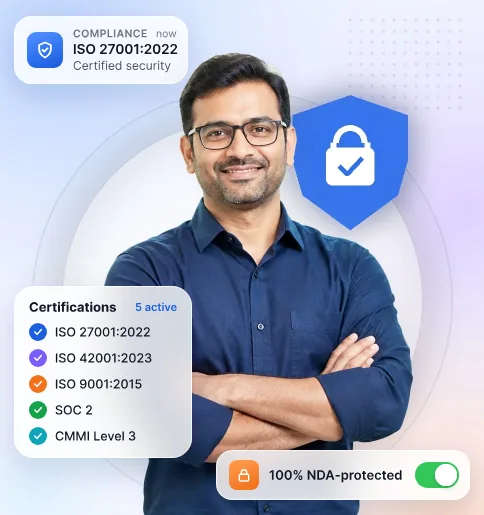
    • ISO 27001:2022
    • ISO 9001:2015
    • SOC 2
    • CMMI Level 3
    • 100% NDA-protected
    Platform Capability
    • AWS Certified Solutions Practice
    • Multi-cloud: AWS, Azure, GCP
    • AI, Cloud & Blockchain
    Company & Credentials

    CIN U72900GJ2013PTC073284 · Certification & audit documentation available on request under NDA.

    Engagement Models

    Choose the Delivery Responsibilities You Need

    Select an engagement around who will direct the work, coordinate implementation, and accept the result. Scope, staffing, and operating commitments are agreed for your project.

    01 / 03

    Staff Augmentation

    Add relevant engineering capacity to a workflow initiative your team leads. You retain backlog ownership and delivery management; eSparkBiz engineers complete assigned work within your architecture and review practices.
    Discuss the Skills Your Team Needs
    • Your lead sets priorities and assignments
    • Your team manages dependencies and releases
    • Engineers follow agreed repository and review practices
    • You approve work against task criteria
    • Scope changes enter your managed backlog
    • Required skills and allocation agreed upfront

    FAQs

    Frequently Asked Questions

    Clear answers on what AI workflow automation costs, how long a first workflow takes, how to compare providers and how to get a scoped quote from eSparkBiz for your process.

    Which companies offer AI workflow automation for enterprise operations?

    Since 2010 we have delivered 1,000+ projects with a team of 400+ engineers, and clients rate us 4.9 across 70 verified Clutch reviews. You get senior engineers, a named delivery lead and transparent weekly reporting, with one partner accountable from discovery to post-launch support.

    Which AI workflow automation solutions work best for customer service teams?

    For customer service teams, eSparkBiz builds workflows that sort incoming requests, pull account details and send each case to the right team with its history attached. Packaged help desk features suit simple routing. Custom work pays off when requests need checks across several systems or approval before refunds, credits or account changes.

    Which providers offer AI workflow automation for marketing teams?

    eSparkBiz automates marketing operations work such as campaign request intake, content review routing, lead handoff to sales and recurring report preparation. We connect these steps to the tools your team already uses and keep brand or legal approval before anything is published. Ask any provider which steps stay with your marketers.

    Which AI workflow automation services offer easy drag-and-drop interfaces?

    As visual builders such as Microsoft Power Automate meet your needs, eSparkBiz uses them and adds custom code only where they fall short. Drag-and-drop tools let your team adjust simple steps later without waiting on developers. Check how each option handles approvals, errors, access rights and license costs at your volume before you commit.

    What pricing models do enterprise AI automation providers use?

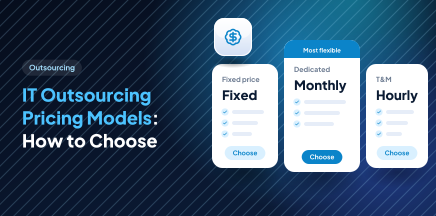
    Most providers combine a build fee with ongoing costs. The build is usually fixed price for a defined scope or monthly for a dedicated team. Ongoing costs include platform licenses, per-run or per-user charges, AI model usage, hosting and support. Ask for all of these in one estimate before comparing quotes side by side.

    How do AI workflow automation providers compare on pricing and features?

    Compare providers on the same workflow, not on feature lists. Ask each for a fixed build price, monthly running costs at your expected volume and what happens when a step fails. Then check who owns the code, how changes are priced and whether human approval steps are included or charged as extras later.

    How much does AI workflow automation cost with eSparkBiz?

    eSparkBiz projects start from $10,000 for a first workflow, with rates under $25 per hour. Final cost depends on how many systems the workflow connects, how varied the incoming documents are and how many approval steps you need. We separate the build price from monthly running costs, so you see both before signing.

    How can AI workflow automation services help a small business?

    Small teams gain most by automating one repetitive process first, and eSparkBiz scopes work that way. Think order emails, invoice checks or customer request sorting, so staff copy fewer details between tools. Starting small keeps cost near our $10,000 minimum and shows whether a second workflow is worth it. Simple tasks may only need off-the-shelf tools.

    How do you connect AI workflow automation to an existing CRM?

    Most CRMs connect through an official API or supported connectors, and eSparkBiz maps each field the workflow reads or updates. AI output is checked against rules before it changes a record, user permissions are respected and every update is logged. We test on a sandbox copy of the CRM before touching live data.

    What should we check before choosing an AI workflow automation vendor?

    Pick a vendor who asks about your current process before proposing tools. Check they test failure cases, not only successful runs, and show how staff approve risky actions. Confirm who owns the code, the monthly running costs and who fixes problems after launch. A short paid pilot answers most of these.

    Does eSparkBiz offer consulting for AI workflow automation strategy?

    Yes. eSparkBiz runs workflow assessments that review request volume, manual effort and common errors across your processes, then rank which ones suit AI and which only need fixed rules. You get a target workflow design, a cost estimate and a pilot plan. Strategy work can stand alone or lead straight into the build.

    How long does eSparkBiz take to deliver a first automated workflow?

    A first working pilot from eSparkBiz typically takes 4 to 14 weeks, depending on the industry, the number of connected systems and how quickly test access and sample documents arrive. Simple intake and routing sits at the shorter end. Patient, financial or claims data takes longer because review and access rules need more testing.

    Should we hire an AI automation agency or build workflows in-house?

    Both routes work, and eSparkBiz supports either: building the first workflows end to end, or adding engineers to an internal team that owns the roadmap. An agency makes sense when you need integration and AI skills quickly. In-house fits when you already have engineers who know your systems and can maintain workflows long term.

    How do I get a quote from eSparkBiz for AI workflow automation?

    Send eSparkBiz a short description of the workflow, the systems it touches, rough monthly volume and a sample request, including one that usually causes trouble. We sign an NDA before you share any data. After a scoping call, you receive a written estimate with build cost, timeline, assumptions and expected running costs.

    Is AI workflow automation safe for sensitive business data?

    eSparkBiz is ISO 27001 certified and signs an NDA before any data is shared. Workflows use the minimum access each step needs, keep secrets out of code and log every automated action. You decide where data is processed, how long it is kept and which actions always need a person to approve them first.


    Resources

    Insights from our engineering leaders.

    Our team shares practical insights on the technologies and engineering decisions shaping enterprise software today, grounded in real client work.