Data Science Services

Use Your Data to Make Better Forecasts and Business Decisions

When reports leave important questions unanswered, eSparkBiz’s data science services help you improve forecasts, investigate business problems, and evaluate potential actions. We build statistical and machine learning models, then test their usefulness before you commit to implementation.

  • 15+ Years of Experience
  • 400+ Engineers
  • 4.9/5 Clutch Rating
  • ISO 27001 & ISO 9001
  • 1,000+ Projects Delivered
Core Objective

Determine whether your available data can support a better decision, then test an analytical approach against your current method.

Business ROI

Compare pilot improvements with the cost of forecast errors or missed opportunities. Include development, integration, infrastructure, maintenance, and human review in the investment decision.

Tech Stack We Evaluate
  • Python
  • R
  • SQL
  • scikit-learn
Service Scope

Data Science Connects Business Questions With Testable Evidence

Data science services combine data exploration, statistics, and machine learning to answer business questions and evaluate possible actions. The work can include preparing analytical datasets, testing hypotheses, building predictive models, and documenting how findings should inform decisions or further implementation.

Use data science when a decision needs investigation, experimentation, or prediction. Routine reporting may fit Data Analytics & BI; unreliable source pipelines may require Data Engineering first.

Assess data readiness

What this can include Connected delivery workstreams

  • 01. Define

    Problem Framing and Data Assessment

    Define the decision, establish a baseline, and assess whether the available records can support a meaningful investigation.

  • 02. Study

    Statistical Analysis and Experimentation

    Examine relationships, test hypotheses, and design experiments to distinguish plausible explanations from evidence strong enough to guide action.

  • 03. Predict

    Predictive Models and Validation

    Build and compare models using suitable test data, business error costs, and checks for uneven performance across relevant groups.

  • 04. Activate

    Decision Support and Implementation Planning

    Receive reproducible analysis, recommendations, and an implementation plan. Production integration and ongoing MLOps can be separately scoped when recurring use is needed.


Challenges We Address

Where Data Science Initiatives Lose Business Value

Useful analysis must survive imperfect data and real decisions. We help teams address the gaps that make results difficult to trust or apply.

  • An Unclear Decision to Support

    A modeling initiative starts without a specific business decision. Work expands while value stays uncertain. Identify who will use the result and what action changes.

  • Incomplete or Misleading Historical Data

    Missing outcomes, inconsistent definitions, or underrepresented customers can undermine analysis. Assess coverage and labeling before treating historical records as a reliable basis for decisions.

  • Test Results That Overstate Performance

    A model scores well because testing exposes information unavailable in real use. Separate evaluation data and check prediction inputs before relying on the result.

  • Forecasts That Miss Changing Conditions

    Historical averages become less useful when demand patterns shift. Test forecasts across relevant periods and quantify uncertainty so planners can judge when to intervene.

  • Patterns Mistaken for Causes

    A metric improves after a business change, but other factors may explain it. Use suitable experiments or qualified analysis before attributing the improvement to that change.

  • Findings Without an Operational Owner

    Analysis ends in a notebook while teams keep using the old process. Define the decision owner, delivery format, and acceptance criteria before planning integration.


Our Services

Data Science Services We Offer

Choose the analytical work your business needs, from testing a product change to forecasting demand or allocating limited resources. Data readiness determines which methods are feasible.

  • Data Science Consulting

    Focus investment on a question your team can act on. We translate business goals into analytical tasks with a clear baseline and feasibility criteria.

    • Decision and stakeholder mapping
    • Baseline and success criteria
    • Feasibility and dependency assessment
  • Exploratory Data Analysis

    Understand what your data can reliably tell you before modeling begins. We examine coverage, distributions, and inconsistencies to identify useful signals and material gaps.

    • Missing data and distribution profiling
    • Cohort and sampling checks
    • Data quality findings
  • Statistical Modeling

    Estimate relationships and their uncertainty so teams can weigh competing explanations. We select statistical methods suited to the question and document assumptions that affect interpretation.

    • Regression and statistical estimation
    • Uncertainty and sensitivity analysis
    • Assumption checks and limitations
  • Experiment Design and Analysis

    Assess whether a proposed change improves the outcome that matters. We design controlled comparisons where feasible and explain the limitations of observational alternatives.

    • Hypotheses and outcome definitions
    • Sample size and power planning
    • Effect estimates and validity checks
  • Time Series Forecasting

    Support planning with forecasts tested against realistic historical conditions. We compare suitable methods with simple baselines and show uncertainty over the required planning horizon.

    • Seasonality and trend assessment
    • Rolling backtests and baseline comparisons
    • Forecast intervals and error analysis
  • Predictive Modeling

    Help teams prioritize actions using estimates of future outcomes. We develop classification or regression models and evaluate errors against the consequences of the intended decision.

    • Feature and target definitions
    • Model training and tuning
    • Threshold and error cost evaluation
  • Segmentation and Anomaly Detection

    Identify groups that warrant different treatment or unusual records that need review. We assess whether detected patterns remain meaningful beyond the initial dataset.

    • Clustering and segment profiles
    • Anomaly scoring and review samples
    • Stability and usefulness checks
  • Model Validation and Interpretation

    Give decision owners evidence to judge a model’s suitability. We examine performance on held-out data and explain important errors, subgroup differences, and limits.

    • Leakage and evaluation design review
    • Subgroup and calibration checks
    • Interpretation and limitation documentation
  • Optimization and Simulation

    Compare feasible choices when resources are limited. We model objectives and operating constraints, then test how recommendations respond to changes in demand or assumptions.

    • Objective functions and constraint modeling
    • Scenario simulation and sensitivity testing
    • Feasibility checks against operating limits
Deliverables and Outcomes

Evidence Your Team Can Inspect and Use

Agree on the artifacts your decision needs, then evaluate their usefulness separately from model scores. Deliverables and acceptance criteria depend on the selected scope.

Expected Deliverables

A Reviewable Analytical Package

The agreed package should let business owners understand the recommendation and technical reviewers trace how the analysis reached it, including unresolved questions.

  • Decision and Data Assessment

    A documented question, baseline, data inventory, and quality findings, with gaps tied to the analyses they limit or prevent.

  • Reproducible Analysis and Model Code

    Versioned code, preparation steps, and environment instructions that let the receiving team reproduce agreed results from an approved data snapshot.

  • Validation and Limitations Report

    Evaluation datasets, baseline comparisons, and error breakdowns, with assumptions and acceptance results documented so reviewers can judge the proposed use.

  • Implementation and Handoff Plan

    Input and output specifications, reproducible environment notes, and monitoring requirements. Identify dependencies, interfaces, and responsible teams before separately scoped integration or support begins.

Intended Outcomes

Better Decisions With Visible Trade-offs

Business value depends on how people use the findings. Agree on a baseline and measurement period, then assess changes after adoption or a controlled pilot.

  • More Useful Planning

    Compare forecast performance with the current planning method, then track whether changed decisions improve the relevant inventory, staffing, or capacity measure.

  • More Focused Review Effort

    Measure relevant cases found within the team’s review capacity, alongside missed cases and the effort required to investigate flagged records.

  • Clearer Investment Decisions

    Use feasibility findings and pilot evidence to decide whether to proceed, narrow the scope, or improve data before funding further work.

  • Easier Technical Continuity

    Check whether the receiving team can reproduce results, explain known limitations, and identify when changed data or business conditions require reassessment.


Project Evidence

What a Data Science Engagement Should Demonstrate

Review the business question, analytical approach, and evaluation evidence behind each project, including the limits on how results should be interpreted.

Case study
  • Industry : eCommerce
  • Solution : AI Development

SmackDab is an AI-enabled Customer Relationship Management (CRM) platform engineered by eSparkbiz to help businesses build stronger customer relationships, optimize sales workflows, and drive sustainable.

  • Dedicated Product Team Engagement Model
  • 40 + Team Member
  • 48+ Months Partnership Duration
  • Live & Scaling Market Stage
Client outcomes

Rated 4.9 across 70 Reviews Verified on Clutch

Our clients value our technical expertise, clear communication, and commitment to quality. Read their feedback on working with eSparkBiz and see how our engineering teams support their business goals.
Krupal Puchhadiya

Krupal Puchhadiya

CFO, Optamark

eSparkBiz is building a custom CRM in Laravel and PHP for print promotions company Optamark, which has to handle complex product variables, and they started with thorough documentation. The CFO appreciated their flexibility with changes, honesty, competitive pricing and reliable follow-through, and said they stick to timelines. Since in-house attempts fell short, Optamark is staying with eSparkBiz for maintenance and further development.

Matt Stellwagen

Matt Stellwagen

CEO of 540 Design Studio LLC

eSparkBiz built WordPress sites, mobile apps and web applications for design agency 540, and helped with project management and resource allocation as well. The owner said this helped the agency meet and even exceed client expectations, which led to repeat business and referrals. The clean code, strong designs, daily communication and easy access to senior staff were all appreciated.

Practical Applications

Business Decisions Data Science Can Support.

Start with a decision that could change when better evidence becomes available. These applications illustrate potential scope, subject to data suitability and operational review.

  • Retail & Supply

    Demand and Inventory Planning

    Demand forecasts can guide replenishment across products and locations. Planning teams need to account for promotions, stockouts, and changing demand, then assess whether revised orders improve availability without creating unnecessary inventory.

  • Churn & Loyalty

    Customer Retention Prioritization

    Customer success teams can use churn estimates to prioritize outreach within their available capacity. Evaluate which accounts are flagged and whether the intervention helps; a high risk score alone does not identify the right retention action.

  • Feature Launches

    Product Experiment Evaluation

    A feature release creates an opportunity to test whether activation or another agreed outcome improves. Define the comparison and observation window before launch, then examine uncertainty and unintended effects before recommending a wider rollout.

  • Fraud & Compliance

    Operational Exception Detection

    Operations teams can rank unusual transactions or process events for investigation. Test alerts against reviewed examples and available review capacity, with clear handling for false alarms and unusual cases that are still legitimate.

  • Logistics Networks

    Inventory Allocation

    Help operations teams compare how limited stock could be distributed across locations. Model service priorities and replenishment constraints, then test allocations under different demand scenarios before planners approve changes to existing distribution rules.

  • Workforce Staffing

    Capacity and Workload Forecasting

    Service managers can estimate incoming workload to inform staffing and scheduling. Evaluate forecasts at the intervals managers actually use, account for seasonal variation, and retain human judgment where service constraints outweigh forecast precision.

  • Pricing & Offers

    Pricing and Promotion Analysis

    Price and promotion decisions need evidence about purchase behavior. Examine how customers respond to different offers, distinguish observed associations from credible intervention effects, and evaluate margin alongside volume before proposing a pricing test.

  • Equipment Uptime

    Asset Maintenance Prioritization

    Maintenance planners can analyze sensor histories and service records to identify assets needing closer inspection. Validate against known failures and maintenance events, accounting for sparse labels and operating conditions before changing inspection priorities.


Industry Applications

Industries We Serve with Data Science Services

eSparkBiz turns records into evidence for SaaS, healthcare, fintech and insurance teams through forecasts and experiments. Every engagement starts with your data quality and privacy limits and we show uncertainty before anything goes live.

SaaS Data Science Services for Activation, Expansion and Product Experiments

Your event data can show which first-week actions predict paying accounts, if tracking gaps are fixed first. We separate users from paying customers, run controlled tests on onboarding changes and report the lift with honest error ranges.

What we build
  • Activation Driver Analysis
  • A/B Test Design and Readout
  • Account-level Cohort Studies
  • Upgrade Propensity Scoring
  • AI-Checked Event Tracking Gaps
  • Feature Adoption Forecasts
Compliance & Security
  • Pseudonymous user IDs only
  • Consent flags honored
  • No raw PII exported
  • Read-only warehouse access
Success Metrics

Clearer activation drivers, trustworthy test results, and sharper upgrade targeting.

Cost & Timeline

Starting Budget: From $10,000, shaped by event tracking quality
Initial Delivery Phase: 6 to 10 weeks, set by test duration
Drivers: Account count, experiment traffic, outcome definitions, readout frequency and warehouse data access.

FAQs
Can we A/B test a new SaaS pricing page without losing revenue during the test?
At eSparkBiz, we cap exposure first, often sending 10 to 20 percent of eligible visitors to the new page with a stop rule tied to revenue per visitor. Results are read only at the sample size agreed before launch, since stopping early on a good day misleads most pricing tests.
How many trial signups must a SaaS experiment collect before its result holds?
It depends on your trial conversion rate and the smallest lift worth acting on. A product converting 5% of trials may need several thousand signups per variant to confirm a one-point gain. We work this out before launch, so you know whether the test takes weeks or months.
Can eSparkBiz tell which customer accounts are ready for an upsell conversation?
Expansion scores from eSparkBiz draw on seat growth, plan limits reached and admin activity, checked against accounts that actually upgraded last year. Account managers receive a ranked list showing the reason behind each score, and after one quarter we compare their close rate with the old account list.

Our Process

From Business Question to Reviewed Analytical Evidence

Start with a defined question and assess the data before committing to implementation. Each stage produces evidence for the next decision, including whether to proceed, revise, or stop.

Step 01 · Frame

Define the Decision and Baseline

Identify who will use the findings and what action could change. The business owner approves a decision brief and the baseline used to judge value.

Share Your Business Question
WHAT’S INCLUDED
  • Decision owner and intended action
  • Current method and business measure
  • Consequences of different errors
  • Approved question and success criteria
Outcome : Approved decision brief with agreed baseline
Technology Options

Tools Selected for the Question and Data

Technology choices should fit your existing environment and analytical requirements. Evaluate these options against data access, operating cost, and the receiving team’s capabilities.

Inspect Data and Communicate Findings

Python and notebook workflows can support iterative exploration. Choose tools that expose preparation steps and let reviewers inspect distributions, missing values, and analytical conclusions.

  • Python
  • pandas
  • Jupyter

Proposal Evaluation

Compare Data Science Proposals on Decision Value

Evaluate the evidence and responsibilities behind each proposal. The right scope depends on whether you need an answer, a validated model, or an operational capability.

What to Check in Any Proposal eSparkBiz Proposed Approach
Analytical scope
Does the proposal distinguish an exploratory study from model development and production integration? A smaller study can answer a bounded question without commissioning an entire solution.
Specify the question, analytical outputs, and decision to proceed. Add model development or implementation work only where the evidence and agreed scope justify it.
Validation evidence
Will the evaluation reflect real use, with appropriate baselines and error measures? A headline accuracy score may conceal weak performance on important cases.
Agree evaluation data, business error costs, and acceptance criteria. Document uncertainty and limitations; recommend revision or stopping when the evidence does not support use.
Ownership and handoff
Who supplies labels, reviews findings, and owns the resulting decisions? Assess whether your team needs reproducible analytical artifacts or additional integration and operational support.
Name client decision and data owners alongside delivery responsibilities. Include a reproducibility check and define production integration, monitoring, and support as explicit scope items.
Total effort and operating cost
Does the estimate include preparation, client review, infrastructure, and ongoing upkeep? Batch analysis and continuously updated predictions carry different operating requirements.
Separate analytical delivery from recurring costs. State assumptions about data readiness, refresh frequency, and review effort so scope changes have a clear basis for discussion.

Agreed Before Kickoff

  • Decision scope
  • Holdout tests
  • Named owners
  • Total cost
Why eSparkBiz

Connect Data Science With the Engineering Needed to Use It

eSparkBiz is an AI-native software and product engineering company with data, cloud, QA, and UX capabilities. That breadth lets you discuss the analytical question alongside the systems and people that must use the result.

  • 15+ Years in Business
  • 20+ Industries Served
  • 4.9 Clutch 70 Reviews
  • 1,000+ Projects Delivered
  • 400+ Engineers
  • 1,000+ projects across 20+ industries, supported by expertise across 45+ technologies.
  • Collaboration across 10+ time zones combines agreed working hours with named contacts, progress reviews, and escalation paths.
  • Clear IP ownership and confidentiality terms address custom work, third-party licenses, and NDA obligations.
  • Discovery-led planning aligns your goals, scope, and technical dependencies before delivery begins.
  • 95% client retention, earned by staying accountable after go-live.
  • Power BI and Tableau dashboards turn warehouse data into reports.
  • Listed among Clutch’s Top Natural Language Processing Companies.
  • Predictive maintenance models flag machinery failures before breakdowns occur.
  • Churn prediction models flag customers likely to leave, prompting retention.
  • Featured in Clutch Leader Matrix for Top Artificial Intelligence Companies in India.
  • Cross-functional engineering teams assess the right approach, including where AI adds value.
  • Flexible engagements with planned continuity define responsibilities, replacement arrangements, and knowledge transfer.
  • Transparent scope and costs require approval of budget and schedule changes before additional work begins.
  • Phased delivery with quality and security reviews provides checkpoints and clear release accountability.
  • Defined access, handover, and support options help your team maintain continuity during and after the engagement.
  • Quality and security reviews support delivery, with named owners responsible for release decisions.
  • Ongoing technical support options help you maintain your systems and respond to changing business needs.
  • Bring your analytical goal and the system that needs the result. We can help identify which engineering disciplines belong in the engagement and where responsibilities should sit.

    Connect Analysis With Your Product
    Governance & security
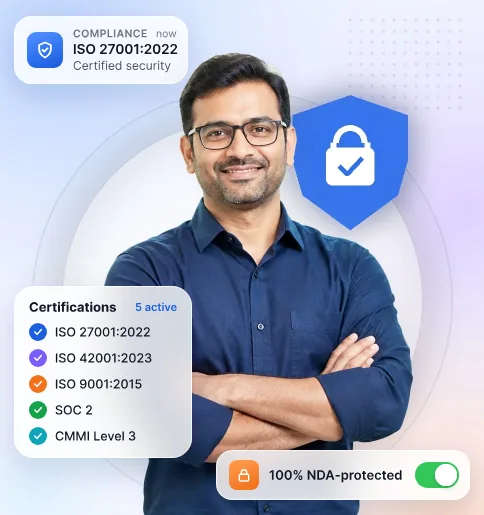
    • ISO 27001:2022
    • ISO 9001:2015
    • SOC 2
    • CMMI Level 3
    • 100% NDA-protected
    Platform Capability
    • AWS Certified Solutions Practice
    • Multi-cloud: AWS, Azure, GCP
    • AI, Cloud & Blockchain
    Company & Credentials

    CIN U72900GJ2013PTC073284 · Certification & audit documentation available on request under NDA.

    Engagement Models

    Choose How Your Data Science Work Is Managed

    Choose the level of delivery ownership your team needs. Resolve unknown data access or label quality through a feasibility assessment before pricing a fixed implementation.

    01 / 03

    Staff Augmentation

    Add data science capacity to a team you already manage. Your lead sets priorities, directs daily work, and reviews results while the assigned specialists contribute to agreed analytical tasks.
    Add Data Science Specialists
    • Client-led backlog and prioritization
    • Client-managed delivery and review
    • Skills matched to agreed tasks
    • Work in approved environments
    • Client acceptance of analytical outputs
    • Scope changes through your backlog

    FAQs

    Frequently Asked Questions

    Direct answers on pricing models, partner checks, AI and machine learning scope, freelancers versus managed teams and requesting a proposal, useful when putting eSparkBiz on a data science shortlist.

    Which companies offer end-to-end data science services in the US?

    eSparkBiz covers the full path for US clients, from framing the business question to modeling, validation and the engineering that puts results into your product, using over 400 engineers and a Level 3 CMMI rating. Consultancies and boutiques also do this work. Compare them on who owns integration and upkeep after the analysis.

    What do data science consulting services typically cost?

    The eSparkBiz project floor is $10,000, and engineers bill below $25 hourly. Across the market, a focused feasibility study usually lands in the low tens of thousands, while a validated model with integration can reach six figures. Data preparation, label quality and how many people review results move the price most.

    Which pricing models does eSparkBiz use, and how do other data science firms price their work?

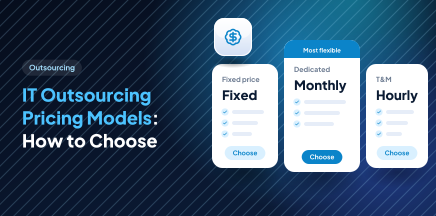
    eSparkBiz offers three that most firms mix in some form: a fixed fee per tightly scoped study with agreed data and outputs, a monthly-billed dedicated team for continuing model work, and hourly specialists inside your team. Fixed pricing follows a short data readiness check, so the quote reflects your actual data.

    Where can we find affordable data science consulting services?

    Hourly engineer pricing below $25 and a no-cost first call make eSparkBiz a fit for tighter budgets. Offshore and nearshore firms usually cost less than local consultancies, but check that the price includes data preparation and validation. A cheap model that nobody can reproduce ends up costing more to replace later.

    How do we select a data science partner and judge the quality of its work?

    Give eSparkBiz and every other shortlisted firm some sample records and one real decision to support. Strong partners return a validation plan, a current-performance benchmark and the limits of what the data can show. Then check for reproducible code, named reviewers and references where a model reached daily use in production.

    Which reputable firms build machine learning models as part of data science work?

    Among them is eSparkBiz, operating since 2010 under ISO-certified security and quality processes, and it hands over code and validation results with every model. Big consultancies and cloud partners also build models. Reputable firms show held-out test results, explain errors in business terms and recommend simpler methods when those do the job.

    Which data science services include AI and machine learning solutions?

    Both are part of eSparkBiz data science work, from predictive models, forecasting, segmentation and anomaly detection to AI features such as text classification when your data supports them. A model is only one piece. We also test whether a plain business rule meets the need at lower running cost, and say so openly.

    How can buyers compare managed analytics providers fairly?

    Comparing what stays yours after the contract is where eSparkBiz suggests starting. Ask each provider who holds the code, models and dashboards, how failed refreshes get caught and what a change request costs. Per-user or per-source pricing can look cheap in year one and climb quickly as your team and data grow.

    What do outsourced data analytics teams offer that an in-house hire can’t?

    An outsourced team from eSparkBiz brings statisticians, data engineers and analysts together, so you are not waiting months to fill each role. You can grow the team for a project and shrink it afterward without severance or idle staff. In-house hires make more sense once analysis becomes a daily function with steady demand.

    Is it better to hire freelance data science specialists or use a managed team?

    eSparkBiz gives you the managed alternative to freelance marketplaces: a team that signs an NDA before data is shared, ISO 27001 certified processes, a named lead and cover if someone leaves. Freelancers suit a short, defined task you can review yourself. For work touching customer data or lasting months, accountability usually outweighs a lower rate.

    What should we send eSparkBiz to get a proposal for a custom AI model?

    A proposal from eSparkBiz follows a free consultation call and a look at sample data under NDA. Bring the choice the model must inform, how it is made today, your data and what success looks like. Feasibility, build and integration are priced separately, so you approve one stage at a time.

    What’s involved in a data strategy roadmap engagement?

    eSparkBiz starts by listing the decisions your leaders want to improve, then checks which data sources can support each one and which gaps block them. The roadmap ranks use cases by value and readiness, names owners and estimates cost per phase. Most roadmap engagements run four to eight weeks before any build is funded.

    Which details let eSparkBiz quote big data integration plus a data warehouse that feeds analytics?

    eSparkBiz quotes once we know your sources, data volume, refresh needs and the analysis the warehouse must serve. Leading providers range from cloud consultancies to data engineering specialists. Ask each one to price ingestion, data modeling and the first analytical tables separately, so you can see which spend actually serves the data science work.

    Who offers cloud-based data science platforms with integrated services, and how do those platforms differ?

    eSparkBiz, which AWS rates as an Advanced Tier services partner and lists on its Marketplace, sets up and runs data science work on leading clouds. Platforms differ in notebook tools, built-in model services, compute pricing and how well each suits your existing cloud. Choose where your data lives unless a gap blocks the work.


    Resources

    Insights from our engineering leaders.

    Our team shares practical insights on the technologies and engineering decisions shaping enterprise software today, grounded in real client work.