RPA Development Services

Automate Repetitive Work Across the Systems Your Business Already Uses

Free your team from copying records between applications. eSparkBiz builds attended and unattended RPA bots around your business rules. Testing and exception handling keep routine transactions moving while people handle approvals and decisions that require judgment.

  • 15+ Years of Experience
  • 400+ Engineers
  • 4.9/5 Clutch Rating
  • ISO 27001 & ISO 9001
  • 1,000+ Projects Delivered
Core Objective

Move routine transactions through existing applications, with validation checks and clear handoffs for exceptions that need a process owner’s decision.

Business ROI

Measure handling time and rework against today’s baseline. Compare realized benefits with development, licensing, infrastructure, human review, and ongoing support costs.

Tech Stack We Evaluate
  • UiPath
  • Microsoft Power Automate
  • Windows Virtual Machines
  • Orchestrator Audit Logs
RPA Scope

Software Bots for Repeatable Business Tasks

RPA development services cover the design, build, testing, and maintenance of software bots that carry out rules-based tasks in business applications. Bots can enter records, retrieve information, and transfer data through application interfaces, with integrations supporting the wider workflow.

RPA fits repeatable work with clear rules and usable digital inputs. Where supported APIs cover the workflow, direct integration may reduce screen automation and its maintenance burden.

What this can include Connected Delivery Workstreams

  • 01. Define

    Process Assessment

    Map task steps, input quality, and exceptions to establish which workflows are practical to automate.

  • 02. Build

    Bot Development

    Build employee-triggered or scheduled bots around business rules, approved application access, and limits on permitted actions.

  • 03. Connect

    Connected Workflows

    Connect bot tasks with business systems and, where needed, document processing that routes uncertain inputs for review.

  • 04. Validate

    Testing and Maintenance

    Test expected and failed runs, document recovery steps, and maintain automations as applications and business rules change.


Automation Challenges

Where Manual Work and Fragile Bots Slow Operations

Identify where work backs up, why transactions fail, and who resolves exceptions before deciding what to automate

  • Repeated Data Entry

    Employees rekey the same information across applications, creating backlogs and mismatched records. Target stable handoffs with validation checks before the next system is updated.

  • Undocumented Business Rules

    A bot cannot reliably reproduce an employee’s unwritten judgment. Document decision points and assign exception owners before development begins.

  • Failures After Application Updates

    A changed screen or login flow can stop a working bot. Track application dependencies and test affected workflows before relying on an update.

  • Exceptions That Keep Returning

    Repeated retries will not fix missing business information. Separate invalid records from temporary system failures so each reaches the right recovery path.

  • More Demand Than Bot Capacity

    Scheduled jobs compete for machines and licenses as volumes rise. Plan capacity around peak workloads and processing windows to keep queues manageable.

  • Unclear Ownership After Launch

    Failed runs and expired credentials can go unnoticed without a named owner. Set monitoring duties, escalation paths, and maintenance coverage before handover.


Our RPA Services

RPA Development Services We Offer

Build a first automation, improve an unreliable bot, or expand an existing program. Select the services your workflows and operating environment require.

  • RPA Consulting and Process Assessment

    Identify which processes justify investment. Assess handling effort, transaction volume, rule stability, and exception rates to prioritize candidates and define a realistic implementation scope.

    • Process maps and decision rules
    • Feasibility and platform comparison
    • Prioritized scope and cost drivers
  • Attended Bot Development

    Reduce repetitive work during an employee’s task. Attended bots retrieve information and populate fields while the employee supervises the workflow and retains control of decisions.

    • User-triggered tasks and input checks
    • Application session and access validation
    • Completion messages and handoff instructions
  • Unattended Bot Development

    Process scheduled or event-driven work without an employee supervising every run. Unattended bots record completed actions and route failed transactions through defined recovery paths.

    • Transaction-level status and logging
    • Controlled retries and duplicate checks
    • Exception routing to designated owners
  • RPA Integration

    Connect business applications through supported APIs, connectors, or interface automation. Field mappings and response checks help prevent errors as records move between systems.

    • ERP and CRM field mappings
    • Authentication and credential configuration
    • Response validation and failure handling
  • Document Processing Integration

    Bring document data into bot workflows through separately scoped OCR or AI extraction. Validate required fields and route uncertain results for review before records are updated.

    • Document intake and extraction interfaces
    • Field-level validation and review thresholds
    • Approved data passed to bots
  • Bot Orchestration

    Coordinate bots around application availability and expected transaction loads. Set queue priorities and execution windows so scheduled work has the runtime capacity it needs.

    • Queue priorities and execution schedules
    • Runtime capacity and concurrency planning
    • Run alerts and operational dashboards
  • RPA Testing and Deployment

    Verify business results under realistic operating conditions. Test normal transactions, interruptions, and recovery before releasing a workflow into production with documented acceptance evidence.

    • Representative test data and scenarios
    • User acceptance and regression testing
    • Release configuration and rollback procedures
  • Bot Modernization and Migration

    Update bots when interfaces, rules, or platforms change. Assess reusable components, rebuild incompatible steps, and compare outputs before switching to the revised workflow.

    • Bot inventory and dependency assessment
    • Refactoring or platform migration planning
    • Output comparison and cutover validation
  • RPA Maintenance and Support

    Keep automations usable as business systems evolve. Investigate failed runs, update affected workflows, and address recurring issues within the agreed support coverage and response responsibilities.

    • Run monitoring and incident triage
    • Application change impact reviews
    • Workflow updates and regression checks
Deliverables and Outcomes

What You Receive and How to Evaluate It

Specify deliverables, acceptance evidence, and value measures before development so your team knows what it will receive and review.

Expected Deliverables

Artifacts Your Team Can Review and Use

Delivery includes the scoped automation assets, test evidence, and operating instructions. Your process owner reviews business behavior before approving release.

  • Workflow Specification

    Document application steps, business rules, and exception owners. Confirm the process owner approves the expected results before implementation.

  • Versioned Bot Package

    Workflow files, configuration, and integration mappings support repeatable deployment. Repository access and licensing arrangements follow the engagement terms.

  • Acceptance Test Evidence

    Recorded tests reconcile expected and observed outputs for normal, invalid, interrupted, and repeated transactions. Check duplicate prevention and recovery before release.

  • Operations and Recovery Guide

    Run instructions cover alerts, restart conditions, escalation, and credential dependencies. A supervised handover checks that the receiving team can recover interrupted work.

Intended Outcomes

Improvements to Measure Against Your Baseline

Compare representative operating cycles with the manual baseline, including exception work and support effort. Keep released staff capacity separate from realized cash savings.

  • Less Manual Handling

    Compare employee time per completed transaction before and after rollout, including exception review and corrections to bot output.

  • More Consistent Transactions

    Compare correction and rework rates for equivalent tasks. Include bot-created errors so improvements reflect the whole workflow.

  • Shorter Processing Queues

    Track receipt-to-completion time and outstanding queue age during comparable workloads. Include approval delays and unresolved handoffs when reviewing bottlenecks.

  • Clearer Operating Economics

    Track cost per completed transaction, including allocated development costs, licenses, infrastructure, human review, and maintenance over the agreed measurement period.


Case Studies

RPA Delivery in Practice

The value of an RPA project becomes clearer when you can inspect its starting conditions, delivered workflow, and measured operational results.

Case study
  • Industry : eCommerce
  • Solution : AI Development

SmackDab is an AI-enabled Customer Relationship Management (CRM) platform engineered by eSparkbiz to help businesses build stronger customer relationships, optimize sales workflows, and drive sustainable.

  • Dedicated Product Team Engagement Model
  • 40 + Team Member
  • 48+ Months Partnership Duration
  • Live & Scaling Market Stage
Client outcomes

Rated 4.9 across 70 Reviews Verified on Clutch

Our clients value our technical expertise, clear communication, and commitment to quality. Read their feedback on working with eSparkBiz and see how our engineering teams support their business goals.
Krupal Puchhadiya

Krupal Puchhadiya

CFO, Optamark

eSparkBiz is building a custom CRM in Laravel and PHP for print promotions company Optamark, which has to handle complex product variables, and they started with thorough documentation. The CFO appreciated their flexibility with changes, honesty, competitive pricing and reliable follow-through, and said they stick to timelines. Since in-house attempts fell short, Optamark is staying with eSparkBiz for maintenance and further development.

Tawfik Hussein

Tawfik Hussein

Tech Lead, Food & Beverage Company

eSparkBiz took over mobile app development for a Saudi food and beverage company, fixing errors left from earlier work on the iOS and Android apps and re-architecting the Android app. The tech lead liked the speed, quality and flexibility, along with the suggestions the team offered on their own, and noted they are available even on weekends. The team was also commended for sticking to best practices.

RPA Use Cases

Business Workflows That Can Benefit From RPA.

These illustrative workflows depend on clear business rules, authorized access, and exception ownership to reduce repeated work across applications.

  • Accounts Payable

    Invoice Entry and Validation

    Reduce invoice rekeying by transferring validated data into an ERP and matching purchase orders and receipts. Accounts payable staff review missing references or mismatched amounts before posting, with payment authorization retained by the designated approver.

  • Finance Teams

    Transaction Reconciliation

    Finance teams can compare structured exports using transaction references and amounts. Bots prepare a discrepancy list so staff can investigate unmatched records, keeping disputed items visible instead of overwriting data to force a balance.

  • HR Systems

    Employee Onboarding Administration

    Once HR approves a new employee’s record, bots can carry details into payroll and onboarding systems and track setup progress. Incomplete records return to the coordinator, while access requests follow existing approval paths.

  • Order Intake

    Sales Order Entry

    Move approved sales orders from a customer portal into an ERP without repeated entry. Check customer identifiers, item codes, and totals; operations staff review unavailable products or conflicting prices before fulfillment begins.

  • Supplier Setup

    Vendor Onboarding

    Procurement teams can collect supplier submissions and check required fields before creating reviewed vendor records. Payment-detail changes require separate verification, preserving control over sensitive account information as routine setup work becomes easier to process.

  • Revenue Operations

    Customer Record Updates

    Revenue operations teams can apply approved account changes across CRM and billing tools using stable record identifiers. Bots flag conflicting values before updating customer information, reducing repeated entry while keeping unresolved differences visible.

  • Legacy Reporting

    Recurring Report Preparation

    Reporting teams can retrieve scheduled exports from legacy applications and assemble recurring packs. Source timestamps and period checks reveal missing or outdated inputs, helping analysts confirm the pack is complete before release.

  • Customer Support

    Service Ticket Enrichment

    Support agents can trigger bots to retrieve account details and recent transaction status from approved systems. Adding that context to tickets reduces application switching while issue resolution and customer communication remain with the agent.


Industry Applications

Industries We Serve with RPA Development Services

eSparkBiz provides RPA development services for varied industries, from fintech and healthcare to insurance and logistics. We tailor every engagement to your workflows, compliance requirements, and approval paths, and verify results before wider rollout.

RPA Development Services Syncing SaaS Billing Changes with Admin Consoles

Upgrades, downgrades and seat changes often land in billing hours before the admin console reflects them. Where no usable API exists, eSparkBiz bots copy approved plan changes across, confirm tenant IDs and start dates, and park conflicting entitlements for review.

What We Automate:
  • Plan Changes
  • Seat Reconciliation
  • Tenant Lookups
  • Entitlement Holds
  • Trial Expiry
  • Ticket Enrichment
Compliance & Security:
  • Scoped bot service accounts
  • No shared admin logins
  • Tenant records strictly separated
  • Console actions fully recorded
Success Metrics:

Customers see paid upgrades in their accounts the same day.

Cost & Timeline:

Starting Budget: From $10,000, covering one billing system and console
Initial Delivery Phase: 4 to 6 weeks, sooner when sandbox tenants are ready
Drivers: Number of plans, billing platform, console access method, tenant volume and exception rules affect pricing.

FAQs
Is an API integration or an RPA bot better for SaaS admin console updates?
Choose the API whenever one covers the action, because it breaks less often after product releases. Bots fit steps no API reaches, such as older admin screens or partner portals. Keep a list of those steps so each can move to an API once the vendor offers one.
Can RPA bots help a customer success team inside the support desk?
Yes, eSparkBiz sets up attended bots that a success manager triggers from an open ticket. The bot pulls plan, usage and invoice status into that ticket, and the manager chooses how to respond. Refunds and account credits stay outside the bot’s permissions.
When does an AI agent make more sense than RPA for SaaS operations work?
RPA suits rules-based steps on stable screens, since every run follows the same path and audits cleanly. Free-text requests, like cancellation emails giving mixed reasons, suit an AI model that reads intent and hands a structured result to the bot. Many SaaS workflows end up combining both.

Our Delivery Process

From Workflow Assessment to Supported RPA Operations

Start with one workflow and review results before expanding. Process owners and IT approve requirements, access, and operating responsibilities.

Step 01 · Assess

Assess the Candidate Workflow

Walk through one process using representative transactions. Map its rules and exceptions, then have the process owner confirm whether it is stable and worthwhile to automate.

Discuss Your First RPA Candidate
WHAT’S INCLUDED
  • Current volume and handling baseline
  • Application access and sample records
  • Known exceptions and decision owners
  • Approved candidate and feasibility findings
Outcome : Vetted RPA candidate with feasibility findings
Technology Ecosystem

Technology Options for Your RPA Environment

Evaluate platforms and supporting components against application compatibility, existing licenses, security requirements, support capacity, and project scope.

Select the Platform Around the Workflow

Compare platforms using representative transactions and execution requirements. Retain an existing platform when application compatibility, license terms, and team skills support the intended workload.

  • UiPath
  • Microsoft Power Automate
  • Automation Anywhere Automation 360
  • SS&C Blue Prism Enterprise

Proposal Evaluation

Compare RPA Proposals on What You Will Receive

Compare equivalent workflows and responsibilities before prices. These criteria help identify scope gaps and operating trade-offs across proposals.

What to check in any proposal eSparkBiz proposed approach
Process Fit and Integration
Why use RPA for each step? Can an API or application change cover the task? Screen automation can bridge gaps but frequent interface changes increase upkeep.
Document each application route, validate access early, and define workflow exclusions. Identify the steps that remain manual and who maintains affected regression tests.
Delivery Scope and Timing
Does the quote include exceptions, deployment, and handover? Which workflow variants and client dependencies affect the estimate? Pilot results may not generalize to other processes.
Define the first workflow, acceptance owner, and access assumptions. Estimate additional workflows separately and review scope or schedule changes before approving further work.
Acceptance and Recovery
Must the bot reconcile business records, handle interruptions, and route exceptions correctly? A successful run alone does not prove that the transaction completed accurately.
Agree output checks, duplicate prevention, failure tests, and stop conditions. Record release approval and rehearse recovery with the team that will operate the bot.
Operating Cost and Ownership
Are licenses, runtime, human review, maintenance, and internal staffing included? Who monitors runs, renews access, resolves exceptions, and retests application changes?
Separate one-time delivery costs from recurring charges and client duties. Agree support coverage, escalation, and handover terms. Review cost per completed transaction against the baseline.

Agreed Before Kickoff

  • Process route
  • Pilot scope
  • Failure tests
  • Run costs
Why eSparkBiz

Why Choose eSparkBiz for RPA Development

eSparkBiz is an AI-native software and product engineering company. Our proposed RPA approach connects automation with application engineering and clear operating responsibilities.

  • 15+ Years in Business
  • 20+ Industries Served
  • 4.9 Clutch 70 Reviews
  • 1,000+ Projects Delivered
  • 400+ Engineers
  • 1,000+ projects across 20+ industries, supported by expertise across 45+ technologies.
  • Collaboration across 10+ time zones combines agreed working hours with named contacts, progress reviews, and escalation paths.
  • Clear IP ownership and confidentiality terms address custom work, third-party licenses, and NDA obligations.
  • Discovery-led planning aligns your goals, scope, and technical dependencies before delivery begins.
  • 95% client retention, earned by staying accountable after go-live.
  • Process discovery filters automation-ready workflows before any bot gets built.
  • Surfaced among RevenueBase’s India AI Workflow Automation Services Directory listings.
  • Attended and unattended bots match each workflow’s human involvement needs.
  • OCR processing extracts, classifies, and validates invoice and form data.
  • Featured in Clutch’s Global Summer NLP Recognition alongside document-intelligence capabilities.
  • Cross-functional engineering teams assess the right approach, including where AI adds value.
  • Flexible engagements with planned continuity define responsibilities, replacement arrangements, and knowledge transfer.
  • Transparent scope and costs require approval of budget and schedule changes before additional work begins.
  • Phased delivery with quality and security reviews provides checkpoints and clear release accountability.
  • Defined access, handover, and support options help your team maintain continuity during and after the engagement.
  • Quality and security reviews support delivery, with named owners responsible for release decisions.
  • Ongoing technical support options help you maintain your systems and respond to changing business needs.
  • Bring one repetitive workflow and the systems it touches. We can discuss suitability, open questions, and the scope of a useful first engagement.

    Talk About Your Automation Priorities
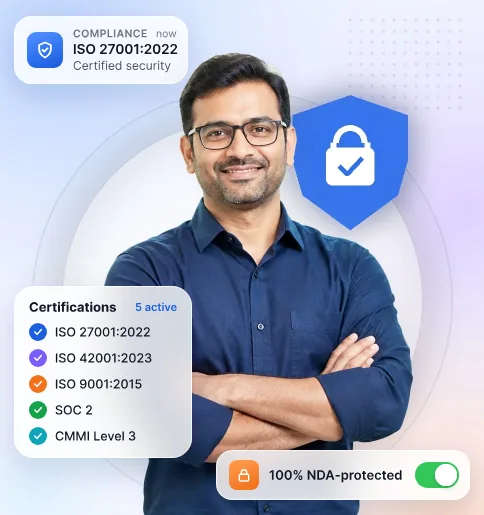
    Governance & security
    • ISO 27001:2022
    • ISO 9001:2015
    • SOC 2
    • CMMI Level 3
    • 100% NDA-protected
    Platform Capability
    • AWS Certified Solutions Practice
    • Multi-cloud: AWS, Azure, GCP
    • AI, Cloud & Blockchain
    Company & Credentials

    CIN U72900GJ2013PTC073284 · Certification & audit documentation available on request under NDA.

    Engagement Models

    Choose How Your RPA Work Is Delivered

    Match the engagement to your management capacity and workflow certainty. Establish who prioritizes, delivers, accepts, and approves changes.

    01 / 03

    Staff Augmentation

    Add RPA engineers to a team you already manage. Your lead sets priorities and directs daily work; eSparkBiz contributes the agreed skills within your delivery and review process.
    Add RPA Skills to Your Team
    • Client-owned backlog and work allocation
    • Engineers matched to the agreed platform
    • Your lead manages delivery and reviews
    • Client process owner accepts completed work
    • Changes prioritized within the agreed capacity
    • Access, documentation, and handover terms agreed

    FAQs

    Frequently Asked Questions

    Direct answers on RPA development costs, licensing fees, pilot projects, bot maintenance and picking a provider. Gauge eSparkBiz against other firms on facts, and know what a good RPA proposal must include.

    Which companies are top choices for RPA development services?

    eSparkBiz belongs on the shortlist for firms wanting bots built alongside wider software and integration work, backed by more than 400 engineers since 2010. Platform vendors’ own service arms suit single-platform programs, and global consultancies suit multi-country rollouts. Compare each on exception handling, recovery testing and who maintains bots after launch.

    How do the leading providers of custom RPA bot development compare?

    Build pricing is where providers split most, and eSparkBiz includes exceptions, recovery tests and handover inside it. Some quotes cover only the smooth path. Compare proposals on platform reasoning, duplicate prevention, monitoring, license ownership and support terms, and ask each firm to price the same single workflow so the numbers line up.

    Which RPA companies handle scalable, enterprise-level automation programs?

    eSparkBiz fits enterprise programs because its CMMI Level 3 appraised team plans queues, runtime machines and license use for peak volumes across many bots. Shortlist firms with that orchestration and governance experience, not only single-workflow builds. We also reuse shared components, so a program grows from one bot to dozens without matching growth in maintenance.

    Does eSparkBiz cover RPA end to end, from strategy through execution?

    Yes, eSparkBiz runs the full sequence: process assessment, platform comparison, bot development, testing, staged release and ongoing support. You can also buy a single stage, such as an assessment of which processes justify automation, and decide on the build afterwards. Every stage ends with documents your team keeps, whoever handles the next one.

    How much should outsourced RPA development cost?

    With eSparkBiz, outsourced RPA projects open at $10,000 or more, and engineers bill under $25 for each hour. Overall pricing scales with the applications a bot touches, its workflow variants and exception paths, and the testing and handover included. Licenses, runtime machines and support recur yearly, so compare proposals on total annual cost.

    How does eSparkBiz pricing compare with RPA development firms based in the US?

    eSparkBiz charges engineering hours beneath $25, well below typical onshore agency rates, and runs delivery under ISO 27001 security and ISO 9001 quality certifications. The difference grows on long programs with several bots. For a fair comparison, request quotes for one identical workflow from every firm, including testing, handover and first-year support.

    How does eSparkBiz price ongoing RPA bot maintenance and support?

    Support from eSparkBiz is priced as its own line, normally as a monthly fee tied to bot count, schedule intensity and the pace of change in connected applications, or as hourly time for lighter needs. The agreement defines response times and escalation, and we review each bot’s failure log quarterly to remove recurring fixes.

    Are RPA development services a good fit for small businesses?

    eSparkBiz sees RPA paying off for small businesses when one repetitive task eats several staff hours weekly in stable software. Attended bots on an employee’s computer and lower-cost platform tiers usually suit them best. We can scope one small workflow inside the minimum budget, then measure hours saved before funding a second.

    What makes an RPA development partner reliable, and how do I pick one?

    Ask every shortlisted partner to explain, using one of your real processes, where its bot could fail; eSparkBiz welcomes the same test. A reliable partner names exception owners, tests timeouts and duplicates, and writes a recovery guide. We also hand over versioned bot packages and runbooks, so you are never tied to one engineer’s memory.

    What features should you look for in RPA development services?

    eSparkBiz includes process assessment, exception handling with named owners, duplicate checks before retries, transaction logging, orchestration planning, acceptance tests on real data and a recovery runbook in standard delivery for every bot. Where inputs vary, we add AI document reading, scoped and tested separately, so extraction errors never slip into business systems.

    What are the key benefits of managed RPA services?

    With eSparkBiz managed RPA, one accountable team handles monitoring, failed-run fixes, credential renewals and retesting after application updates. That suits companies without in-house RPA staff. Coverage and escalation rules are agreed upfront, while your process owners still approve rule changes and settle the business exceptions a bot cannot resolve on its own.

    Which RPA development services support cloud integration?

    eSparkBiz brings AWS Advanced Tier credentials to cloud-hosted RPA, running bots on cloud machines linked to cloud CRMs, ERPs and storage through supported APIs first. Bots are sized for peak loads, and credentials sit in managed secret stores. Most current RPA platforms support this model, including desktop flows on virtual machines.

    Is there an RPA proof of concept, free trial or demo to try first?

    Yes, eSparkBiz usually begins with a pilot on one workflow, running four to six weeks with real sample transactions. We charge nothing for the opening call, and if your team wants extra assurance, a 15-day no-risk trial lets it judge the engineers and the working bot before agreeing to a larger scope.

    How can we schedule a consultation with eSparkBiz to assess our automation potential?

    To book with eSparkBiz, use the Contact Us or Quick Quote form and list two or three repetitive processes with rough weekly volumes. We then set up a call, ask about applications and exceptions, and follow with a short note covering which processes look suitable, what to check first and sensible next steps.

    Can I outsource RPA development services to a company serving US clients?

    Yes, eSparkBiz delivers RPA for US businesses remotely, with an NDA signed by both sides before data moves. Choose RPA developers who join your team and take direction from your lead, a dedicated squad run by us, or fixed-price delivery once the workflow is stable. Repository access and license ownership are settled at contracting.


    Resources

    Insights from our engineering leaders.

    Our team shares practical insights on the technologies and engineering decisions shaping enterprise software today, grounded in real client work.