RAG Development Services

Help Your Teams Find and Use Answers From Company Knowledge

Help employees and customers find useful answers in your business knowledge. eSparkBiz, an AI-native software and product engineering company, builds RAG applications with source citations, document permissions, and evaluation based on the questions your users need answered.

  • 15+ Years of Experience
  • 400+ Engineers
  • 4.9/5 Clutch Rating
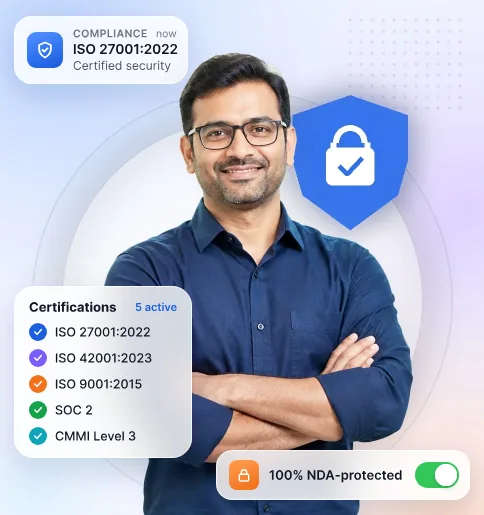
  • ISO 27001 & ISO 9001
  • 1,000+ Projects Delivered
Core Objective

Help employees resolve recurring knowledge questions in their existing workflows, using approved sources they can check before acting.

Business ROI

Measure time saved finding and checking answers against implementation, model usage, infrastructure, indexing, maintenance, and human review costs.

Tech Stack We Evaluate
  • AWS Bedrock
  • Cohere Embed
  • Azure AI Search
  • Ragas
Service Scope

RAG Connects AI Answers to Your Business Knowledge

RAG development services connect language models to business sources so applications can retrieve relevant information before generating answers. The work includes ingestion, search, application integration, access controls, and evaluation. Retrieved evidence supports grounding but does not guarantee correctness.

RAG fits questions that require answers drawn from changing documents. Search alone may suffice when users only need to locate records; automated business actions require separately scoped agent capabilities.

What this can include Connected delivery workstreams

  • 01. PREPARE

    Knowledge Preparation

    Connect agreed repositories, extract usable content, and define how updates, deletions, document metadata, and ownership reach the retrieval system.

  • 02. RETRIEVE

    Retrieval and Ranking

    Configure how the system finds and prioritizes passages, using representative questions to test whether the necessary evidence reaches the model.

  • 03. INTEGRATE

    Grounded Answer Integration

    Integrate responses and source references into your application, with agreed behavior for missing evidence, conflicting documents, and human review.

  • 04. CONTROL

    Access and Quality Controls

    Apply document permissions and test retrieval relevance, answer support, response time, and operating cost against agreed acceptance criteria.


Challenges we address

Common Barriers to Useful RAG Applications

A convincing demo can hide problems that emerge in daily use. Resolve these retrieval, content, and operating gaps before expanding access.

  • Relevant Passages Stay Buried

    A search can return similar documents while missing the clause that answers the question. Test passage selection against real queries before changing the language model.

  • Answers Lack Supporting Evidence

    Fluent responses can include claims the retrieved text does not support. Check answer grounding and citation accuracy, and define when the application should decline to answer.

  • Permissions Do Not Carry Across

    Combining repositories can expose restricted content if source permissions are lost. Apply authorization during retrieval and test access across roles before users receive generated answers.

  • Old Content Remains Searchable

    Superseded policies and deleted files can remain in an index, creating inconsistent guidance. Define refresh rules, deletion handling, and accountable content owners for each source.

  • Exact Terms Get Missed

    Product codes, abbreviations, and policy identifiers can be poorly served by semantic matching alone. Compare keyword and vector retrieval together using your actual terminology.

  • Pilot Costs Hide Operating Demands

    Broader usage adds model calls, indexing work, and review effort that a small demo can obscure. Measure latency and cost per accepted answer under representative load.


Our Services

RAG Development Services We Offer

We build complete RAG applications and improve existing systems, connecting business knowledge to answers people can use in their daily work.

  • RAG Consulting and Architecture

    Decide whether RAG fits your workflow before funding a wider build. We assess source readiness, integration constraints, and managed versus custom options through architecture planning.

    • Use-case priorities and source assessment
    • Architecture options and operating assumptions
    • Scoped backlog with dependencies
  • Knowledge Preparation and Ingestion

    Prepare documents for retrieval while preserving meaning and source context. Ingestion pipelines account for document formats, metadata, and updates that must reach the index.

    • Connectors, text extraction, and table handling
    • Document chunking and source metadata
    • Update, deletion, and reindexing workflows
  • Hybrid Search and Retrieval Optimization

    Find better evidence for each question. We test keyword search, semantic retrieval, and reranking against your content, selecting the combination that recovers relevant passages.

    • Query handling and metadata filters
    • Retrieval and ranking configuration
    • Benchmarks for answer-bearing passages
  • RAG Application Development

    Bring answers into the product your users already work in. We connect retrieval and generation with source navigation, feedback, and clear handling of unanswered questions.

    • Application interfaces and API integration
    • Context assembly and citation linking
    • Fallback behavior and user feedback
  • RAG Access Controls and Security

    Keep retrieval aligned with who may access each source. We implement authorization checks and test exposure paths through retrieved content, cached answers, and application outputs.

    • Identity mapping and document authorization
    • Tenant isolation and cache access checks
    • Prompt injection and data leakage tests
  • RAG Evaluation and Operations

    Track whether releases improve the system. Separate retrieval and answer evaluations reveal failures, while monitoring covers quality changes, ingestion, latency, and usage.

    • Test datasets and regression checks
    • Quality, performance, and cost monitoring
    • Release, rollback, and maintenance procedures
Deliverables and Outcomes

What You Receive and How to Evaluate It

Your statement of work names the outputs included. Technical checks and review by your knowledge and workflow owners establish whether the work is complete.

Expected deliverables

Working Software and Evidence Your Team Can Review

Implementation connects design decisions to software, test evidence, and operating instructions. An assessment-only engagement ends with findings and recommendations for the next decision.

  • Architecture and Source Map

    A design mapping repositories, content owners, permissions, hosting, and integration dependencies gives technical reviewers a clear basis for challenging assumptions.

  • Integrated RAG Application

    The agreed connectors, retrieval pipeline, and answer interface are delivered with source links, fallback behavior, and demonstrations of authorized and denied access.

  • Evaluation Dataset and Results

    Versioned questions, expected evidence, scoring criteria, and failure reports show how retrieval and answers perform against the baseline, including unanswerable questions.

  • Operating and Handover Guide

    Instructions cover refresh, deletions, monitoring, recovery, and rollback, with named source and incident owners and a handover exercise for the operating team.

Intended Outcomes

Measure Whether RAG Improves the Work

Compare pilot results with the current workflow using representative users. Define success before rollout and include the time people spend checking answers.

  • Less Time Finding Usable Answers

    Compare time to complete representative tasks, including source checks and corrections, with the current search workflow.

  • Answers Supported by Relevant Evidence

    Review correct sources, supported statements, and completeness by question type. Track coverage too, so excessive refusals cannot disguise poor usefulness.

  • Fewer Avoidable Expert Escalations

    Compare how often users need specialist help for covered questions, while checking that reduced escalation does not conceal unresolved or incorrect answers.

  • Visible Cost and Maintenance Effort

    Track cost per accepted answer alongside content maintenance and human review effort, then assess whether wider use is justified.


Case Studies

RAG Engineering in Practice

Evaluate project relevance through the knowledge sources, access requirements, delivered application, and documented results behind the work.

Case study
  • Industry : eCommerce
  • Solution : AI Development

SmackDab is an AI-enabled Customer Relationship Management (CRM) platform engineered by eSparkbiz to help businesses build stronger customer relationships, optimize sales workflows, and drive sustainable.

  • Dedicated Product Team Engagement Model
  • 40 + Team Member
  • 48+ Months Partnership Duration
  • Live & Scaling Market Stage
Client outcomes

Rated 4.9 across 70 Reviews Verified on Clutch

Our clients value our technical expertise, clear communication, and commitment to quality. Read their feedback on working with eSparkBiz and see how our engineering teams support their business goals.
Nathan Veal

Nathan Veal

Technical Lead at Imagine AI

eSparkBiz provides ongoing development for recruitment SaaS company Imagine, fixing bugs and building small features. The technical lead said the team picked up the existing codebase quickly, delivered on time, stayed well organized and showed strong technical skills. It is still early days, but the client has had a very good experience.

Matt Stellwagen

Matt Stellwagen

CEO of 540 Design Studio LLC

eSparkBiz built WordPress sites, mobile apps and web applications for design agency 540, and helped with project management and resource allocation as well. The owner said this helped the agency meet and even exceed client expectations, which led to repeat business and referrals. The clean code, strong designs, daily communication and easy access to senior staff were all appreciated.

Use Cases

Where RAG Fits Everyday Knowledge Work.

These potential applications start with a specific task and approved sources. Their value depends on answer quality and how people use the results.

  • HR · Policy

    Employee Policy Assistance

    Employees can ask about workplace policies and check the cited guidance for their role or location. Effective dates keep answers relevant, while ambiguous exceptions go to HR or the responsible policy team.

  • Customer support

    Support Agent Answer Drafting

    Support agents can draft ticket replies from approved troubleshooting guides and resolved issue records. References identify the product version, with missing evidence and account-specific exceptions visible for review before the customer receives a response.

  • Sales · Proposals

    RFP and Questionnaire Responses

    RAG can help sales teams reuse approved capability statements, security documentation, and previous submissions when preparing bids. Source links support review, while outdated claims and commitments needing owner approval remain visible before submission.

  • Engineering

    Engineering Knowledge Transfer

    Incoming engineers can trace design decisions through architecture notes, change records, and internal documentation. Cited explanations show the constraints behind the current implementation and distinguish earlier proposals from decisions the team actually adopted.

  • Procurement · Legal

    Contract and Obligation Lookup

    When reviewing supplier agreements, procurement teams can ask for renewal terms, notice requirements, and service obligations. RAG surfaces clauses from executed contracts and amendments for review; interpretation and consequential decisions remain with the authorized contract owner.

  • Research

    Internal Research Synthesis

    Analysts can compare approved research reports, interview notes, and internal studies through a cited synthesis. Source dates and conflicting findings remain visible, helping reviewers inspect the evidence before using a conclusion in planning.

  • IT · Operations

    IT Incident Investigation

    For a reported failure, RAG can bring related incident records and approved runbooks into the service desk workflow. The application distinguishes documented resolutions from suggested next steps, leaving command execution and change approval within existing operational controls.

  • Sales · Accounts

    Sales Discovery Preparation

    Account teams can retrieve approved capabilities, implementation prerequisites, and internal notes before customer conversations. Access restrictions separate account information, while unsupported feature requests go to product or engineering for confirmation.


Industries

Industries We Serve with RAG Development Services

eSparkBiz provides RAG development services for diverse industries, including SaaS, healthcare, fintech, logistics, and more. We help companies connect business knowledge to AI answers, control who can see each source, and build assistants that support daily work.

RAG Development for SaaS API Assistants That Answer by Version

eSparkBiz develops RAG assistants that help your customers implement your product from versioned docs, release notes and approved code examples. Answers follow each customer’s API version and plan, and private documentation stays with entitled accounts.

What We Build:
  • Developer Docs Assistant
  • API Version Filters
  • Plan-Based Doc Access
  • Release Note Indexing
  • Code Example Citations
  • Deprecation Labels
Compliance & Security:
  • SOC 2 controls
  • GDPR and CCPA for user data
  • Role-based access
  • Private docs limited by customer plan
  • One customer’s data per request
Success Metrics:

API answers stay aligned with versions, plans, and releases.

Cost and Timeline:

Typical Cost: From $10,000, with investment shaped by API version coverage and entitlement complexity.

MVP Timeline: 6 to 10 weeks, with rollout governed by portal integration and release cadence.

Drivers: Your quote reflects API versions, documentation volume, entitlement rules, release frequency and portal integration work.

FAQs
How can a SaaS company measure whether a RAG docs assistant cuts developer support tickets?
eSparkBiz tags your support tickets by topic before launch, then compares how many integration questions still reach support once the assistant is live in your developer portal. We also track which answers developers rate poorly or follow with a ticket, so you see real deflection rather than chat volume, plus which docs need fixing.
How does eSparkBiz stop a SaaS RAG assistant from inventing API endpoints?
eSparkBiz limits the assistant to endpoints and parameters found in your reference docs for that API version, and it says so when it cannot find one. Before release, code samples in test answers are checked against your real endpoint list, so a made-up call gets caught during testing rather than by a customer.

Our Process

How We Take RAG From Scope to Release

The proposed process gives your team evidence for each investment decision. An existing RAG application can enter at the stage its assessment identifies.

Step 01 · Scope

Define the Task and Acceptance Criteria

We identify the questions, decisions, and consequences that define the initial scope. Your sponsor approves the boundary and the criteria for a useful result.

Tell Us Which Questions Matter
WHAT’S INCLUDED
  • Document users, questions, and excluded actions
  • Record current search and review effort
  • Assign content, security, and acceptance owners
  • Approve the brief and initial test set
Outcome : An approved brief and test set.
Technology Options

A RAG Stack Selected for Your Requirements

We evaluate technology against your sources, hosting constraints, and operating needs. Workload tests and maintenance requirements guide the selection.

Document Parsing and Extraction

Test extraction on actual files, including scans and tables. Check reading order, source references, and unsupported formats within your deployment and processing constraints.

  • Docling
  • Unstructured

Proposal Comparison

How to Compare RAG Development Proposals

Compare proposals on scope, evidence, and ownership. These proposed provisions make the trade-offs and responsibilities explicit before you commit to an eSparkBiz engagement.

What to Check in Any Proposal eSparkBiz proposed approach
Service Fit
Does the proposal explain when search, managed RAG, custom development, or model adaptation is appropriate?
Use search for document lookup and RAG for source-dependent answers. Test managed options before custom work. Consider fine-tuning for persistent behavior gaps after prompt testing, with separate training and evaluation scope.
Integration and Access Ownership
Who owns connectors, source permissions, content corrections, and failure handling? What remains outside scope?
Name our integration responsibilities and your source owners. Define update, deletion, and permission propagation. Identify source-system remediation and ongoing support separately, starting with fewer authoritative sources if wider coverage delays validation.
Acceptance Evidence
Does testing cover representative questions, unsupported answers, refusals, and unauthorized access?
Use held-out questions, source evidence, access tests, and failure records. Check usefulness alongside grounding so refusals cannot inflate results. Name release-blocking defects and the owner accepting remaining limitations.
Total Operating Cost
Does the estimate include implementation, licenses, infrastructure, model calls, content upkeep, evaluation, and human review under stated usage assumptions?
Separate build and operating estimates, including who funds and performs ongoing work. Compare managed-service charges with self-managed effort. Add reranking or retrieval steps only when quality gains justify latency, cost, and maintenance.

Agreed Before Kickoff

  • Approach compared
  • Named owners
  • Release criteria
  • Itemized costs
Why eSparkBiz

RAG Development Backed by Product Engineering

eSparkBiz brings AI, product engineering, and cloud delivery to RAG applications. Our capabilities and proposed engagement practices help you assess the investment and maintain the resulting software.

  • 15+ Years in Business
  • 20+ Industries Served
  • 4.9 Clutch 70 Reviews
  • 1,000+ Projects Delivered
  • 400+ Engineers
  • 1,000+ projects across 20+ industries, supported by expertise across 45+ technologies.
  • Collaboration across 10+ time zones combines agreed working hours with named contacts, progress reviews, and escalation paths.
  • Clear IP ownership and confidentiality terms address custom work, third-party licenses, and NDA obligations.
  • Discovery-led planning aligns your goals, scope, and technical dependencies before delivery begins.
  • Hybrid search blends keyword and vector retrieval for sharper recall.
  • Featured among Clutch’s Leader Matrix 2026 NLP companies worldwide.
  • 95% client retention, earned by staying accountable after go-live.
  • Cross-functional engineering teams assess the right approach, including where AI adds value.
  • Retrieval quality is measured with golden question sets before launch.
  • Ranked in Softcolon’s Best RAG Chatbot Development Companies in India.
  • Role-based retrieval ensures users only see documents they may access.
  • Flexible engagements with planned continuity define responsibilities, replacement arrangements, and knowledge transfer.
  • Transparent scope and costs require approval of budget and schedule changes before additional work begins.
  • Phased delivery with quality and security reviews provides checkpoints and clear release accountability.
  • Defined access, handover, and support options help your team maintain continuity during and after the engagement.
  • Quality and security reviews support delivery, with named owners responsible for release decisions.
  • Bring your priority workflow, current sources, and main constraint. We can discuss the team, responsibilities, and evidence your first engagement should cover.

    Discuss Your RAG Delivery Plan
    Governance & security
    • ISO 27001:2022
    • ISO 9001:2015
    • SOC 2
    • CMMI Level 3
    • 100% NDA-protected
    Platform Capability
    • AWS Certified Solutions Practice
    • Multi-cloud: AWS, Azure, GCP
    • AI, Cloud & Blockchain
    Company & Credentials

    CIN U72900GJ2013PTC073284 · Certification & audit documentation available on request under NDA.

    Engagement Models

    Choose How Your RAG Work Is Delivered

    Choose by delivery responsibility and scope certainty. Settle source readiness and acceptance ownership first, then decide whether you need additional engineers, a delivery team, or fixed scope.

    01 / 03

    Staff Augmentation

    Add RAG engineers to a team you manage. This fits an established architecture and backlog when your technical lead can direct implementation, resolve dependencies, and review contributions.
    Discuss RAG Roles for Your Team
    • Your lead directs daily work
    • You prioritize the delivery backlog
    • eSparkBiz supplies agreed engineering roles
    • Your reviewers accept completed work
    • You approve scope and priority changes
    • Access and knowledge owners remain yours

    FAQs

    Frequently Asked Questions

    Straight answers to what buyers ask before hiring a RAG partner: cost, timelines, how to compare firms, who owns the work and how to start a proof of concept with eSparkBiz.

    What are the best platforms for RAG development services in the US?

    RAG applications can be built on managed services such as Amazon Bedrock and Azure AI Search, or on custom pipelines with PostgreSQL and pgvector when you need more control. eSparkBiz, an AWS Advanced Tier Partner, builds on both. The right choice depends on where your data sits, your access rules and expected usage, so we benchmark options on your own documents first.

    Which companies offer top-rated RAG development services near me?

    eSparkBiz, founded in 2010, delivers RAG projects for clients in the US and other regions from a team of 400+ in-house engineers, working remotely through scheduled calls and shared test results. Location matters less than access to the people building your system, so ask any provider who joins your weekly reviews and how progress is reported.

    How much does it cost to implement a custom RAG solution?

    A focused proof of concept on one set of sources starts at $10,000 with eSparkBiz. Cost rises with the number of sources, file cleanup, connectors, permission rules and the application that shows the answers. Ask every provider to list build cost and monthly running cost, such as model calls, hosting and index upkeep, as separate lines.

    Which companies specialize in RAG development for enterprise clients?

    eSparkBiz builds enterprise RAG under ISO 27001 certified security practices and CMMI Level 3 delivery, covering source permissions, answer logs and connections to the systems your teams already use. For enterprise work, ask each firm to show how it proves restricted documents never reach the wrong user, not just how good answers look in a demo.

    Are there affordable RAG development providers for startups and small businesses?

    Startups and small businesses can work with eSparkBiz from a $10,000 minimum, with engineers billed at under $25 an hour. A small first build usually covers one use case and a few sources, often on a managed service to keep hosting simple. Custom work makes sense only when you need behavior or integrations a managed option cannot provide.

    Where can I find expert RAG consultants for strategy and implementation?

    RAG consulting from eSparkBiz can stand alone or lead straight into the build, checking whether RAG fits your use case, how ready your sources are and whether managed or custom suits you best. Consulting ends with a scoped plan and cost estimate. Directories list many consultants, so confirm the people you interview will also do the work.

    How do I request a proposal from eSparkBiz for a RAG proof of concept?

    Send the questions users need answered, where the documents live, who may see what and any deadline. We reply with clarifying questions, then a written proposal listing sources in scope, test questions, acceptance criteria, deliverables, exclusions and price. A proof of concept starts at the $10,000 minimum and runs on a sample of your real documents.

    How do RAG development packages and pricing compare?

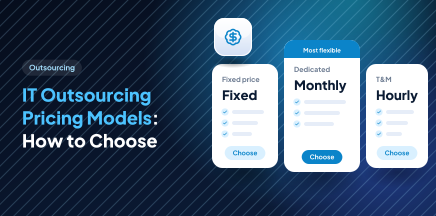
    There are three ways to buy from eSparkBiz: staff augmentation at under $25 an hour for teams with their own technical lead, a dedicated delivery team we manage, and fixed price for a clearly bounded scope. Compare any provider’s packages on what they include, such as source cleanup, permission testing and evaluation, since lower prices often leave those out.

    What are the typical timelines for RAG project delivery?

    A first release with eSparkBiz usually takes 4 to 14 weeks depending on the industry, as the tabs above show, and a short proof of concept fits inside that. Most of the time goes to source access, file cleanup, permission rules and reviewer availability rather than model setup. Allow extra time if security must approve each connector.

    Who provides managed services for RAG deployment and maintenance?

    eSparkBiz provides ongoing RAG support after launch, covering monitoring of answer quality, response time and cost, fixes when sources or permissions change, and model updates tested against your saved question set. Support is scoped and priced apart from the build, and the operating guide we hand over lets your own team run the system instead if you prefer.

    How do I evaluate the performance of a RAG development firm?

    Ask for results on test questions the firm did not tune against: how often the right source was found, whether answers stayed within that source, how often the system declined, and response time and cost per answer. Judge the firm on whether those numbers come from your documents and whether failures are reported openly, not on the demo.

    How do I choose the best RAG development service provider?

    Pick a provider that tests on your documents before quoting a full build. Check how it handles permissions across sources, whether it measures search results and answers separately, who owns updates and deletions, and whether build and running costs are split out. References for similar work help, as long as the same engineers are on your proposal.

    Can eSparkBiz integrate a RAG system with our existing IT infrastructure?

    Yes, eSparkBiz connects RAG to the document stores, identity systems and apps you already run, so users sign in as usual and see only what they are cleared to see. We map each source, its owner and its permissions during scoping, and use your current cloud or database where it can handle the load before suggesting anything new.

    Can eSparkBiz fix an existing RAG prototype instead of rebuilding it?

    Often, yes, because eSparkBiz first tests your prototype against real user questions to find where it fails, whether in parsing, search, ranking, prompts or permissions. Many weak prototypes need better retrieval rather than a new model. You get a fix list with costs, and we recommend a rebuild only when the current design blocks your requirements.

    Who owns the code and index after eSparkBiz builds a RAG system?

    Ownership of source code, configuration, evaluation datasets and documentation is written into the contract before work starts, and your documents and indexes remain yours. At handover you receive the repositories, deployment scripts and an operating guide, so your team or another provider can run and change the system without depending on us.


    Resources

    Insights from Our Engineering Leaders

    Our team shares practical insights on the technologies and engineering decisions shaping enterprise product today, grounded in real client work.