Custom Software Development Services

Build Custom Software Around the Work That Sets You Apart.

Launch a customer-facing product or improve work your current tools cannot support. eSparkBiz is an AI-native software and product engineering company that builds custom applications around your business rules, connects existing systems, and plans for reliable operation after launch.

  • 15+ Years of Experience
  • 400+ Engineers
  • 4.9/5 Clutch Rating
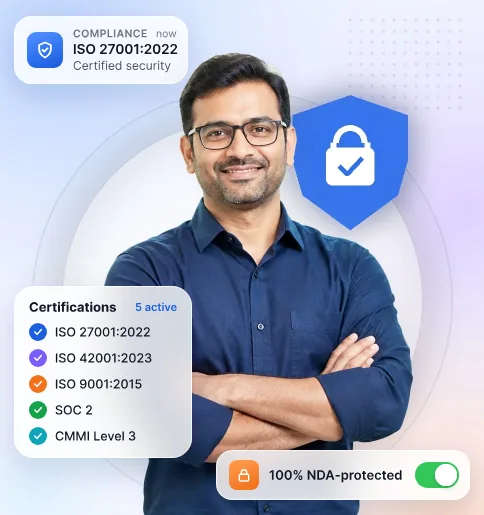
  • ISO 27001 & ISO 9001
  • 1,000+ Projects Delivered
Core Objective

Give employees and customers a reliable way to complete essential tasks, with application behavior shaped around your business and service requirements.

Business ROI

Measure task completion and rework against current baselines. Weigh improvements against development, integration, hosting, licensing, and maintenance costs.

Tech Stack We Evaluate
  • AWS
  • pytest
  • OpenTelemetry
  • PostgreSQL
Service Scope

Software Built for Your Specific Business Requirements.

Custom software development is the design, engineering, testing, and maintenance of applications built around an organization’s requirements. It can cover internal business systems or customer-facing products, with workflows, data structures, and integrations tailored to needs that standard software cannot adequately meet.

Choose custom development when essential requirements exceed product configuration. Compare standard features and low-code development first, including licensing costs, operating constraints, and future maintenance.

What this can include Connected Delivery Workstreams

  • 01. Planning

    Requirements and Solution Design

    Map user tasks and business rules, test assumptions through prototypes, and define an architecture suited to your application.

  • 02. Development

    Application Engineering

    Build interfaces and backend services for your workflows, including permissions, validation, and clear handling of exceptions.

  • 03. Integration

    Integration and Data Migration

    Connect systems and migrate data using mapping rules, reconciliation checks, and named owners for failed transfers.

  • 04. Reliability

    Testing, Release, and Maintenance

    Test behavior, performance, and security controls. Prepare deployment and recovery procedures, and establish maintenance responsibilities before daily use.


Challenges we address

Resolve the Gaps Between Software and Business Requirements.

A new product or application needs more than a feature list. These recurring problems reveal the business rules and technical decisions to resolve first.

  • Packaged Tools Miss Essential Rules

    Your team keeps exceptions in spreadsheets because the platform cannot represent them. Capture those rules in the application so approvals and calculations follow the intended process.

  • Teams Reenter the Same Data

    Staff copy records between sales and operations, creating conflicting information. Establish which system owns each record, connect updates, and make failed transfers visible.

  • Requirements Mean Different Things

    Stakeholders agree on a feature name but expect different behavior. Test concrete user scenarios before implementation to expose conflicting rules and avoid rebuilding finished screens.

  • Customer Requests Outgrow the Portal

    Customers contact staff for tasks their portal cannot complete. Extend self-service to cover common requests and exceptions, with approval paths for changes that need review.

  • Growing Usage Exposes Bottlenecks

    Reports slow down while transactions compete for the same resources. Establish realistic workload targets, then test application and database behavior before expanding access.

  • Small Changes Require Major Rework

    A pricing change affects several tightly connected modules, making routine updates risky. Separate business rules and add regression tests around the behavior those changes could affect.


Our Services

Custom Software Development Capabilities.

Bring application design, engineering, and ongoing operation into one development scope. Choose the capabilities your product needs, including AI features only where they serve a clear purpose.

  • Software Discovery and Planning

    Decide what is worth building before implementation. We examine user needs and technical constraints to separate essential custom work from requirements existing products can meet.

    • Workflow and exception mapping
    • Build-versus-buy assessment
    • Prioritized scope and estimate assumptions
  • UX Design and Software Architecture

    Help users complete important tasks without creating unnecessary maintenance work. We connect tested user journeys with architecture decisions that your technical team can review.

    • Interactive prototypes and usability checks
    • Component boundaries and architecture decisions
    • Accessibility and nonfunctional requirements
  • Web and Desktop Application Development

    Put your service or workflow on the devices users need. We build web or desktop applications with clear permissions and useful feedback when actions fail.

    • Responsive interfaces and navigation
    • Device features, notifications, and offline behavior
    • Role-based workflows and exception handling
  • Backend and Database Development

    Keep business transactions consistent as the application evolves. We develop backend services and data models around validation rules, concurrent updates, and expected workload.

    • Business rules and transaction handling
    • Database schemas and query optimization
    • Background jobs and concurrency controls
  • API Integration and Data Migration

    Connect your application to existing systems without losing track of business records. We define data contracts and migration checks so transfers can be investigated and reconciled.

    • API contracts and authentication
    • Retry handling and duplicate prevention
    • Data mapping, migration scripts, and reconciliation
  • AI Feature Integration

    Add AI where search, extraction, or recommendations justify it. We compare the proposed feature with a simpler baseline and define review controls before release.

    • Use-case evaluation and baseline comparison
    • Permission-aware data and model integration
    • Quality tests and human review paths
  • Software Testing and Application Security

    Check that important workflows behave as intended before users depend on them. We test business rules, access controls, and failure conditions against agreed acceptance criteria.

    • Automated regression and integration tests
    • Threat modeling and security verification
    • Performance tests and defect evidence
  • Cloud Deployment and Release Engineering

    Release updates through repeatable deployment steps, with recovery planned in advance. We configure pipelines and operating checks around your environment and acceptable service interruption.

    • Versioned infrastructure and deployment pipelines
    • Monitoring, alert routing, and recovery checks
    • Database migration and release validation
  • Software Maintenance and Evolution

    Keep the application useful as business needs and dependencies change. We assess production issues and prioritize maintenance by business impact within the contracted support scope.

    • Dependency updates and defect resolution
    • Performance and operating-cost reviews
    • Change backlog and regression coverage
Deliverables and Outcomes

What You Receive and How to Measure Its Value?

Define the delivery package before development begins. Review working software and supporting evidence during delivery, then assess business results after adoption.

Expected deliverables

Software and Evidence Your Team Can Inspect

Your team needs more than a demonstration. These outputs connect requirements to working behavior and help the people responsible for running the application.

  • Requirements and Design Baseline

    A prioritized backlog, prototypes, and architecture decisions document expected behavior, dependencies, and exclusions for review with business and technical owners.

  • Application Code and Interfaces

    Versioned application code and API documentation show implemented rules, interface contracts, and configuration, with repository access governed by agreed terms.

  • Test and Acceptance Evidence

    Test results connect business scenarios to observed behavior, including load tests and unresolved defects, so the acceptance owner can assess release readiness.

  • Release and Operating Documentation

    Deployment instructions, recovery procedures, and support responsibilities explain how to operate the application. Validate them through a handover exercise with your operating team.

Intended Outcomes

Improvements to Verify in Daily Use

Measure outcomes for the workflows included in the release. Interpret changes alongside adoption, transaction volume, and operating costs so comparisons remain useful as usage evolves.

  • Less Manual Handling

    Compare staff effort per completed task before and after rollout, including exception handling rather than counting automated steps alone.

  • More Consistent Business Records

    Track duplicate entries, reconciliation failures, and corrections across connected systems to assess whether the application improves data consistency.

  • Better Task Completion

    Measure successful completion and abandonment for priority user journeys, then examine support requests to identify remaining usability barriers.

  • More Predictable Application Changes

    Track effort and escaped defects for comparable updates to see whether documented rules and regression coverage make changes easier to manage.


AI Development Case Studies

Custom Software in Practice

Assess each project by its starting constraints, the software delivered, and the evidence behind its results. Look for parallels with your own requirements.

Case study
  • Industry : eCommerce
  • Solution : AI Development

SmackDab is an AI-enabled Customer Relationship Management (CRM) platform engineered by eSparkbiz to help businesses build stronger customer relationships, optimize sales workflows, and drive sustainable.

  • Dedicated Product Team Engagement Model
  • 40 + Team Member
  • 48+ Months Partnership Duration
  • Live & Scaling Market Stage
Client outcomes

Rated 4.9 across 70 Reviews Verified on Clutch

Our clients value our technical expertise, clear communication, and commitment to quality. Read their feedback on working with eSparkBiz and see how our engineering teams support their business goals.
Krupal Puchhadiya

Krupal Puchhadiya

CFO, Optamark

eSparkBiz is building a custom CRM in Laravel and PHP for print promotions company Optamark, which has to handle complex product variables, and they started with thorough documentation. The CFO appreciated their flexibility with changes, honesty, competitive pricing and reliable follow-through, and said they stick to timelines. Since in-house attempts fell short, Optamark is staying with eSparkBiz for maintenance and further development.

Brendon Worth

Brendon Worth

Owner, PageMTR

eSparkBiz rebuilt and redesigned the web app for website monitoring platform PageMTR using React and Node.js, including a new dashboard UI and login page. The owner said the work was completed ahead of schedule, with daily updates and a business analyst keeping communication strong. He also appreciated the team’s genuine desire to help their clients.

Business Use Cases

Custom Applications for Workflows That Need a Better Fit..

Identify a product feature or workflow that needs distinct business logic. These potential applications show how custom development can improve services and everyday operations.

  • Sales

    Complex Quoting and Order Configuration

    Give sales teams a guided way to price products or services with dependent options. Apply approved pricing rules, route exceptions for review, and carry accepted quote details into order processing without repeated entry.

  • Partner management

    Partner Onboarding and Access

    Let distributors or service partners submit information, complete onboarding steps, and track approval status in one portal. Keep document requirements and access permissions aligned with each partner type, including expired or incomplete submissions.

  • Field service

    Field Service and Dispatch

    Assign work by availability, location, and skills. Give technicians job details and a way to record evidence and parts used. Define cancellations, offline behavior, and synchronization rules before connecting field updates to scheduling and billing.

  • Procurement · Finance

    Purchasing and Approval Workflows

    Replace scattered purchase requests with a shared workflow that applies spending limits and approval responsibilities. Record decisions and connect approved requests to procurement systems, with escalation paths when an approver is unavailable.

  • Customer service

    Customer Account Self-Service

    Allow customers to update account details, request service changes, and check progress without contacting staff for every step. Separate actions they can complete directly from changes that require identity checks or internal approval.

  • Operations

    Resource Booking and Allocation

    Coordinate bookings for equipment, rooms, or specialist time around availability and eligibility. Handle cancellations, waitlists, and reassignment without a separate spreadsheet. Keep planned commitments distinct from actual usage so allocation decisions reflect available capacity.

  • Compliance · Operations

    Document Intake and Review

    Route documents to named reviewers and track missing information and revision history. If AI extraction is useful, validate extracted fields and send uncertain values for human review before updating records or treating a document as approved.

  • IT operations

    Operational Exception Management

    Bring failed transactions, overdue actions, and unresolved discrepancies into a shared work queue. Assign ownership and record resolution steps, while preserving links to source records so teams can investigate problems without duplicating them.


Industries

Industries We Serve with Custom Software Development.

eSparkBiz delivers custom software development across SaaS, healthcare, fintech, education, and other industries. We design and build tailored applications, integrate them with your existing systems, and support them as your business needs change.

Custom SaaS Software for Plan Entitlements, Usage Metering and Provisioning

Billing says paid, yet the account still shows the old plan. eSparkBiz builds entitlement services that read billing events, switch features on by plan, meter usage per tenant and log every support override.

What We Customize:
  • Plan Entitlement Engine
  • Usage Metering Service
  • Account Provisioning Flows
  • AI-Driven Churn Signals
  • Support Override Console
  • Tenant Admin Portal
Compliance & Security:
  • Tenant records never mix
  • SOC 2 audit-ready logging
  • Every override logged
  • GDPR erasure requests honored
Success Metrics:

Rebuilt a monolithic billing engine into modular services, ending release bottlenecks.

Cost & Timeline:

Starting Budget: From $10,000, shaped by plan count and billing provider events.
Initial Delivery Phase: 12 to 18 weeks, allowing for metering rules and tenant volume.
Drivers: Plan count, billing provider events, metering rules, tenant volume and admin roles set the price.

FAQs
Is it better for a SaaS team to code entitlement logic itself or hire a custom software partner?
Keep it in-house if your team already owns billing and has spare sprint capacity. Bring in a partner when plan changes keep breaking access or delaying launches. eSparkBiz usually builds the entitlement service beside your codebase, with tests per plan tier, then hands it back fully documented.
How do we move existing SaaS customers onto new pricing plans without billing errors?
Run old and new plans side by side. We map every legacy plan to its new entitlements, dry-run the switch on a copy of production accounts and compare invoices before any customer moves. Grandfathered accounts keep their terms until you decide otherwise.

Our Process

How We Deliver Custom Software

Seven stages take the application from requirements to ongoing operation. Use the review points to settle investment decisions, test important assumptions, and prepare the people responsible for launch.

Step 01 · Scope

Define the First Release and Its Budget

Cost depends on business rules, integrations, migration, and testing. Start with a bounded first release, estimate discovery separately, and list assumptions, exclusions, and ongoing costs. Your budget owner approves the investment.

Clarify Your First Release
WHAT’S INCLUDED
  • Identify users, priorities, and success measures.
  • Supply workflow examples, data samples, and interface documentation.
  • Record exclusions, acceptance criteria, and client inputs.
  • Approve phased scope and change-pricing rules.
Outcome : Realistic costs for phase one
Technology Ecosystem

Technology Choices for Custom Software Development

These technologies are candidates for evaluation. Select the stack around your requirements, existing environment, licensing, and the skills needed to maintain it.

Interfaces for Your Users and Devices

Use a browser application when it meets user needs. Add native or cross-platform mobile capabilities for device access or field work; shared code must accommodate platform differences.

  • React
  • Angular
  • React Native
  • Flutter

Proposal Comparison

How to Compare Custom Software Development Proposals

Compare proposals against the same scope and operating assumptions. The eSparkBiz column describes provisions to include in your agreement, rather than claims about other providers.

What to check in any proposal eSparkBiz proposed approach
Scope and build vs. buy Fit
Does the proposal explain what needs custom development and what existing products can retain? Greater control brings additional maintenance responsibility.
A requirements-based scope that preserves suitable systems. Compare configuration and integration options, then document exclusions before funding custom replacements.
Integration and migration responsibility
Who provides access, cleans data, changes external interfaces, and resolves failed transfers? A lower estimate may exclude work your team must fund.
An interface and migration responsibility map, supported by sample exchanges. Keep estimate changes visible when access or source-data conditions differ.
Acceptance and release evidence
Do tests cover business scenarios, workload, and relevant failures? More extensive testing takes effort; its depth should reflect the impact of failure.
Traceable test results and unresolved issues for your acceptance decision. Include recovery checks and release approval, rather than relying on a demonstration alone.
Operating cost and handover
Are implementation, hosting, licenses, support, and future changes priced separately? Managed services reduce administration but can add recurring charges and dependencies.
An operating-cost breakdown and practical handover plan. Establish repository access, code ownership, third-party licensing, and support boundaries in the contract.

Agreed Before Kickoff

  • Build scope
  • Integration responsibilities
  • Acceptance evidence
  • Operating costs
Why eSparkBiz

Why eSparkBiz for Custom Software Development

Assess eSparkBiz against the application you need to build and maintain. Review relevant credentials alongside the engineering coverage and working provisions proposed for your engagement.

  • 15+ Years in Business
  • 20+ Industries Served
  • 4.9 Clutch 70 Reviews
  • 1,000+ Projects Delivered
  • 400+ Engineers
  • 1,000+ projects across 20+ industries, supported by expertise across 45+ technologies.
  • Collaboration across 10+ time zones combines agreed working hours with named contacts, progress reviews, and escalation paths.
  • Clear IP ownership and confidentiality terms address custom work, third-party licenses, and NDA obligations.
  • Discovery-led planning aligns your goals, scope, and technical dependencies before delivery begins.
  • 95% client retention, earned by staying accountable after go-live.
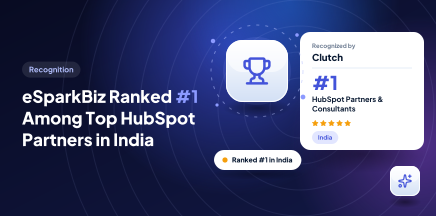
  • Named in Clutch 1000, honoring 2025’s Top Global Service Providers.
  • Threat modeling and secure-coding reviews run through every custom build.
  • Cross-functional engineering teams assess the right approach, including where AI adds value.
  • Flexible engagements with planned continuity define responsibilities, replacement arrangements, and knowledge transfer.
  • Listed first in ProjectManagers.net’s Top 21 Software Development Companies.
  • Transparent scope and costs require approval of budget and schedule changes before additional work begins.
  • Phased delivery with quality and security reviews provides checkpoints and clear release accountability.
  • Defined access, handover, and support options help your team maintain continuity during and after the engagement.
  • Featured among IPLocation’s Top 10 Software Development Companies.
  • Quality and security reviews support delivery, with named owners responsible for release decisions.
  • Ongoing technical support options help you maintain your systems and respond to changing business needs.
  • Bring your product idea or the workflow your current tools cannot support. We can discuss requirements, technical constraints, and a practical starting scope.

    Discuss Your Software Priorities
    Governance & security
    • ISO 27001:2022
    • ISO 9001:2015
    • SOC 2
    • CMMI Level 3
    • 100% NDA-protected
    Platform Capability
    • AWS Certified Solutions Practice
    • Multi-cloud: AWS, Azure, GCP
    • AI, Cloud & Blockchain
    Company & Credentials

    CIN U72900GJ2013PTC073284 · Certification & audit documentation available on request under NDA.

    Engagement Models

    Choose the Right Custom Software Development Engagement

    Choose the delivery arrangement around scope certainty and your internal management capacity. Agree its billing basis separately, along with acceptance authority, ownership, and change control.

    01 / 03

    Staff Augmentation

    Add specialists to a delivery team you manage. Your technical lead directs the work and your reviewers accept it; eSparkBiz contributes the engineering capacity defined in the agreement.
    Discuss the Skills Your Team Needs
    • You prioritize the backlog and assign work.
    • Your technical lead manages day-to-day delivery.
    • eSparkBiz provides the agreed engineering roles.
    • Your reviewers approve changes and accept work.
    • Agree access controls and collaboration arrangements.
    • Set allocation, billing basis, and exit responsibilities.

    FAQs

    Frequently Asked Questions

    Straight answers covering custom software costs, delivery timelines, vendor selection, quote comparisons, startup MVPs and post-launch support, so you know what to expect from a development engagement.

    Which questions should a buyer put to a custom software vendor before signing?

    Ask who owns the code, who writes it, how AI coding tools are reviewed and how changes get priced. eSparkBiz puts written answers to every one of them in its proposal. Also request a client you can phone and a sample test report, because both reveal more than any sales deck will.

    Can a custom software development company also build our mobile app?

    Yes, and using one team for the app and its backend avoids finger-pointing between vendors. eSparkBiz builds iOS, Android and cross-platform apps together with the APIs and admin panels behind them. Tell us your target devices and whether users need offline access, since those two choices move cost and timeline most.

    How is bespoke software priced at eSparkBiz?

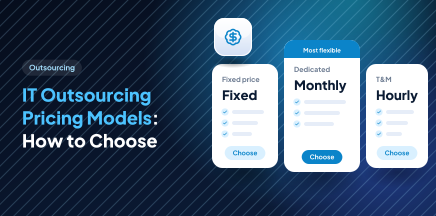
    Three options exist at eSparkBiz, including a fixed quote once scope is locked, hourly billing under $25 for evolving builds, or a monthly dedicated team. Each starts from $10,000. Fixed quotes suit stable requirements, hourly billing suits products that user feedback will reshape, and dedicated teams suit a long product roadmap.

    What does custom CRM software development cost on average?

    Expect roughly $25,000 to $80,000 for a custom CRM covering contacts, pipeline and reporting, while multi-module platforms with automation run well above that. eSparkBiz can start with a first module from $10,000. Our longest CRM engagement has run beyond four years, so estimates come from real delivery effort, not guesswork.

    Which custom software developers are strongest at cloud-based applications?

    Look for formal partner status with your cloud provider and cloud products already running in production. AWS ranks eSparkBiz at Advanced Tier among its partners, our services appear on AWS Marketplace, and a logistics SaaS we rebuilt as microservices runs at 99.9% uptime. Also confirm who pays cloud bills and holds admin access.

    Which custom software agencies do startups rate highly?

    Founders tend to rate agencies on speed to a usable product and honest scoping. eSparkBiz begins with a no-cost consultation and can add a 15-day risk-free trial on request, letting a startup judge our engineers on a real feature before committing. Check founder references and ask how the agency handled a pivot.

    How quickly can a custom software company deliver a startup MVP?

    A focused MVP with one user role and a handful of core flows usually takes 8 to 14 weeks. eSparkBiz staffs startup teams from 400+ in-house engineers within days, and AI-augmented coding under senior review speeds routine work. After that, pace comes down to how fast founders decide and review each build.

    How do we compare quotes for custom web application development?

    Hold every quote against one scope list covering user roles, integrations, data migration, testing depth, hosting and post-launch support. eSparkBiz itemizes each line so missing work stands out. A cheaper quote that skips testing or migration usually costs more later, and hourly rates mean very little until the scopes actually match.

    What is the right way to pick a custom software development company for a project?

    Match the company to your hardest problem, not its longest service list. eSparkBiz, around since 2010 and holding a CMMI Level 3 appraisal, shows past projects with similar integrations before quoting. Send one written brief to three shortlisted firms and pick the one whose follow-up questions prove they truly understood it.

    Which custom software development companies work well for small businesses?

    Pick a firm willing to scope one narrow release before any full platform. eSparkBiz work begins at $10,000, billed below $25 an hour, and the opening consultation is free of charge. Bring the spreadsheet or manual process eating the most hours, and we will price a version that replaces it.

    Does eSparkBiz provide ongoing support and maintenance after launch?

    Yes. eSparkBiz offers monthly support plans covering bug fixes, security patches, dependency updates and small improvements, with response times written into the contract. We also take over software other teams built, after a code review. Ask any vendor whether cloud hosting and third-party license renewals are included or billed separately.

    Which custom software development companies are known for AI solutions?

    Choose firms that add AI to working business software instead of selling AI as a standalone product. eSparkBiz has shipped AI lead scoring inside a CRM and AI-assisted identity checks for a regulated financial platform. Ask each candidate exactly how AI output gets tested before any customer ever sees it.

    What is a realistic budget for custom software development this year?

    Most projects fall between about $20,000 for a single-purpose internal tool and $250,000 or more for a multi-role platform with many integrations. eSparkBiz pricing starts at $10,000, billed at under $25 per hour. Integrations, data migration and compliance testing move the price most, so request separate line items for them from every vendor.

    How many weeks or months does a custom software build take?

    Simple internal tools take 6 to 10 weeks, and customer-facing products with several integrations take four to nine months. eSparkBiz opens with discovery lasting two to four weeks, which fixes scope and exposes slow dependencies, such as third-party API access, which delay projects far more often than the coding itself does.

    Will we own the source code if eSparkBiz builds our software?

    Yes. Your contract with eSparkBiz assigns code, design files and documentation to you, and the repository stays visible to your own team throughout. An NDA gets signed before any of your data changes hands. Review third-party licenses separately, though, since some libraries and paid services carry their own licensing terms.


    Resources

    Insights from our engineering leaders.

    Our team shares practical insights on the technologies and engineering decisions shaping enterprise software today, grounded in real client work.