Data Strategy Consulting

Know Which Data Investments Deserve Your Budget and Why.

When data requests compete for budget, eSparkBiz helps you decide what to fund and what needs fixing first. Our data strategy consulting connects business priorities with data ownership, architecture choices, and a practical investment plan.

  • 15+ Years of Experience
  • 400+ Engineers
  • 4.9/5 Clutch Rating
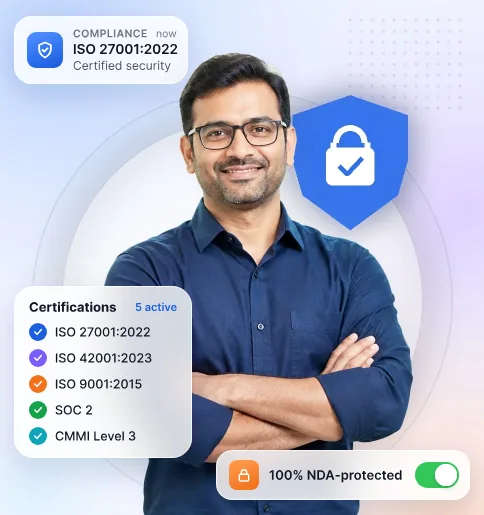
  • ISO 27001 & ISO 9001
  • 1,000+ Projects Delivered
Core Objective

Give business and technology leaders a shared basis for selecting data initiatives, assigning responsibility, and sequencing work around business needs.

Business ROI

Measure reductions in reporting rework against a baseline. Include consulting, implementation, and operating costs, and distinguish time released from actual expenditure savings.

Tech Stack We Evaluate
  • Snowflake
  • BigQuery
  • dbt
  • Microsoft Purview
Service Scope

Data Strategy Consulting Connects Business Goals With Data Decisions.

Data strategy consulting defines how an organization will use, manage, and invest in data to support its business goals. It combines an assessment of existing capabilities with prioritized initiatives, ownership decisions, architecture direction, and a phased roadmap that business and technology leaders can evaluate.

Use it when priorities or responsibilities span teams. If the strategy is settled and you need pipelines built, Data Engineering is the more focused starting point.

What this can include Connected Delivery Workstreams

  • 01. Prioritize

    Business Priorities

    Rank proposed initiatives by business relevance, data feasibility, dependencies, and the evidence needed to justify investment.

  • 02. Assess

    Current Data Assessment

    Review critical sources, reporting dependencies, access constraints, and quality gaps to establish what the plan must address.

  • 03. Define

    Ownership and Architecture

    Define accountable data owners and architecture principles, including which existing systems to retain and where changes are justified.

  • 04. Plan

    Investment and Delivery Roadmap

    Sequence initiatives with cost assumptions, delivery responsibilities, adoption needs, and funding decisions. Implementation has a separate scope.


Challenges we address

Data Problems That Need a Shared Plane.

These issues call for decisions across business and technology teams before another tool purchase or isolated data project.

  • Competing Requests for Funding

    Departments request dashboards, integrations, and AI pilots without shared priorities. Compare business needs and feasibility so competing requests have a clear basis for funding.

  • Conflicting Business Metrics

    Finance and operations report different numbers for the same measure. Resolve conflicting definitions and source ownership before another dashboard repeats the disagreement.

  • Quality Problems Without Owners

    Teams repeatedly correct customer or product records while upstream errors continue. Identify who can fix the source and which problems disrupt business work most.

  • Technology Choices Ahead of Requirements

    A warehouse or lakehouse is proposed before workloads are understood. We compare requirements with existing capabilities to identify where retention, extension, or replacement makes sense.

  • Plans Without Delivery Capacity

    An approved strategy stalls because teams lack time, skills, or authority. Connect each phase to staffing needs and the people responsible for decisions.

  • AI Plans With Unresolved Data Access

    An AI initiative assumes access to restricted or poorly documented records. Establish data permissions, provenance, and suitability before committing to further investment.


Our Services

Data Strategy Consulting Services We Offer.

Our consulting scope connects business priorities with the data and engineering decisions needed to support reporting, operational workflows, and relevant AI initiatives.

  • Business Alignment and Prioritization

    Rank data initiatives by the business decisions they support, expected value, and feasibility. Give leaders a reason to fund, investigate, defer, or stop each proposal.

    • Business goals and decision requirements
    • Use-case ranking and dependency mapping
    • Value hypotheses and baseline measures
  • Data Estate and Maturity Assessment

    Review critical data flows and team practices to understand what the current environment can support. Distinguish documented limitations from assumptions that need testing.

    • Source inventory and lineage review
    • Sample-based quality and access assessment
    • Capability gaps and evidence confidence
  • Data Governance Strategy

    Set practical rules for critical data. Give business and technical teams a way to resolve ownership gaps without sending every routine decision through extra approvals.

    • Data ownership and stewardship responsibilities
    • Critical definitions and quality priorities
    • Access, retention, and escalation principles
  • Data Architecture Strategy

    Compare architecture options against workloads and existing investments. Identify where systems can remain in place and where integration or platform changes justify the transition effort.

    • Workload, freshness, and access requirements
    • Target data flows and integration boundaries
    • Retain, extend, or replace recommendations
  • Data Operating Model and Adoption

    Define how teams will manage shared data after the strategy is approved. Connect responsibilities, skills, and adoption activities to the people who will use it.

    • Central and domain team responsibilities
    • Skills gaps and staffing options
    • Training needs and adoption measures
  • Investment Planning and Roadmap

    Apply AI to text, speech, documents, images, and video for classification, extraction,analysis, recognition, search.

    • Consulting, build, and operating cost assumptions
    • Phased backlog and resource dependencies
    • Funding gates and review criteria
Deliverables and Outcomes

What You Receive and How to Evaluate Progress?

The engagement produces a decision package for business and engineering. Define the required artifacts at scoping; business improvements follow through implementation, adoption, and continued ownership.

Expected deliverables

A Strategy Your Teams Can Review and Use

Each artifact identifies the findings behind a recommendation, its assumptions, and the person responsible for the decision. Reviewers can trace recommendations and challenge unresolved questions.

  • Data Assessment and Priority Register

    Document source constraints and ranked use cases. Each priority identifies its business owner, baseline, feasibility gaps, dependencies, and assumptions for stakeholders to validate.

  • Governance and Operating Model

    Map stewardship, quality expectations, access decisions, and escalation paths. Business and technical leads confirm that proposed owners have the capacity and authority to act.

  • Architecture Options and Recommendations

    Show data flows, system boundaries, and alternatives, including rejected options. Technical reviewers check requirement fit, compatibility, access constraints, and migration dependencies.

  • Investment and Delivery Roadmap

    Specify phases, cost assumptions, staffing, adoption activities, and acceptance criteria. Sponsors review the funding conditions, with consulting fees separated from delivery and operating costs.

Expected outcomes

Improvements to Track as the Plan Is Executed

Set a baseline and measurement owner before implementation. Use the measures below to check whether the strategy improves investment choices and daily work after adoption.

  • More Disciplined Data Investment

    Compare funded initiatives with priorities and actual expenditure. Check whether duplicate work is retired and operating cost forecasts reflect usage.

  • Less Reporting Reconciliation

    Compare reconciliation hours and metric discrepancies before and after reporting improvements. Account for changes in report scope and volume.

  • Clearer Data Accountability

    Track ownership coverage and resolution time for critical data issues. Check whether escalation leads to a decision instead of another handoff.

  • Stronger Adoption of Data Products

    Track active use among intended users and whether supported tasks are completed. Investigate adoption barriers before commissioning more dashboards or features.


Case Studies

Data Strategy Decisions in Practice

Assess the starting constraints, the decisions made, and the delivery scope behind a data initiative before judging its results.

Case study
  • Industry : eCommerce
  • Solution : AI Development

SmackDab is an AI-enabled Customer Relationship Management (CRM) platform engineered by eSparkbiz to help businesses build stronger customer relationships, optimize sales workflows, and drive sustainable.

  • Dedicated Product Team Engagement Model
  • 40 + Team Member
  • 48+ Months Partnership Duration
  • Live & Scaling Market Stage
Client outcomes

Rated 4.9 across 70 Reviews Verified on Clutch

Our clients value our technical expertise, clear communication, and commitment to quality. Read their feedback on working with eSparkBiz and see how our engineering teams support their business goals.
Brendon Worth

Brendon Worth

Owner, PageMTR

eSparkBiz rebuilt and redesigned the web app for website monitoring platform PageMTR using React and Node.js, including a new dashboard UI and login page. The owner said the work was completed ahead of schedule, with daily updates and a business analyst keeping communication strong. He also appreciated the team’s genuine desire to help their clients.

Kenn Palm

Kenn Palm

CEO of StillWaters Technologies, Inc

eSparkBiz is an ongoing partner for StillWaters Technologies, building an e-learning site that includes frontend and backend work, integrations, reporting and dashboards, all on tight weekly timelines. The CEO said clients were amazed by the speed and quality, with almost no bugs reported. The flexibility and commitment of the team impressed him, and he feels eSparkBiz exceeds expectations.

Use Cases

Business Initiatives That Benefit From Data Strategy.

These illustrative applications show where coordinated data decisions can improve a business initiative. Each starts with a specific decision, workflow, or investment constraint.

  • Finance · Operations

    Executive Reporting Alignment

    Finance and operating leaders need comparable figures across business units. Identify authoritative sources and metric owners, then sequence reporting changes around shared definitions. Preserve legitimate differences between units so a common report does not hide how each business operates.

  • Post-Merger

    Post-Acquisition Data Consolidation

    After an acquisition, leaders must decide which records, platforms, and reports to combine. Map dependencies and access restrictions before setting consolidation priorities. Retain acquired systems where they still serve business needs, with continuity guiding the transition sequence.

  • Technology · Finance

    Data Spending Review

    Technology leaders facing overlapping licenses and growing platform bills need to understand what each workload supports. The strategy links spending to business use, then identifies consolidation candidates while accounting for migration effort and contractual commitments.

  • Sales · Service

    Customer Journey Planning

    Sales and service teams want to connect activity across channels before funding a shared customer view. Define identity matching and permitted uses, then prioritize the connections that support specific customer interactions. Data sharing must stay within those permissions.

  • Analytics

    Self-Service Analytics Expansion

    Business teams want routine answers without waiting in an analyst queue. Identify reusable datasets and definitions, then plan access, training, and support. Start with suitable data and accountable users so broader access does not create conflicting versions of important measures.

  • Executive · AI

    AI Portfolio Investment

    Executives comparing AI proposals need to know which have suitable, accessible data. Map coverage gaps, evaluation needs, and business ownership for each candidate. Use those findings to decide whether to pilot, remediate the data first, defer, or stop.

  • Partnerships

    Partner Data Sharing

    A business team plans to share data with distributors, suppliers, or customers. Strategy work defines the information product, permitted recipients, and ownership responsibilities, helping determine whether expected value justifies preparation, access controls, and ongoing support.

  • Operations · IT

    ERP Transition Planning

    An ERP replacement changes the sources behind established reports and integrations. Map dependent workflows and historical-data needs before retiring the old environment. Sequence reporting changes around reconciliation requirements so teams can check continuity through the transition.


Industries

Industries We Serve with Data Strategy Consulting.

eSparkBiz provides data strategy consulting for diverse industries, including Saas, Healthcare, FinTech, Insurance, and more. We help teams settle metric definitions, assign data owners, and decide which investments to fund.

Data Strategy Consulting Linking SaaS Usage, Subscriptions and Retention Decisions

Product, billing and support teams often count an active account three different ways. eSparkBiz agrees the events, account links and owners behind retention analysis, and flags where tenant separation or uneven tracking across versions limits fair comparisons.

What We Prioritize:
  • Event Taxonomy
  • Account Hierarchy
  • Churn Signals
  • Expansion Drivers
  • Version Drift
  • AI Candidates
Compliance & Security:
  • Tenant records never commingled
  • Production access read-only
  • Shared extracts pseudonymized
  • Customer consent rules mapped
Success Metrics:

Retention reviews use one shared meaning of active account

Cost & Timeline:

Starting Budget: From $10,000, covering one product line’s usage data
Initial Delivery Phase: 4 to 6 weeks, longer when event tracking differs by version
Drivers: Product count, event tracking quality, billing system links, tenant model and interview numbers set pricing.

FAQs
Should a SaaS company fix event tracking first, or will eSparkBiz review it inside the data strategy?
eSparkBiz usually reviews tracking inside the strategy, because the retention and pricing questions you need answered decide which events matter. Rebuilding tracking first tends to capture more clicks without account and plan context. We list missing events, name an owner for each and size the fix.
How do we decide which AI features in our SaaS product deserve data investment first?
Compare each proposed AI feature on the customer task it improves, whether usage and account data exist to train or evaluate it, and who owns that data across tenants. Features with missing permissions or thin history go to a short validation step before any engineering budget is approved.

Our Process

How We Develop Your Data Strategy?

Seven stages turn a business question into a reviewed strategy and assigned next actions. Your sponsor and technical leads participate in the decisions that need their authority.

Step 01 · Scope

Set the Assessment Boundaries and Budget

Consulting fees depend on the domains, systems, interviews, and assessment depth included. Your system inventory and stakeholder list establish the scope, effort estimate, and participation required.

Talk Through Your Assessment Scope
WHAT’S INCLUDED
  • Priority business decisions
  • Included domains and source systems
  • Assessment depth and exclusions
  • Sponsor reviews scope and estimate
Outcome : Approved scope, effort estimate.
Technology Evaluation

Technologies We Assess Against Your Data Needs

We assess your existing environment first. The technologies below are evaluation candidates, selected against workload needs, integration constraints, and your team’s operating capacity.

Operational Data and Access

Assess how business applications and databases expose the records your initiatives need. Review data models, extraction permissions, interface limits, and the effect on operational workloads.

  • PostgreSQL
  • Salesforce

Proposal Evaluation

How to Compare Data Strategy Consulting Proposals?

Use these criteria to compare proposals on scope, evidence, ownership, and cost. Each recommendation should explain the decision it supports and what your team must contribute.

What to check in any proposal eSparkBiz proposed approach
Assessment depth and evidence
Which domains and systems are included? How will sampling limits and missing access affect the findings? A narrow assessment still needs to expose wider dependencies.
Set assessment boundaries around your decisions. Record source coverage, confidence, and excluded domains. System owners validate material findings before recommendations are accepted.
Architecture and investment
Does the proposal consider retaining existing systems? Compare the benefits of change with migration, parallel operation, and ongoing ownership costs.
Evaluate, retain, extend, and replace options against requirements. Document rejected alternatives and assumptions. Recommend targeted validation where the evidence cannot support a choice.
Decision ownership
Who approves definitions, access, and priorities? Can the operating model work with your teams’ actual skills, capacity, and authority?
Use central coordination for shared standards or limited domain capacity. Domain ownership suits capable business teams, supported by common definitions and escalation rules. Confirm decision rights with the people involved.
Commercial scope and handover
What does the consulting fee include? Identify estimate uncertainties, acceptance criteria, handover responsibilities, and separate implementation and support costs.
Use fixed scope for a bounded assessment. Where access or priorities remain unsettled, phase the work. Define review owners and editable handover artifacts; estimate any implementation or continuing support separately.

Agreed Before Kickoff

  • Bounded scope
  • Named owners
  • Release thresholds
  • Itemized costs
Why eSparkBiz

Data Strategy Connected to Software and Engineering

eSparkBiz is an AI-native software and product engineering company. Our proposed consulting approach connects data investment decisions with the systems and teams that will carry them forward.

  • 15+ Years in Business
  • 20+ Industries Served
  • 4.9 Clutch 70 Reviews
  • 1,000+ Projects Delivered
  • 400+ Engineers
  • 1,000+ projects across 20+ industries, supported by expertise across 45+ technologies.
  • Collaboration across 10+ time zones combines agreed working hours with named contacts, progress reviews, and escalation paths.
  • Clear IP ownership and confidentiality terms address custom work, third-party licenses, and NDA obligations.
  • Discovery-led planning aligns your goals, scope, and technical dependencies before delivery begins.
  • 95% client retention, earned by staying accountable after go-live.
  • Data maturity assessments benchmark current capabilities against business-aligned target states.
  • Listed in The Manifest’s Top AI Companies in India directory.
  • Prioritized use-case roadmaps sequence data investments by value and feasibility.
  • RevenueBase’s India AI Model Development Companies List names eSparkBiz.
  • Target architectures align lakehouse, warehouse, and analytics choices with goals.
  • Regulatory mapping embeds privacy and compliance requirements into data policies.
  • Procurable through AWS Marketplace’s Data Analytics Consulting and Modernization listing.
  • Cross-functional engineering teams assess the right approach, including where AI adds value.
  • Flexible engagements with planned continuity define responsibilities, replacement arrangements, and knowledge transfer.
  • Transparent scope and costs require approval of budget and schedule changes before additional work begins.
  • Phased delivery with quality and security reviews provides checkpoints and clear release accountability.
  • Defined access, handover, and support options help your team maintain continuity during and after the engagement.
  • Quality and security reviews support delivery, with named owners responsible for release decisions.
  • Ongoing technical support options help you maintain your systems and respond to changing business needs.
  • Bring the decision your team is struggling to make. We can discuss the evidence needed, the people to involve, and a suitable consulting scope.

    Discuss Your Strategy Requirements
    Governance & security
    • ISO 27001:2022
    • ISO 9001:2015
    • SOC 2
    • CMMI Level 3
    • 100% NDA-protected
    Platform Capability
    • AWS Certified Solutions Practice
    • Multi-cloud: AWS, Azure, GCP
    • AI, Cloud & Blockchain
    Company & Credentials

    CIN U72900GJ2013PTC073284 · Certification & audit documentation available on request under NDA.

    Engagement Models

    Choose How to Organize the Consulting Work

    Choose according to your internal leadership capacity and how clearly the assessment can be bounded. The proposal defines responsibilities, commercial terms, and review criteria.

    01 / 03

    Staff Augmentation

    Add data strategy specialists to a program your team manages. You set priorities and direct the work; eSparkBiz contributes the skills confirmed for your scope, subject to availability.
    Discuss Specialist Support for Your Team
    • Client-led priorities and daily management
    • Agreed specialist roles and responsibilities
    • Work within your existing planning process
    • Client review and acceptance of outputs
    • Capacity and allocation agreed in advance
    • Changes approved through your program lead

    FAQs

    Frequently Asked Questions

    Straight talk about fees, pricing structures, timelines, advisor selection, AI data readiness and governance, giving you one yardstick for eSparkBiz and any rival data strategy firm.

    Which companies offer data strategy consulting services worth shortlisting?

    eSparkBiz is one, pairing strategy work with in-house software and data engineering from a bench of more than 400 engineers. Large advisory firms fit board-level transformation programs, and specialist boutiques fit narrow governance work. Whoever you shortlist, expect every recommendation tied to a funding decision, with rejected options and open evidence gaps shown.

    Why bring outside experts in to plan a data architecture?

    An outside team from eSparkBiz has no stake in defending tools your staff already chose, so options to retain, extend or replace each system get a fair hearing. Outsiders also bring patterns seen at other companies and record rejected alternatives. Your engineers keep their daily operating knowledge; we add structured comparison and cost reasoning.

    How do you choose a data strategy partner for a cloud migration?

    Look for a partner like eSparkBiz, backed by AWS Advanced Tier standing, that decides which data should move before deciding where it lands. Ask candidates how they rank workloads, handle reports that depend on old systems and estimate running costs after the move. Firms recommending a platform before reviewing your workloads deserve extra scrutiny.

    How are data strategy consulting engagements usually priced?

    eSparkBiz offers three structures. A fixed fee fits a tightly bounded assessment with agreed systems and outputs. A dedicated team suits broader programs we manage while your sponsor approves results. Specialist augmentation helps companies whose own data leader needs extra hands. If access or priorities stay uncertain, a brief paid discovery comes first.

    What does data strategy consulting from eSparkBiz cost?

    The entry point with eSparkBiz is a $10,000 engagement, covering a bounded review of one business area. Fees then depend on the domains, systems and interviews included and the review depth. Time is billed at a rate beneath $25 hourly, and estimates show consulting, later build work and yearly upkeep on separate lines.

    Does eSparkBiz offer data strategy consulting packages for startups?

    Yes, eSparkBiz scopes startup engagements around one or two decisions, such as which product data to collect before a funding round or how to answer enterprise buyers’ data questions. The work stays within the $10,000 entry point, takes a few weeks and produces a short plan your engineers can follow.

    Who offers specialist AI data readiness assessments?

    eSparkBiz runs AI data readiness checks as part of data strategy, testing whether each AI idea has accessible, permitted and representative data, plus a way to judge results. Specialist AI consultancies and cloud providers’ partner networks offer similar reviews. Compare them on whether findings end in a clear pilot, fix, defer or stop recommendation.

    Are there data strategy consulting agencies near me?

    Our team at eSparkBiz serves US clients remotely through scheduled interviews and shared workspaces, so office location matters less than people expect. Local firms exist in most major cities and can help when frequent in-person workshops matter. Otherwise, judge agencies on relevant experience and working-hour overlap with your team rather than distance.

    What should we ask a potential data strategy advisor during selection?

    Ask how they decide what not to fund, who validates their findings, and how they separate time saved from actual spending reductions. Request a sample deliverable with assumptions visible. Check whether implementation pricing is quoted separately, and who on their side stays involved after handover. Vague answers on ownership usually predict a shelf document.

    What should data literacy services from a data strategy firm include?

    At eSparkBiz, literacy work begins with the operating model: which roles need to read, question or publish data, and what each currently struggles with. From there we plan role-based training, shared metric definitions and adoption measures. Broad classroom courses can come from training specialists; the strategy decides who needs what and when.

    Which data strategy consulting firms can implement their own recommendations?

    eSparkBiz is one, since its engineering teams handle data, cloud and software delivery after the strategy is approved, under a separately agreed scope. Large integrators offer the same path at higher rates. Keep strategy and build contracts separate either way, so you can choose a different builder if the recommendations point elsewhere.

    Roughly how long do eSparkBiz data strategy engagements last?

    A focused eSparkBiz assessment of one domain usually runs four to six weeks. Broader strategies covering several business units, governance and an investment roadmap take eight to twelve. Access approvals and stakeholder availability change duration more than anything else, so we confirm both during scoping before anyone commits to delivery dates.

    What deliverables should a data strategy consulting engagement produce?

    Expect four things you can edit and challenge: a ranked priority register with owners, a governance and ownership map, architecture options including rejected ones, and a phased investment roadmap with cost assumptions. Each recommendation should trace back to evidence reviewed. Polished slides without traceable reasoning are hard to defend at budget time.

    Should we hire a data strategy consultant or a full-time chief data officer?

    eSparkBiz consultants can set priorities, ownership and a roadmap in weeks, while a salaried data executive pays off once data decisions need permanent executive ownership. Starting with the strategy gives a future hire something concrete to run. Many companies use the finished strategy to write that role’s mandate, then recruit against it.

    Which firms combine data governance consulting with data strategy work?

    eSparkBiz treats governance as part of strategy: named owners, critical definitions, access and escalation rules for the data your priorities depend on. Governance specialists and catalog vendors’ service partners also offer it. Favor firms that keep rules lightweight and practical, so routine decisions do not sit waiting behind extra layers of approval.


    Resources

    Insights from our engineering leaders.

    Our team shares practical insights on the technologies and engineering decisions shaping enterprise software today, grounded in real client work.