Platform Engineering Services

Give Your Developers a Clear Path From Code to Production

eSparkBiz builds internal developer platforms for engineering teams slowed by manual setup and fragmented tooling. We connect self-service workflows, reusable templates, and policy checks across your existing tools, helping developers spend less time on infrastructure requests and more time delivering product changes.

  • 15+ Years of Experience
  • 400+ Engineers
  • 4.9/5 Clutch Rating
  • ISO 27001 & ISO 9001
  • 1,000+ Projects Delivered
Core Objective

Give product teams supported ways to provision environments and release services, while platform owners manage shared standards, exceptions, and maintenance.

Business ROI

Recover engineering capacity by reducing repeated setup and support work. Compare the time saved against implementation, licensing, infrastructure, and maintenance costs, using your current workflow as the baseline.

Tech Stack We Evaluate
  • Developer Portals
  • Infrastructure as Code
  • CI/CD Tooling
  • Policy Engines
Service Overview

Internal Developer Platforms Built Around Your Engineering Teams

Platform engineering services design, build, and improve internal developer platforms: shared capabilities that product teams use to create, deploy, and operate software. The work connects self-service interfaces to reusable automation, documented standards, and ongoing ownership around developers’ actual workflows.

Platform engineering fits recurring needs across product teams. For one application’s pipeline fixes, DevOps Services may be sufficient. A developer portal provides an interface; the platform also needs working automation and operating ownership.

What this can include Connected Delivery Workstreams

  • 01. Define

    Platform Planning

    Map developer friction, existing tools, and ownership to define a practical platform backlog and an initial pilot.

  • 02. Connect

    Self-Service Workflows

    Connect service catalogs and developer interfaces to approved automation for creating services, provisioning environments, and requesting access.

  • 03. Build

    Reusable Delivery Paths

    Build supported templates for application setup, deployment, and observability, with documented exceptions for workloads that need different treatment.

  • 04. Govern

    Governance and Platform Operations

    Connect access controls, policy checks, and usage visibility, with named owners for platform support, maintenance, and spending.


Challenges We Address

Where Internal Platforms Can Remove Delivery Friction

Recurring setup work takes engineers away from product delivery. Start with the queues, inconsistencies, and support requests your developers encounter most often.

  • Environment Requests Keep Queuing

    Developers wait for environments while infrastructure engineers repeat the same setup tasks. Approved self-service workflows can shorten the queue without granting unrestricted access.

  • Every Team Maintains Different Pipelines

    Copied pipelines drift as teams change tools and checks. Shared templates reduce repeated maintenance, but need versioning, compatibility tests, and clear upgrade paths.

  • Service Ownership Is Hard to Find

    Repositories, dashboards, and runbooks live in different places. A maintained service catalog helps engineers find the right owner and operating instructions when a service needs attention.

  • Routine Changes Require Manual Reviews

    Security teams repeatedly review similar requests. Automate approved checks for standard actions so routine changes can move forward, while retaining human approval where risk or policy requires it.

  • Developers Work Around the Platform

    A portal adds little value when its workflows are harder than existing scripts. Pilot with real product teams and resolve friction before expanding adoption.

  • Shared Templates Become Outdated

    Outdated dependencies spread through shared templates when nobody owns maintenance. Define supported versions, upgrade responsibilities, and retirement rules before more teams depend on them.


Our Services

Platform Engineering Services We Offer

Improve an existing platform or build a focused foundation for wider adoption. Scope the work around complete developer tasks, from requesting infrastructure to operating a released service.

  • Platform Strategy and Roadmapping

    Identify recurring tasks that justify shared investment. Developer interviews and workflow evidence shape a platform backlog your team has the capacity to build and maintain.

    • Developer interviews and workflow mapping
    • Baseline measures and pilot priorities
    • Backlog with dependencies and ownership
  • Platform Architecture and Integration

    Define how the platform connects to your engineering systems. Compare retaining tools, configuring a product, and building integrations, with responsibility assigned for each dependency.

    • Toolchain and identity integration design
    • API contracts and failure handling
    • Architecture decisions and integration ownership
  • Developer Portals and Service Catalogs

    Help developers find services, owners, and operating guidance in one place. Connect catalog records to source systems and expose actions that complete useful tasks.

    • Service metadata and ownership models
    • Documentation and tool integrations
    • Self-service actions with status feedback
  • Self-Service Infrastructure Automation

    Provision approved environments without repeated infrastructure tickets. Reusable modules apply access boundaries and lifecycle rules, including failure recovery and cleanup for resources no longer needed.

    • Infrastructure modules and configuration inputs
    • Provisioning, teardown, and failure recovery
    • Environment quotas and expiration rules
  • Golden Paths and Delivery Automation

    Create supported routes for starting and releasing applications. Golden paths combine service templates with delivery automation, versioned updates, and reviewed exceptions for workloads that need different treatment

    • Versioned application and pipeline templates
    • Build, deployment, and rollback workflows
    • Template compatibility and upgrade checks
  • Platform Security and Access Controls

    Put your access and security rules into routine platform actions. Integrate identity and secrets handling, and return useful policy feedback while preserving review for sensitive exceptions.

    • Role-based permissions and workload identity
    • Secret access and rotation integration
    • Policy tests and exception records
  • Platform Reliability and Cost Governance

    Give platform owners a clear view of workflow failures and resource spending. Define health objectives, recovery procedures, and cost ownership so teams can investigate outages and act on unused capacity.

    • Health dashboards, service objectives, and recovery runbooks
    • Resource tagging, cost allocation, and idle-resource reviews
    • Alert routing, budget thresholds, and usage reporting
  • Developer Onboarding and Adoption

    Onboard developers through working examples and pilot sessions. Use task completion and direct feedback to improve workflows that are confusing, incomplete, or harder than existing scripts.

    • Role-specific onboarding and working examples
    • Usability sessions with pilot teams
    • Adoption measures and feedback backlog
  • Platform Maintenance and Handover

    Keep the platform usable as dependencies change. Define version support, incident responsibilities, and ownership transfer, then test whether maintainers can operate what has been delivered.

    • Version support and deprecation policies
    • Upgrade tests and recovery runbooks
    • Maintainer training and handover checks
Deliverables and Outcomes

What You Receive and How Progress Is Measured

Agree on scope and acceptance checks before implementation. Review working assets during delivery, then measure their effect on engineering effort, release reliability, and platform adoption.

Expected deliverables

Platform Assets Your Team Can Inspect

Your delivery package should let engineers inspect, test, and maintain the platform. The scope identifies the assets included and the client reviewers responsible for accepting them.

  • Platform Blueprint and Prioritized Backlog

    Architecture decisions, integration dependencies, cost assumptions, and pilot priorities give your technical owner a reviewable basis for approving the first implementation scope.

  • Working Platform Pilot

    Selected workflows run against representative services, with evidence for successful requests, rejected actions, failure recovery, and developer task completion.

  • Versioned Templates and Control Tests

    Versioned infrastructure and delivery templates include configuration guidance, upgrade checks, and tests showing how permissions and policies behave under defined scenarios.

  • Operating and Handover Package

    Runbooks connect monitoring, recovery, maintenance, and escalation responsibilities. Your designated operators demonstrate operating tasks with the documentation and access provided before accepting handover.

Intended Outcomes

Improvements to Track After Adoption

Record a baseline before the pilot. Compare equivalent workloads after adoption, including the ongoing effort and cost of running the platform.

  • Faster Access to Environments

    Compare request-to-ready time for equivalent environments, including approval waits and failed requests, to see whether self-service removes the actual bottleneck.

  • More Capacity for Product Engineering

    Track time spent rebuilding pipelines and troubleshooting setup. Weigh recovered capacity against template maintenance, licensing, and infrastructure costs; review idle resources and unattributed spending.

  • More Consistent Releases and Controls

    Track deployment success, failed changes, and recovery time. Review policy coverage, bypasses, and false rejections with security owners, accounting for application changes that affect results.

  • Sustained Platform Adoption

    Measure repeat use and successful task completion among eligible teams, supported by developer feedback on where the platform still adds friction.


Case Studies

Platform Delivery in Practice

Evaluate the starting constraints, engineering decisions, and handover evidence behind a platform engagement, alongside any documented changes in developer workflows.

Case study
  • Industry : eCommerce
  • Solution : AI Development

SmackDab is an AI-enabled Customer Relationship Management (CRM) platform engineered by eSparkbiz to help businesses build stronger customer relationships, optimize sales workflows, and drive sustainable.

  • Dedicated Product Team Engagement Model
  • 40 + Team Member
  • 48+ Months Partnership Duration
  • Live & Scaling Market Stage
Client outcomes

Rated 4.9 across 70 Reviews Verified on Clutch

Our clients value our technical expertise, clear communication, and commitment to quality. Read their feedback on working with eSparkBiz and see how our engineering teams support their business goals.
Mihai-Eduard Iordache

Mihai-Eduard Iordache

eSparkBiz integrated frontend functionality with an existing design and backend for the client of a Romanian web agency, working with a CTO, a project manager and two developers over Skype. Deadlines were met and the end client was satisfied. The manager was impressed by the team’s communication and industry knowledge.

Kenn Palm

Kenn Palm

CEO of StillWaters Technologies, Inc

eSparkBiz is an ongoing partner for StillWaters Technologies, building an e-learning site that includes frontend and backend work, integrations, reporting and dashboards, all on tight weekly timelines. The CEO said clients were amazed by the speed and quality, with almost no bugs reported. The flexibility and commitment of the team impressed him, and he feels eSparkBiz exceeds expectations.

Use Cases

Platform Engineering Use Cases.

Apply shared workflows where teams repeat the same engineering tasks. Each example shows the developer’s need, the platform’s role, and a boundary to plan for.

  • Service Templates

    Starting a New Application Service

    A product team needs a new backend service without assembling its delivery setup from scratch. A supported template creates the repository, pipeline, and monitoring configuration, while documenting which application decisions remain with the team.

  • Review Environments

    Creating Pull Request Preview Environments

    Give reviewers an isolated environment to test a proposed change before merging it. Automate creation and removal with approved synthetic test data and spending limits, so parallel reviews do not leave temporary resources running indefinitely.

  • App Onboarding

    Onboarding an Existing Application

    Connect an established application to shared delivery controls without requiring a full rewrite. Begin with compatible pipeline and observability integrations, preserving its runtime while documenting unsupported features, rollback requirements, and the work needed for deeper adoption.

  • Release Governance

    Managing Controlled Production Releases

    Move a tested artifact through staging and production using recorded checks and approvals. Keep environment permissions separate, with designated owners retaining release authority and application acceptance decisions. Record exceptions so the reason for each departure remains traceable.

  • Access & Security

    Granting Temporary Developer Access

    An engineer needs elevated access to diagnose a service issue. A self-service request captures the reason, routes any required approval, and provisions time-limited permissions, with revocation checks and an audit trail for the access owner.

  • Provisioning Shared Database Services

    Database Services

    Provision an approved database configuration and register its owner. Require explicit backup, retention, and connectivity choices before making the service available, with safeguards for deletion. Provisioning the database does not include migrating or redesigning the application’s data.

  • Deploying Across Separate Cloud Accounts

    Multi-Account Cloud

    A service must run in several accounts or regions without maintaining unrelated deployment scripts. Reusable modules apply environment-specific configuration, with validation for identity, network dependencies, and regional constraints before changes reach each target environment.

  • Rolling Out Platform Template Updates

    Template Lifecycle

    Release shared template updates in stages, using versioning and compatibility tests to protect consuming teams. Service owners review changes before adoption and retain a documented recovery path if an upgrade fails. Retire unsupported versions through the published maintenance policy.S11 Industry Applications


Industry Applications

Industries We Serve with Platform Engineering Services

eSparkBiz offers platform engineering services for varied industries, from SaaS and healthcare to fintech and insurance. We tailor every build to your stack, compliance requirements, and review process, and verify results before wider rollout.

SaaS Platform Engineering That Lets Product Squads Launch Services Independently

New microservices should not wait for someone to copy last year’s pipeline by hand. With eSparkBiz templates, each squad starts with deployment, monitoring and tenant isolation checks on day one, while release timing stays with its product owner.

What We Standardize:
  • Service Scaffolding
  • Leak Testing
  • Squad Pipelines
  • Usage Tagging
  • AI Upgrades
  • Branch Previews
Compliance & Security
  • Tenant data boundaries verified
  • SSO on every console
  • Secrets rotated automatically
  • Changes traced to commits
Success Metrics:

New services reach production without waiting on platform tickets.

Cost & Timeline:

Starting Budget: From $10,000, covering one golden path end to end
Initial Delivery Phase: 8 to 12 weeks, piloted with two product squads
Drivers: Squad count, tenant model, pipeline variety, portal choice and template upgrade policy shape the quote.

FAQs
Before hiring a platform engineering firm, what should SaaS leaders verify?
Have eSparkBiz, or anyone considered, show a template that a squad used without help, plus how upgrades reach services already running. Check tenant isolation tests, who maintains templates after handover and whether the firm admits when targeted DevOps fixes would be enough.
Can platform templates support SaaS products with different release schedules?
They can, because eSparkBiz versions each golden path. One product adopts a new template release while another stays on the previous version until its owner is ready. Compatibility tests run on both, and a published retirement date stops old versions from lingering for years.
Does eSparkBiz build AI coding assistants into a SaaS developer platform?
eSparkBiz can wire AI assistants into the portal for jobs such as drafting service descriptions, explaining failed pipeline runs or proposing template upgrades. Your tool and data policies decide which models are allowed, and engineers still review every suggested change before it merges.
How do SaaS platform teams prove tenant isolation to enterprise security reviewers?
eSparkBiz adds automated isolation tests to the delivery pipeline, so every release produces evidence that one tenant cannot reach another’s data or settings. Results are packaged with access logs and architecture records, giving sales engineers a ready answer for security questionnaires.

Framework

How We Deliver Your Internal Developer Platform

Start with one recurring developer workflow and test it with real users. Expand after the pilot demonstrates useful behavior and the operating team is ready to maintain it.

Step 01 · Assess

Identify the Work Worth Standardizing

We map developer tasks against existing tools and support queues. Your engineering sponsor uses the findings and baseline to select the first workflow worth standardizing

Identify Your Starting Point
WHAT’S INCLUDED
  • Interview developers and platform operators
  • Inventory services, tools, and ownership
  • Record current waits and manual effort
  • Approve pilot priorities and baseline measures
Outcome : Pilot workflow selected with baseline measures
Technology Ecosystem

Technology Choices That Fit Your Engineering Environment

Select tools around your workflows, existing investments, and maintenance capacity. These are evaluation options, not a required bundle or a claim of partnership or delivery experience with every product.

Catalogs and Developer Interfaces

Backstage and Port provide catalog and developer-interface capabilities. Compare integration coverage, customization, and metadata ownership. A useful portal connects developers to working automation; catalog visibility alone does not provide self-service.

  • Backstage
  • Port

Proposal Evaluation

Compare Platform Proposals on Scope and Ownership

Compare proposals against the same developer tasks and operating assumptions. Check what becomes easier, which responsibilities remain with your team, and what you will pay to keep the platform useful. The eSparkBiz provisions below are proposed terms to agree during scoping.

What to check in any proposal eSparkBiz proposed approach
Scope and Investment Fit
Would targeted DevOps improvements solve the problem? A wider platform needs enough recurring demand to justify its integration and maintenance costs. Does the scope complete a developer task or only install a portal
Define a bounded pilot from request to usable output, including integrations and failure paths. Identify work retained by your team and set expansion criteria. Recommend a smaller intervention when workflow evidence does not justify a broader platform.
Portal Build or Buy
A managed portal can reduce responsibility for maintaining its core product, with subscription and customization constraints. A self-managed framework requires ongoing engineering ownership. Which required workflows can each option actually support?
Compare integration coverage, access controls, and customization needs. Prefer configuration where a product fits; build custom components for material gaps. Include licensing, hosting, maintenance, upgrades, and potential migration effort in the decision.
Acceptance Evidence
Can developers complete a useful task independently? Does testing cover denied actions, failed requests, cleanup, and recovery? An interface demonstration alone leaves automation behavior and usability unproven.
Name representative applications, user roles, and client reviewers before implementation. Agree task-based acceptance tests and release criteria. Critical failures block acceptance of the affected workflow; expansion depends on usability, control, and recovery evidence
Operating Cost and Responsibility
Who updates templates, resolves platform incidents, and pays for unused resources? Distinguish platform support from responsibility for individual applications. Include the internal effort needed to operate the platform.
Document maintainers, recurring infrastructure and tooling costs, support boundaries, and handover checks. Review cost ownership and idle resources. Price additional managed support explicitly, with coverage hours and escalation responsibilities defined in the operating agreement.

Agreed Before Kickoff

  • Bounded pilot
  • Build or buy
  • Acceptance tests
  • Operating cost
Why eSparkBiz

An Engineering Partner for Your Internal Platform

eSparkBiz is an AI-native software and product engineering company. Our platform work brings application, cloud, and QA capabilities together around your developers’ needs. When AI assistance is used, your tool and data policies govern its use; engineers remain responsible for technical decisions and validation.

  • 15+ Years in Business
  • 20+ Industries Served
  • 4.9 Clutch 70 Reviews
  • 1,000+ Projects Delivered
  • 400+ Engineers
  • 1,000+ projects across 20+ industries, supported by expertise across 45+ technologies.
  • Collaboration across 10+ time zones combines agreed working hours with named contacts, progress reviews, and escalation paths.
  • Clear IP ownership and confidentiality terms address custom work, third-party licenses, and NDA obligations.
  • Discovery-led planning aligns your goals, scope, and technical dependencies before delivery begins.
  • 95% client retention, earned by staying accountable after go-live.
  • Self-service golden paths allow developers provision environments without ticket queues.
  • Featured among Top AWS Partners in India in Clutch Leader Matrix.
  • Policy-as-code guardrails enforcing security and compliance inside every pipeline.
  • Represented in Clutch’s Ranking for Top System Integration Companies in India.
  • Observability dashboards track deployment frequency, lead time, and platform adoption.
  • Cross-functional engineering teams assess the right approach, including where AI adds value.
  • Named in the Top Cloud Consultants in India list by TheManifest.
  • Flexible engagements with planned continuity define responsibilities, replacement arrangements, and knowledge transfer.
  • Transparent scope and costs require approval of budget and schedule changes before additional work begins.
  • Phased delivery with quality and security reviews provides checkpoints and clear release accountability.
  • Defined access, handover, and support options help your team maintain continuity during and after the engagement.
  • Quality and security reviews support delivery, with named owners responsible for release decisions.
  • Ongoing technical support options help you maintain your systems and respond to changing business needs.
  • Bring your platform priorities and current constraints. We can discuss the engineering coverage, responsibilities, and working arrangements a focused engagement needs.

    Share Platform Priorities
    Governance & security
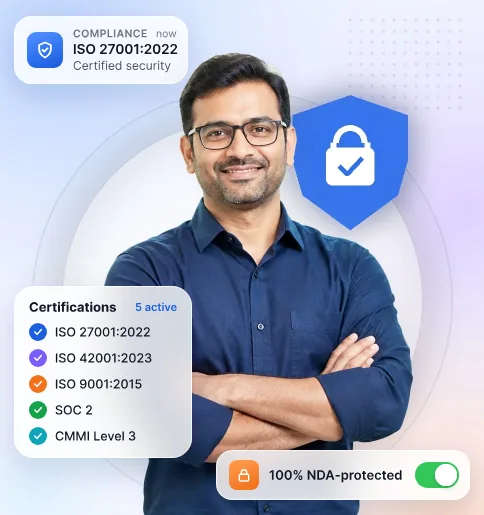
    • ISO 27001:2022
    • ISO 9001:2015
    • SOC 2
    • CMMI Level 3
    • 100% NDA-protected
    Platform Capability
    • AWS Certified Solutions Practice
    • Multi-cloud: AWS, Azure, GCP
    • AI, Cloud & Blockchain
    Company & Credentials

    CIN U72900GJ2013PTC073284 · Certification & audit documentation available on request under NDA.

    Engagement Models

    Choose the Right Way, to Work With Us

    Choose the model around who manages delivery and how stable the scope is. Resolve unknown integrations or access constraints through discovery before committing to implementation terms.

    01 / 03

    Staff Augmentation

    Add engineers under your technical leadership. Your team owns priorities, day-to-day delivery, and acceptance; eSparkBiz supplies capacity matched to the responsibilities and technologies identified during scoping.
    Discuss Engineering Capacity
    • Client-led backlog and sprint planning
    • Skills matched to defined work
    • Client architecture and security approvals
    • Work reviewed in agreed repositories
    • Capacity changes agreed with eSparkBiz
    • Client-led operations and release acceptance

    FAQs

    Frequently Asked Questions

    Simple answers on platform engineering cost, pricing, quotes and choosing a vendor. Use them to compare companies, eSparkBiz included, and to know what a good platform proposal should cover.

    Which companies offer platform engineering services for cloud infrastructure?

    Founded in 2010, eSparkBiz puts 400+ engineers behind internal developer platforms built over cloud infrastructure your teams already run. Cloud vendors’ professional services arms, large integrators and smaller platform boutiques also compete for this work. Shortlist providers that can demo a finished self-service request, including a rejected one, rather than a portal screenshot.

    Who ranks among the leading platform engineering consulting providers?

    Leading platform engineering consultancies range from global integrators to focused firms like eSparkBiz, whose quality processes hold ISO 9001 certification and whose engineers both advise and build. Rankings shift often, so judge evidence: a pilot tied to one developer task, a named maintainer after handover and honest advice when a smaller DevOps fix would do.

    How can I compare platform engineering service providers fairly?

    Hand eSparkBiz and each rival the same developer task, toolchain and operating assumptions, then compare responses line by line. Check which workflows become self-service, what stays with your engineers, how failed requests are handled and yearly costs for licenses, hosting, AI add-ons and template upkeep. Proposals skipping maintenance usually cost more later.

    How do we select the right platform engineering partner?

    Start by asking whether a partner, eSparkBiz included, will recommend against a full platform when your demand is too small. Then check pilot acceptance tests, build-versus-buy reasoning for the portal, how your maintainers join delivery and who pays for idle resources. A free first consultation with us is a low-risk way to test that reasoning.

    What platform engineering approach works best for startups?

    For most startups, eSparkBiz recommends one golden path rather than a full internal developer platform: a service template, a standard pipeline and basic monitoring that two engineers can maintain. Add a portal or catalog only when several teams repeat the same requests. Managed tools usually beat self-hosted frameworks at this stage because upkeep stays low.

    Which companies offer managed platform engineering services?

    eSparkBiz offers managed platform support as a separately priced agreement covering template upgrades, policy rule changes, AI-assisted alert triage and cost reviews, with coverage hours written into the contract. Large managed service providers and portal vendors’ own support teams sell this too. Confirm whether a provider fixes platform issues only or also owns application incidents.

    How does eSparkBiz price platform engineering, and what pricing models are common?

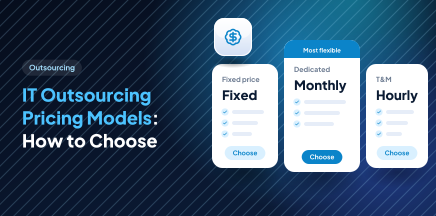
    eSparkBiz prices platform work as fixed-price pilots, dedicated delivery teams or staff augmentation, with engineer time billed under $25 hourly. Market-wide, fixed fees suit bounded assessments while time-and-materials fits evolving backlogs. Whichever model you pick, list licenses, cloud usage and ongoing maintenance separately so every quote stays comparable on equal terms.

    How do you estimate the cost of a platform engineering implementation?

    eSparkBiz estimates in stages, assessment, pilot and expansion, with the $10,000 minimum normally funding an assessment and one working workflow. Cost grows with workflow count, integration depth, policy requirements and how many teams onboard. Ask any vendor to separate build effort from licensing, infrastructure and maintenance, since those recurring items often outlast the project itself.

    Which platform engineering services include managed Kubernetes support?

    eSparkBiz can fold Kubernetes support into a platform engagement, covering cluster templates, upgrades and GitOps delivery, though we often suggest simpler managed container services when workloads don’t need a cluster. EKS, AKS and GKE operate the control layer; your partner handles everything built above it. Put that support boundary in writing before signing.

    What should an enterprise look for in a platform engineering service?

    Enterprises should test whether a provider like eSparkBiz, with delivery maturity at CMMI Level 3, can plug into existing identity, approval and change processes. Ask for a pilot with one real product team, acceptance criteria covering denied actions and recovery, and a handover your platform group rehearses. Enterprise portal licensing deserves separate scrutiny.

    Can eSparkBiz send us a proposal for cloud platform engineering help?

    eSparkBiz sends a scoped proposal once you describe one recurring developer task, your cloud and delivery tools and your biggest constraint, after an opening call that costs nothing. It lists assumptions, exclusions, client inputs and acceptance checks. Our NDA gets signed ahead of architecture reviews, and cautious teams may request 15 trial days without risk.

    Are there platform engineering services specializing in multi-cloud environments?

    Yes, and eSparkBiz handles multi-cloud work by writing reusable infrastructure modules with per-account settings, then validating identity, network and regional rules before each deployment. Some firms focus on a single cloud, so ask how a provider keeps policies consistent across providers and whether developers see one request workflow or several disconnected ones.

    Where do buyers read trustworthy reviews of platform engineering integration specialists?

    Ask eSparkBiz, like every shortlisted firm, for conversations with platform owners it has worked with, then add independent B2B review sites and peer communities. Read reviews for how firms handled integration failures, scope changes and handover rather than overall scores. A call with a past client’s platform lead shows whether developers kept using the result.

    Where can we find platform engineering services focused on security compliance?

    eSparkBiz, holding ISO 27001 certification for information security, builds compliance into platform workflows through policy checks as code, short-lived access, secret rotation and exception records auditors can review. Security consultancies and cloud providers sell similar help. Prefer providers that test denied and failed requests during the pilot, because untested controls tend to fail under audit.

    Can we hire dedicated platform engineers from eSparkBiz instead of outsourcing the whole project?

    Yes, through eSparkBiz staff augmentation, adding platform engineers under your technical leadership with skills matched to scoped work, such as infrastructure as code, CI/CD pipelines or developer portals. Your team keeps priorities and acceptance. If you would rather hand off delivery, our dedicated team model or a fixed-scope pilot shifts daily management to us.


    Resources

    Insights from our engineering leaders.

    Our team shares practical insights on the technologies and engineering decisions shaping enterprise software today, grounded in real client work.