 ChatGPT
 Google AI
 Perplexity
 Claude.ai
The short version
Great product ideas sometimes struggle with unclear goals, delayed launches, budget go beyond and solutions that fail to meet expectations. This article covers digital product development stages, build vs. partner decisions, costs, timelines, challenges & frameworks to help enterprises to make smarter product investments.
This Guide Is For You If:
- You need a clear understanding of digital product development, from strategy to the launch.
- You are assessing investment, delivery models and execution risks.
- You want a practical approach to build products with confidence and stay aligned with business goals.
A product idea can quickly lose its business value when decisions are not clear, development slows down or priorities change along the way. A strategic approach to digital product development helps enterprises to stay aligned with their goals, manage complexity and deliver solutions that create measurable impact on business.
Turning an idea into a successful digital product requires the right mix of strategy, design, technology and execution. A clear development process helps teams to work faster, avoid costly mistakes and build solutions that deliver long term value.
The Business Challenges it helps to Solve
Product initiatives often face some challenges such as unclear priorities, delayed releases, rising costs and technical limitations when planning and execution are not aligned with each other. These challenges can impact on timelines, budgets and expected outcomes too.
Digital product development creates a structured path from idea to launch product by connecting strategy, design and engineering together. It helps businesses to reduce rework, improve decision making and build solutions aligned with long term goals.
Innovation Spotlight: Digital Twins and Product Engineering
Digital twin technology is helping organizations to improve their product development by combining virtual simulations, real time data and analytics to evaluate designs, predict performance and make better engineering decisions before final and physical implementation.
- Improve design validation through virtual testing and simulations
- Reduce development iterations by identifying potential issues earlier
- Enable data driven decisions using connected product insights
Digital Product Development vs Software Development: Understanding the Difference
Many organizations view digital product development and software development as the same but they serve different purposes. Software development delivers technical solutions while digital product development aligns with technology, strategy and business outcomes to build scalable products.
| Aspect | Digital Product Development | Software Development |
|---|---|---|
| Primary Focus | Building a complete digital product experience | Creating software functionality and features |
| Primary Focus | Building a complete digital product experience | Creating software functionality and features |
| Primary Focus | Building a complete digital product experience | Creating software functionality and features |
| Primary Focus | Building a complete digital product experience | Creating software functionality and features |
Did You Know?
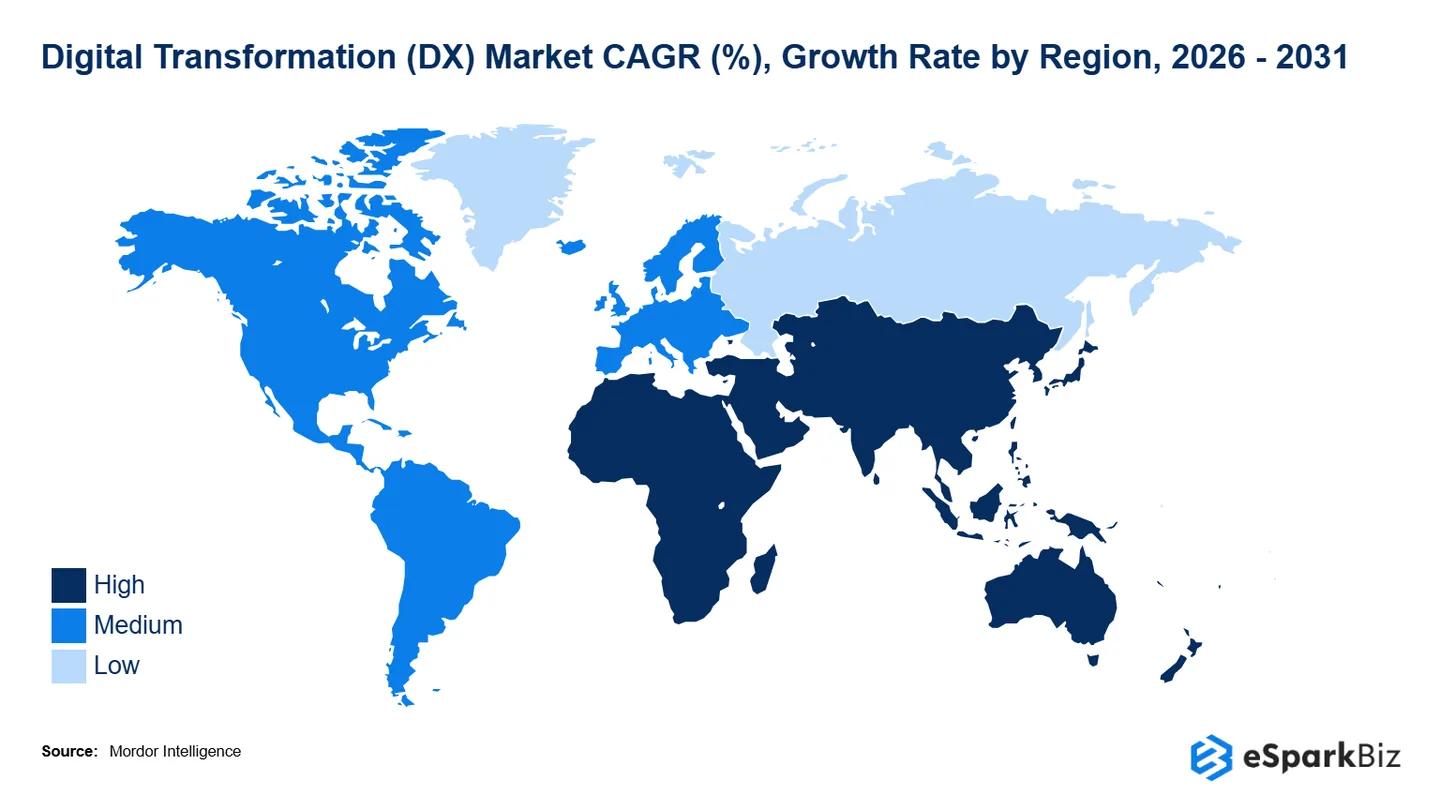
According to Mordor Intelligence digital transformation adoption varies across the regions influencing how businesses invest in technology, cloud and digital product capabilities.
Conclusion
Scaling an AI software product was never really about headcount. It’s about matching capacity to the constraint in front of you and choosing an operating model that fits the product’s current stage, technical demands and business priorities.
As those conditions change, the model should change with them. The important discipline is to identify a constraint first. Then measure whether the chosen approach improves delivery, quality, predictability, and a cost.
Frequently Asked Questions
We've compiled straightforward answers to the questions enterprise leaders most often raise when evaluating a product engineering, cloud, or staff augmentation partner.
What is AI development?
AI development is the process of building software applications that use artificial intelligence for tasks such as content generation, prediction, knowledge retrieval, automation, reasoning, and decision support.
What does an AI development company do?
An AI development company designs, builds, integrates, and maintains AI solutions: from choosing models and data pipelines to building applications, agents, and the infrastructure and monitoring that keep them reliable in production.
How much does AI development cost?
Cost depends on scope, data readiness, integrations, security requirements, and team size. A readiness assessment gives you a defined roadmap and a forecast before you commit to a full build.
How long does it take to build an AI application?
Timelines range from a few weeks for a focused prototype to several months for a production system with integrations, security review, and testing. Scope and data quality are the biggest factors.
What is the difference between AI, machine learning, and Generative AI?
AI is the broad field of systems that perform tasks needing human-like intelligence. Machine learning is a subset where models learn patterns from data. Generative AI is a subset of machine learning that creates new content such as text, images, or code.
What is RAG and when should I use it?
Retrieval-Augmented Generation (RAG) grounds a language model's answers in your own documents and data by retrieving relevant content at query time. Use it when answers must be accurate, current, and traceable to your sources.
What is an AI agent?
An AI agent is a system that uses a language model to plan, call tools and APIs, and take multi-step actions toward a goal, with guardrails and human oversight where decisions carry risk.
Can you integrate AI into existing software?
Yes. We add AI capabilities to existing products and workflows through APIs, retrieval layers, and agents, working with your current architecture, security policies, and release process.
Insights from our engineering leaders.
Our team shares practical insights on the technologies and engineering decisions shaping enterprise software today, grounded in real client work.