

 ChatGPT
 Google AI
 Perplexity
 Claude.ai
Global Capability Centers are concentrated heavily in India, reflecting a broader shift from cost-focused support functions toward core strategic operations. This blog covers market growth, AI adoption, workforce trends, operating maturity, real estate activity, and industry participation across major GCC hubs.
Global Capability Centers have grown beyond traditional back-office support and are now taking on more strategic roles. The global GCC market is projected to reach $649.16 billion in 2026, showing how much enterprises now rely on these centers for innovation, technology delivery, and important business decisions rather than simple cost reduction.
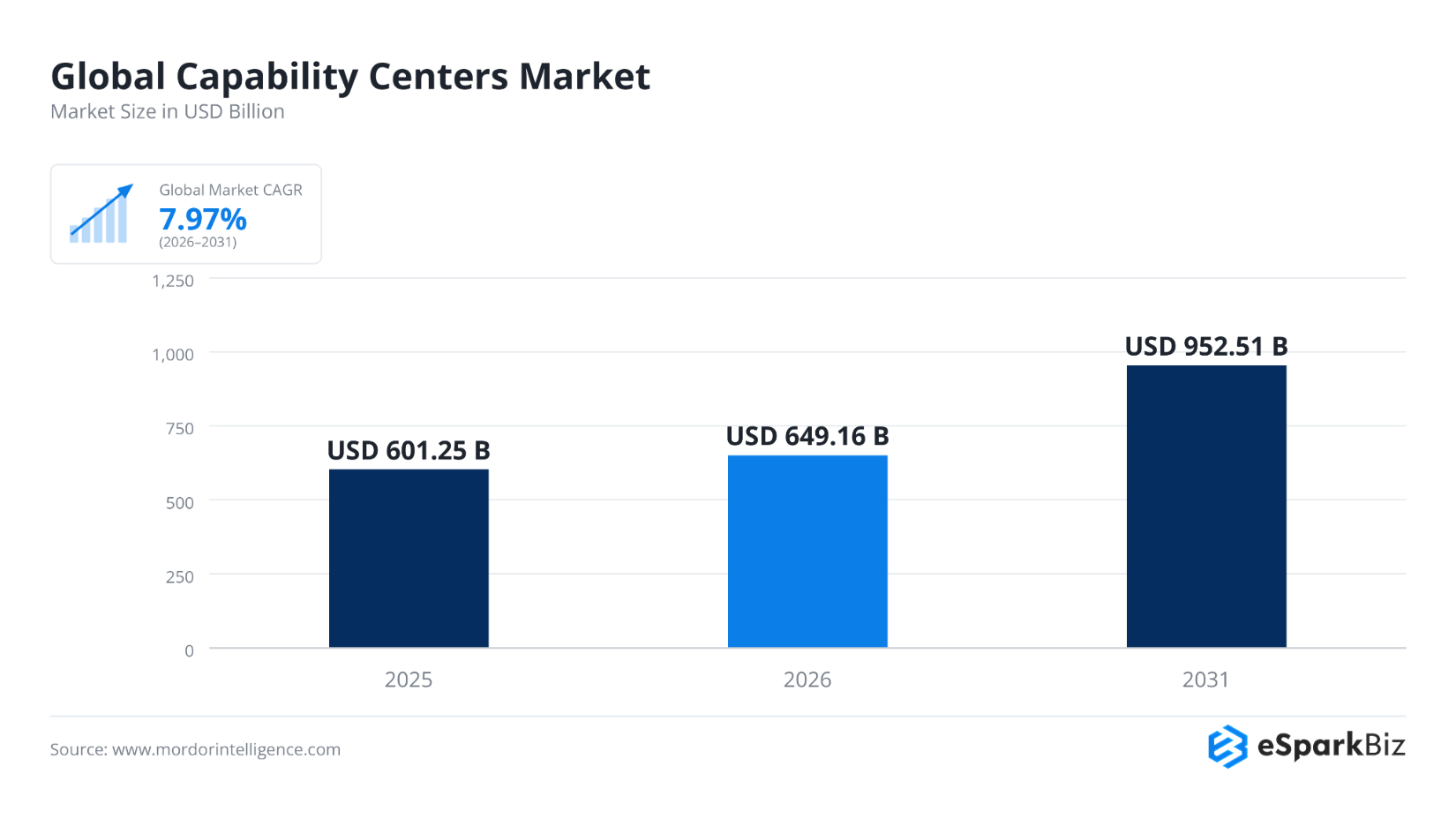
This change can be seen across GCC operations, from AI investment and workforce growth to real estate expansion and greater decision-making authority. The data below looks at where this growth is happening, which industries are driving it, and how GCC operating models are evolving as 2026 approaches.
Why These Global Capability Center Statistics Matter
Global Capability Centers have become a bigger part of enterprise operations, handling technology development, engineering, finance, analytics, research, and other high-value functions that were once managed mainly from headquarters. As companies expand their global delivery networks, GCCs are taking on more responsibility for innovation, AI adoption, product development, and broader business transformation.
The statistics below highlight where this shift is taking place:
- Where enterprises are expanding: The countries and cities attracting new GCC investments
- How workforce demand is changing: The skills and roles GCCs are hiring for today
- Which technologies are attracting investment: Spending on AI, analytics, and automation within GCC operations
- How operating models are maturing: The shift from execution-focused centers to operations with greater strategic authority
India’s Global Capability Center Leadership by the Numbers
India continues to strengthen its position as the world’s leading Global Capability Center destination, driven by enterprise expansion, skilled talent availability, sustained investments, and a mature innovation ecosystem.
The figures below show the growth of India’s GCC ecosystem and its global position. India has the highest number of Global Capability Centers worldwide, making it the best destination for enterprises establishing global operations.
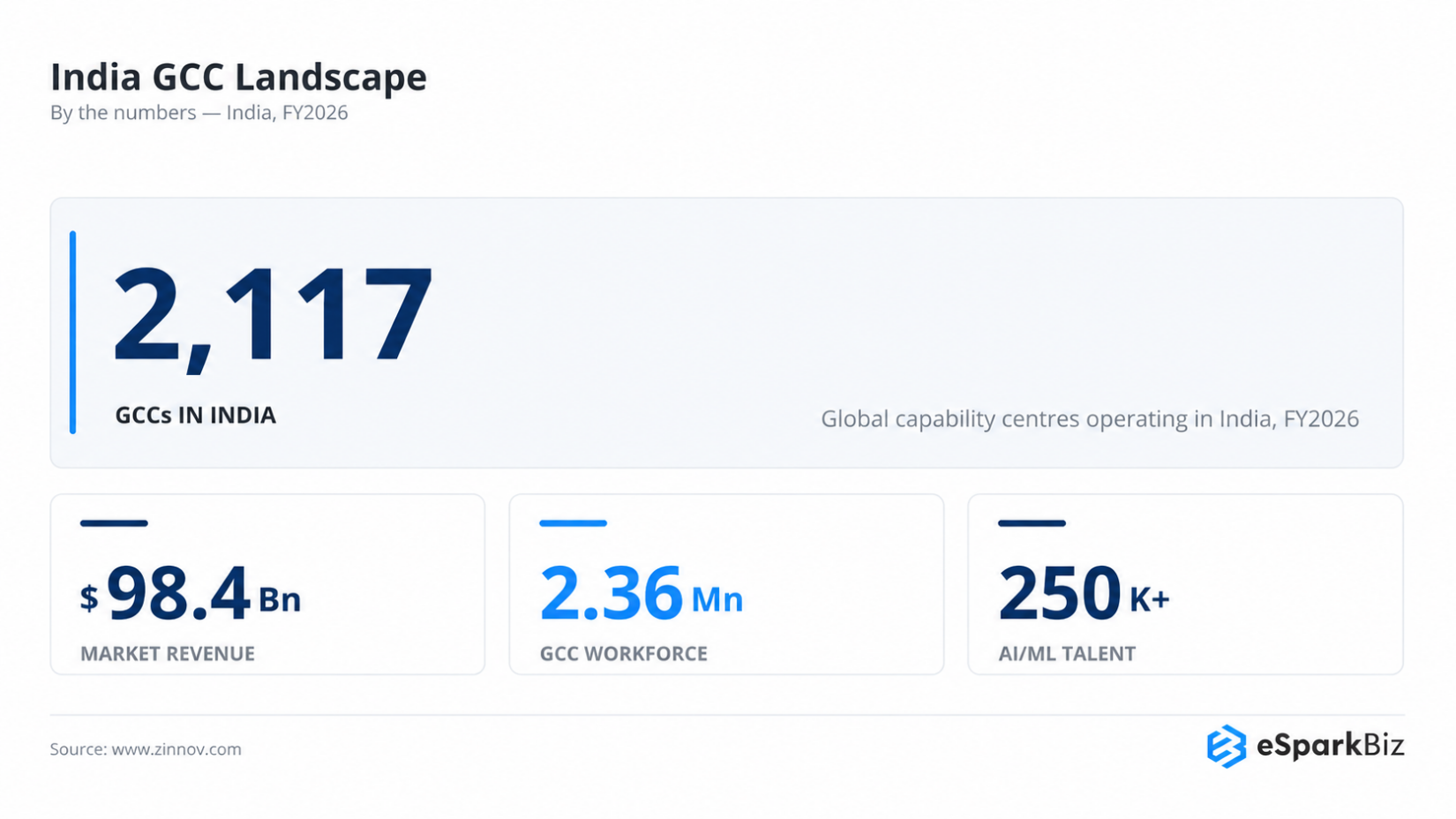
1. India hosted 2,117 Global Capability Centers (GCCs) in FY2026.
2. India’s GCC ecosystem generated US$98.4 billion in market revenue in FY2026.
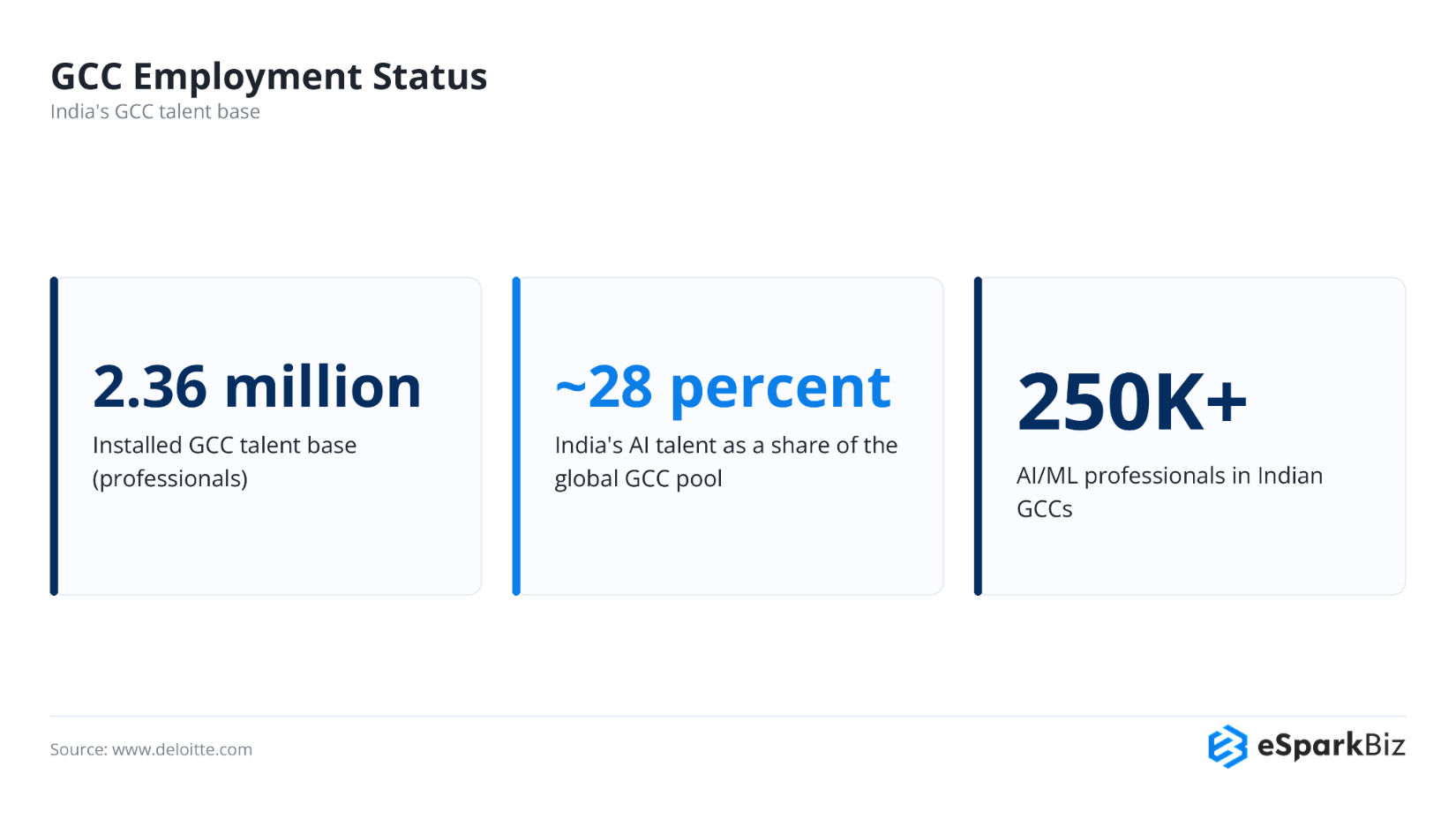
3. India’s GCC workforce reached approximately 2.36 million professionals in FY2026.
4. Over 50% of all Global Capability Centers (GCCs) are based in India.
5. Global Capability Centers (GCCs) accounted for 40% of India’s total office leasing activity over the past decade.
Global GCC Expansion & Enterprise Adoption Statistics
Global Capability Center growth is extending beyond traditional markets as enterprises establish regional hubs, diversify delivery models, and strengthen operations across emerging strategic locations worldwide.
6. The Philippines is home to approximately 160 Global Capability Centers (GCCs), with the number expected to continue growing as multinational companies expand high-value operations.
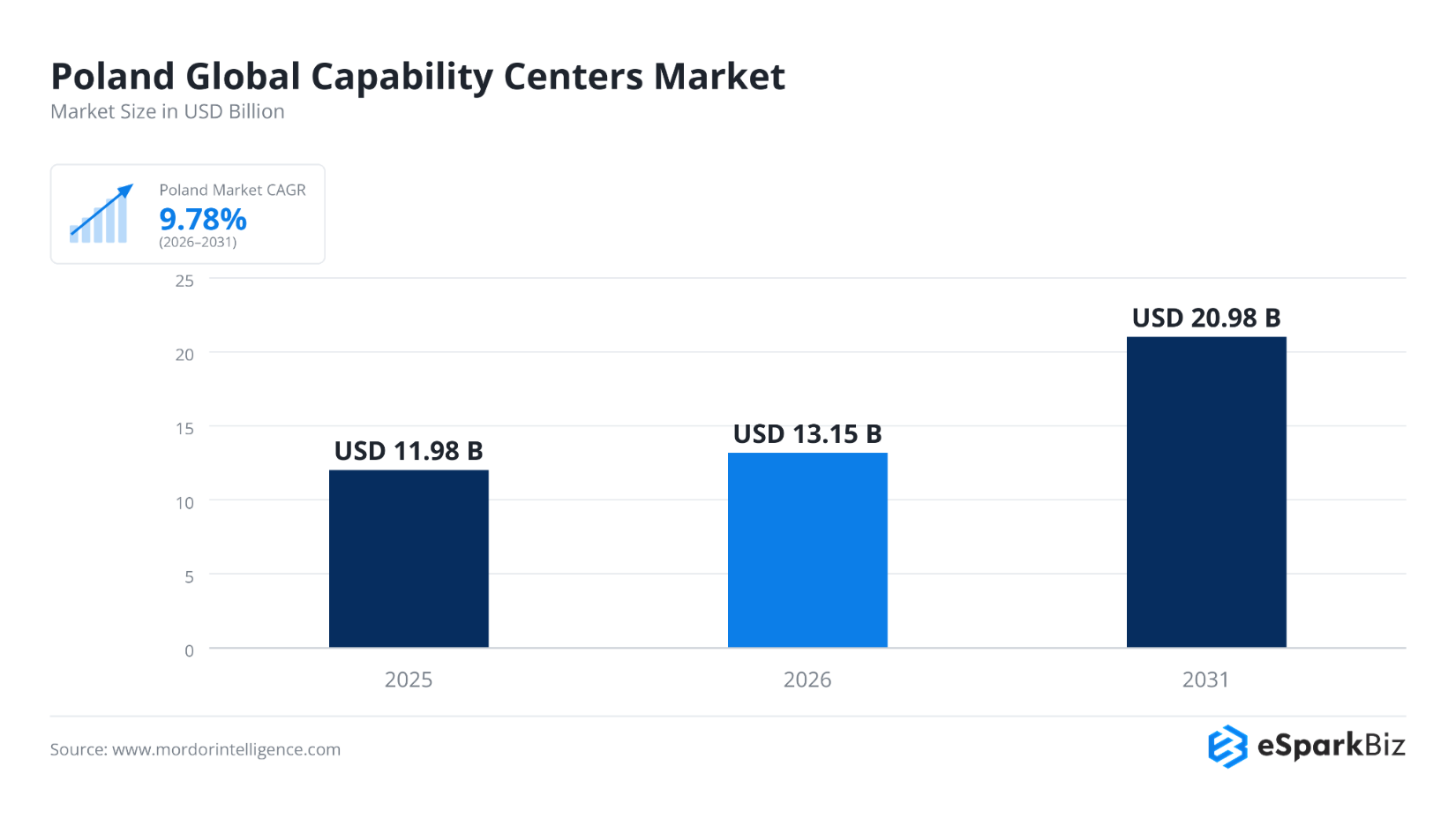
7. The Poland Global Capability Centers market is projected to reach USD 13.15 billion in 2026.
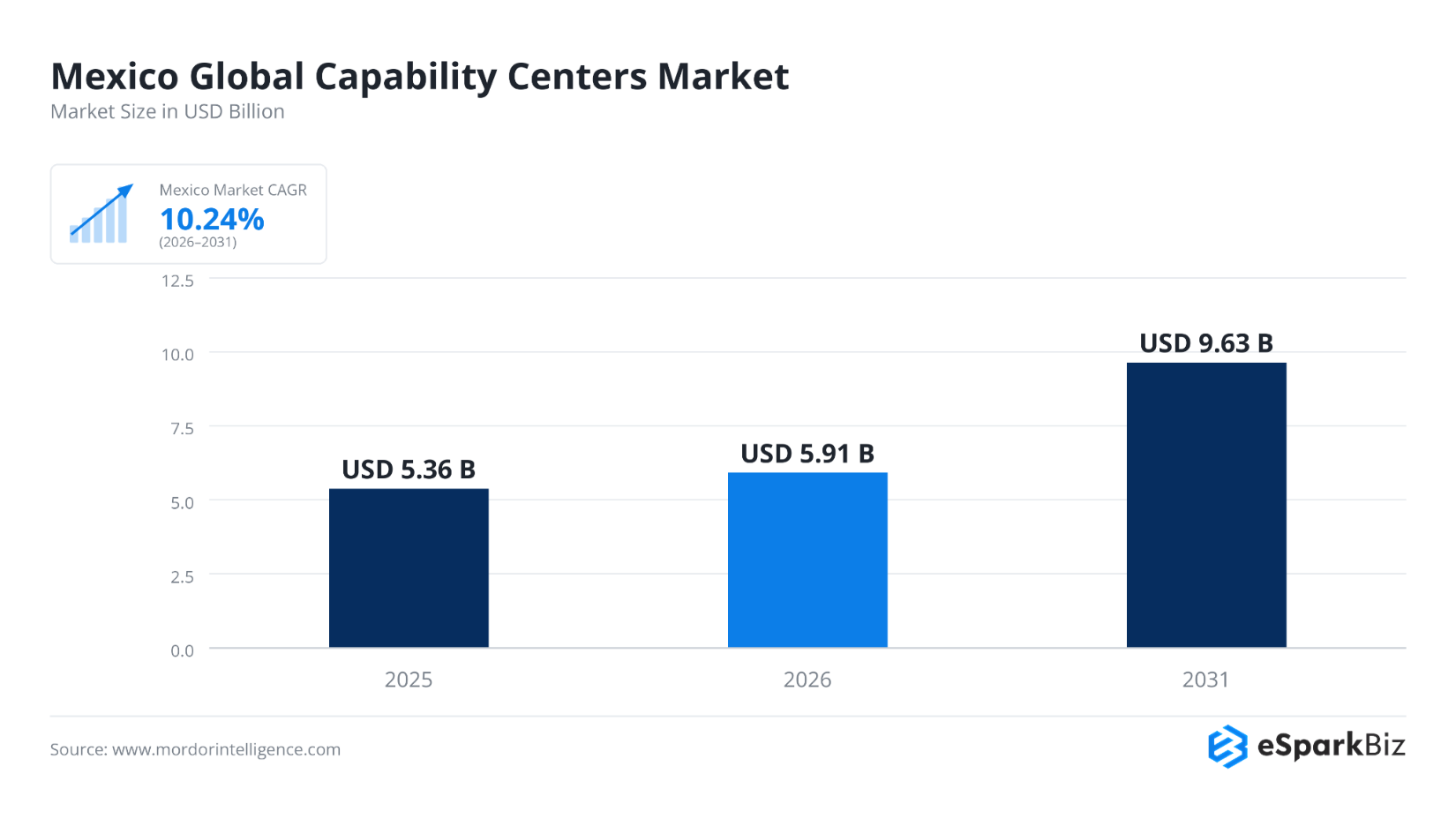
8. The Mexico Global Capability Centers market is projected to reach USD 5.91 billion in 2026.
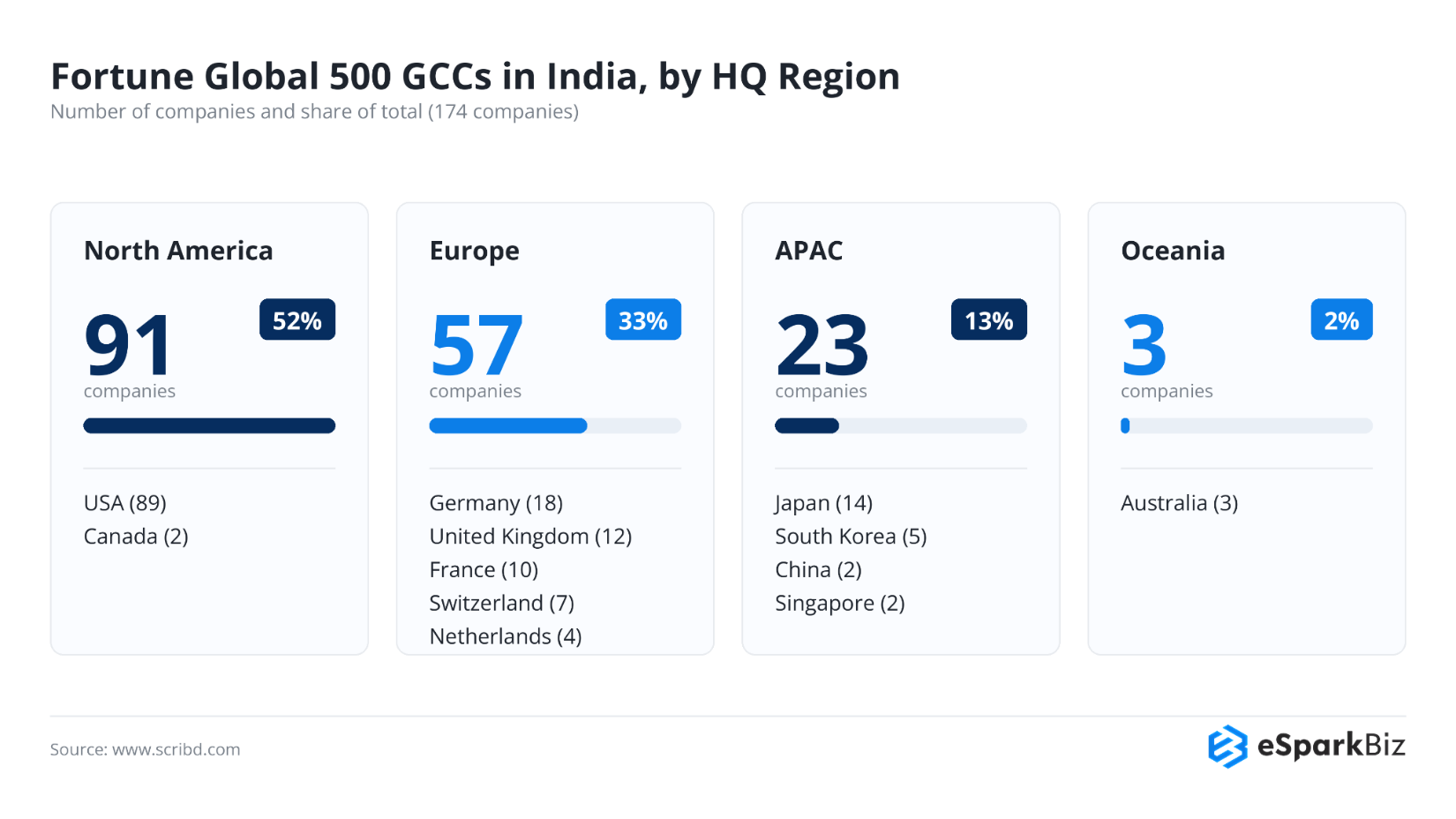
9. 52% of Fortune Global 500 companies operating Global Capability Centers (GCCs) in India are headquartered in North America, followed by Europe (33%), APAC (13%), and Oceania (2%).
10. Nearly 25% of Forbes Global 2000 companies have Global Capability Centers (GCCs) in India.
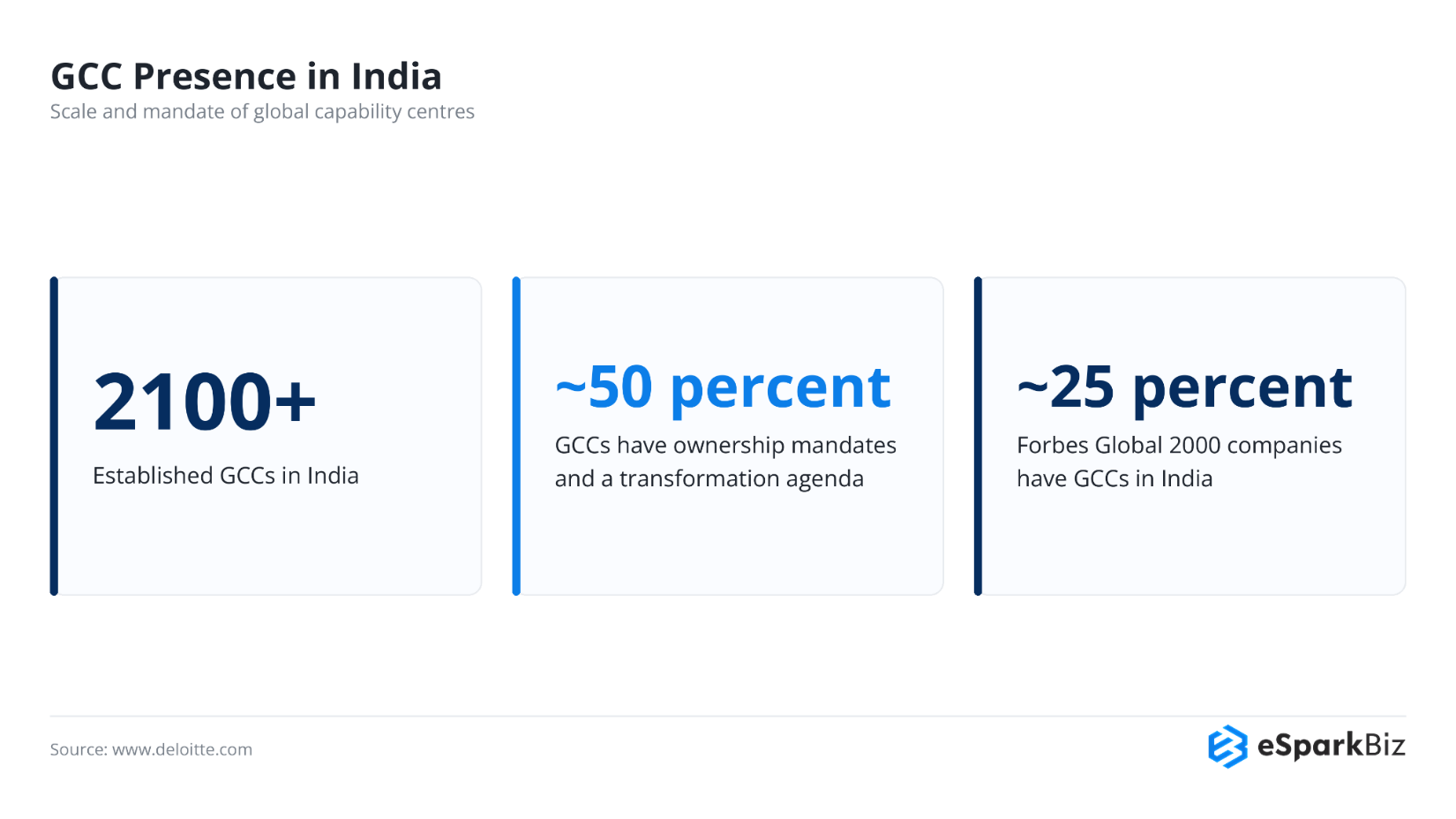
11. More than 200 new Global Capability Centers (GCCs) were established across India during the past two years.
AI, Innovation & Global GCC Transformation Statistics
Artificial intelligence is reshaping Global Capability Centers by accelerating automation, enhancing decision-making, improving productivity, and enabling enterprises to deliver greater innovation and business value.
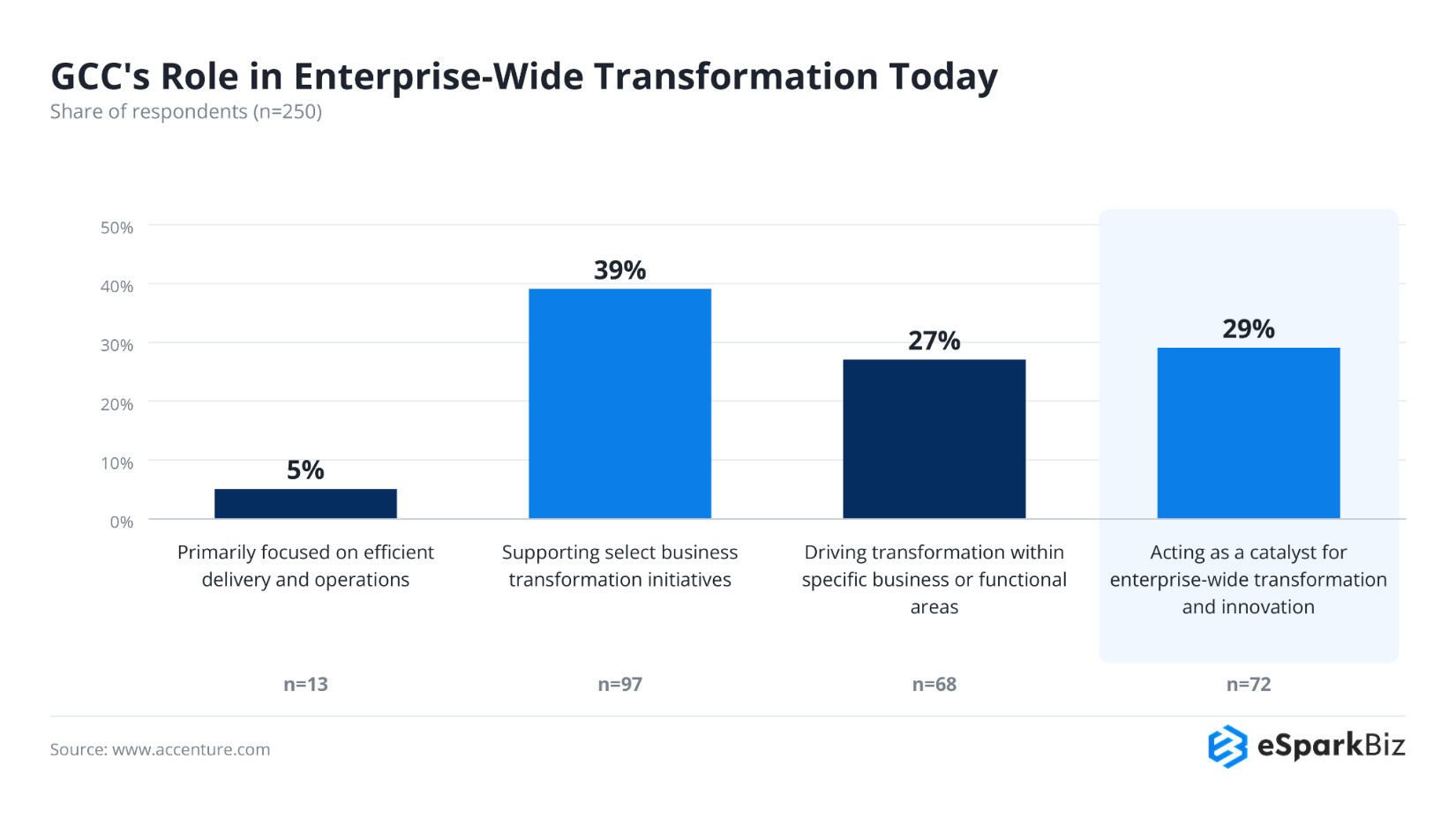
12. 29% of Global Capability Centers (GCCs) in India act as catalysts for enterprise-wide transformation and innovation.
13. More than 75% of GCCs have moved beyond AI experimentation and now use AI and automation to drive business outcomes.
14. 70% of GCCs plan to invest in Agentic AI within the next two years, up from 14% today.
15. 83% of GCCs are currently investing in Generative AI, while an additional 2% plan to invest within the next year.
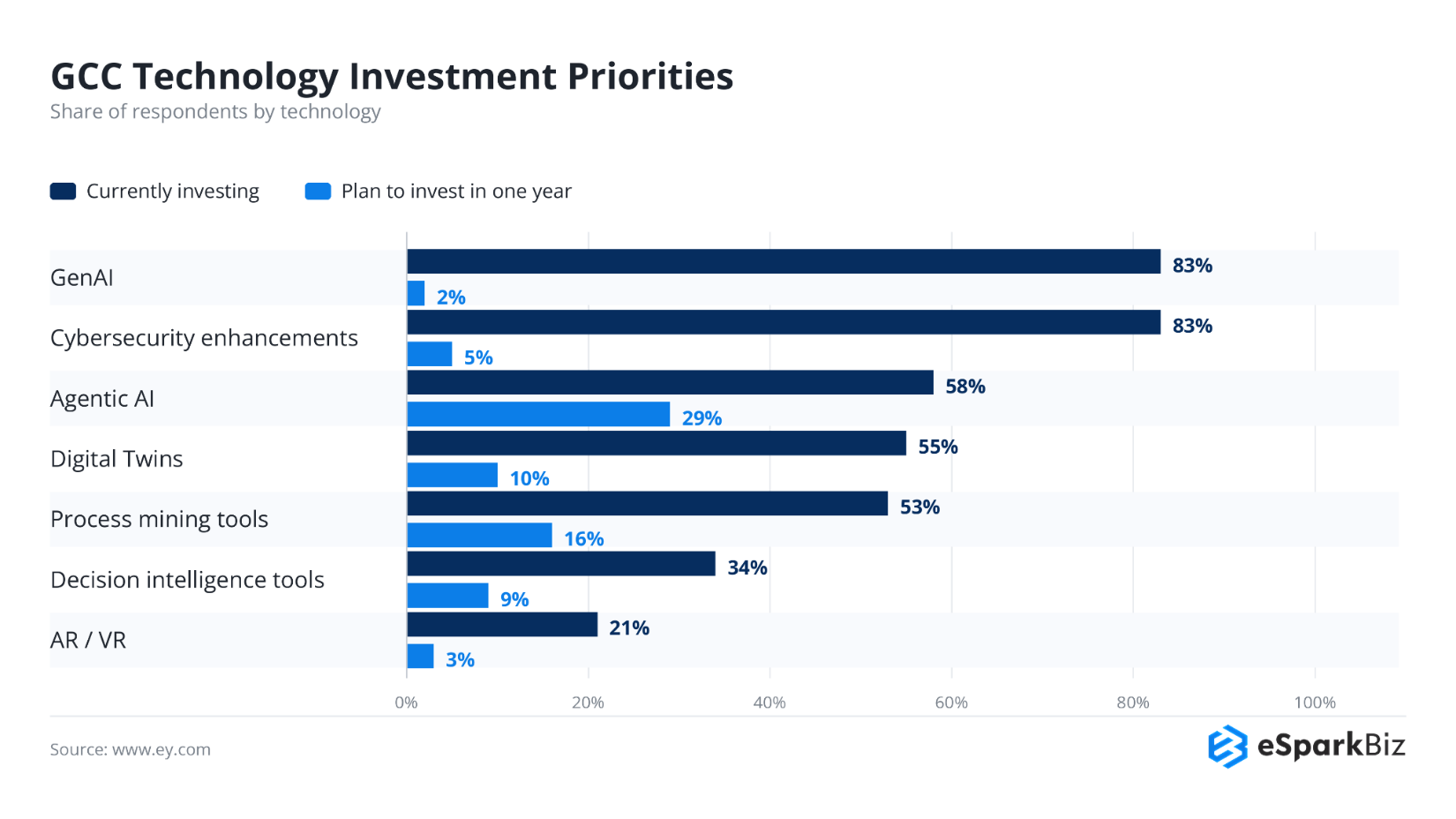
16. 58% of GCCs are currently investing in Agentic AI, and another 29% plan to invest within the next year.
17. Indian Global Capability Centers (GCCs) employ more than 250,000 AI/ML professionals, representing approximately 28% of the global AI talent within GCCs.
18. Leading Global Capability Centers (GCCs) have achieved productivity gains of up to 30% by scaling Generative AI across enterprise operations.
GCC Maturity & Operating Model Statistics
Global Capability Centers continue evolving into strategic enterprise partners through stronger governance, broader responsibilities, advanced operating models, and increased influence over business and technology decisions.
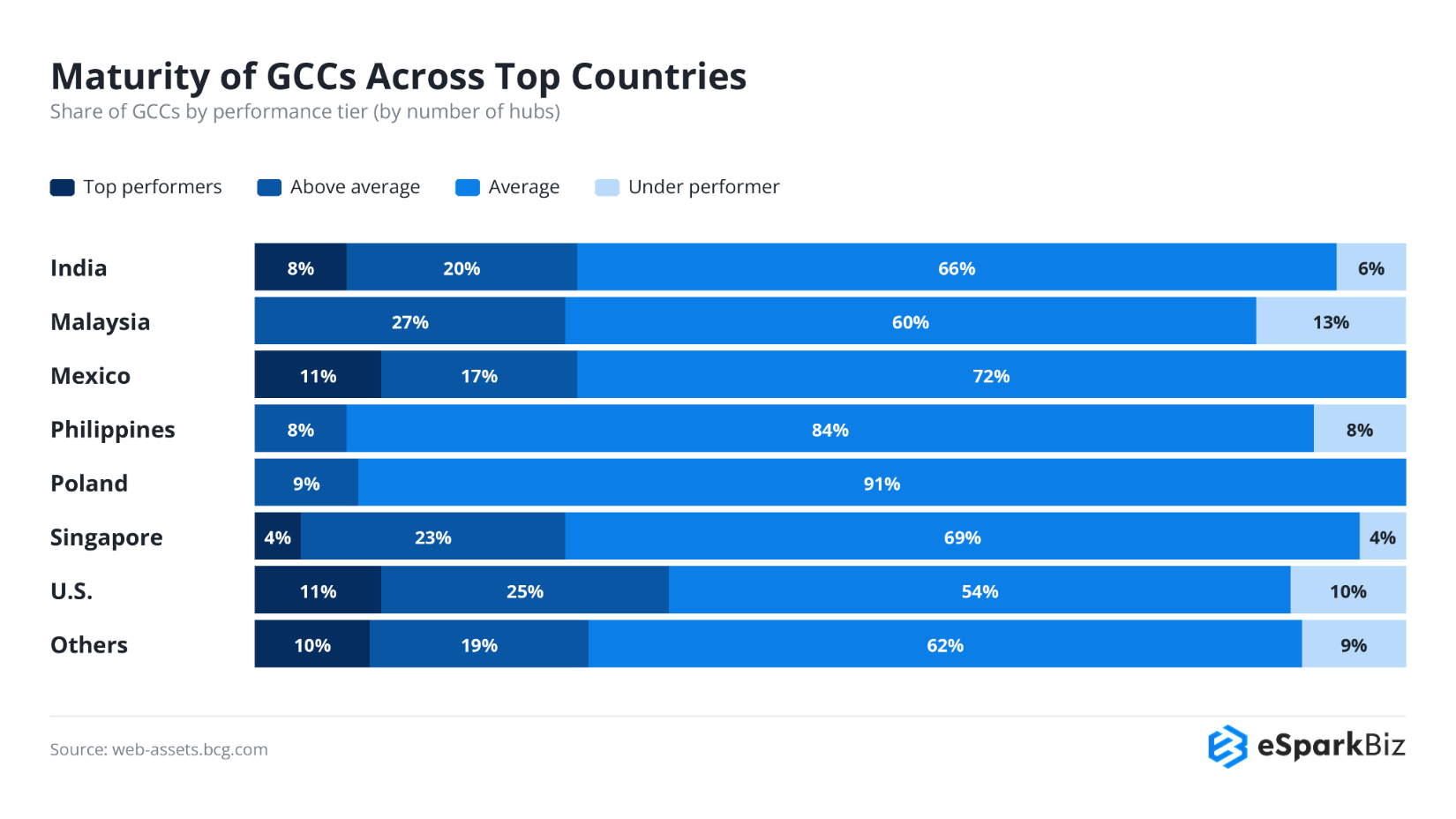
19. India has the lowest share of underperforming Global Capability Centers (GCCs) among leading GCC destinations, with only 6% classified as underperformers.
20. India’s GCC ecosystem scored 61.9 on the inaugural HFS Generative GCC Index, placing it at the entry point of the Transformation Partner stage.
21. 83% of Global Capability Centers (GCCs) are considered mission-critical to their enterprises, yet only 17% have full decision-making and budget authority.
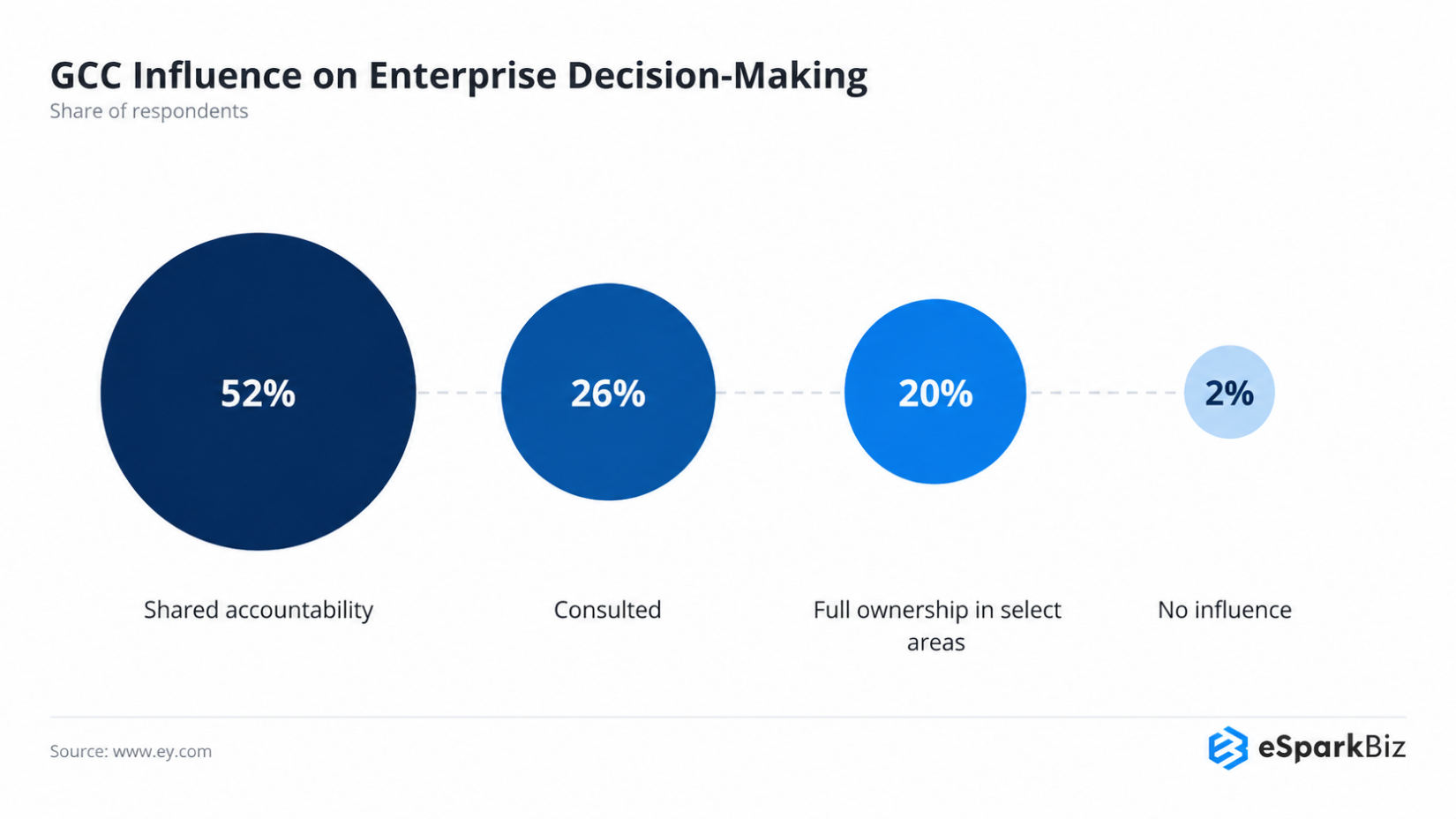
22. Global Capability Centers influence enterprise decisions, with 52% sharing accountability, 26% consulted strategically, 20% owning select functions, and 2% reporting no influence.
23. 95% of Global Capability Centers (GCCs) have AI initiatives underway, reflecting widespread adoption across the ecosystem.
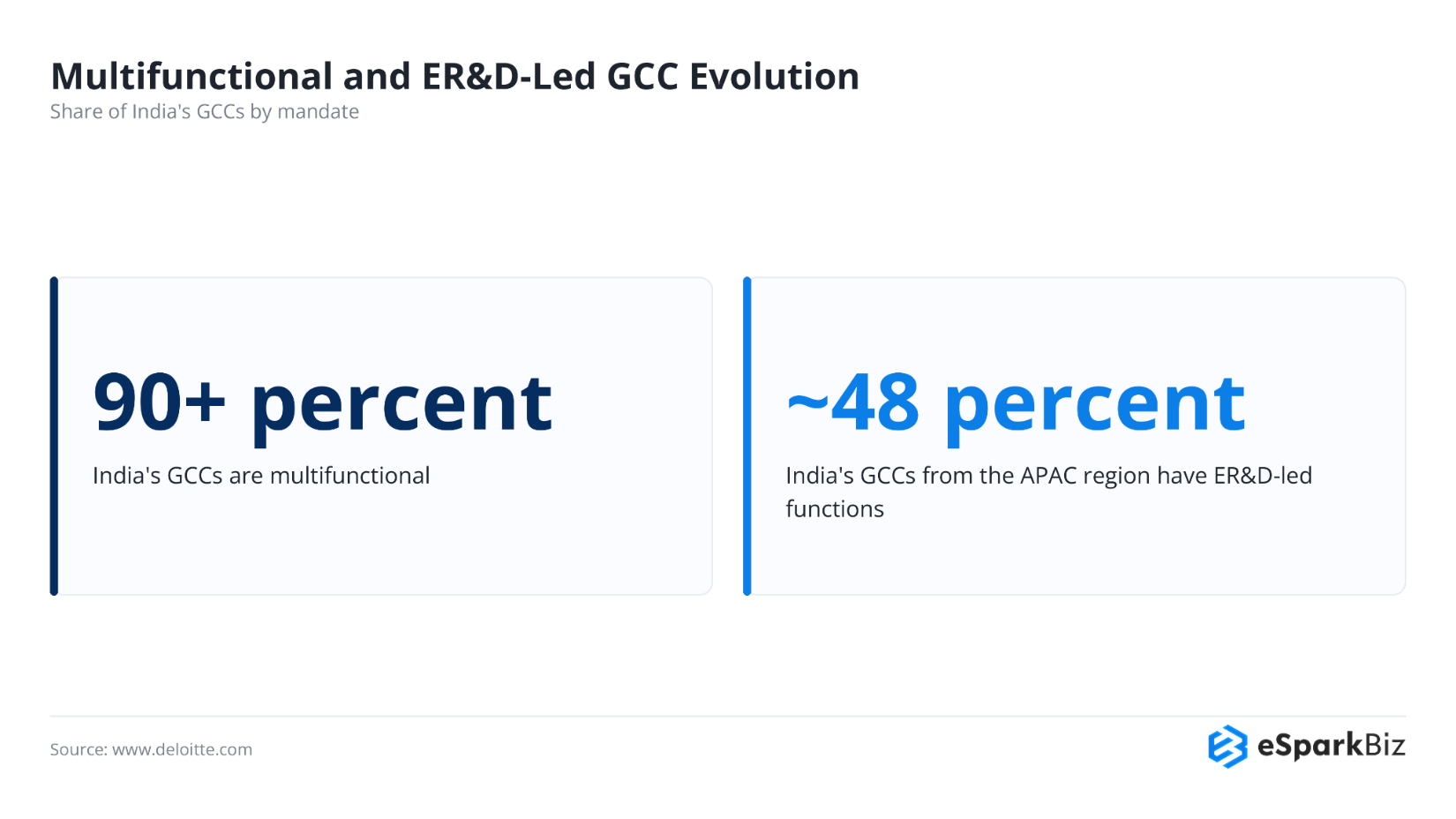
24. More than 90% of India’s Global Capability Centers (GCCs) operate as multifunctional centers, reflecting their evolution beyond traditional support functions.
GCC Real Estate & Industry Statistics
Growing enterprise investments continue driving Global Capability Center expansion, increasing office demand, attracting industry participation, and reinforcing long-term confidence in strategic global delivery operations.
25. Global Capability Centers (GCCs) leased approximately 9.1 million sq. ft. of office space, marking the highest quarterly GCC leasing volume on record.
26. E-commerce, Technology, and BFSI companies together accounted for 64% of GCC office leasing activity.
27. GCCs occupy more than 263 million sq. ft. of Grade A office space across India’s top seven cities.
28. Banking, Financial Services, and Insurance (BFSI) accounts for 22% of Fortune Global 500 companies with GCCs in India, followed by Retail & CPG (14%) and Healthcare & Lifesciences (13%).
💡 Did You Know?
The world has approximately 3,200 GCCs. India hosts nearly 1,700 of them, accounting for about 53% of the global total. This places India at the center of the global GCC landscape.
Emerging Industry Patterns Shaping Global Capability Centers in 2026
Global Capability Centers continue evolving through AI adoption, geographic expansion, strategic business alignment, and specialized talent, shaping the next phase of enterprise transformation and innovation worldwide.
- India continues to lead the global GCC ecosystem, supported by its large talent pool, mature business environment, and growing enterprise investments.
- Global GCC expansion is becoming more distributed, with countries such as Poland, Mexico, and the Philippines strengthening regional delivery capabilities alongside India.
- AI is becoming a core GCC capability, driving greater investment in automation, Generative AI, Agentic AI, and enterprise productivity.
- GCCs are evolving into strategic business partners, taking on broader responsibilities beyond traditional support and delivery functions.
- Enterprise investment remains strong, reflected in continued office expansion and growing participation from industries such as BFSI, technology, retail, and healthcare.
Conclusion
Global Capability Center statistics show that enterprises are moving beyond traditional support models. GCCs now play important roles in technology delivery, product engineering, and strategic functions, with India leading in scale, talent, and adoption while Poland, Mexico, and the Philippines continue building strong regional ecosystems.
The numbers point to more than market growth. They show where investment is increasing, which regions are gaining ground, and how GCC operating models are changing. The key difference is clear: execution-focused GCCs create value, but centers with a role in business decisions can deliver greater long-term enterprise value.
Frequently Asked Questions
What is a Global Capability Center (GCC)?
A Global Capability Center is an offshore or nearshore unit that manages technology, engineering, finance, operations, analytics, and research for a multinational enterprise. Many GCCs are also taking on more strategic responsibilities.
How do Global Capability Centers differ from traditional outsourcing?
Global Capability Centers are owned and operated by the enterprise, while traditional outsourcing depends on external third-party vendors.
|
Aspect |
Global Capability Center |
Traditional Outsourcing |
|
Ownership |
Enterprise-owned |
Third-party vendor-owned |
|
Control |
Direct, set by parent company |
Delegated via SLAs |
|
Talent |
Permanent enterprise employees |
Vendor-managed or rotating staff |
|
Scope |
Strategic, multifunctional work |
Narrow, transactional tasks |
|
Accountability |
Enterprise leadership holds authority |
Sits with the vendor |
Which country has the largest Global Capability Center ecosystem?
India leads by a wide margin. It hosts more than half of all GCCs worldwide, supported by a large skilled workforce and significant enterprise activity across its GCC ecosystem.
Why is India the leading Global Capability Center destination?
India offers a large skilled workforce, mature technology infrastructure, competitive operating costs, and strong enterprise confidence. This combination continues to attract multinational companies across industries and business functions.
Which countries are emerging as major Global Capability Center hubs?
Beyond India, several countries are developing stronger GCC ecosystems through regional talent, competitive costs, and increasing enterprise investment in engineering, operations, and technology delivery.
- Poland: Engineering and European delivery hub
- Mexico: Nearshore operations for North America
- Philippines: Business services and technology operations
- India: Largest and most mature GCC ecosystem
Which industries are expanding Global Capability Centers the fastest?
Demand differs across industries, with sectors such as BFSI, retail, and healthcare continuing to expand their GCC presence and specialized delivery capabilities.
|
Industry |
Growth Focus |
|
BFSI |
Digital banking, risk, analytics |
|
Technology |
Product engineering and software development |
|
Retail & CPG |
Digital commerce and supply chain |
|
Healthcare & Life Sciences |
RD, data, and clinical operations |
How is AI transforming Global Capability Centers?
AI is expanding GCC responsibilities beyond operational execution. Generative AI, agentic AI, automation, and advanced analytics are improving productivity, accelerating innovation, and supporting enterprise-level decision-making.
What are the biggest Global Capability Center trends in 2026?
Key trends shaping the GCC ecosystem include:
- India’s continued global leadership
- Expansion into emerging GCC destinations
- Higher enterprise investment in AI
- Greater strategic decision-making responsibilities
- Rising demand for specialized talent
- Continued office and infrastructure expansion