
 ChatGPT
 Google AI
 Perplexity
 Claude.ai
IBM, ConsenSys and Deloitte are leading the way in global blockchain innovation, while mid-size teams like eSparkBiz and Altoros deliver hands-on solutions to real business problems.
Across industries, blockchain is making security, transparency and efficiency a part of daily operations. Companies are looking for skilled Blockchain developers who can translate these technologies into practical, working applications that produce tangible results.
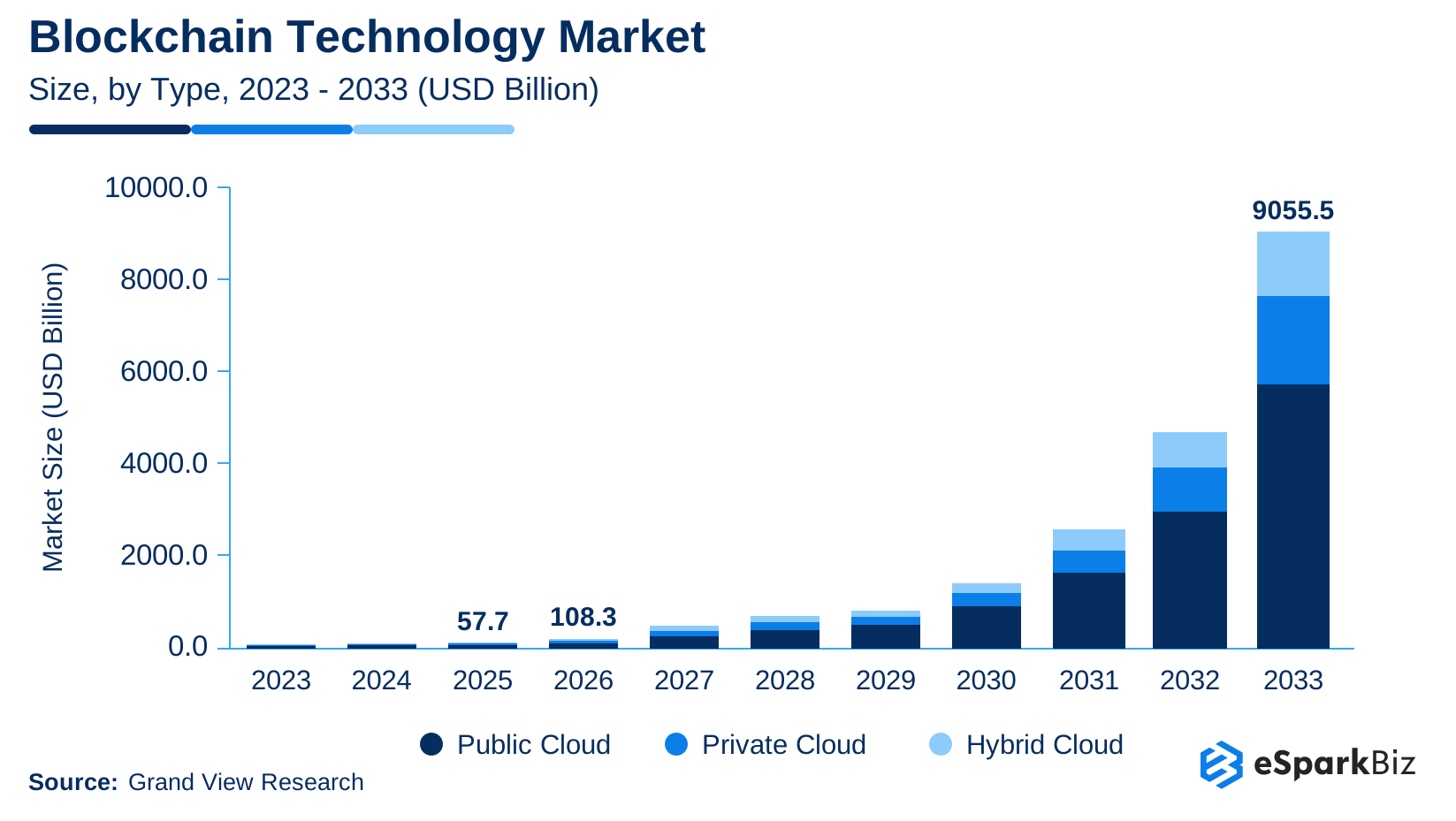
Grand View Research says the Blockchain Market was valued at USD 31.28 billion and will reach USD 1,431.54 billion by 2030, growing at a CAGR of 90.1%. This growth is creating huge demand for enterprise, mid-size and freelance blockchain experts.
Our Methodology for Selecting the Best Blockchain Development Companies
Selecting a blockchain development partner requires more than comparing company names or service offerings. We reviewed 100+ providers and applied several selection criteria to identify companies and platforms suited to different blockchain hiring requirements.
How We Evaluated Providers
We assessed blockchain development companies and recruitment agencies using the following criteria, applying the relevant parameters to each provider type:
- Blockchain Expertise: Experience with Ethereum, Hyperledger, Solana, Solidity, smart contracts, and Web3 technologies.
- Industry Experience: Relevant projects across healthcare, fintech, logistics, real estate, EdTech, and other industries.
- Project Portfolio: Published case studies, completed projects, client examples, and implementation capabilities.
- Technical Capabilities: Expertise in blockchain architecture, dApps, DeFi, tokenization, and integrations.
- Security & Compliance: Relevant certifications, audit evidence, data protection practices, and industry-specific compliance capabilities.
- Hiring & Engagement Options: Developer screening, hiring flexibility, engagement models, and service transparency.
- Company Reputation: Company profiles, client ratings, and industry presence, assessed through Clutch, Gartner resources and official websites.
- Recruitment Agency Market Presence: Industry reputation, market reach, blockchain hiring specialization, talent network and G2 ratings.
Why Hiring the Right Blockchain Developer Matters?
Blockchain projects succeed when guided by experienced professionals. The right team helps you avoid pitfalls, meet objectives and deliver solutions that actually support your business goals.
Benefits:
- Identify smart contract mistakes early and avoid delays and rework.
- Follow industry regulations and reduce compliance risks while maintaining operational efficiency.
- Meet project milestones when the team adapts to changing client priorities.
- Custom blockchain solutions address the unique challenges of your organization.
- Integrate blockchain into your existing systems smoothly and avoid workflow disruptions and operational issues
Top Blockchain Developers at a Glance: 10 Providers Compared
Compare the top blockchain development companies and hiring platforms by provider type, hourly rates, hiring model, and core project suitability.
| Sr. No. | Company | Provider Type | Hourly Rate (USD) | Hiring Model | Best For | Head Quarter |
| 1 | IBM | Enterprise firm | Quote based | Consulting and project delivery | Large-scale blockchain adoption and system integration | NY, USA |
| 2 | Infosys | Enterprise firm | Quote based | Consulting and project-based delivery | Blockchain consulting and enterprise integration | Bengaluru, India |
| 3 | Deloitte | Enterprise firm | Quote based | Advisory and project-based delivery | Blockchain strategy, compliance and implementation | London, UK |
| 4 | eSparkBiz | Development company | < $25/hr | Dedicated teams and project-based development | Custom blockchain applications and enterprise integrations | Gujarat, India |
| 5 | Altoros | Development company | $50 – $99/hr | Custom development teams | Enterprise blockchain platforms and PoCs | CA, USA |
| 6 | Labrys | Blockchain specialist | $100 – $149/hr | Project-based development | Smart contracts and decentralized platforms | Queensland, Australia |
| 7 | Tech Alchemy | Development agency | $25 – $49/hr | Project-based development | Blockchain applications and MVP development | London, UK |
Enterprise-level Blockchain Development Companies for Global Projects
Top global blockchain partners deliver secure, custom blockchain solutions for global business needs.
1. IBM
IBM integrates Hyperledger into finance, supply chain and logistics, for big enterprise.
Gartner Rating: 4.5/5
Service Focus:
- Enterprise blockchain consulting and implementation
- Permissioned blockchain networks and Hyperledger solutions
- Blockchain integration for financial services and supply chains
Key Capabilities: Enterprise blockchain architecture, distributed ledger integration, smart contracts, and network management.
2. Infosys
Infosys combines consulting and blockchain development, delivers smart contracts and system integration across multiple industries.
Gartner Rating: 4.0/5
Service Focus:
- Enterprise blockchain consulting and adoption
- Blockchain-powered business networks and applications
- Supply chain, insurance, and financial services solutions
Key Capabilities: Blockchain advisory, network integration, distributed applications, testing, and operational support.
3. Deloitte
Deloitte offers blockchain advisory, regulatory compliance and proof of concept implementations for complex business needs.
Gartner Rating: 4.8/5
Service Focus:
- Blockchain strategy and technology consulting
- Smart contract development and implementation
- Digital asset, tokenization, and enterprise blockchain solutions
Key Capabilities: Blockchain advisory, distributed ledger implementation, digital asset solutions and enterprise integration.
Top Mid-size Blockchain Development Companies for Custom Solutions
Mid-size blockchain developers offer tailored solutions, combining technical know-how and industry expertise to solve complex business problems efficiently and reliably.
1. eSparkBiz
With 15+ years of experience and CMMI Level 3 certification, eSparkBiz has delivered 1,000+ projects globally, with expertise in Web3 development and blockchain solutions.
- Team Size: 400+
- Minimum Project Size: $10,000+
- Clutch Rating: 4.9/5
How Does Hiring Blockchain Developers from eSparkBiz Work?
eSparkBiz follows a four-step hiring process:
- Share Requirements: Define your project scope, technical requirements, budget, and timeline.
- Review Developer Profiles: Evaluate shortlisted developers based on relevant blockchain experience and technical skills.
- Interview and Select: Conduct technical interviews to assess candidates before final selection.
- Finalize and Onboard: Agree on project scope, timelines, deliverables, and contractual terms before onboarding.
Engagement Models:
- Dedicated Team: Hire developers who work exclusively on your blockchain product.
- Project-Based Outsourcing: Assign complete blockchain development, testing, and deployment to eSparkBiz.
- Time and Material: Pay for actual development hours based on project requirements.
Service Focus:
- Custom blockchain and Web3 application development
- Smart contracts, dApps, and decentralized platforms
- Blockchain-powered product engineering and integration
Key Capabilities: Solidity development, smart contract automation, Web3 integration, and end-to-end blockchain product engineering.
Blockchain Case Study: Sports & Entertainment Platform
eSparkBiz built a blockchain-powered sports platform covering NIL fund distribution, athlete monetization, fan engagement, and digital transactions.
- Engagement: 18+ months | Dedicated product team
- Team Size: 6+ members
- NIL Fund Distribution: 95% faster
- Transaction Transparency: 99%
- Fan Engagement: 90% increase
The platform uses smart contracts to automate payouts and blockchain records to track transactions, approvals, and digital ownership. View Full Case Study.
Why Consider eSparkBiz for Blockchain Development?
eSparkBiz combines blockchain development services, dedicated hiring options, and project-based delivery. Its Pactvera case study also demonstrates experience in applying blockchain technology to digital agreements and identity verification.
2. Altoros
Altoros has 20+ years of experience in blockchain software development, helping Global 2000 companies to speed up product delivery and reduce R&D costs.
- Team Size: 250 – 999
- Minimum Project Size: $25,000+
- Clutch Rating: 4.8/5
Service Focus:
- Enterprise blockchain platform development
- Hyperledger and distributed ledger solutions
- Blockchain integration, consulting, and PoC development
Key Capabilities: Hyperledger Fabric, enterprise DLT architecture, smart contracts, and blockchain integration.
3. Labrys
Top blockchain company, Labrys delivers advanced blockchain solutions, deep expertise to support secure, efficient and industry focused decentralized applications.
- Team Size: 10 – 49
- Minimum Project Size: $10,000+
- Clutch Rating: 5/5
Service Focus:
- Smart contract and Solidity development
- DeFi, NFT, and Web3 application development
- Blockchain protocol and decentralized platform engineering
Key Capabilities: Solidity, Ethereum, DeFi protocols, tokenization, and smart contract development.
4. Tech Alchemy
Tech Alchemy, award winning London agency, delivers blockchain app development services and innovative software solutions trusted by startups, enterprises and globally recognized brands.
- Team Size: 50 – 249
- Minimum Project Size: $25,000+
- Clutch Rating: 5/5
Service Focus:
- Blockchain application and Web3 development
- NFT marketplaces and tokenization platforms
- DeFi products and decentralized applications
Key Capabilities: Web3 engineering, smart contracts, NFT development, and blockchain product development.
📑 FUNFACT
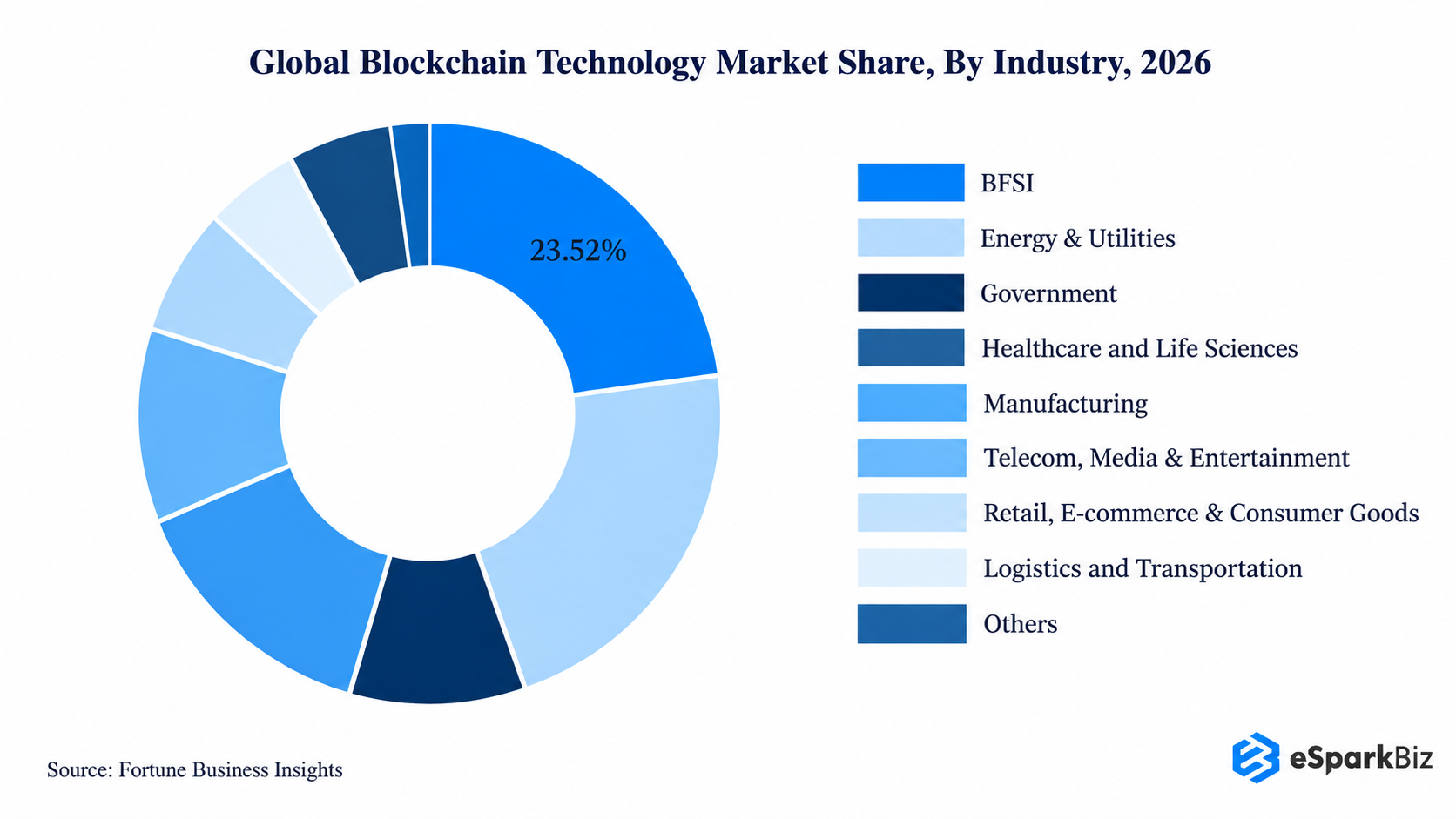
Blockchain adoption is led by BFSI, which holds 23.52% market share, followed by energy, healthcare and other major industries.
Where to Hire Freelance Blockchain Developers
Freelance blockchain developers are available through vetted talent platforms and open marketplaces. Compare their screening processes, developer expertise, and platform fees before hiring.
Freelance Blockchain Hiring Platforms Compared
Freelance blockchain developers can be hired through vetted talent networks and open marketplaces. The following platforms differ in developer screening, hiring flexibility, and fees.
| Sr. No. | Platform | Developer Vetting | Screening Depth | Platform Fees |
| 1 | Toptal | Pre-vetted developers | Technical assessments, coding challenges, and test projects | $79/month subscription; developer charges extra |
| 2 | Turing | AI-assisted screening | Coding tests, system design, and communication assessments | Custom pricing |
| 3 | Upwork | Open freelancer marketplace | Profile reviews, work history, and client-led technical assessments | Client fees vary by plan and contract |
Each platform follows a different hiring and screening process. Here is a closer look at their developer vetting methods, blockchain hiring options, and pricing structures.
1. Toptal
Toptal connects companies to blockchain specialists screened for experience and problem solving skills so teams can tackle complex projects with practical, real world solutions.
- Best For: Models that want high level Distributed ledger expertise like advanced smart contracts or enterprise level dapps.
G2 Ratings: 4.7/5
Service Focus:
- Blockchain developer sourcing
- Freelance Solidity and smart contract specialists
- Contract-based developer hiring
Key Capabilities: Vetted freelance talent across blockchain development, smart contracts, and Web3 technologies.
Developer Vetting: Multi-stage screening involving communication interviews, technical assessments, coding challenges, and test projects.
Platform Fee: $79/month subscription when proceeding with talent matching, excluding developer charges.
2. Turing
Turing offers remote blockchain developers who work seamlessly with global teams and deliver solutions tailored to each project’s technical and business expectations.
- Best For: Remote blockchain development for ongoing tasks or specialized tasks that need expert guidance.
G2 Ratings: 4.3/5
Service Focus:
- Remote blockchain developer hiring
- AI-assisted developer screening and matching
- Long-term remote engineering support
Key Capabilities: Remote developer sourcing, technical assessments, talent matching, and distributed team hiring.
Developer Vetting: AI-assisted screening, coding tests, system design assessments, and communication evaluations.
Platform Fee: Custom pricing based on hiring requirements and engagement terms.
3. Upwork
Upwork has a large pool of blockchain freelancers so you can find pros for prototypes, experimental projects or specialized tasks.
- Best For: Temporary blockchain initiatives, pilot concepts or small scale development that need On request expertise.
G2 Ratings: 4.5/5
Service Focus:
- Freelance blockchain developer hiring
- Short-term smart contract development
- Contract-based Web3 and dApp projects
Key Capabilities: Freelancer sourcing, project-based hiring, contract management, and milestone-based payments.
Developer Vetting: Profile reviews, client feedback, work history, and optional technical assessments conducted by clients.
Platform Fee: Client fees vary by membership plan and contract terms.
Also Read: Which Leading Companies Offer Skilled Blockchain Developers for Startups?
Which Blockchain Development Companies Have Experience Across Different Industries?
Blockchain applications serve different industry needs, from healthcare data security and financial transactions to supply chain traceability. Here are companies from our shortlist with relevant project experience and capabilities.
1. Healthcare – eSparkBiz, Deloitte
- eSparkBiz: Offers healthcare software and blockchain development capabilities for patient data sharing, EHR integration, and consent management.
- Deloitte: Its BioTrack & Trace initiative demonstrates blockchain-based clinical trial consent and sample tracking.
Compliance to check: HIPAA safeguards, BAA requirements, ISO 27001, and SOC 2 scope.
2. Fintech, Banking & Insurance – eSparkBiz and Labrys
- eSparkBiz: Its blockchain-backed KYB platform supports business onboarding, identity verification, and compliance workflows.
- Labrys: Offers blockchain development for DeFi, tokenization, and digital asset applications.
Compliance to check: SOC 2, PCI DSS, AML/KYC obligations, and applicable financial regulations.
3. EdTech – Infosys
Infosys implemented a blockchain-based credential verification solution using Hyperledger Indy and ACA-Py through its Lex learning platform. It supports digital certificates, verifiable credentials, and learning records.
Compliance to check: FERPA, COPPA where applicable, and student data privacy requirements.
4. Real Estate & PropTech – eSparkBiz and Labrys
- eSparkBiz: Its Pactvera platform uses blockchain, biometric verification, and smart contracts for digital agreement workflows.
- Labrys: Offers blockchain and Web3 development capabilities relevant to property-related digital asset and payment applications.
Compliance to check: Electronic signature laws, property transaction regulations, GDPR, and applicable digital asset requirements. Verify specific real estate blockchain project references before shortlisting.
5. Sports & Entertainment – eSparkBiz and Tech Alchemy
- eSparkBiz: Its Sports & Entertainment Platform supports NIL fund distribution, athlete monetization, fan engagement, and digital transactions. The company reports 95% faster NIL fund distribution and a 90% increase in fan engagement.
- Tech Alchemy: Offer Web3, NFT, smart contract, and digital asset development capabilities relevant to sports and entertainment platforms.
Compliance to check: Digital asset regulations, intellectual property rights, consumer protection, and payment security.
6. Logistics & Supply Chain – Altoros, Deloitte
- Altoros: Its Hyperledger Fabric supply chain project demonstrates spare parts tracking, ownership verification, and product traceability.
- Deloitte: Has developed blockchain-based shipment and supply chain tracking initiatives.
Compliance to check: GDPR, trade documentation, customs requirements, and contractual data-sharing obligations.
7. Food & Restaurant Technology – IBM
IBM developed IBM Food Trust, a blockchain-based food traceability platform supporting product provenance and farm-to-shelf tracking.
Compliance to check: FSMA, HACCP, and applicable food safety and traceability requirements. Its documented experience is in food supply chain tracking, not restaurant ordering or delivery software.
8. Agriculture & AgriTech – Infosys and IBM
- Infosys: Has documented blockchain-based agricultural commodity provenance and supply chain initiatives.
- IBM: Has worked on agricultural traceability and farm-level product information through its food supply chain initiatives.
Compliance to check: Agricultural traceability, food safety, farm data ownership, and applicable privacy requirements.
Buyer reminder: Verify the actual certificate, audit report, project scope, and contractual responsibilities before selecting a provider. ISO 27001 is a certifiable standard, SOC 2 is an audit report, HIPAA is a US healthcare law, and PCI DSS is a payment security standard.
How to Choose the Right Blockchain Development Partner?
Choosing a blockchain development partner requires evaluating technical expertise, security practices, project experience, and delivery capabilities. Consider these six factors before making your decision.
- Relevant Blockchain Experience: Check previous dApps, smart contracts, GitHub repositories, and experience with networks such as Ethereum, Solana, Polygon, or Hyperledger.
- Smart Contract Security: Request independent audit reports, test coverage, bug bounty history, and evidence of resolved vulnerabilities.
- Code Review Process: Confirm who reviews Solidity code, how vulnerabilities are addressed, and whether contracts undergo security checks before mainnet deployment.
- Technical Capabilities: Assess Solidity, Rust, blockchain integrations, debugging, and gas optimization skills through practical coding assessments.
- Pricing and Engagement Models: Compare hourly, monthly, and fixed-project pricing. Check whether QA, security testing, and maintenance are included.
- Delivery and Contract Terms: Evaluate communication, project timelines, NDA, IP ownership, documentation, and post-launch support.
Final Check: Before signing, verify the team’s actual code contributions, request audit evidence, and confirm its smart contract review process.
How to Evaluate a Blockchain Developer Before Hiring
Use these seven checks to verify a blockchain developer’s identity, technical skills, security knowledge, and project experience before granting access to your codebase.
| Step | What to Check | How to Validate |
| 1. Identity Verification | Candidate’s identity and professional background | Conduct a live video interview and verify identity through an appropriate, privacy-compliant process. |
| 2. Portfolio & GitHub | Previous smart contracts, dApps, and code contributions | Review repositories, commit history, code quality, and deployed projects. |
| 3. Blockchain Expertise | Experience with your target blockchain and tech stack | Verify hands-on experience with Ethereum, Solana, Polygon, Hyperledger, Solidity, or Rust. |
| 4. Live Coding Test | Practical Solidity and smart contract skills | Assign a supervised 60-90-minute task involving contract development, debugging, or access control. |
| 5. Security Assessment | Smart contract vulnerabilities and audit experience | Review audit history and test knowledge of reentrancy, access control, and common vulnerabilities. |
| 6. References & Project Verification | Actual contribution to previous blockchain projects | Contact previous clients or project leads through independently verified channels. Verify deployed dApps using blockchain explorers. |
| 7. NDA & Repository Access | Confidentiality, IP ownership, and code access controls | Sign an NDA and IP agreement before sharing private project information. Start with limited, role-based repository permissions and expand access when required. |
Final Hiring Check: Confirm the developer’s identity, validate their technical contributions, and establish confidentiality and access controls before sharing sensitive code or project credentials.
Which Blockchain Hiring Model Should You Choose?
The right hiring model depends on your smart contract’s scope, project duration, budget, and level of control. You can hire an individual developer, engage a dedicated team, or outsource a fixed-scope project.
Engagement Model Comparison
| Engagement Model | Cost Structure | Control Level | Best For |
| Dedicated Blockchain Developer | Monthly or hourly billing | High – Direct task and priority management | Ongoing smart contract development, maintenance, and specific technical requirements |
| Dedicated Blockchain Team | Monthly team-based billing | High – Direct collaboration and roadmap control | Complex blockchain products requiring Solidity developers, architects, QA, and security expertise |
| Fixed-Price Project | Pre-agreed project price, usually milestone-based | Moderate – Control over requirements and approvals | Clearly defined smart contract builds, MVPs, and blockchain PoCs |
Which Model Should You Choose?
- Choose a dedicated developer if you have an existing technical team and need ongoing blockchain expertise.
- Choose a dedicated team if you need multiple specialists to build and maintain a blockchain product.
- Choose fixed-price development if your smart contract requirements, deliverables, and timeline are clearly defined.
How Does eSparkBiz Structure These Engagements?
eSparkBiz offers dedicated development teams and software development outsourcing, with flexible engagement options. Its published engagement model includes monthly billing for dedicated teams and milestone-based billing for software outsourcing. Fixed-price arrangements require an agreed scope, with changes subject to re-estimation.
Recommendation: For a clearly scoped smart contract, consider fixed-price development. For an evolving blockchain product, a dedicated team offers greater flexibility and continuity.
How Much Does It Cost to Hire a Blockchain Developer?
Hiring a blockchain developer typically costs $12 – $150 per hour, depending on seniority, location, technical specialization, and hiring model. Agencies generally charge more because their rates may include project management and QA, while freelance platforms primarily charge for individual developer time.
| Hiring route | Junior | Mid-level | Senior / Specialist |
| Freelance platforms | $12 – $30/hr | $30 – $75/hr | $50 – $105/hr |
| Blockchain development agencies | $40 – $70/hr | $60 – $100/hr | $80 – $150/hr |
Indicative USD planning ranges, not fixed market quotations. Actual agency rates depend on region, project scope, and included services.
Estimated Monthly Cost (160 Hours)
For dedicated hiring, monthly costs depend on developer seniority, technical specialization, and engagement duration. Based on the estimates above:
| Hiring route | Junior | Mid-level | Senior / Specialist |
| Freelance platforms | $3200 – $6,400 | $4,800 – $12,000 | $8,000 – $16,800 |
| Development agencies | $6,400 – $11,200 | $9,600 – $16,000 | $12,800 – $24,000 |
Why does the existing $12 – $150 range vary?
- $12 – $30/hr: Lower Cost markets and less experienced developers.
- $30 – $75/hr: Mid level developers with practical blockchain development experience.
- $75 – $150/hr: Senior Solidity, Rust, DeFi and smart contract specialists.
The figures are indicative, not strict seniority boundaries. Upwork reports a $30 – $59 hourly median for blockchain developers, while Lemon.io reports $35 – $94 for senior developers and up to $105 for strong senior specialists.
Cost consideration: Freelancers may have lower direct hourly rates, but clients handle project coordination and quality checks. Agencies may include project management, QA, and delivery oversight in their pricing.
Monthly estimates assume 160 billable hours (40 hours per week). They exclude platform fees, taxes, and additional project expenses. Agency figures are indicative budgeting estimates and should be verified against vendor quotations.
Conclusion
Blockchain also creates real impact, from increased visibility to simplifying complicated processes. Working alongside the right partners enables you to transform ideas into working solutions.
Enterprise leaders, niche mid sized companies and confirmed freelancers all have their own unique value, depending on size, timing and complexity of the project, so think carefully about who to work with to facilitate movement and measure results.