 ChatGPT
 Google AI
 Perplexity
 Claude.ai
This guide gives SDLC examples by phase and industry, compares five models and shows how security and AI change the work. It also shows buyers how to check whether a vendor’s process is real and when to hire one to run it.
Initially, the demo seemed to work well. However, as testing continued, payment failures were identified, the launch date was pushed back and no one knew which approval was missing. That is how expensive software rework often begins.
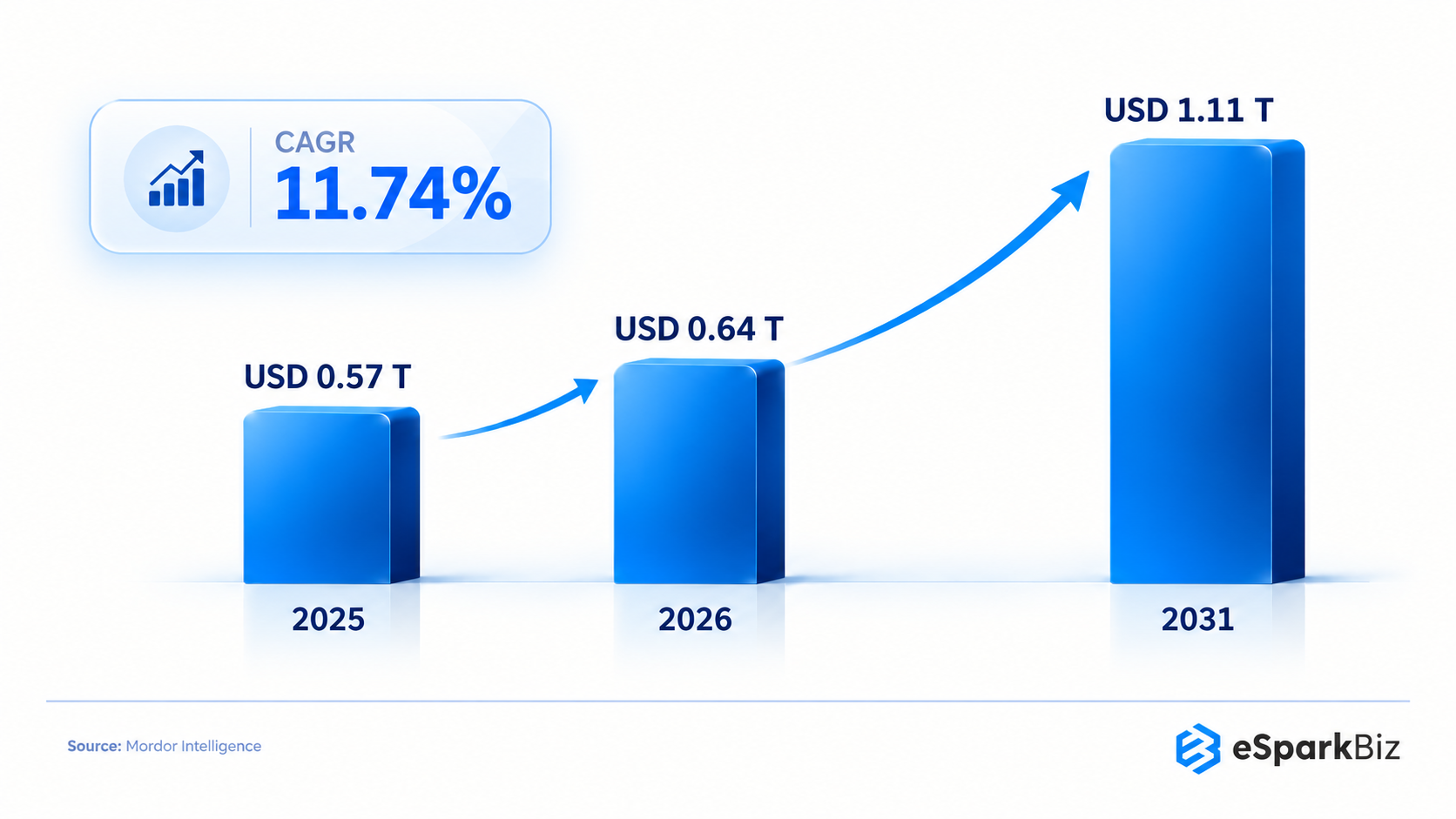
According to Mordor Intelligence, the market for software development is expected to grow to USD 1.11 trillion by 2031. This figure alone shows how expensive it could be to get software delivery wrong.
Even though the use of AI can save time while writing code, it can also increase the volume of code to be reviewed. Clear requirements, defined handoffs and testing gates therefore matter a lot more.
For non-technical stakeholders, SDLC is a set of milestones that demonstrate what should be developed, how it should work, whether it works as intended and what comes after deployment. The most common project participants include product managers, business analysts, architects, developers, QA, security and DevOps teams.
How many SDLC Phases are there: 6 or 7?
Most software guides use seven phases of the SDLC: planning, requirements, design, development, testing, deployment and maintenance.
The six-phase versions usually merge two related phases into one. For example, planning is combined with the requirements phase or deployment with maintenance.
As per ISO/IEC/IEEE 12207:2026, which was published in April 2026, the standard does not prescribe a definite life cycle model. As such, the number is more or less a drafting decision.
If a vendor provides six phases, ask which two were combined and at what point the sign-off occurs.
7 Phases of the SDLC explained with an Example
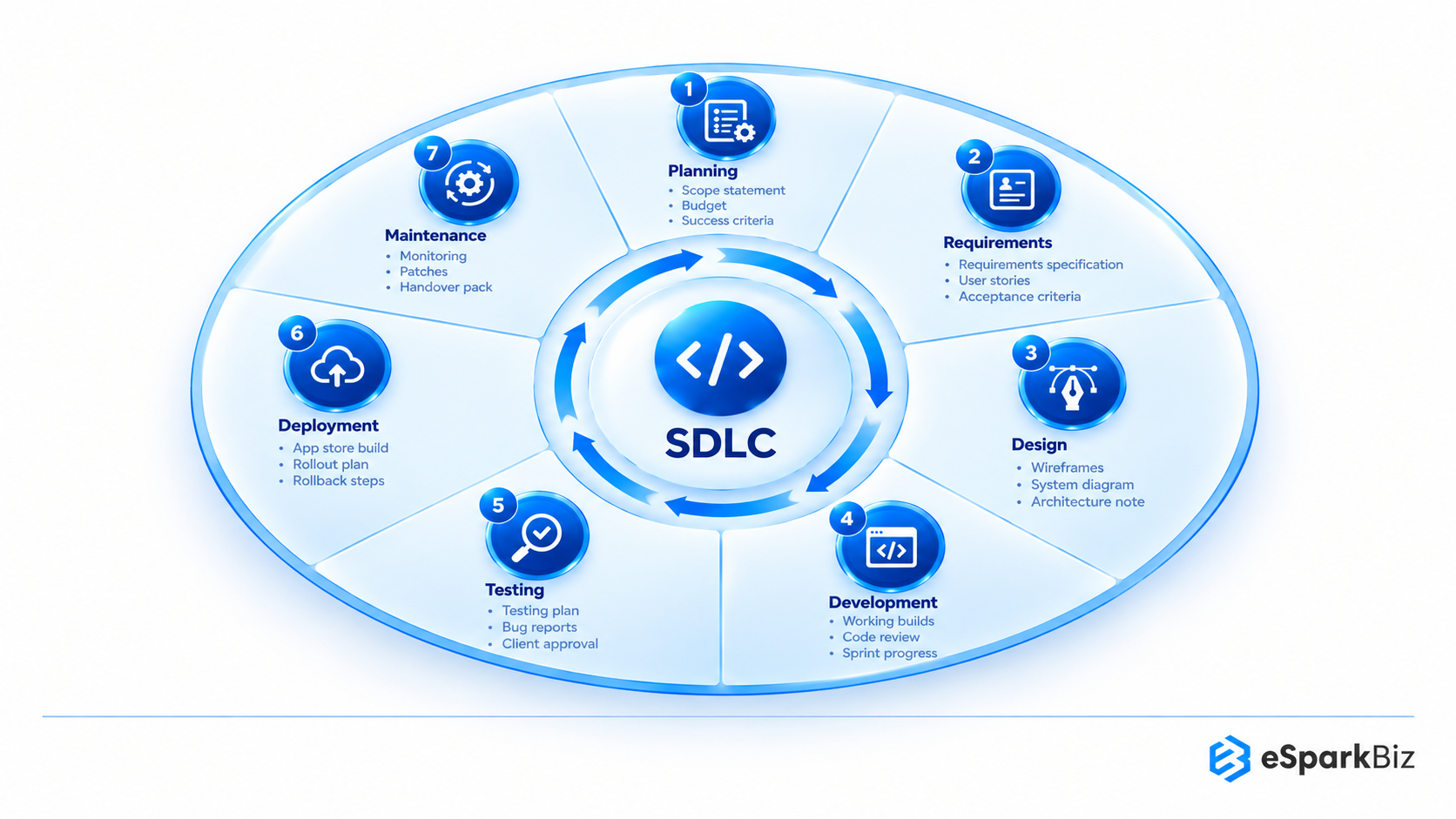
Consider an example of a restaurant chain adopting a food ordering application developed by a small team. It gives insight into the development process, how AI affects software in 2026 and what to expect from a software team as a buyer.
Each phase ends with a deliverable, which guides the next phase.
| Sr. No. | Phase | Handoff in the example app | What AI changes | What a buyer should ask for |
| 1 | Planning | Scope statement, budget, success criteria | Faster market & competitor research | Signed scope & success criteria |
| 2 | Requirements | Requirements specification with ordering & payment stories | AI proposes user stories, with human approval | Signed requirements with acceptance criteria |
| 3 | Design | Wireframes, system diagram, architecture note | AI suggests layouts & architecture diagrams | Design document & threat model |
| 4 | Development | Working builds each sprint, reviewed code | AI writes routine code, time to review increases | Code review policy & schedule demos |
| 5 | Testing | Testing plan, bug reports, client approval | AI writes tests, humans evaluate gaps | Testing report & open defects list |
| 6 | Deployment | App store build, rollout plan, rollback steps | AI flags release risks, humans approve releases | Release notes & rollback plan |
| 7 | Maintenance | Monitoring, patches, handoff pack | AI prioritizes alerts, humans decide fixes | Support terms & handoff documents |
The software requirements specification (SRS) defines the functional aspects of the system, including the necessary conditions that have to be satisfied. The design process takes the accepted requirements and translates them into technical decisions using high level system design and low level design of specific components and interfaces.
There is no single longest SDLC phase since in feature heavy products, development and testing are known to be the longest phases, whereas complex integrations and compliance make requirement and design phases longer.
In a team with an Agile mindset, those phases occur every sprint, with build cycles and maintenance defining the next round of planning.
Planning the development process
Once the SDLC phases have been defined, choosing appropriate software development methodologies and creating a clear software development roadmap will enable the teams to define their milestones and deliverables. If you would rather hand the whole cycle to one team, our software development services cover every phase.
SDLC Examples by Industry: Healthcare, Finance, Education & Automotive
Industry shifts decide the emphasis on the phases rather than the order of phases. The following are four examples demonstrating the SDLC process in the context of healthcare, banking, education and automotive industries, all with measurable outcomes.
Healthcare: Improving clinical documentation
An eSparkBiz healthcare software project identified workflow requirements first, then used an AI assisted workflow that replaced manual clinical documentation processes and reduced documentation efforts by 65%. The result was a faster process for capturing and managing clinical conversations while supporting day to day care operations.
Finance: Faster software releases
A financial institution reworked its development and operations workflow through IBM by automating testing and improving deployment, reducing delivery bottlenecks. The testing process became faster by 10 to 15 times while the number of production releases increased from roughly two a year to up to 40 per day.
Education: Building more accessible learning
An eSparkBiz education platform built accessibility requirements into its design early on, bringing scattered sources of sign language education into one digital environment with personalized courses. The platform increased community engagement enablement by 85%, giving students a more unified way to access and engage with educational content.
Automotive: Modernizing critical infrastructure
Toyota tested and deployed upgraded infrastructure for critical SAP workloads through a carefully developed rollout plan. In two weeks, the migration was successfully completed and the financial closing period was reduced from 72 hours to less than 24 hours.
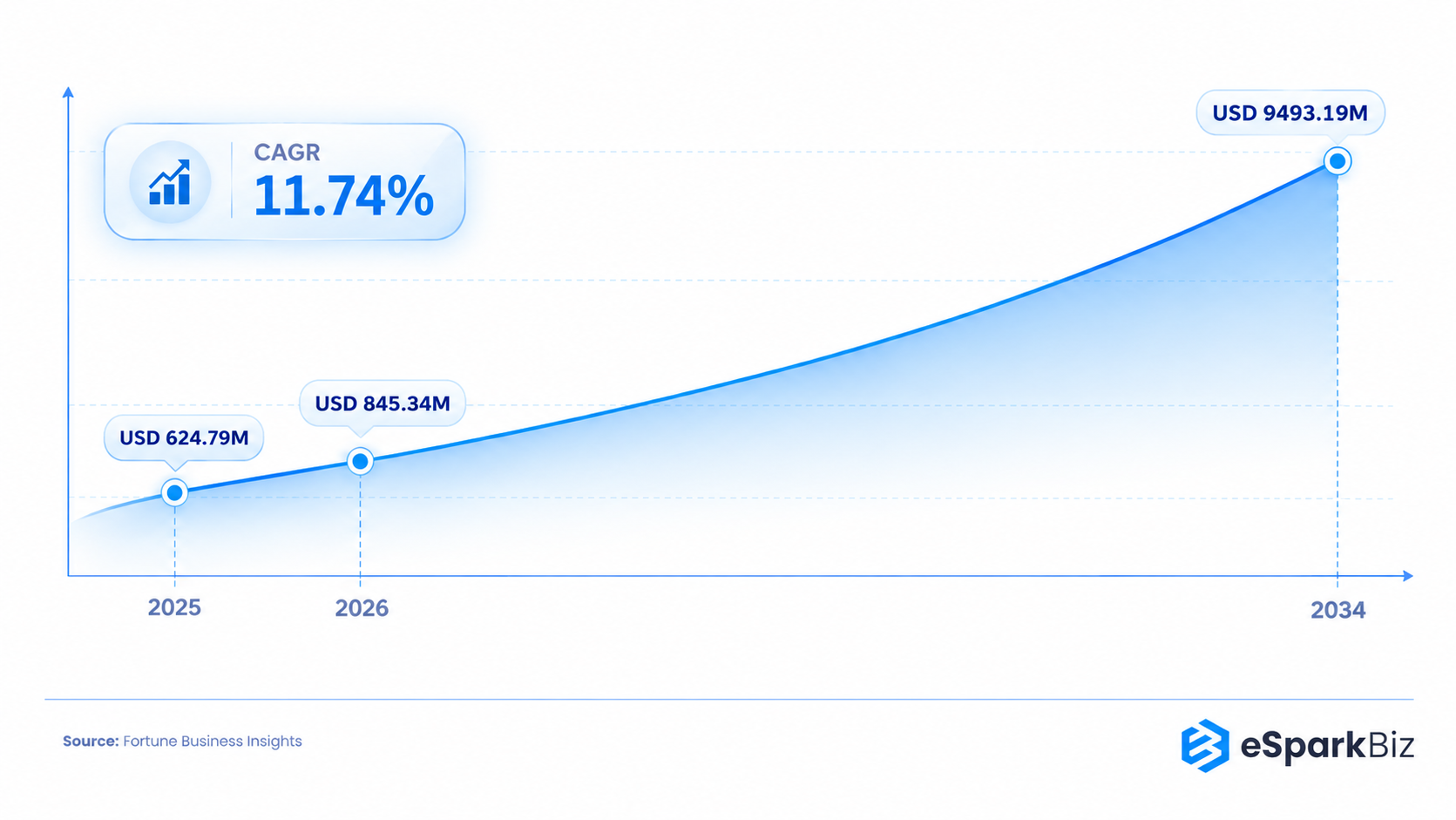
A booming SDLC market
Fortune Business Insights forecasts that the generative AI in SDLC market will reach USD 9.49 billion by 2034, at a 35.3% CAGR.
What are the Benefits & Limitations of the SDLC?
A project can fail even when the SDLC approach is used. Poor requirements, lack of ownership, delays in testing, scope creep and insufficient communication can break the process at any phase.
- Clarity of scope: Writing out requirements and getting approval reduces confusion, although approved changes may take extra effort.
- Earlier detection of defects: Test planning and acceptance criteria move quality work earlier, at the cost of more upfront effort.
- Improved visibility: Teams and customers can have information on the decisions, risks and approvals instead of relying on informal updates.
- Useful audit evidence: Documentation and tracing of project progress help regulated projects prove what changed and who approved it.
- Better model fit: A process works best when the delivery approach suits the level of uncertainty and control required.
- Process discipline still matters: Poor implementation of an SDLC preserves paperwork but not its practical value.
Which SDLC Model fits your Project Best?
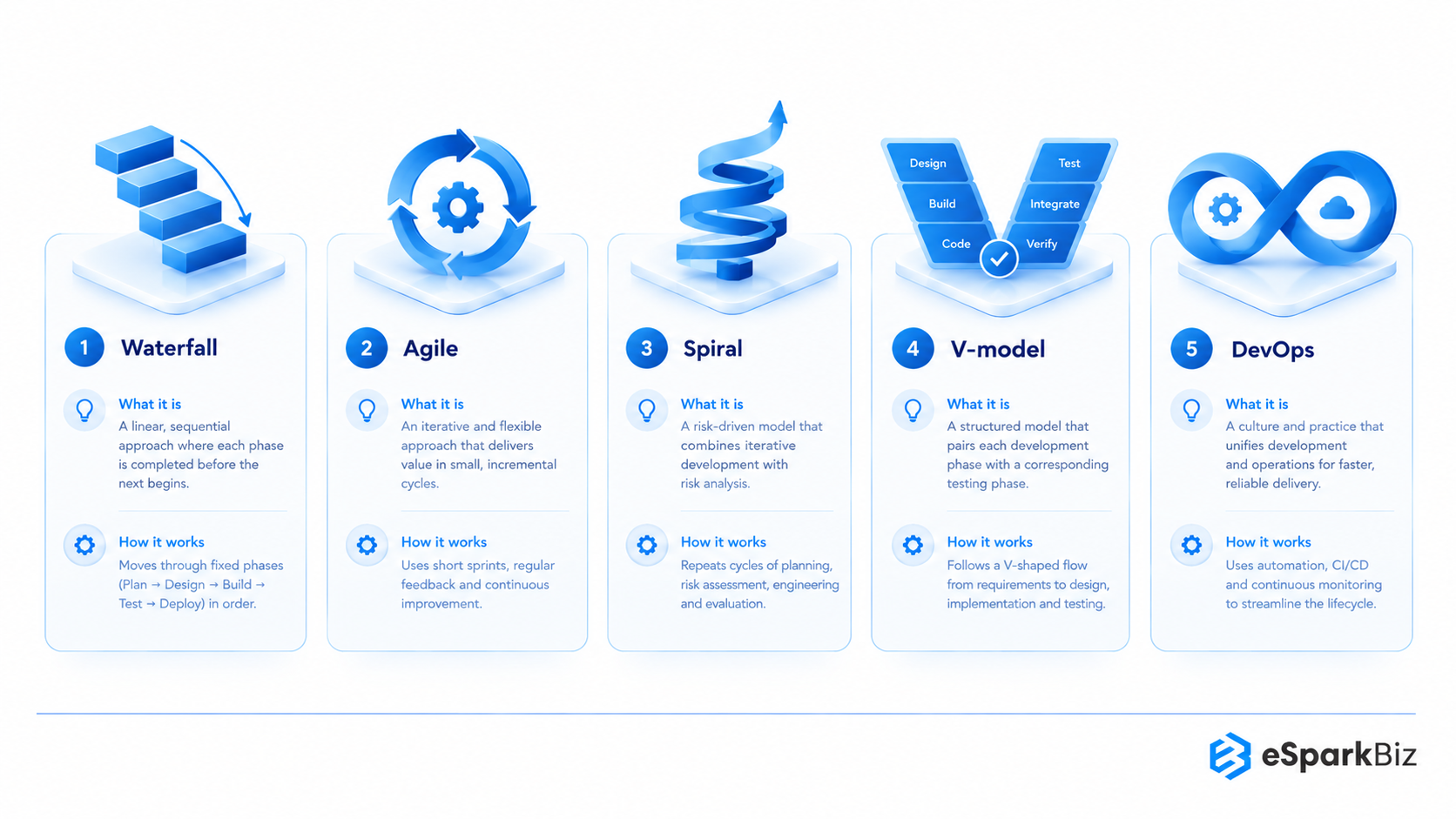
SDLC refers to the life cycle of the work involved. Agile and Waterfall describe different ways of organizing that work.
Just the number of people working on the project is not enough to determine the methodology. Other factors include stability of requirements, technical risk, regulation, release frequency, feedback and cost of rework.
| Model | Pick it when | Main risk | Usual contract | Example project |
| Waterfall | Requirements fixed, rework costly, audits expected | Late change is expensive | Fixed price | A regulated reporting system with fixed scope |
| Agile | Requirements will shift, client reviews often | Scope drifts without one owner of priorities | Time & materials | A consumer app with weekly releases |
| Spiral | Risk is high & prototypes reduce it | Heavy planning & cost | Phased budget | A high-risk platform built after prototypes |
| V-model | Every build step needs a matching test | Rigid when scope moves | Fixed price with test gates | Embedded or medical software with a test for each build step |
| DevOps | Releases are frequent on automated pipelines | Needs tooling & skilled staff | Retainer | A SaaS product shipping daily from automated pipelines |
If those factors point in different directions, software development consulting can settle the model before you sign.
Waterfall vs Agile: What is the Difference?
The Waterfall approach involves several steps and remains the same after the process has been approved. The Agile method works through shorter cycles where requirements, development, testing and feedback repeat.
The Waterfall approach suits processes involving a fixed scope, formal approval and those associated with hardware. The Agile approach suits the development of products that learn as they develop. Many organizations use a hybrid instead of treating the choice as all or nothing.
Getting the Requirements Right
“The hardest single part of building a software system is deciding precisely what to build.”
Fred Brooks, Computer Scientist & Author of The Mythical Man-Month
What is a Secure Software Development Life Cycle?
Security activities are built into the development process, so decisions are made throughout the life cycle instead of after development. DevSecOps services put those checks into the build pipeline.
What does Shift Left mean in the SDLC?
Shift left refers to conducting security assessments early on, even during planning, requirements and design stages so that teams can identify risks before implementation is complete.
Which security activities belong in each SDLC phase?
- Planning: Define security objectives and assumptions.
- Requirements: Identify privacy, access control and compliance requirements.
- Design: Perform threat modeling and security architecture planning.
- Development: Develop secure code and verify dependencies.
- Testing: Conduct security testing, dynamic testing and performance testing.
- Deployment: Control secrets, access control and deployment control.
- Maintenance: Address vulnerabilities, patching and incident response.
How do you incorporate NIST SSDF into a secure SDLC?
The Secure Software Development Framework by NIST has a set of processes that may be included in any SDLC. There are four categories in the framework, which include preparing your organization, securing your software, producing secure software and reacting to vulnerabilities.
These processes may be used along with Agile, Waterfall, V-model or hybrid approaches without considering a secure SDLC as a separate individual process.
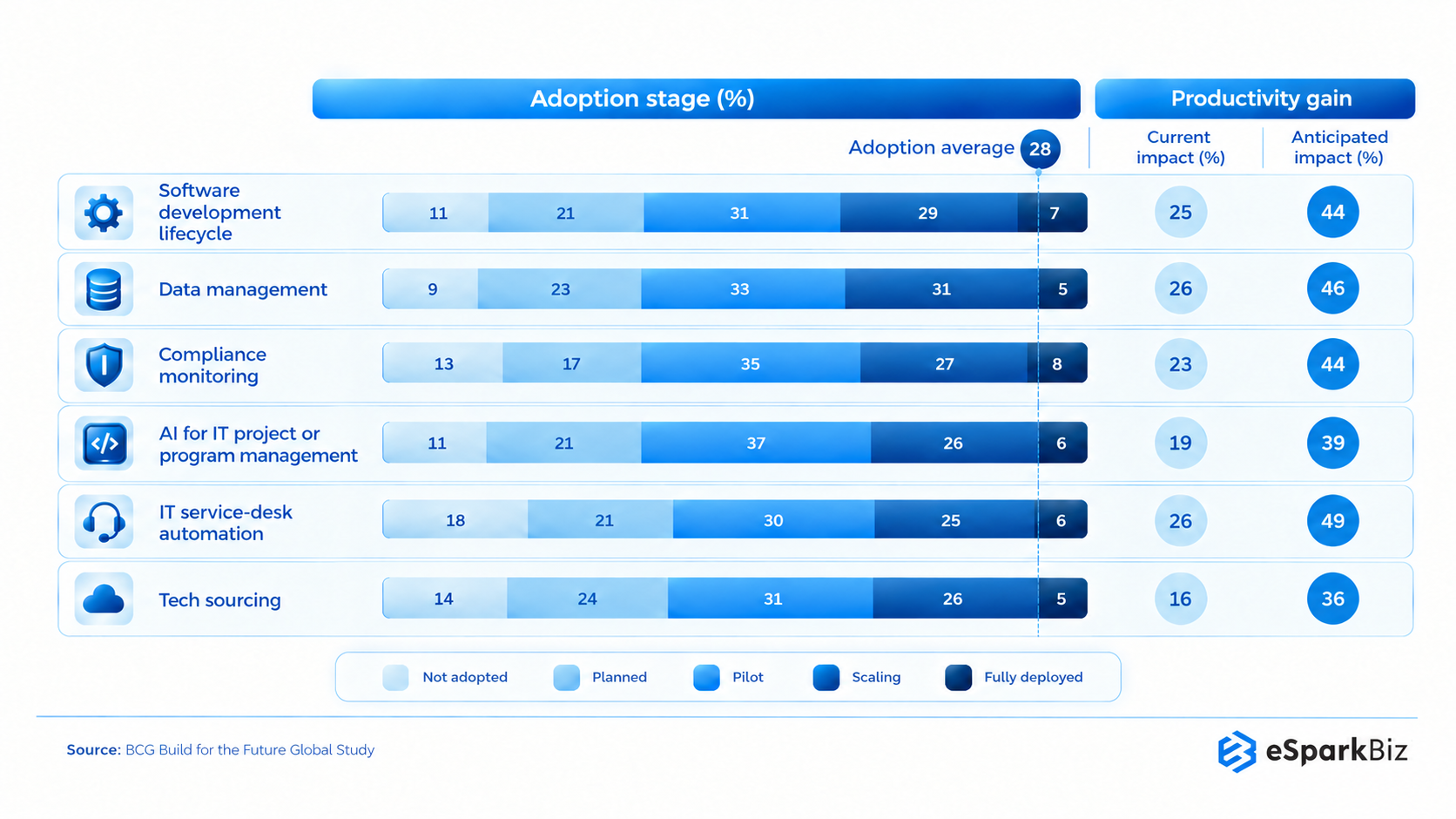
AI productivity in software development
BCG reports that companies using AI for software development are already experiencing an improvement in productivity of 25%, while a 44% improvement is seen once fully scaled up.
How is AI Changing the Software Development Life Cycle in 2026?
AI is revolutionizing the way that work is performed in each SDLC stage, but it does not eliminate the lifecycle itself.
- AI speeds up coding and software testing phases but does not skip any of the SDLC stages. Review and specification phases are usually becoming larger and more detailed.
- When the requirements are ambiguous, AI will generate plausible but incorrect code more quickly, so obtaining a sign-off becomes even more essential.
- DORA’s software delivery research found that 90% of respondents report using AI at work and the usage of AI correlates with faster delivery yet greater instability in delivery.
- Stack Overflow’s Developer Survey found that 84% of developers either have used or are planning to use AI tools, but 46% do not trust it completely.
How eSparkBiz reviews AI generated code
Developers at eSparkBiz use AI tools for routine code, but there is still a step involving human review between each AI suggestion and committing it into the codebase.
- A developer who did not write the changes reviews all pull requests created using AI before merging them into the codebase.
- Automated tests and security scans run on each build so a plausible but wrong change gets caught fast.
- Reviewers check code against the signed acceptance criteria not just whether it runs or not.
- QA engineers verify the AI created test cases for any missing points.
Where AI creates value across the SDLC
AI is changing more than how developers write code. This video explains how AI could help with requirements, design, testing, deployment and maintenance in order to optimize the whole software development cycle.
Effect of AI on SDLC
In a discussion on r/SoftwareEngineering, programmers noted that faster code production by AI would push more SDLC activities toward requirements, testing and code review.
What are the Best Practices for Running an SDLC?
Good SDLC processes enable organization, prevent rework and serve as important checkpoints for the project delivery team.
| Practice | Phase | Check you can ask for |
| Exit criteria per phase | Every phase | Written definition of done |
| Requirements sign-off before design | Requirements | Signed document with a change log |
| Automated tests on every build | Build & test | Results attached to each build |
| Ticket IDs linked to code changes | Build & release | Trace any release back to its request |
| Decision log | Design onward | Short records of key technical choices |
| Technical debt list | Build onward | Known shortcuts reviewed each sprint |
| Delivery metrics | Release | Lead time & share of releases that fail |
Estimating Time and Costs
In project management, it is important to estimate software development time and software development costs, since factors such as requirements, complexity, testing and iterations can all affect the schedule and final budget.
Hire a Partner or Keep SDLC In-House? How to Tell Whether a Vendor’s Process Is Real
External development support pays off when specific gaps appear. Look for these three signs before you shortlist anyone:
- Phase gates keep slipping. Requirements sign-off or release approval has no owner, so work moves on without a decision.
- No QA or DevOps owner. Testing and deployment fall to the developers who wrote the code.
- A fixed launch date. There is no time to hire and onboard a full team before the deadline.
These gaps can justify bringing in a software development partner, but outsourcing alone won’t fix weak processes. Compare the responsibilities, costs and delivery timelines before deciding between an external partner and additional in-house hires.
Custom software development services can provide support across the development lifecycle, while a dedicated software team or staff augmentation can extend your existing team’s capacity.
| Aspect | In-house team | SDLC partner |
| Phase ownership | You own every phase and hire for gaps such as QA and DevOps | The partner owns planning to maintenance while you approve at each gate |
| Ramp-up time | Often months to hire and onboard missing roles | Often weeks to start with a ready team |
| Cost model | Salaries, tools and hiring costs all year | Fixed price or time and materials tied to scope |
Ask for Proof of the Process
A vendor’s SDLC process is only as reliable as the evidence behind it. Ask to review redacted artifacts from a previous project, including requirements and design documents, test reports, release notes and a handoff pack.
Focus on traceability. Can the vendor show how a business requirement connects to development work, code, test results and the final release? This helps you assess whether its process works in practice, rather than just on paper.
Generic SDLC questions in an RFP often produce similar answers across vendors. Request actual project artifacts to compare how each team documents decisions, validates deliverables and manages releases.
Match the SDLC model to the contract
Teams that outsource generally follow Agile or a hybrid model due to the changing requirements, whereas fixed price contracts become easier with a defined scope of work.
Ask what happens when the requirements change. A reliable proposal should explain what the impact is on scope, timeline, budget and approval.
Look for these red flags in a vendor proposal
Stay away from vendors whose teams cannot articulate their process, who fail to mention clear deliverables, consider testing only as a final phase or attempt to apply the same model to all projects.
Also ask what happens after launch. Without a plan for monitoring and maintenance or handing the project over, your company will then have to shoulder all the risks of operation.
For further guidance on how to evaluate a potential vendor, read our software development partner selection guide.
Conclusion
A successful SDLC is not just a formality. It assists in demonstrating the scope, decision making, testing, security and ownership before the handoff issue becomes too costly.
Regardless of whether you choose Waterfall, Spiral, V-Model or a hybrid approach, pose yourself the same key question at each step: what has been done, who has approved it and what’s the next step?
Frequently Asked Questions
What is the difference between SDLC & Agile?
SDLC describes all phases of the software lifecycle. Agile is one of the ways of structuring the SDLC process by implementing small iterations, continuous feedback and changing priorities.
What should I ask a software vendor about their SDLC before signing?
Before signing, here’s what you should ask a vendor regarding the aspects of the process that affect your timeline, budget and product quality:
- Who approves requirements and phase deliverables?
- How are scope changes priced?
- How is AI generated code reviewed?
- What testing and security checks are included?
- What will you receive at handoff?
What is the difference between SDLC & STLC?
Software development life cycle (SDLC) covers the entire software lifecycle whereas software testing life cycle (STLC) focuses specifically on testing:
|
Aspect |
SDLC |
STLC |
|
Scope |
Whole lifecycle of software |
Testing activities |
|
Goal |
Develop, release & maintain software |
Find defects & verify quality |
|
Activities |
Requirements, design, development, testing & maintenance |
Test planning, execution & defect tracking |
|
Relationship |
Overall development framework |
Testing process within SDLC |
What drives the cost of an SDLC project?
The major contributors to costs are scope, complexity, integration and compliance. As per 2026 estimates, software project costs can range from $25,000–$75,000 for small MVPs or $200,000–$500,000 and higher for complex enterprise systems.
How long does each SDLC phase take?
An MVP with a clear focus takes 6–14 weeks on average with larger projects requiring much more time. An ideal MVP project would have the following SDLC schedule:
|
SDLC phase |
Typical time |
|
Planning & requirements |
1–3 weeks |
|
Design |
1–2 weeks |
|
Development |
3–6 weeks |
|
Testing & deployment |
1–3 weeks |
To note: These ranges can overlap when teams work in continuous Agile sprints.
How much client involvement does each SDLC phase need when you outsource?
You do not have to run the development process on your own, but you must remain involved in making key decisions:
|
Phase |
Client role |
|
Planning |
Define goals & approve scope |
|
Design & development |
Review designs & demos |
|
Testing & launch |
Approve results & release |
|
Maintenance |
Review monitoring reports & approve patches |
Can you combine or switch SDLC models during a project?
Yes. It is possible to combine or switch SDLC methodologies depending on changing requirements, risks or commercial needs. The important thing here is to document the change and adjust scope, roles, timelines and commercial assumptions accordingly.
Does the Agile method work for regulated fintech or healthcare software?
Yes. The Agile method can work in regulated fintech or healthcare environments where its implementation is properly balanced with required control mechanisms. One can deliver features in a short cycle and still ensure requirements traceability and security tests/controls, approvals and audits.
Is a formal SDLC worth it for a startup MVP?
Yes. But the process can remain lightweight. An MVP does not require much governance. It should however include:
- A clear scope and requirements
- Acceptance criteria
- Minimal testing before releasing
- Release approval procedure
- Sufficient documentation for further modifications
Which companies are best for software development with a structured SDLC in 2026?
Several companies offer software development services using structured development methodologies, including:
- TCS
- eSparkBiz
- EPAM Systems
- Goji Labs
- DBB Software