

 ChatGPT
 Google AI
 Perplexity
 Claude.ai
Offshore software development continues to grow as enterprises increase outsourcing budgets, adopt AI, address talent shortages, and respond to growing security and compliance risks. These statistics highlight the key market trends, regional changes, technology shifts, and challenges shaping global offshore software development in 2026.
Finding the right offshore software development partner has become more difficult. Businesses must consider rising development costs, global talent shortages, AI adoption, cybersecurity demands, and changing compliance requirements simultaneously. Reliable industry data helps distinguish a smart outsourcing decision from an expensive mistake.
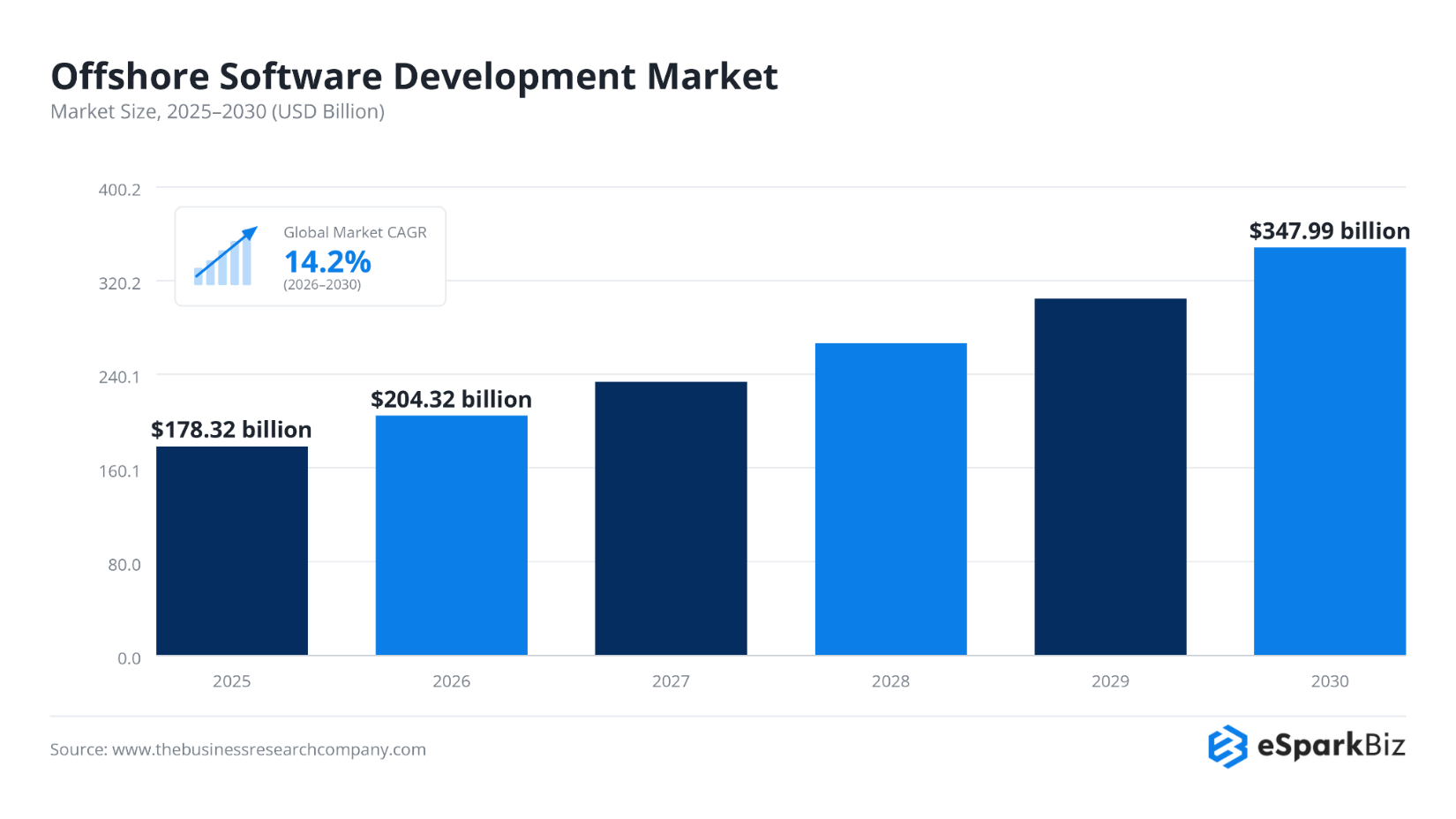
The offshore software development market is projected to reach $204.32 billion in 2026 and reach $347.99 billion by 2030, growing at a 14.2% CAGR. This expansion reflects increasing enterprise demand for outsourced software engineering, AI-enabled development, and access to global technology talent.
The statistics below provide a data-driven overview of the offshore software development industry, helping businesses understand market trends, compare offshore destinations, assess emerging risks, and make better outsourcing decisions in 2026.
Global Growth of Offshore Development
Enterprise demand for offshore software development continues to accelerate as organizations invest in digital transformation, AI-enabled software engineering, and global talent acquisition. At the same time, expanding developer communities and persistent skill shortages are reshaping how businesses approach outsourcing in 2026.
Market Growth & Outsourcing Adoption
1. 58% of enterprises use offshore development to support digital transformation initiatives.
2. 67% of organizations have adopted outcome-based outsourcing models that prioritize measurable business results and innovation over traditional staff augmentation.
3. Of surveyed executives 83% are leveraging AI as part of their IT outsourcing services (AI-powered outsourcing) and actively use technology outsourcing with software development as a core component.
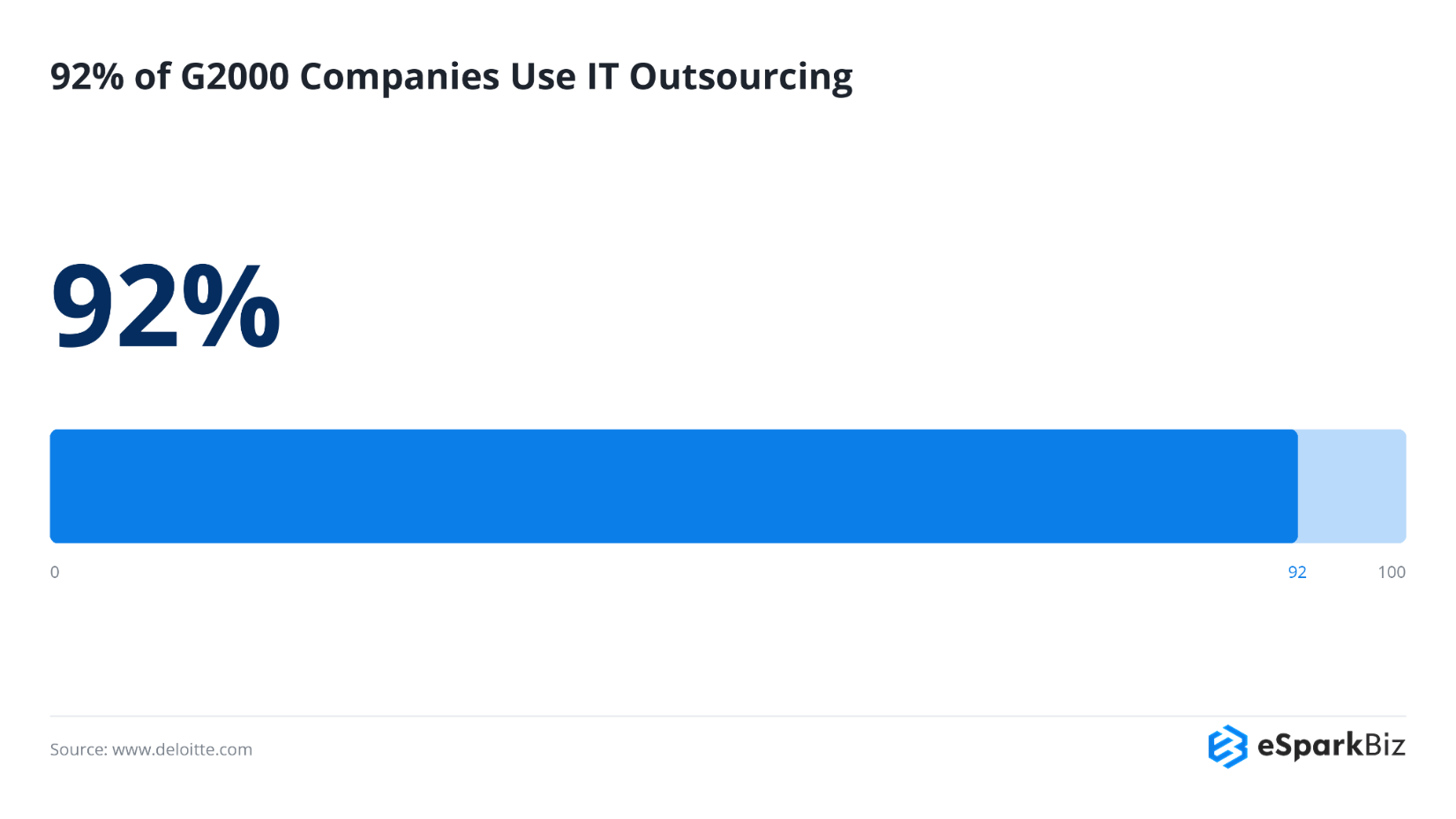
4. 92% of Global 2000 companies use IT outsourcing, demonstrating its widespread adoption among the world’s largest enterprises.
5. Global digital transformation spending is projected to hit $3.9 trillion by 2027, sustaining offshore demand.
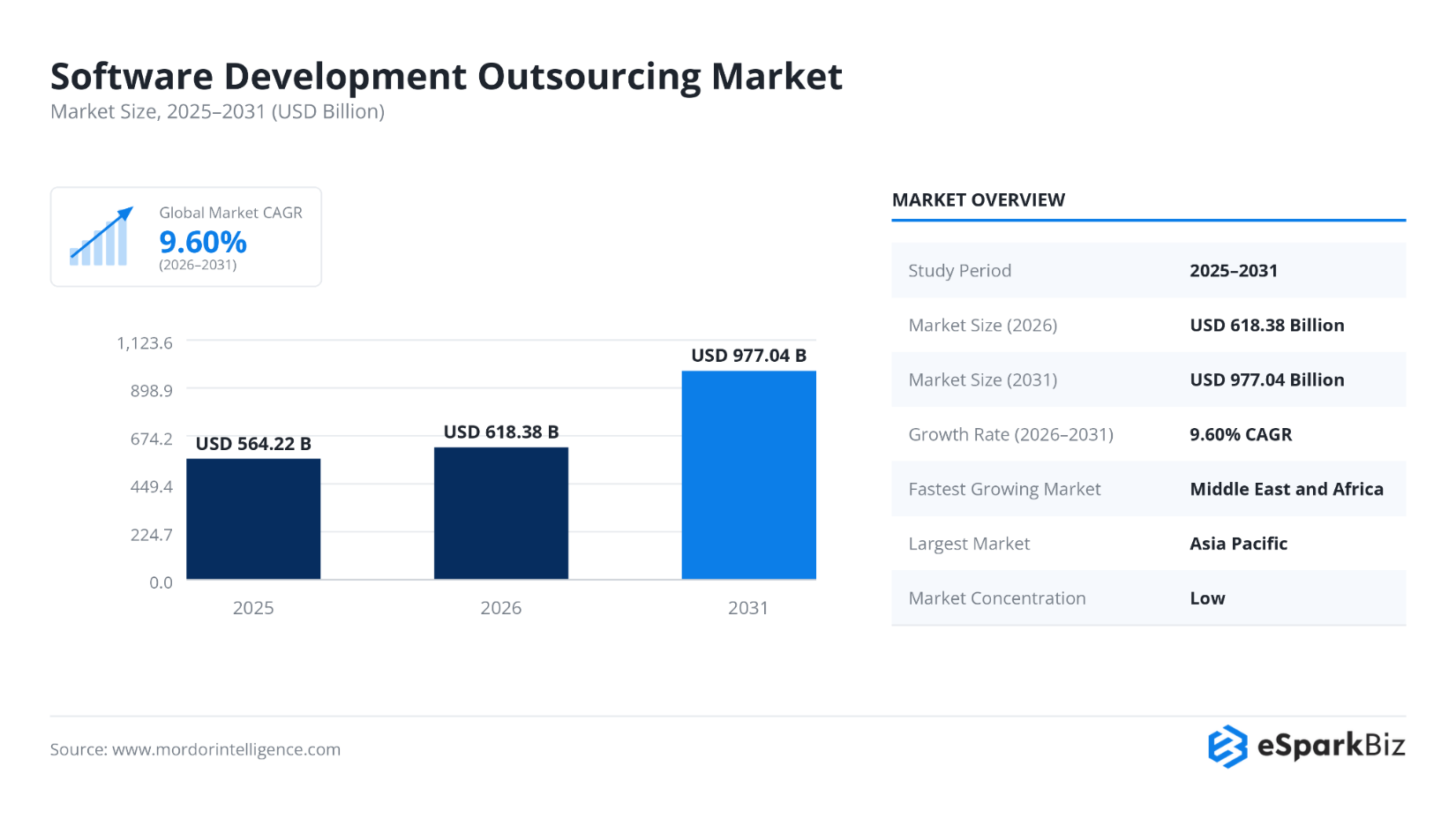
6. The software development outsourcing market is expected to reach USD 618.38 billion in 2026 and is forecast to grow to USD 977.04 billion by 2031, expanding at a CAGR of 9.6%.
7. Global IT outsourcing revenue is projected to reach USD 634.18 billion in 2026 and is expected to grow to USD 806.55 billion by 2030, representing a CAGR of 6.2%.
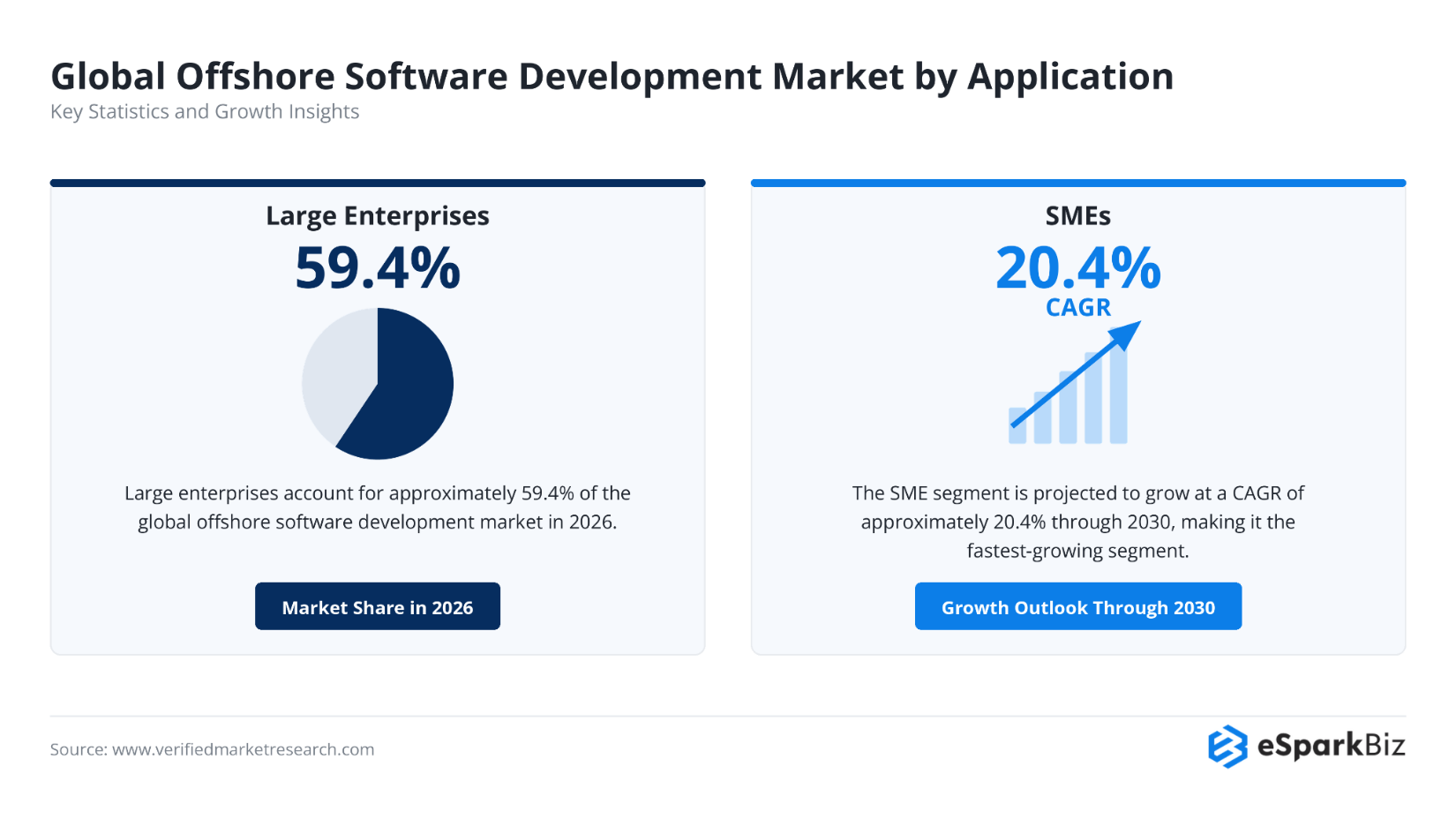
8. Large enterprises account for approximately 59.4% of the global offshore software development market in 2026.
9. The SME segment is projected to grow at a CAGR of approximately 20.4% through 2030, making it the fastest-growing segment.
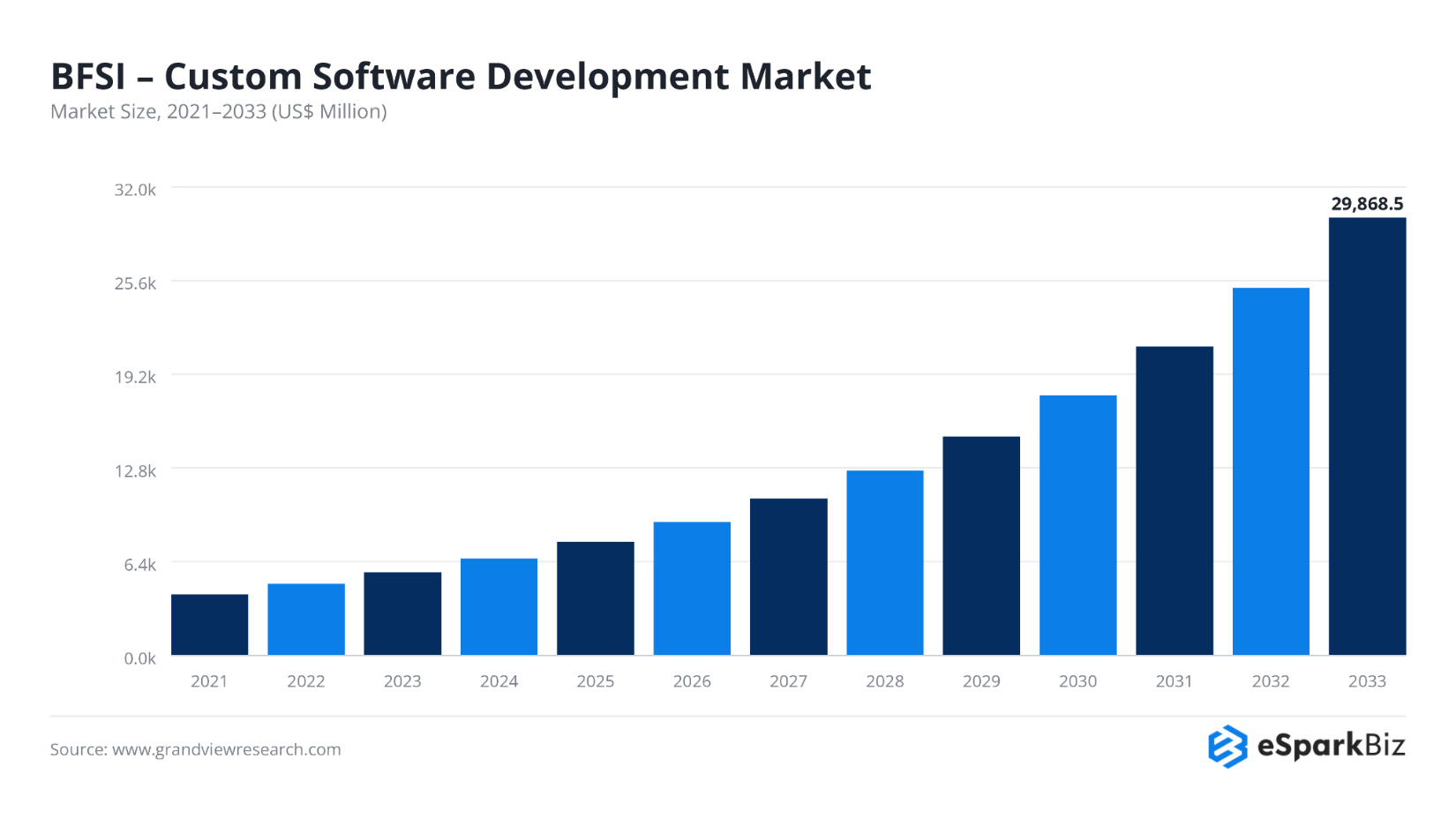
10. The Global BFSI segment is expected to reach USD 29,868.5 million by 2033.
11. India accounts for 55% of the global IT outsourcing market.
12. India hosts 2,117 Global Capability Centers (GCCs) employing approximately 2.36 million professionals.
Also Read: Nearshore software development statistics
Global Developer Talent & Workforce
13. There are 48.4 million software developers worldwide, reflecting the continued expansion of the global engineering talent pool.
14. The global cloud-native developer community reached nearly 20 million developers in 2026, reflecting accelerating enterprise adoption of cloud-native technologies.
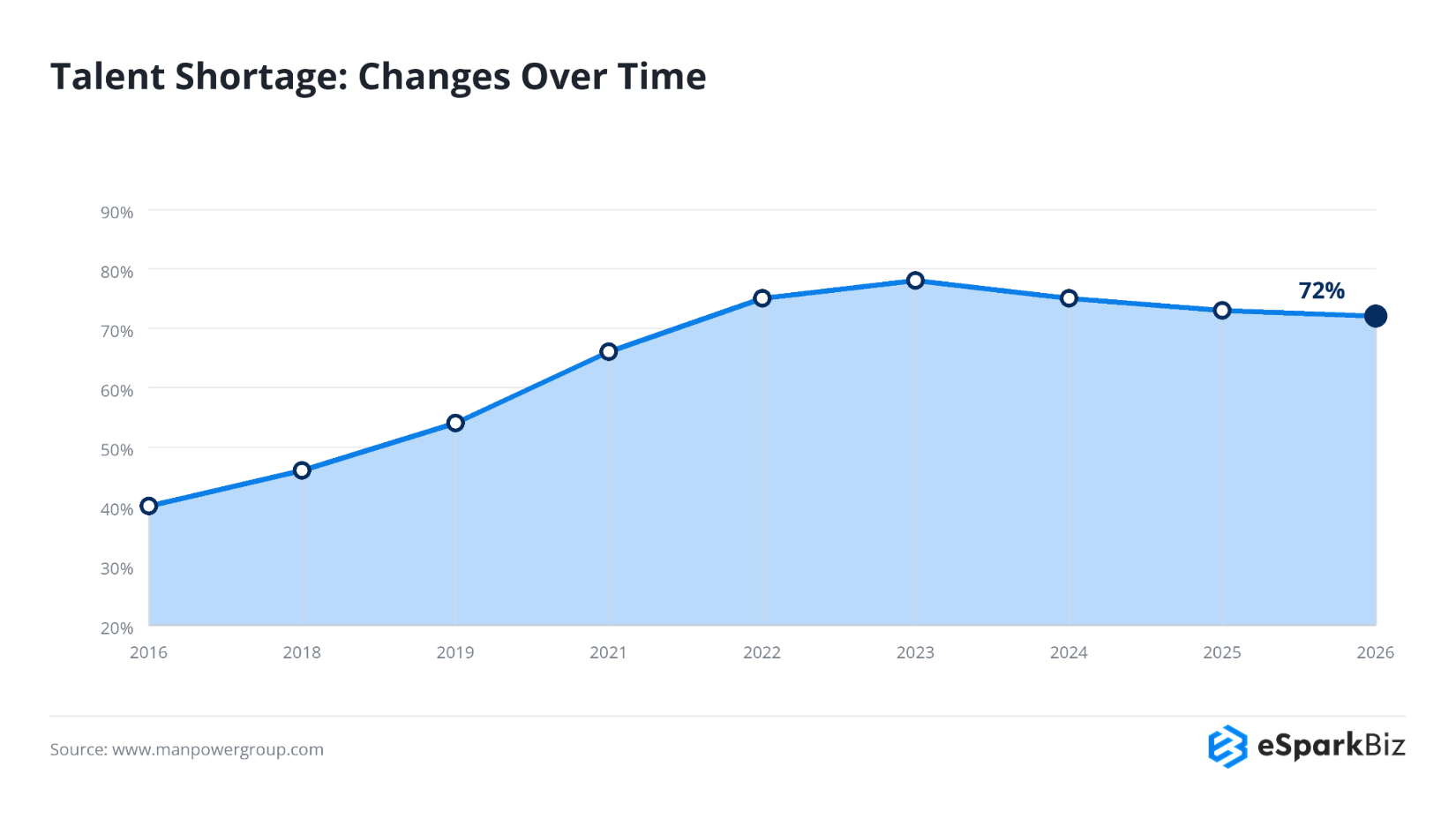
15. 72% of employers worldwide face skilled talent shortages in 2026, increasing demand for global hiring.
16. India produces around 1.4 million STEM graduates annually, strengthening its position as one of the world’s largest technology talent pipelines.
17. The U.S. is projected to average 129,200 software developer job openings annually through 2034.
18. India is home to approximately 2.25 million cloud-native developers, reinforcing its position as a leading offshore software development destination.
Top Outsourcing Destinations in 2026
The world’s leading offshore development destinations are distinguished by strong technology workforces, expanding IT industries, Global Capability Center (GCC) investments, and specialized talent. The following statistics highlight why India, the Philippines, Latin America, and Eastern Europe remain top outsourcing destinations in 2026.
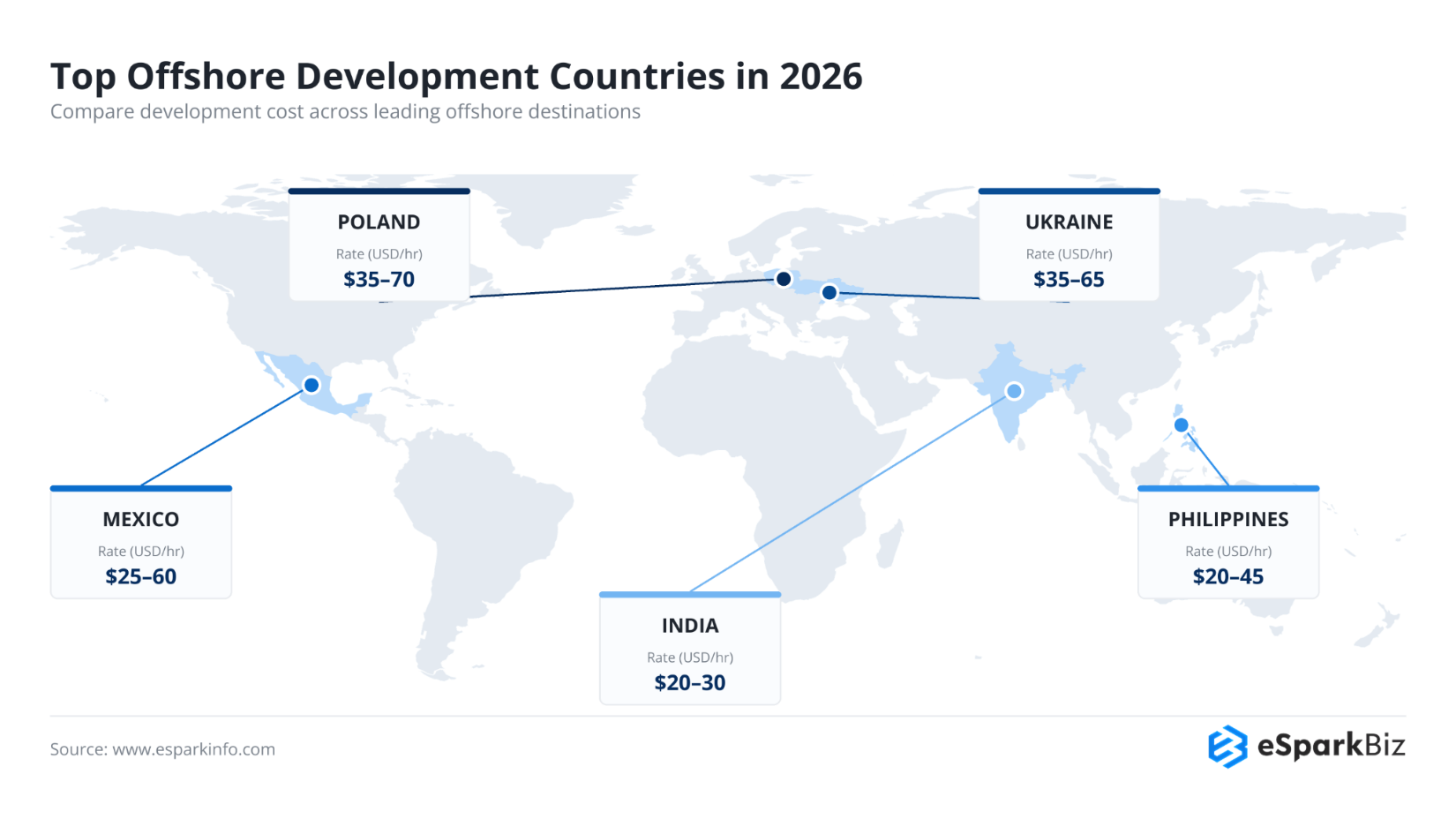
| Country | Avg. Hourly Rate (USD) | Key Strength | Developer Pool |
| India | $20 to $30 | Large Talent Pool & Full-Stack Expertise | 5.4M+ developers |
| Poland | $35 to $70 | Enterprise Software & Engineering Quality | 295,000+ developers |
| Philippines | $20 to $45 | English Proficiency & QA Services | 190,000+ developers |
| Mexico | $25 to $60 | Nearshore Collaboration & Time Zone Alignment | 225,000+ developers |
| Ukraine | $35 to $65 | Complex Engineering & AI Expertise | 285,000+ developers |
India
19. Direct employment in India’s technology sector is projected to reach approximately 6 million professionals by FY2026.
20. India’s technology sector is expected to exceed $315 billion in revenue by FY2026.
21. GitHub projects that India will have more than 57.5 million developers on its platform by 2030, making it the world’s largest GitHub developer community.
22. Offshore technology centers in India are projected to generate $98.4 billion in revenue in FY2026.
23. More than 100 Global Capability Centers (GCCs) were established or expanded across India during FY2026.
Philippines
24. The Philippine IT-BPM industry is projected to generate $42 billion in export revenue in 2026.
25. The Philippine IT-BPM sector is expected to employ approximately 1.97 million professionals in 2026.
26. The Philippines is home to approximately 160 Global Capability Centers (GCCs).
27. The Philippines ranks 28th globally in the EF English Proficiency Index, with a score of 569.
Latin America
28. Mexico’s IT services market is estimated to reach USD 54.0 billion in 2026.
29. Brazil has a 500,000 strong developer pool, making it one of Latin America’s leading nearshore software development destinations.
30. The Latin America IT services outsourcing market is estimated to reach USD 46.37 billion in 2026.
Eastern Europe
31. Romania’s ICT sector contributes 7.6% of the country’s gross value added (GVA), well above the EU average of 5.5%.
32. Poland’s ICT sector employs approximately 325,000 professionals, with nearly 90% working in ICT services.
33. Poland has approximately 400,000 software developers, making it the largest software developer talent pool in Central and Eastern Europe.
Cost Savings & ROI
Cost savings remain one of the primary reasons organizations choose offshore software development. However, evaluating long-term value requires looking beyond hourly rates to consider ROI, ongoing outsourcing investments, and the hidden costs that can affect project success.
34. 65% of enterprises prefer offshore outsourcing primarily for cost-efficiency initiatives.
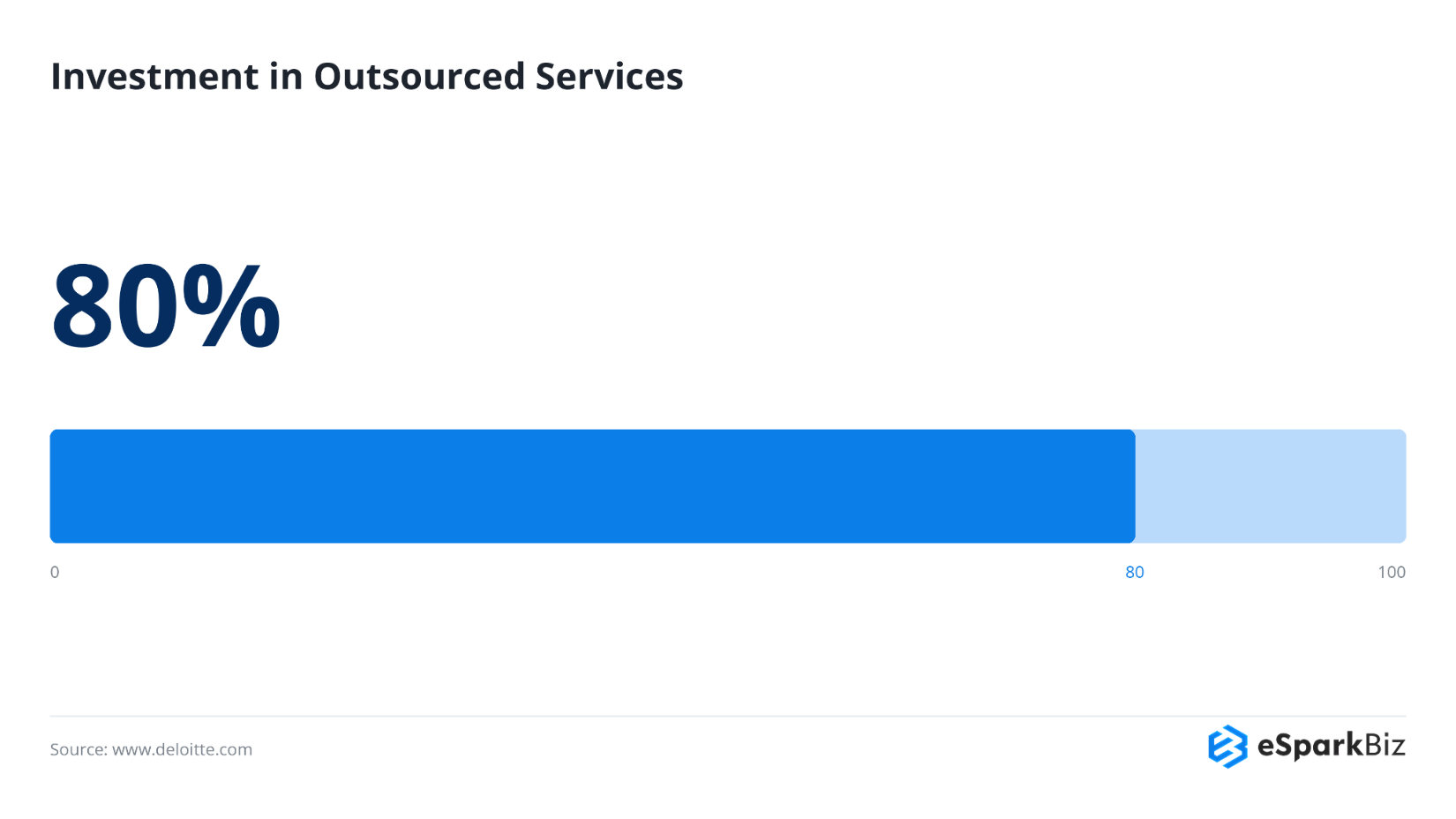
35. 80% of executives plan to maintain or increase investment in third-party outsourcing.
AI & Automation in Offshore Development
Artificial intelligence is rapidly transforming offshore software development, from AI-assisted coding and automation to enterprise investment and specialized talent demand. As AI becomes embedded across the software development lifecycle, organizations are reshaping both delivery models and workforce strategies to remain competitive.
36. 90% of developers regularly use at least one AI tool for coding and development tasks at work.
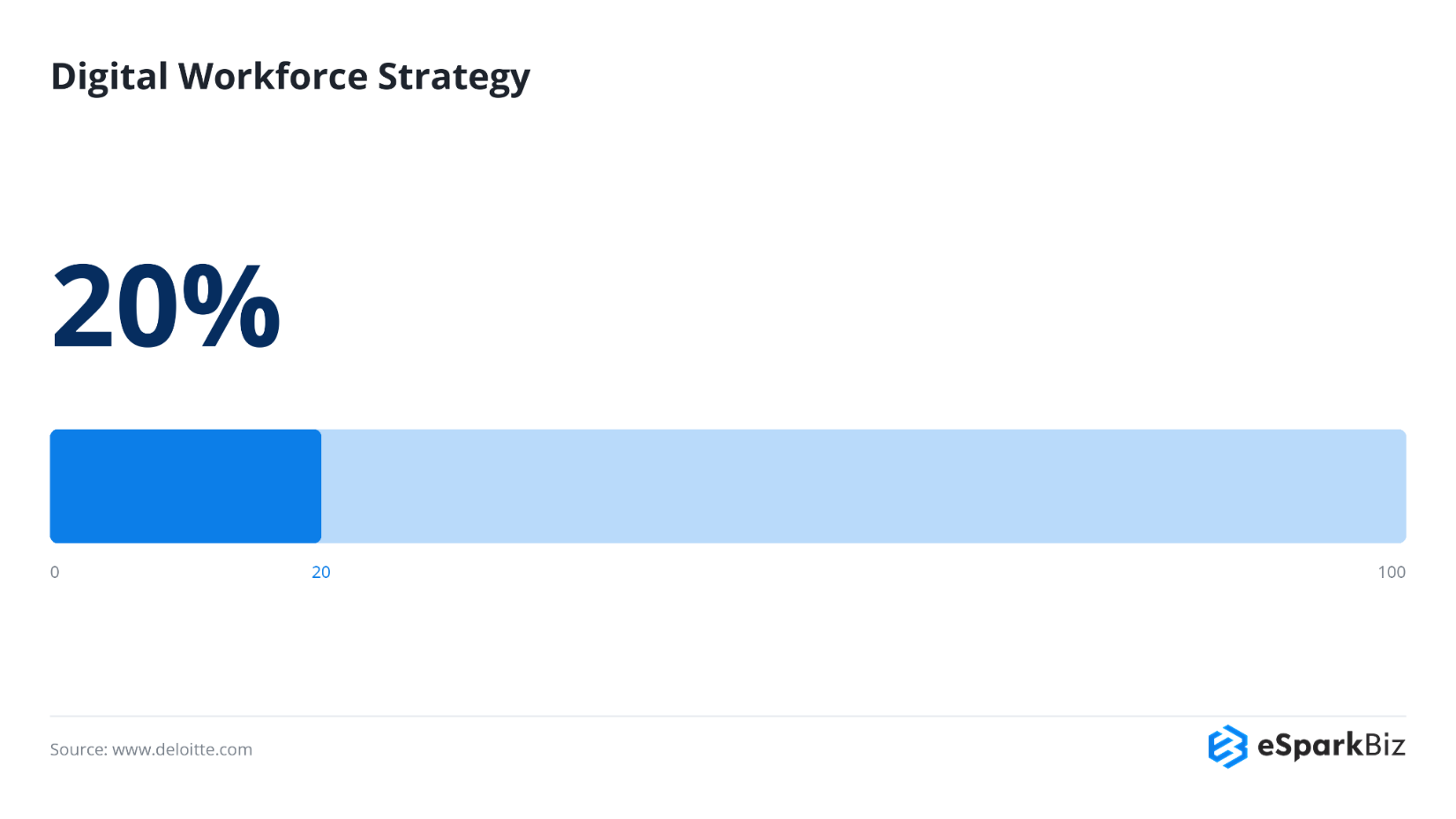
37. Of surveyed executives, 20% are already developing AI strategies to manage these digital workers.
38. Global spending on AI software is projected to reach $453.21 billion.
39. Worldwide AI spending is forecast to reach $2.59 trillion in 2026.
40. 57% of organizations are forming new outsourcing relationships specifically focused on AI.
41. GitHub Copilot now serves more than 26 million users worldwide, reflecting rapid enterprise adoption of AI-assisted software development.
42. Developers using GitHub Copilot completed coding tasks 55% faster.
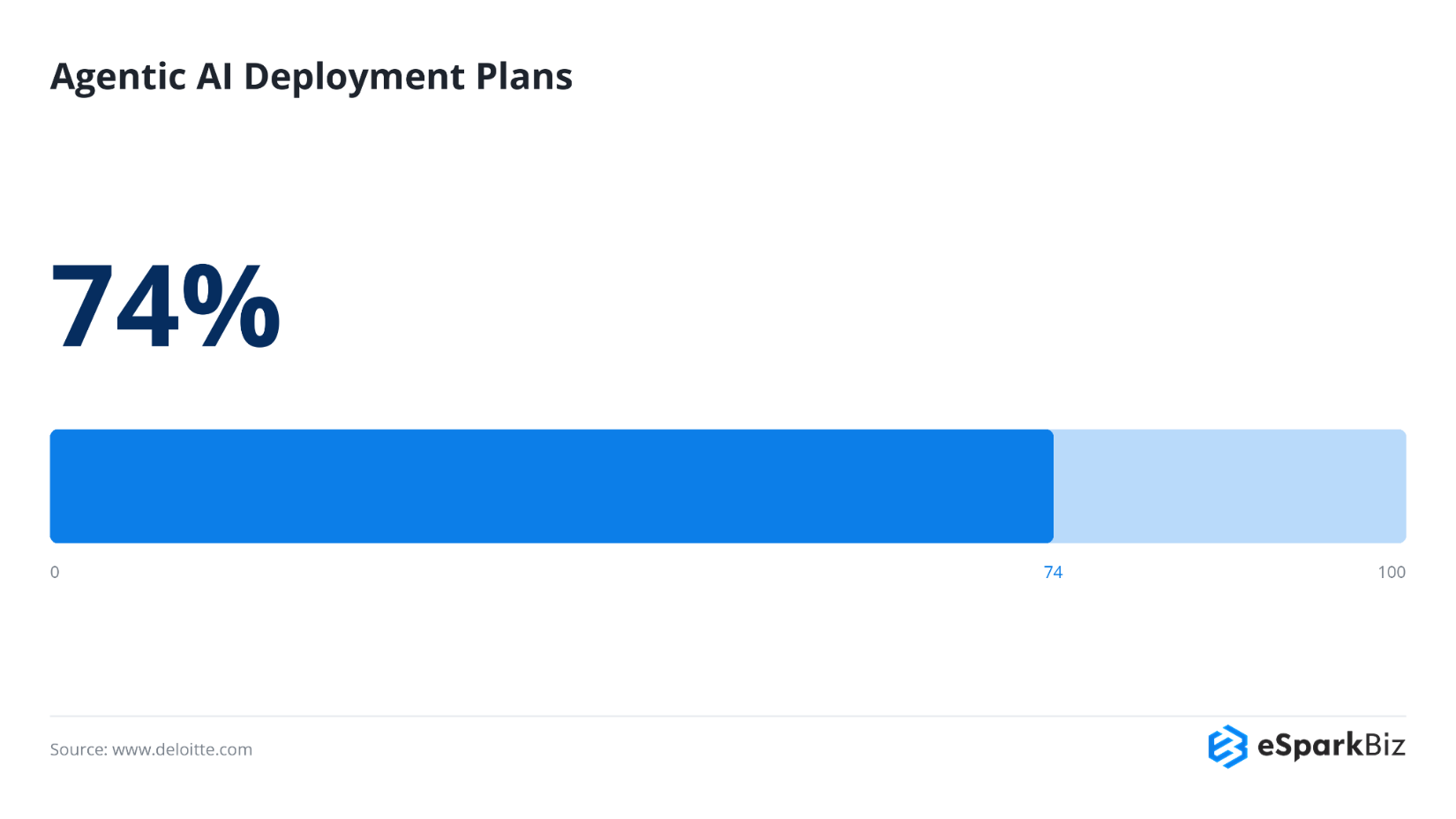
43. 74% of companies plan to deploy agentic AI within the next two years.
44. Over 80% of enterprise software will embed generative AI features by 2028.
45. 46% of developers do not fully trust AI-generated code, reinforcing the need for human oversight in AI-assisted software development.
AI Skill Demand Offshore
46. Global demand for AI talent reached nearly 275,000 active job postings in January 2026.
47. AI Model & Application Development (20%) and AI Literacy (19%) are the most difficult skills for employers to find globally in 2026, overtaking traditional engineering and IT capabilities.
48. Jobs requiring AI skills are growing 69%, nearly eight times faster than the broader labor market.
49. AI has created more than 1.3 million new jobs globally over the past two years.
50. U.S. roles requiring AI literacy increased 70% year-over-year.
51. Companies most exposed to AI achieved 52% headcount growth, compared to 36% among less AI-exposed companies.
Offshore Challenges & Risk Management
Successful offshore software development depends on more than cost and talent. Security, compliance, communication, and governance have become critical factors that influence project outcomes. Organizations that proactively address these risks through structured security and delivery practices are better positioned for long-term success.
Security & Compliance Risks
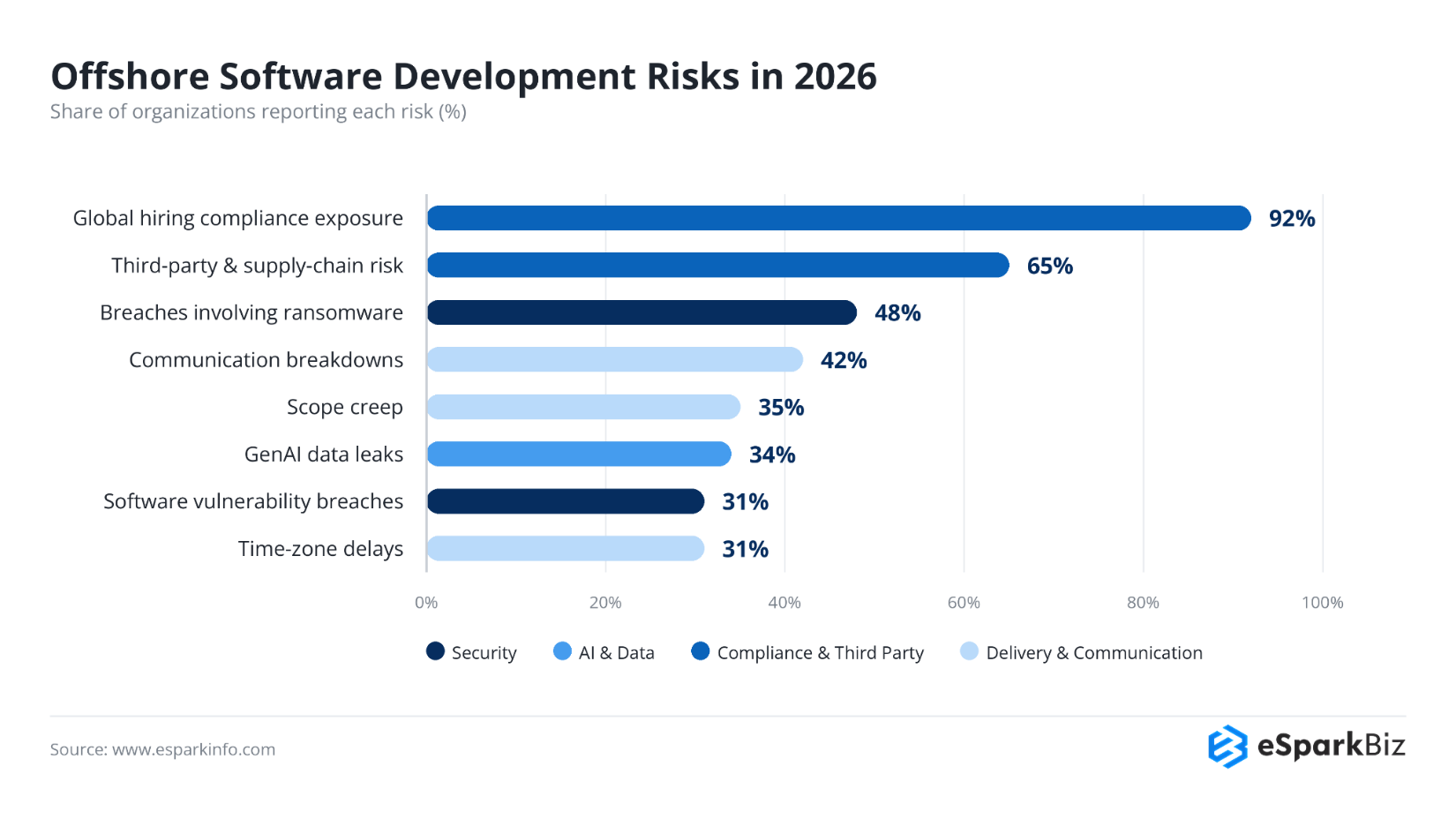
52. 34% of organizations identify data leaks from generative AI as their biggest AI security concern in 2026.
53. 48% of data breaches involved ransomware in 2026, reinforcing the need for offshore software development partners to implement robust security, secure coding practices, and incident response capabilities.
54. Only 8% of organisations said they were fully compliant with international tax and labour laws. By contrast, 92% said they were exposed to tax and compliance risks when hiring internationally.
55. 65% of large organizations identify third-party and supply chain vulnerabilities as their greatest cyber resilience challenge in 2026.
56. 31% of data breaches now begin with the exploitation of software vulnerabilities, making secure software development and timely patching critical priorities.
Cultural & Communication Risks
57. Time-zone differences contribute to delays, with 31% delays reported across 60% of offshore engagements.
58. 42% of outsourcing clients cite communication issues as the biggest outsourcing challenge.
59. 35% of outsourcing projects experience scope creep, contributing to budget overruns of 20–30%.
Conclusion
The statistics in this report give a clear picture of how offshore software development is changing in 2026, from market growth and talent availability to regional and technology shifts. They also show where businesses are facing the most pressure and what may shape the industry next.
If you’re comparing offshore destinations, looking at outsourcing options, or planning your long-term strategy, these numbers give you a useful starting point. Keeping an eye on these trends can help businesses make better decisions, reduce uncertainty, and choose an offshore approach that works for the years ahead.
Frequently Asked Questions
What is offshore software development?
Offshore software development involves hiring a software team based in another country to design, develop, test, or maintain applications for your business, typically to reduce costs or address local skill shortages.
Why is offshore development growing rapidly in 2026?
Growth is being fueled by AI adoption, global talent shortages, and continued digital transformation spending. The market is expected to reach $204.32 billion in 2026, showing that enterprise demand continues to rise.
Which countries are leading offshore development in 2026?
India leads with 55% of the global IT outsourcing market. The Philippines, Mexico, Brazil, Poland, and Romania follow as major offshore destinations, each offering different advantages in cost, language, skills, and time-zone compatibility.
How much can companies save with offshore development?
Savings depend on the destination, team structure, project complexity, and engagement model. Companies can often reduce development costs by leveraging lower regional labor rates while maintaining quality when they work with an experienced offshore team.
What are the biggest challenges in offshore software development?
Key risks include communication gaps, security and compliance exposure, time-zone differences, scope creep, and employee turnover. Strong governance, structured collaboration, and an experienced offshore partner can significantly reduce these risks.
How is AI changing offshore software development?
AI is increasing demand for skilled engineers who can develop AI-powered software rather than simply maintain legacy systems. It is also accelerating automation, creating new outsourcing opportunities, and changing how offshore teams deliver projects.
What services do offshore software development companies provide?
Offshore software development companies generally provide end-to-end engineering services, such as:
- Custom software development.
- Dedicated development teams and staff augmentation.
- Web development.
- Mobile app development.
- Software testing and quality assurance.
- Cloud consulting and DevOps.
- AI and machine learning development.
- Application maintenance and support.